NORFOLK — Insects, reptiles and birds are not typically welcome guests inside a library, but four special friends from Sharon Audubon were greeted with open arms at Norfolk Library on Wednesday, Jan. 31.
Bethany Sheffer of Sharon Audubon educated and entertained a group of 12 children who departed the school bus at the library. She brought with her a stick bug, a box turtle, a ball python and a dove, along with a table of touchable items like turtle shells and snake sheddings.
Each of the critters resides at Sharon Audubon nature sanctuary and are unfit for release for various reasons. Sheffer shared both the individual histories of each animal with the group as well as the unique aspects of the different species.
Stick bugs, also known as “walking sticks,” Sheffer explained, are a unique species of insect that are highly adept to camouflage. At a quick glance, they look identical to wooden sticks and can sell the act to predators by posing in unusual stances.
“See his arm in the air right now? He’s like, ‘Maybe if I pause with my arm up, all of you guys won’t see me,’” said Sheffer.
The stick bug at Norfolk Library did not have a name, so Sheffer requested suggestions.
“Princess,” shouted one attendee.
“Twiggy,” exclaimed another.
“Princess Twiggy,” remarked a third.
Sheffer then brought out a box turtle named Bao who was sent to live at Sharon Audubon after a dog cracked his shell. The damage restricted Bao from being able to recluse into his shell and left him vulnerable to predators.
Guests took turns holding the turtle to get an up-close look.
“He feels wet,” said one child as she hesitantly held Bao.
A ball python then made an appearance. Named Togo, this snake was originally a pet that was surrendered to the Audubon. Sheffer explained that ball pythons are native to West Africa and are constrictor snakes, not venomous snakes.
“Animals only ever bite if they’re scared and feel they need to protect themselves or if they’re hungry and they’re biting their food,” she said.
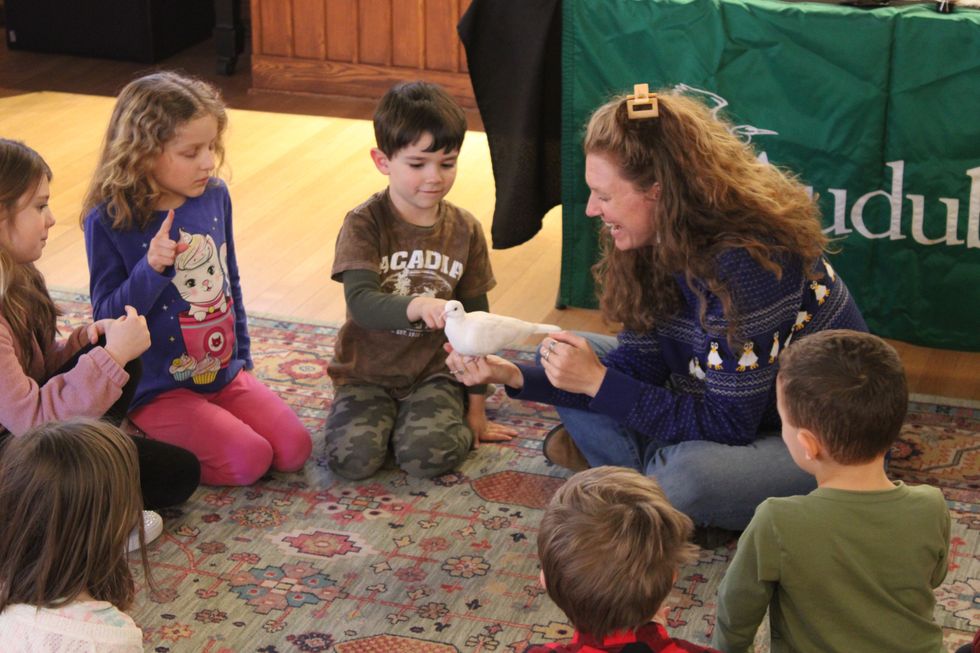
Finally, Sheffer shared a white dove named Paloma who arrived at Sharon Audubon in need of recovery.
Paloma was released as part of a ceremony, probably a wedding, and was found injured. She was reportedly featherless upon arrival in Sharon. Through treatment at the Audubon, Paloma’s plumage has returned but she remains flightless.
After learning about each animal and getting a feel — literally — for how each one lives, the children concluded by touching all of the related objects on the display table.
“This feels like bubble wrap,” said one child while rustling a snake skin.
Riley Klein
Paloma the dove recovered from injuries at the Sharon Audubon nature sanctuary.










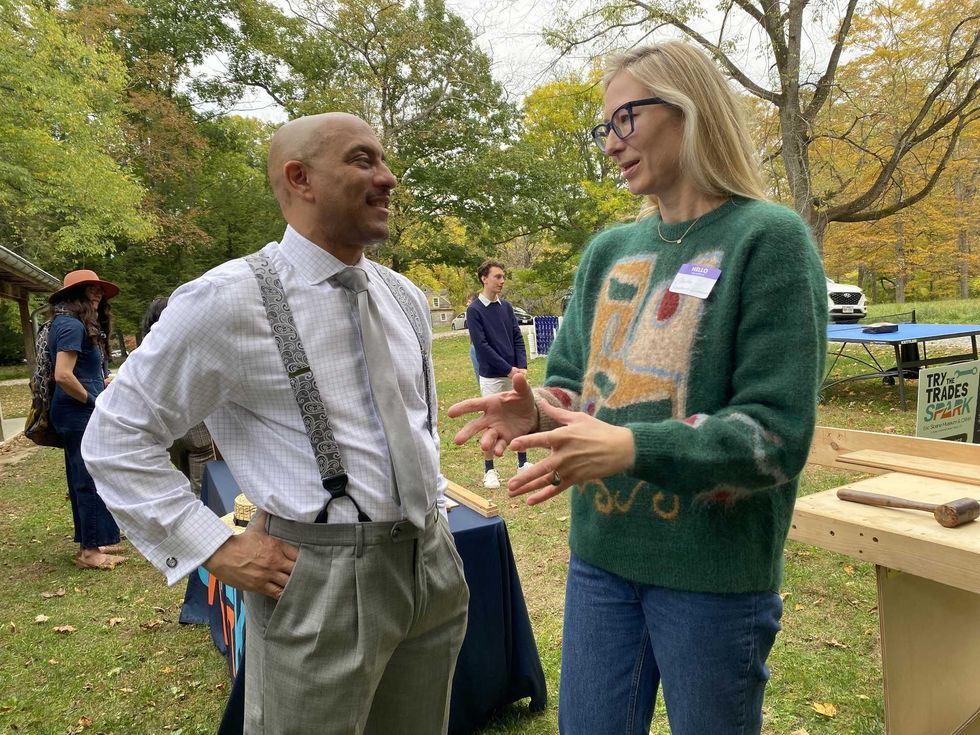 About to open the planning event for the sixth annual Troutbeck Symposium on Sunday, Oct. 4, Troutbeck owner Charlie Champalimaud spoke with guest speaker Hasan Kwame Jeffries of The Ohio State University, who has been a vital participant in the program since it began in 2021.Photo by Leila Hawken

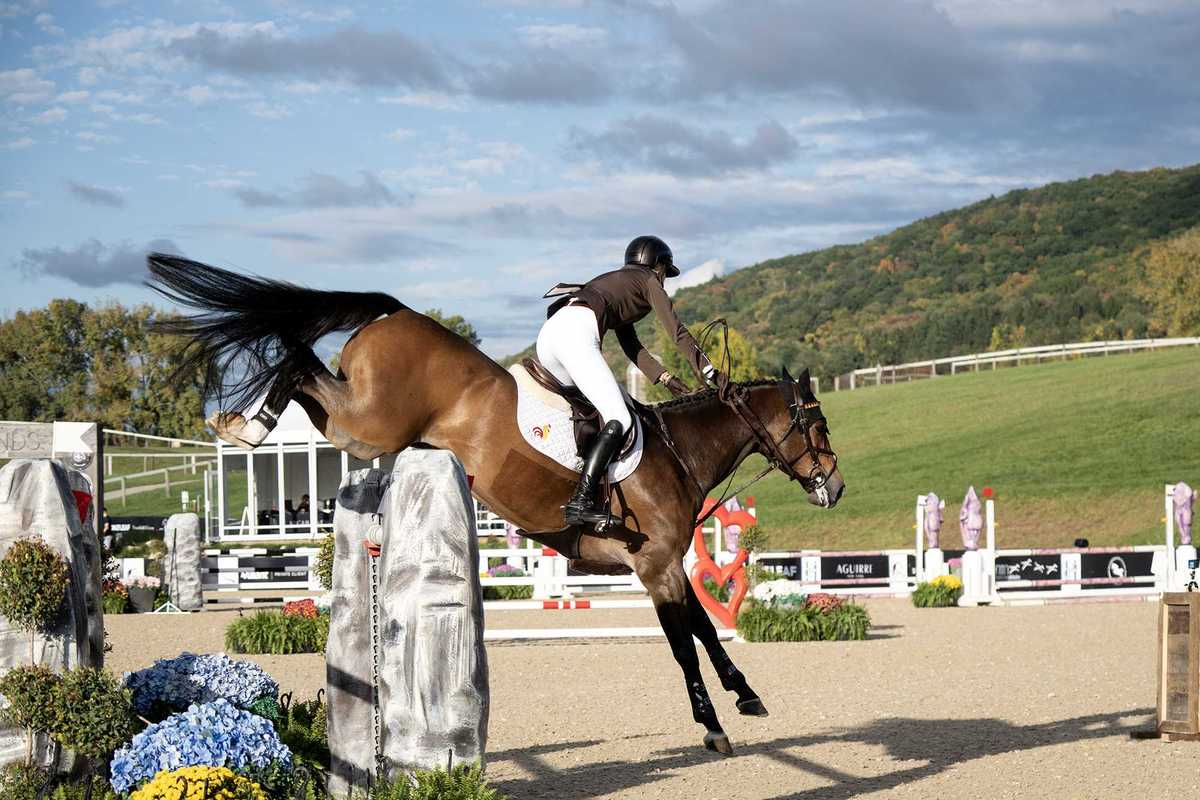
 Photo by Kirsten Edlund-Tunkel