Sharon Hospital's first babies of 2026

Bryan Monge Orellana and Janneth Maribel Panjon Guallpa, of Amenia, are the parents of Ethan Nicolas Monge Panjon, Sharon Hospital’s first baby of 2026.
Photo provided
Subscribers get unlimited access to every weekly edition, the full archive, and all Special Sections.
Already a subscriber?
Already a subscriber but aren’t registered for online access? Click here .
You're signed in — but we couldn't find an active subscription.
Your subscription is active — you now have unlimited access to Millerton News online, including the e-edition and archives.

Bryan Monge Orellana and Janneth Maribel Panjon Guallpa, of Amenia, are the parents of Ethan Nicolas Monge Panjon, Sharon Hospital’s first baby of 2026.

Graham Corrigan & Nathan Miller
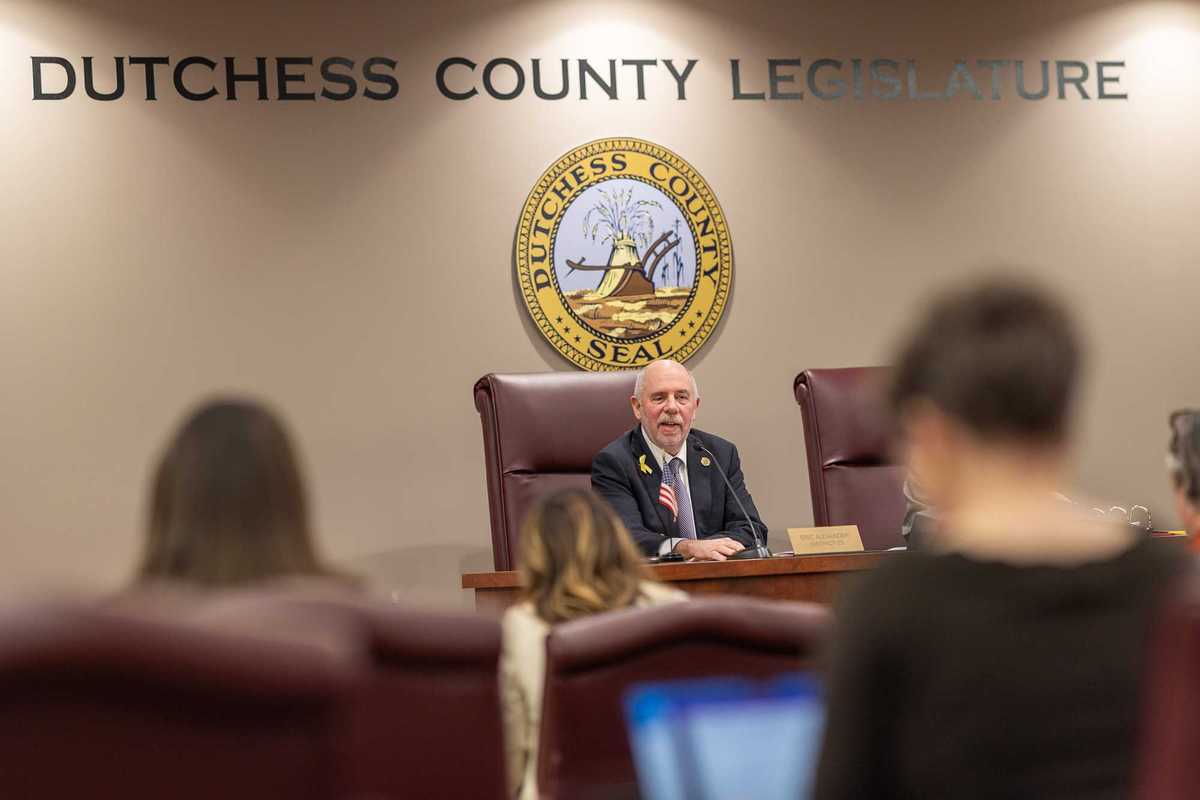
County Legislator Eric Alexander leads a meeting of the Dutchess County Legislature's Public Safety Committee on Wednesday, March 4, 2026. Alexander represents the towns of Amenia, Washington, the Village of Millbrook and a portion of the Town of Pleasant Valley
Democratic candidates made gains and held ground across Northern Dutchess County in elections on Tuesday, Nov. 3.
County Legislator Eric Alexander has retained his seat after winning against Republican challenger Stefanie Hubert. As of 10:15 p.m., Alexander had secured 56.8% of the vote.
Democrat Trevor Roush made an upset win against Republican incumbent Brian Walsh in Pine Plains. Roush won 598 votes to Walsh's 465.
Town Supervisor Rosanna Hamm ran unopposed in Amenia, as did Julia Descoteaux in Stanford. Damian Guttierrez, who also ran unopposed, will now take a seat on the Amenia Town Board.
It was a big night for local libraries, too: ballot measures increasing library budgets passed in Millbrook, Stanford and Pine Plains.
In the race for State Assembly, Didi Barrett fended off a challenge from Republican Gregory Campus to represent District 106. Barrett won with 66.9% of the votes to Campus’s 33.1%.
State Senator Michelle Hinchey won another term representing District 41, which comprises Columbia and Greene counties, as well as the top half of Dutchess County.
Hinchey is fending off Republican challenger Patrick Sheehan with 68.4% of votes.
Democrat Pat Ryan defended his seat in Congress against Jackie Mary Auringer, taking 63.8% of the vote to Auringer’s 36.1%.
The sole exception to the blue wave was in the State Assembly. Incumbent Republican Anil R. Beephan is currently leading in a tight race against Democrat Brooklyn Talarico, 50.6%-49.4%.
Kirk Imperati ran unopposed to win a second four-year term as Dutchess County Sheriff.
In statewide races, Democratic incumbent Governor Kathy Hochul defeated her Republican challenger, Bruce Blakemann. Hochul is leading with 64% of votes to Blakeman's 36%.
Attorney General Letitia James won another term after continual clashes with the Trump administration. James defeated Republican challenger Saritha Komatireddy with 64.1% of the vote.
State Comptroller Thomas P. DiNapoli defended his seat against Joseph Hernandez.
D.H. Callahan
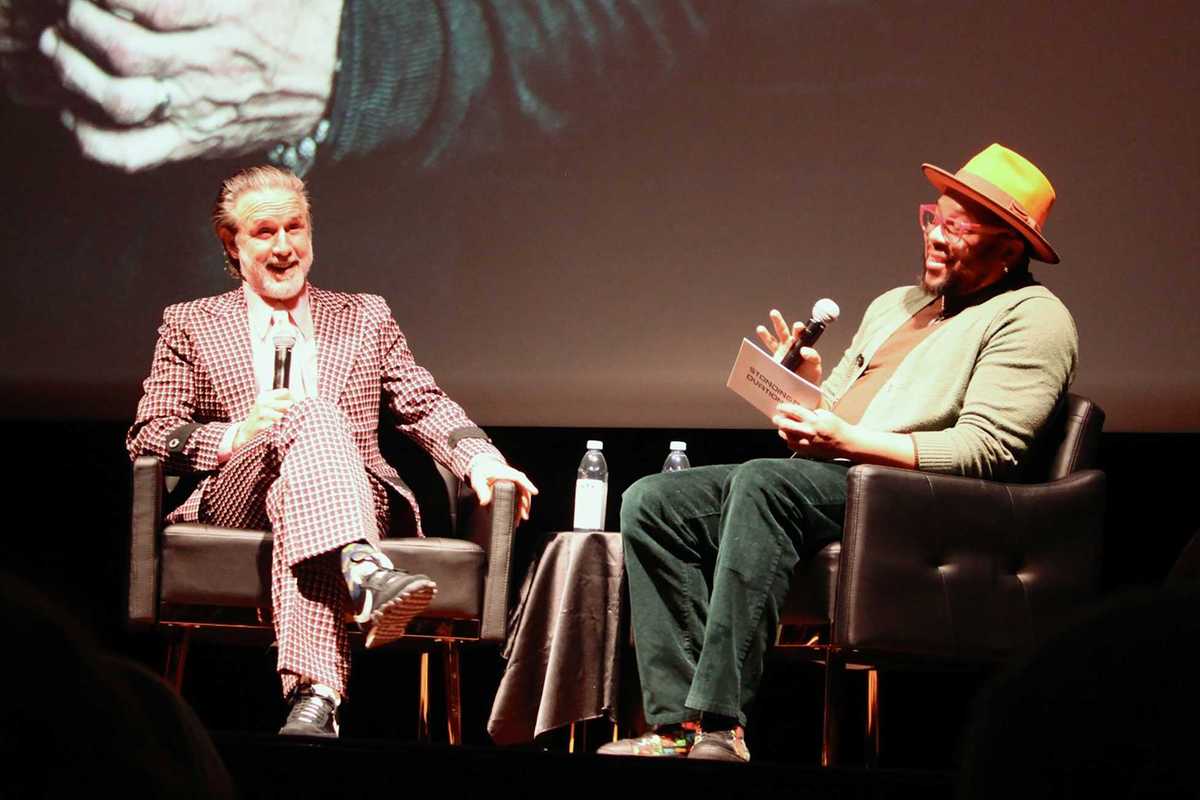
David Arquette, left, talks with moderator Victor Dandridge during “Behind the Scream” at the Warner Theatre in Torrington on Oct. 31.
This December marks the 30th anniversary of Wes Craven’s “Scream,” one of the most influential movies in horror history. On Saturday, Oct. 31, David Arquette, one of the film’s stars, came to the Warner Theatre in Torrington for a Halloween screening and conversation billed as “Behind the Scream.”
“Scream” was met with critical praise when it premiered in 1996, with many noting its satirical, self-aware look at the horror genre without the usual trappings of camp or kitsch. Featuring a cast of mid-1990s A-listers including Drew Barrymoore, Matthew Lillard, Rose McGowan, Liev Schreiber, Neve Campbell and “Friends” star Courteney Cox, the movie was destined to be part of the cinematic zeitgeist.
Ahead of the event, the Warner got into the Halloween spirit on Friday, Oct. 30, with a live performance on the street. Hartford’s Bushnell Theatre, which has a long working partnership with the Warner, brought its digital creative team to project a spectacular Halloween-themed visual display onto the theater’s facade while dancers from the Nutmeg Ballet performed the “Thriller” dance and employees passed out candy to area trick-or-treaters.
The spooky festivities continued on Halloween night, with some moviegoers dressing in costume for the screening. After the film, Arquette emerged from the wings donning a holiday-appropriate suit himself. His talk with the evening’s host, Victor Dandridge, seemed effortless, giving audience members the sense that they were sitting in on a candid conversation about “Scream,” Arquette’s life, his time as a professional wrestler, his status as a certified Bob Ross painting instructor and his relationships with his fellow actors.
While he regaled the audience with stories from his career, attendees seemed particularly tickled by the tale of Arquette and co-star Rose McGowan crashing a local prom. He talked about his relationship with Courteney Cox, which began on the set of “Scream,” thanks in part to his admitted crush on the TV star. He recalled his personal relationship with director Wes Craven, whose encouragement helped Cox and Arquette become a serious couple. The two would go on to marry and have a child together.
Though there were planned plugs for other projects, including the professional wrestling documentary “You Can Not Kill David Arquette” and his ownership of the rights to Bozo the Clown, the conversation felt more intimate than one might expect walking into the grand theater.
The Warner has a packed calendar of events for the remainder of the year. “Almost, Maine,” a play about relationships in a small town in Maine, will run on select dates throughout November. Almost Queen, a Queen tribute band, will take the stage just one night after country music superstar LeAnn Rimes comes to town.
From there, the theater will off a host of holiday programming, including productions of “The Nutcracker,” screenings of “Frozen,” “White Christmas” and “The Santa Clause,” and seasonal performances by Clay Walker, Jessica Lynn and the Torrington Symphony Orchestra.
For more information and a complete calendar of events, visit warnertheatre.org.
Laurie Fendrich
Now, 30 years later and in his late 60s, Jones is at the point in his life where he’s ‘figuring out how to land the plane.’
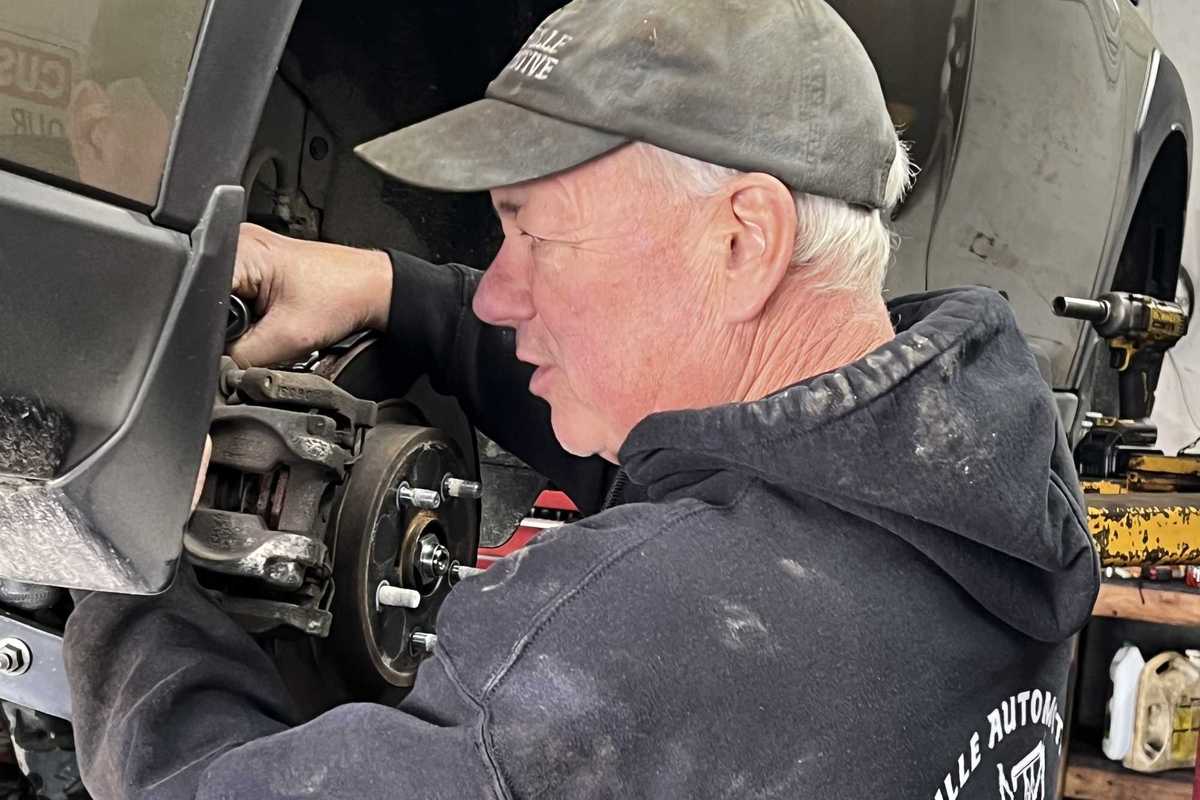
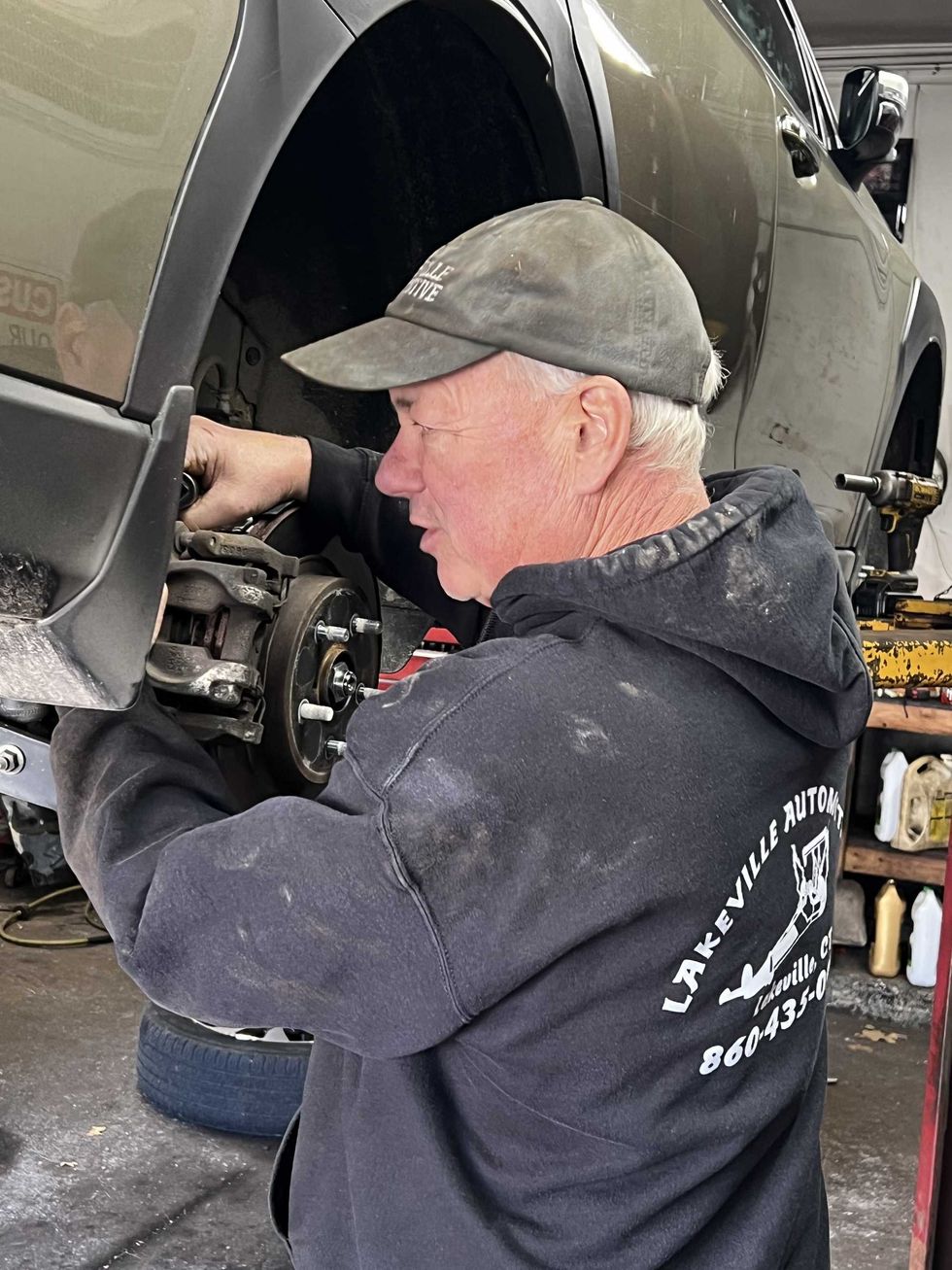
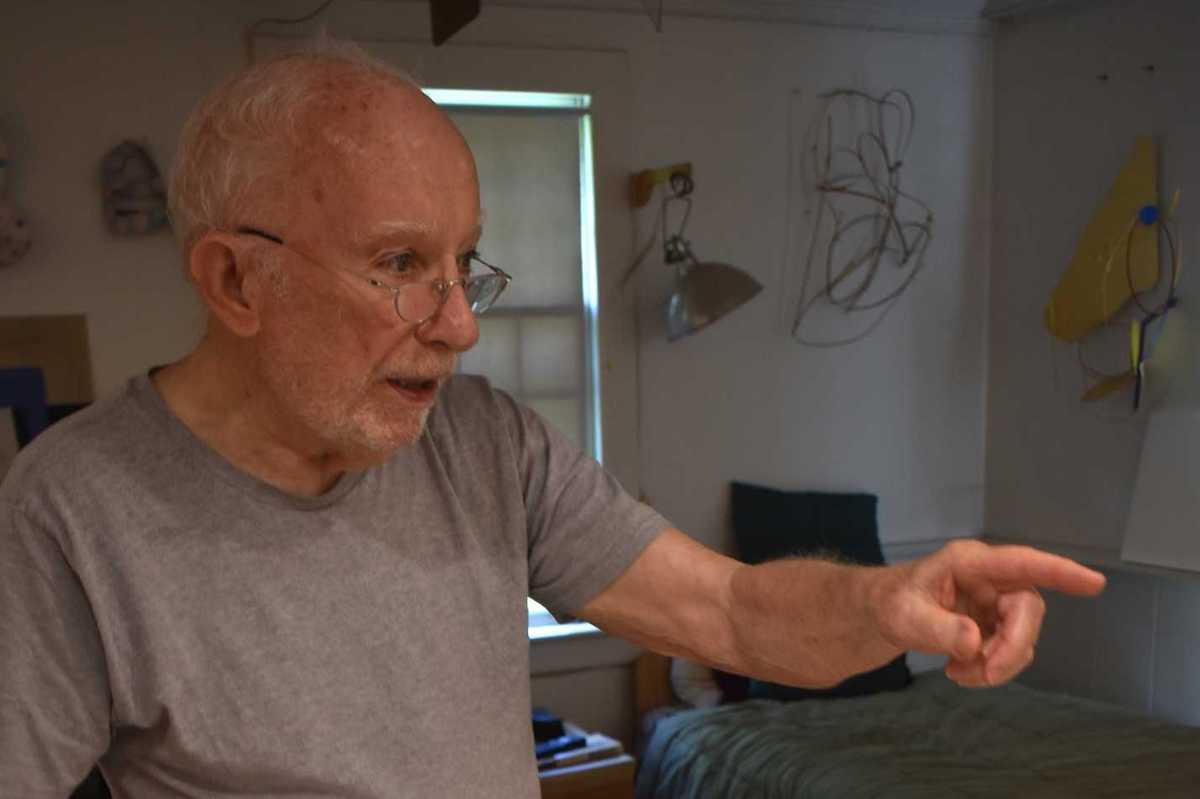
My husband and I first met Dave Jones in 2019, after we’d just moved into our house in Lakeville, a former auto repair garage with 14-foot-high ceilings that had been renovated into a residence. One day, when we woke up to a dead car battery, we called Lakeville Automotive, the nearest repair shop. Jones answered the phone a bit gruffly but then surprised us by showing up in half an hour to jump-start our car. We invited him inside for coffee, and looking around, he said with a grin that for 10 years, back in the day, he’d stored his Mazda Miata right in our living room.
From then on, whenever our 2012 Mazda 3 has needed a tuneup, new brakes, tires or a new exhaust pipe, we’ve taken our car only to Dave. (It still purrs like a kitten when driven.) When you know diddly-squat about cars like I do but love the car you have so much you want it to last a couple of hundred thousand miles, you need a mechanic who knows his stuff, will be there for you and is fair and trustworthy. That’s Jones.
The second of four children, he was born not far away, in Sharon. When he was in grammar school, however, the family moved to Florida and stayed for five years. While only in his early teens, he started using what he simply calls his “knack for cars” to take engines apart and put them together again. “I made lots of mistakes,” he said.
It wasn’t until his family moved back to Connecticut and he was 16, a junior enrolled in a work/study program at Housatonic Valley Regional High School, that his car tinkering turned serious. Jones got a job working at Arnold’s Garage in Canaan, driving back and forth in what he considers his first “real car,” a ’69 Mustang. To this day, he still drives his second “real car” — a ’68 Dodge Dart that, when he was younger, he drove in drag races at Lebanon track.
After his stint at Arnold’s, Jones spent the next several years working at a succession of garages — Autosport in Sharon, Jack’s Auto Service in Wassaic and Hans Rocke in Lakeville. He then spent five years working with his father doing excavation but, realizing that was “a wrong turn,” returned to Autosport for another five years.
Jones also moonlighted, repairing friends’ cars in his yard in Salisbury. Growing tired of the buildup of cars on his property and, more importantly, realizing he’d be a lot better off financially if he opened his own shop, he took the plunge and purchased an abandoned gas station in downtown Lakeville in 1996, converting it into Lakeville Automotive.

He had to teach himself the business and bookkeeping side of things, which he says led to some mistakes that cost him considerable money. Eventually, he learned enough — along with his know-how with cars — to make his shop succeed.
Now, 30 years later and in his late 60s, Jones is at the point in his life where he’s “figuring out how to land the plane.” Not quite ready to retire, he’s deliberately slowing things down. For almost a year, he’s been without an assistant mechanic and, by choice, is working strictly on his own.
Several years ago, Dave bought a 25-foot pontoon boat. For the past eight years, he and his longtime partner, Edith Hanzy, have spent their summers moving lazily about Twin Lakes. In the fall, they have the boat wrapped up, and in March, they tow it south to Florida, where they’ve been renting the same house in Cape Coral for the past eight years. There, they moor the boat right outside their home and spend days and nights traversing the 400 miles of canals in the area, spotting manatees, beautiful birds and dolphins trailing them by day and gazing at the stars at night.
Jones reflects that it’s not as much fun working on cars as it was in his youth. Newer models have a plethora of electronic control modules (ECMs) and don’t require his kind of mind/eye/hand intelligence. He says — almost but not quite jokingly — that “Cars are evil.”
He doesn’t mean environmentally, although he understands the impact of internal combustion engines on our planet. He means the feeling that there are malevolent forces at work when you labor on a car. Only someone whose knowledge is built on years of experience working with his hands knows what it feels like for a bolt to suddenly, and for no reason, snap in half, thereby turning an hour-long repair job into a full day’s work.
Here’s to Jones taking a long, slow approach to landing that plane of his. Many of us want him to stay in Lakeville for a lot longer and not entertain any ideas about sailing away to Florida.

Want more of our stories on Google? Click here to make us a Preferred Source.
D.H. Callahan
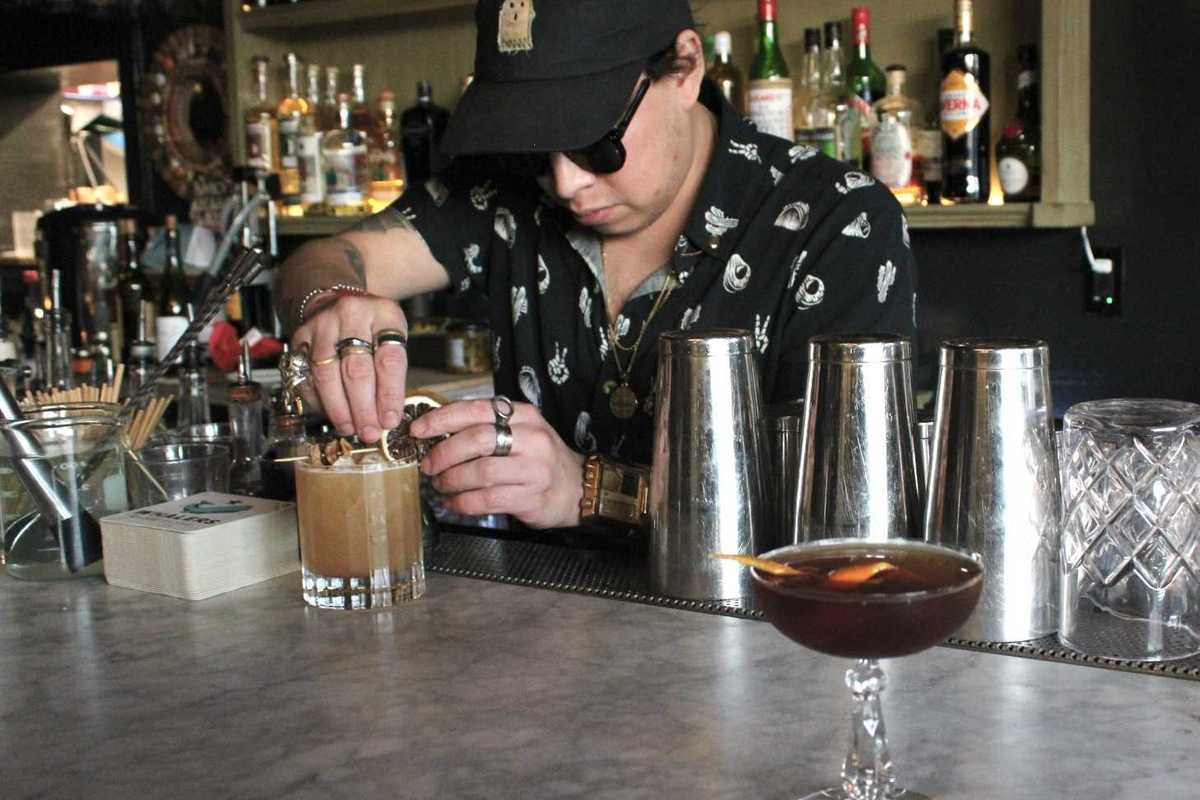
Ryan Andrade brings his passion for inventive cocktails and neighborhood hospitality to Le Bar in Sharon.
When Ryan Andrade moved back to the Tri-Corner region during the pandemic, he wasn’t looking to create a new kind of neighborhood bar. But by the time he connected with Robert Arbor of Le Gamin in Sharon, his vision was clear. In May, they brought that vision to life at a revitalized Le Bar.
Andrade grew up around Millerton, attending the Webutuck High School before heading to Western New England University, where he studied psychology. He’d been slinging coffee since high school but didn’t catch the cocktail bug until managing a cafe at the SoHo Grand Hotel, which, thanks to an international clientele accustomed to different time zones, had a morning bar service. It was there that Andrade discovered the seemingly infinite possibilities of the cocktail world. While there was only so much one could do with coffee, learning about the potential for cocktails, with their shelves and cabinets of curious ingredients, had Andrade feeling like a kid in a candy shop. It wasn’t long before he was seeking out mentors to teach him the industry secrets required of an innovative mixologist.
Through a series of bartender jobs in Manhattan and Brooklyn, Andrade found those mentors and learned those secrets. He started making his own creations, and the consistently positive reactions fueled his enthusiasm and desire to learn more. By the time the pandemic ravaged the industry in New York, his tool belt was full of tips, tricks and a deep knowledge of the cocktail world.
Robert Arbor, the restaurateur behind Sharon’s Le Gamin and its popular sister location in Brooklyn’s Greenpoint neighborhood, was looking for something more than a place to sling beers. He’d taken over the space behind his French restaurant in the heart of Sharon and was turning it into a bar with beer, basic cocktails and light snacks. His restaurant staff doubled as bartenders, learning the trade on the job. It was the beginning of something the community craved, but it wasn’t quite there yet. He’d known of Andrade and his reputation working at the White Hart in Salisbury and Panacea in Amenia, but it wasn’t until Andrade was between jobs that they got to talking shop.
Though he’d settled in nicely in his six years since moving back to the region, Andrade missed his neighborhood bar. He’d reminisce about walking to the corner for a cocktail with friends or grabbing an easy meal on a whim. With years of experience in New York, Arbor knew exactly what he meant, and was eager to help him create it.
It’s not easy to get people to come into a bar for a cocktail when they have to drive out of their way to get it. But when you pair it with food, it’s simply a dinner out. Andrade wanted to pair his cocktails with casual, albeit elevated, food options. The region is full of refined options for discerning diners, Le Gamin included. The idea behind Le Bar’s food was to make it easy, accessible and delicious. The bar comes first, but the food still needs to be good. With access to Arbor’s kitchen and staff, they took some of the French staples from Le Gamin and added some more casual options, including a chicken sandwich and sausage bites. During happy hour, their offerings are some of the best deals in the area.
Of course, the star of the show is the cocktail menu. Arbor raves about Andrade’s skills, passion and attention to detail. He recalls a time when a regular customer brought in a whole bushel of fresh raspberries. Andrade jumped at the chance to turn them into a compote for his cocktails. The passion comes through in every glass served. His focus while mixing a drink borders on obsessive. His mastery of the bar tools is notably impressive. His garnishes elevate each drink into a cookbook-worthy work of art.
Diners at Le Bar choose their own pace. Some pop in for a quick bite, while others settle in for the evening with friends over rounds of cocktails, laughs and some of those delicious fries. It’s not uncommon to find a table of 20-something weekenders mixing it up with a group of Gen X locals.
Together, Arbor and Andrade have built that new kind of neighborhood bar and whether you’re coming from around the corner or a farther away, you’ll feel right at home.
Natalia Zukerman
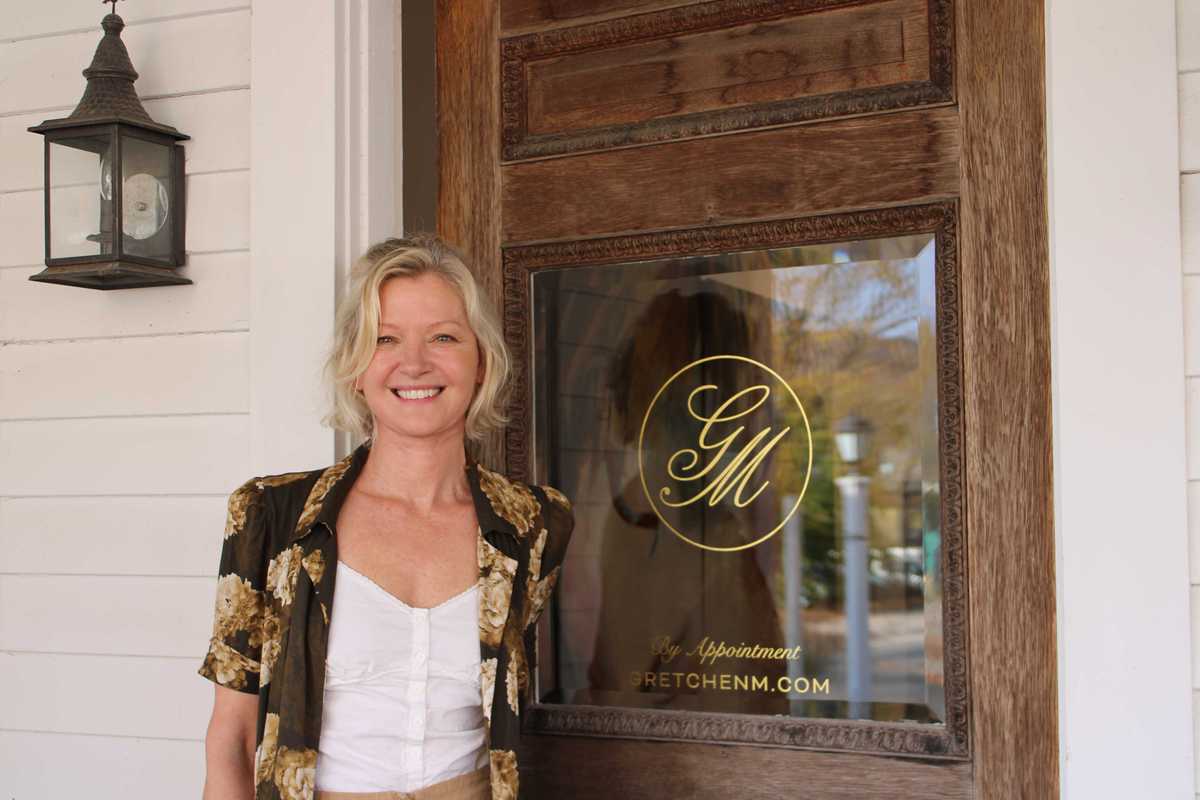
Grethen Mol at her new studio in Salisbury.
The keys are hanging from the lock when Gretchen Mol comes to greet me at her new studio on Academy Street in Salisbury. The door is open, and so, it turns out, is she. Mol has the easy familiarity of someone you’ve known for years. And in a sense, you have.
The actress, known for her roles in “Boardwalk Empire,” “The Notorious Bettie Page” and, most recently, “Tulsa King,” is opening Gretchen M. Studio, a creative space and showroom for her small-batch clothing line, with an open house Friday, Nov. 6, and Saturday, Nov. 7.
But don’t call it a store.
“It’s really a studio space,” Mol explained. “It’s my personal kind of place to be creative, and then at the same time I am trying to sell dresses.”
And pants, and tops, and perhaps eventually jumpsuits and maybe even coats. The possibilities are open-ended, which seems to be exactly how Mol likes it.
“I’ve always loved making spaces,” she said. “I want people to feel like they could come in any time and just be here.”
Mol launched her clothing line about three years ago, inspired by a vintage 1940s house dress she had owned for decades. Her acting career, particularly her work in period pieces, had given her an appreciation for the artistry of costume design.
“You really step into someone else,” she said of wearing period clothing. Of her role in “Boardwalk Empire,” she said, “I loved that time period. I love those old movies. I think somehow, you put on these clothes and you stand taller.”
But Mol wanted to make something less precious and more practical. Her original house dress was something she could wear around the house, out to dinner or even over pajamas. She began experimenting with fabrics, modifying the silhouette and, at the suggestion of her sister-in-law, adding pockets.
“Pockets!” Mol recalled her sister-in-law insisting. “And I was like, ‘Yes. Of course.’”
Today, Mol sketches her designs and works with a technical designer and manufacturers in New York City to produce exceptionally small runs, sometimes as few as 10 pieces. She sources fabrics from places like Mood Fabrics, allowing the materials themselves to inspire new iterations.
“You’re not gonna see it everywhere,” she said of her collection. “You don’t have to worry that you’ll show up at a party in the same dress as someone else … well, maybe except for around here,” she added with a laugh.
For her clothing line, Mol has partnered with lawyer Jill Foley, who brings business and organizational expertise to the endeavor. The partnership allows Mol to pursue the project alongside an acting career that can take her away for months at a time.
“It’s been really fun to have something else besides my acting,” she said, “that’s generated from me, and that I can just put my head to when I have the time to do it and when I feel inspired.”
The studio itself is an extension of that creative impulse. Alongside her clothing are vintage pieces, books, puzzles and other objects that have caught her eye. On the walls hang paintings by her late mother, Janet, an artist and longtime teacher whose commitment to making space for her own work left a lasting impression.
Mol remembers that after her parents divorced, her mother, now a single parent, gradually claimed more room in their family home for her art. Eventually, the living room became her studio.
“I was like, ‘That’s so badass,’” Mol recalled, laughing. “Who needs a couch there?”
Looking back, she recognizes the significance of watching her mother insist on having a creative life.
“I never felt she neglected anything to do it,” Mol said. “In retrospect, it was so important that I saw her do that.”
Now Mol has carved out a room of her own, right in the center of Salisbury. She isn’t entirely sure what it will become, and she’s comfortable with that uncertainty.
“I’m doing this thing. I’m not exactly sure and clear what it’s gonna be and what the future is, but I’m so excited to see where it takes me,” she said.
For someone accustomed to inhabiting other people’s stories, stepping forward with something of her own has required a different kind of courage.
“You do have to step out in front of it,” she said. “That’s been the interesting part for me, to grapple with how much I’m ready to do that.”
For now, she’s simply inviting the community in.
“Swing by. Check it out. Maybe you’ll like it.”
Gretchen M. Studio, 7 Academy St., Salisbury, will celebrate its opening Friday, Nov. 6, from 4 to 7 p.m., and Saturday, Nov. 7, from 11 a.m. to 4 p.m. No RSVP is required. Following the opening, the studio will be available by appointment, with occasional open hours. Visit gretchenm.com.
D.H. Callahan
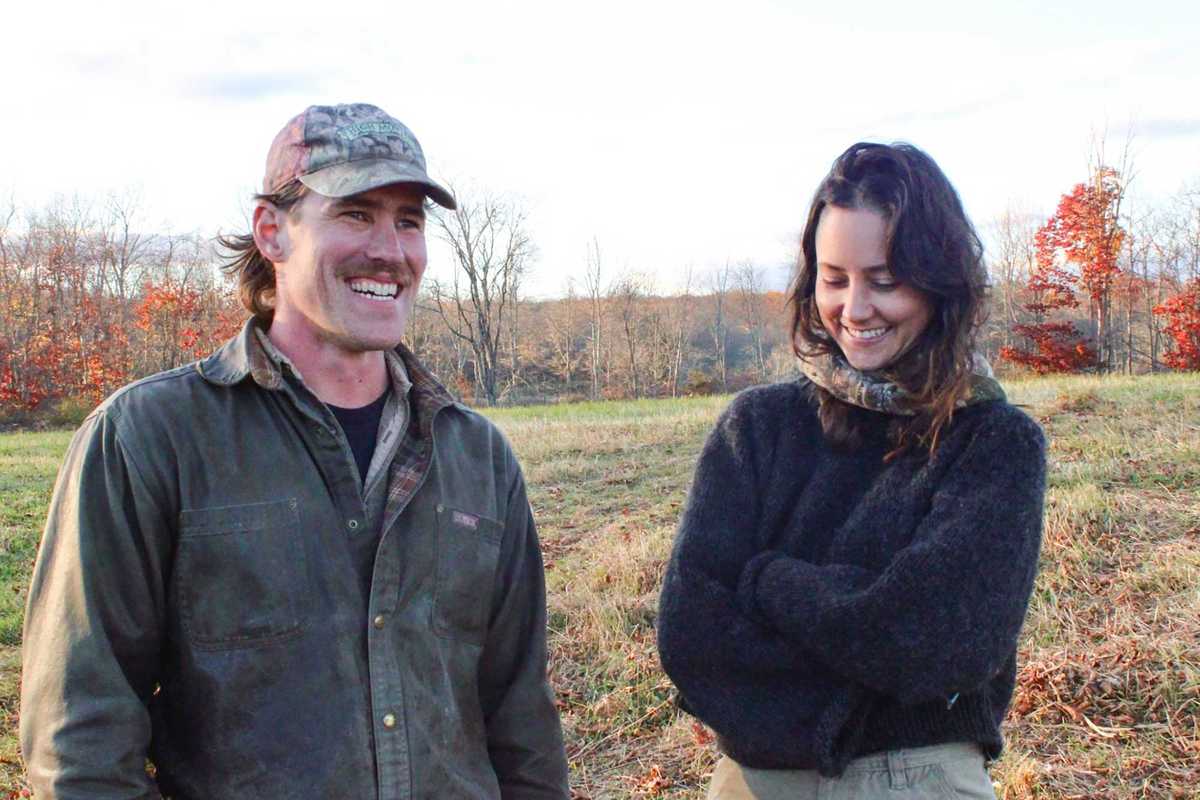
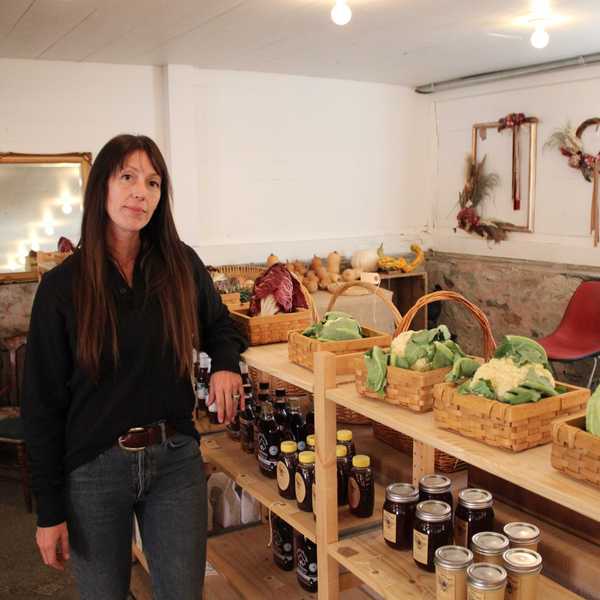
Hungry Reaper Farm founders and managers Will O’Meara and Jill Verzino
On Saturday afternoon, Nov. 7, the farmers at Hungry Reaper Farm in Morris, Connecticut, will host the first concert at their new outdoor venue, The Three Hickeries, smack in the middle of a beautiful field on their farm.
Farm co-founders and co-managers Will O’Meara and Jill Verzino have always been interested in independent means of production. On the farm, that means growing organic produce on a small scale with a big impact. Their crops feed folks from Bridgeport, where Verzino runs a farmers market on Saturdays, all the way over to Millerton, where their vegetables can be found at Tri Corner FEED Market, the community-minded grocery store offering locally sourced food on a sliding scale.
Both O’Meara and Verzino have extensive experience growing food. Verzino grew up helping her grandmother tend her quintessential Italian vegetable garden. O’Meara started working on farms when he was just 16, got a degree in sustainable food and farming from UMass Amherst and managed other farms before the couple, who have been dating since high school, decided to start their own.
Part of their decision to strike out on their own was based on a desire to do things differently. Local organic food can often feel like a luxury reserved for the privileged and budget-blind. They wanted to bring their produce to a wider audience. Since starting on one acre of rented land, they’ve worked with food pantries, local municipalities, schools and other nonprofits to get their fresh produce in the hands and mouths of people who don’t traditionally have access to such high-quality food. They also landed on a pretty provocative name, with edgy branding to boot.
Verzino, who trained as a visual artist, is responsible for all of the branding. She seems to have an affinity for the medieval and macabre. But more than just a personal preference, it’s a way for them to stand apart from the standard farm branding, which, though often adorable, can start to blend together. Nobody forgets a bag of organic lettuce with a grim reaper sticker on it. After all, Verzino says, “farming is all about sex and death.”
That preference for the weird and unique doesn’t stop with their brand. The couple, who both grew up in the area, used to see a lot of live music. They reminisce about the now-closed Cafe Napoli in Watertown, where they could see a new band with a new sound every week. To them, the small, independent acts seemed to speak the same language as their approach to food and farming. They wanted to find a way to bring that kind of experience to their community.
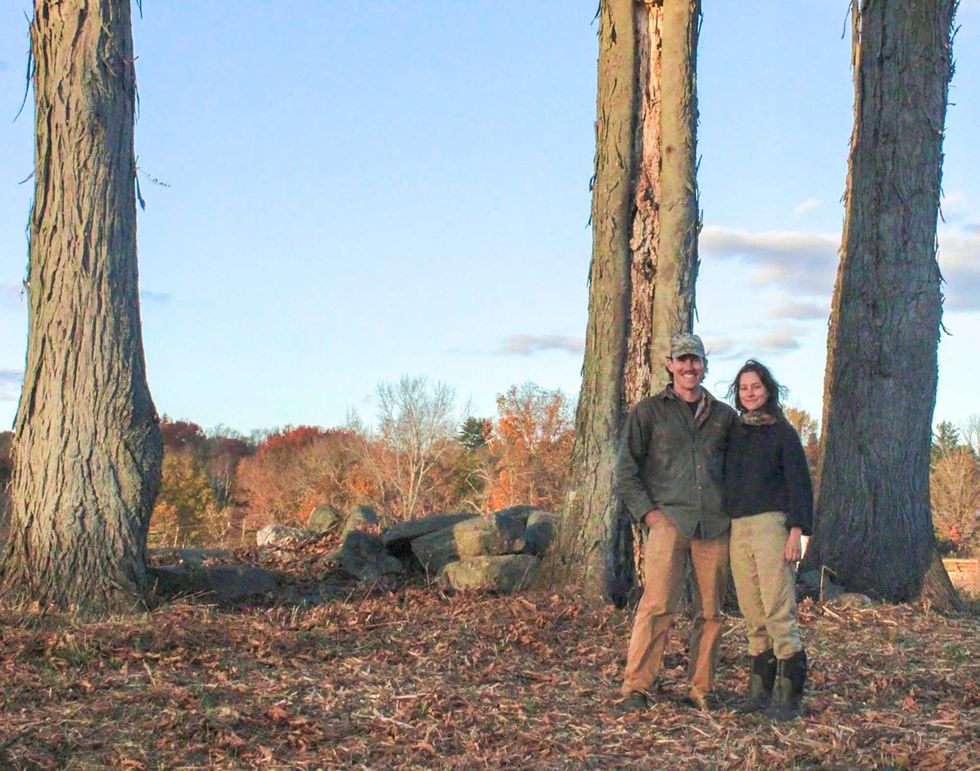
As they worked their fields, three stately hickory trees towered over the crops. “We like experimental music. We like creative people. We like trees,” Verzino said.
This, they decided, was where they would harvest their next offering — live music.

Playing the first show at The Three Hickories are a couple of experimental acts indeed. The headliner is Old Saw from Ripton, Vermont. Led by composer Henry Birdsey, the ensemble makes experimental ambient music using a wide variety of unexpected instruments. More than songs, each piece feels like a weathered tapestry cloaking the whole scene in haunting textures. A larger-than-life sound emerges from their instruments like an ancient giant awaking from its gothic slumber.
Opening the show is the Knife Kickers from right down the road in Thomaston, Connecticut. Singer and guitarist John Zacarria is the nucleus of this rotating lineup. Sometimes he plays by himself, and sometimes he brings his friends. Rumor has it he’ll be joined by the cellist featured on his last release, “an acoustic album.”
November might seem like an odd time to launch a DIY outdoor concert in Connecticut, but O’Meara and Verzino aren’t just relying on the hearty nature of New Englanders. To warm the audience and musicians, they’ve enlisted the help of pop-up coffee cart Backdrifter Coffee. Still, a sweater and some gloves might be a good idea, just in case.
For tickets and more information about the farm, visit hungryreaperfarm.com.

Want more of our stories on Google? Click here to make us a Preferred Source.

Want more of our stories on Google? Click here to make us a Preferred Source.