Thank you!
Your support is sustaining the future of local news in our communities.

Fear and Loathing in the Woodland

Fear and Loathing in the Woodland

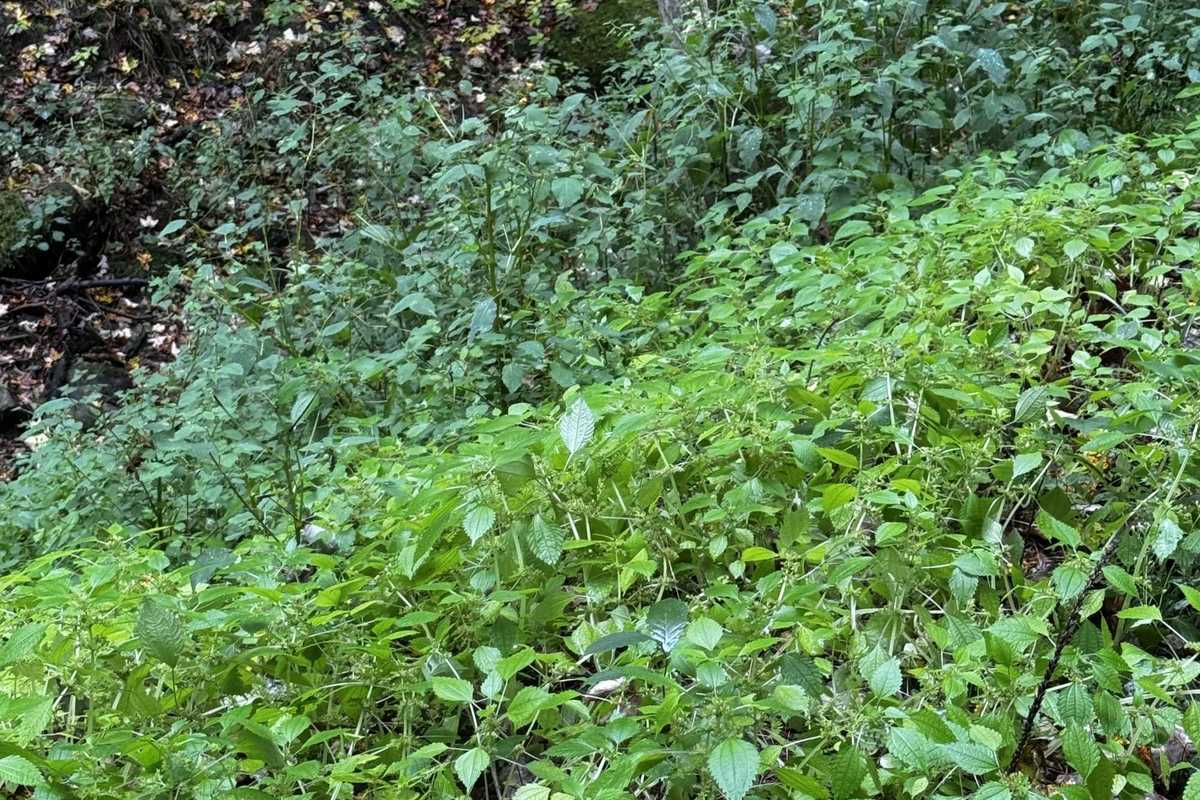
Fear and Loathing in the Woodland Japanese barberry, an invasive shrub with thorny branches, provides shelter for mice and can contribute to conditions that allow tick populations to thrive.

Provided

I am tempting tick-bite fate by writing this, even from the safety of my office.

Eight people emailed me with a link to the New York Times article on ticks that ran in the Aug. 20 magazine section.My Instagram algorithm made sure that I saw the same story several times over.The article, “The Summer the Ticks Took Over,” by Benjamin Wallace reads like a horror story, engendering a kind of paranoia that sidewalk-hugging New Yorkers can easily fall prey to.The reader comments enhance the author’s terror and fall into key categories: readers who are living proof of the sometimes harrowing, life-altering consequences of a tick bite; readers’ instructive life hacks against ticks (“permethrin is your friend”); readers’ collective chant to kill the deer; and, finally, readers who question why anyone would ever go in the woods again.

This last category of comment is, to me, the most troublesome. Staying out of the woods means that the conditions that begat the tick proliferation (hint: it’s not the deer) will continue.You see, we are the solution, or at least part of the solution. But only if we go into the woods.

I was born in New York City, and my family moved to the nearby suburbs when I was 8. My experience with nature as a child was limited to raking up leaves in our front yard until my parents sent me, at 12 years old, to a Girl Scout camp in Mahopac, New York.There, I was enchanted by the woods; the hemlocks created a pink glow on the floor with their dead needles and, combined with their cathedral height, brought awe to a girl who, until then, would rather play with a Barbie doll than get her hands in the dirt.

It wasn’t until 2012, when my now-husband and I bought our house and property in West Cornwall, that those memories came back to me.Where were those awe-provoking woods? Had a spell been put on the enchanted forest of my youth? The woods looked foreboding: swags of bittersweet vine choking the life out of mature trees and distorting the branches of young trees, thorns from invasive shrubs acting like barbed wire to keep humans away. And the ticks!

We began removing bittersweet from the large trees, many of them already dead from being choked by the vines. I spent the next decade, and continue still, removing the invasive undergrowth of barberry, Japanese honeysuckle, multiflora rose and the many other plants fighting to become monoculture. This was no wave of a magic wand, but it had a transformative effect. Native plants grew in to take the place of the invasives. And we noticed a marked reduction in ticks.

On Aug. 17, the Cary Institute released the findings of 35 years of research on ticks that carry Lyme.The major finding is that, rather than deer, mice and other small rodents that are the primary vector for passing the bacteria that causes Lyme to ticks. Mice are proliferating, along with the ticks that feed on them, as the loss of diversity in ecosystems promotes their survival.

James Sheppard, an infectious disease physician at Yale University, goes further: “These rodents also tend to be synanthropic — they thrive in human-altered environments. The loss of biodiversity and the urbanization and suburbanization of humans is promoting transmission of infections.”

So how do you reduce mouse populations? Removing barberry goes a long way, as this one invasive plant with its barbed branches has enabled mice, and the ticks that love them, to proliferate. Without the barberry barriers, hawks, owls, foxes and coyotes can hunt mice effectively and reduce their populations. This is biodiversity at work.

The proliferation of ticks and the severity of disease they transmit is a skin-crawling reality. We need to stay vigilant as other tick-borne infections, such as anaplasmosis and Alpha-Gal (which is not an infection but rather a tick-transmitted allergic reaction), creep into nearby areas. I am in favor of culling deer, which are vectors for the ticks that cause Alpha-Gal. In fearing the outdoors, uninformed people cannot apply the most effective solution now at our disposal for eradicating ticks. It’s a good time to cut down barberry and poison the cut stem by dabbing on glyphosate or triclopyr. And remember, permethrin, sprayed on gloves, shoes and clothing, is your friend.

Dee Salomon ungardens in Litchfield County.
Latest News

Legal Notices - September 29, 2026

Legal Notices - September 29, 2026

Legal Notice

Ducillo Fine Carpentry LLC Articles of Org. filed NY Sec. of State (SSNY) 5/3/2026. Office located in Dutchess Co. SSNY designated agent of LLC upon whom process may be served. SSNY shall mail process to: LegalZoom USCA, Inc., 45 Main Street, Suite 238, Brooklyn NY 11201. Purpose: any lawful activity.

Keep ReadingShow less

Classifieds - September 29, 2026

Classifieds - September 29, 2026

SERVICES OFFERED

Hector Pacay Landscaping, LLC. Residential & Commercial. Tree service, Painting, Masonry, Stone Walls, Lawn Mowing, Gardens, Construction. 845-636-3212. CT and NY.

REAL ESTATE FOR SALE

PUBLISHER'S NOTICE: Equal Housing Opportunity. All real estate advertised in this newspaper is subject to the Federal Fair Housing Act of 1966 revised March 12, 1989 which makes it illegal to advertise any preference, limitation, or discrimination based on race, color religion, sex, handicap or familial status or national origin or intention to make any such preference, limitation or discrimination. All residential property advertised in the State of Connecticut General Statutes 46a-64c which prohibit the making, printing or publishing or causing to be made, printed or published any notice, statement or advertisement with respect to the sale or:rental of a dwelling that indicates any preference, limitation or discrimination based on race, creed, color, national origin, ancestry, sex, marital status, age, lawful source of income, familial status, physical or mental disability or an intention to make any such preference, limitation or discrimination

Keep ReadingShow less
Dutchess County Flock cameras deactivated after public outcry

More than 100 Dutchess County residents crowded into the community meeting room at Pleasant Valley Town Hall on Wednesday, Sept. 23, to voice their concerns over the county’s use of license plate reading surveillance cameras.

Photo by Nathan Miller

Flock cameras in Dutchess County will no longer capture license plates, and the cameras will come down in the next 30 days.
The news comes after Dutchess County District Attorney Anthony Parisi and Sheriff Kirk Imperati announced Thursday that they are withdrawing their support for the county’s continued use of Flock Safety license plate readers. The law enforcement officials made the announcement less than 48 hours after a packed public forum in Pleasant Valley, where residents overwhelmingly voiced their objections to the cameras.

“We listened to the questions that were asked and the concerns that were raised,” Parisi said in a statement. “After those discussions, we agreed that the appropriate response is to listen to our community and change course.”

Keep ReadingShow less
google preferred source

Want more of our stories on Google? Click here to make us a Preferred Source.

Motorcycle crash survivor fights through weeks of surgeries

Paris Perkins sits in his hospital bed at Westchester Medical Center, awaiting further surgeries.

Photo provided

MILLERTON — Nearly three weeks after a motorcycle crash cost him his left leg, Paris Perkins remains at Westchester Medical Center, facing more surgery and a long rehabilitation. But his father says the 22-year-old Millerton resident is already talking about running again.

Perkins was injured Sept. 10 in a collision with a delivery truck at Route 44 and Kennels Road in the Town of Washington. The collision threw Perkins into a roadside utility pole. His left leg was amputated below the knee, and he suffered fractures to his right leg and pelvis.

Keep ReadingShow less

At home

At home

The Webutuck Wildcats hosted Rondout at Webutuck High School for a sunny matchup on Wednesday, Sept. 23. The Wildcats won out over Rondout 2-1 after scoring a goal in overtime. The win at home on Wednesday brings Webutuck’s season record to 2-4 so far this season.

Photo by Joe Bartlett

The Webutuck Wildcats hosted Rondout at Webutuck High School for a sunny matchup on Wednesday, Sept. 23. The Wildcats won out over Rondout 2-1 after scoring a goal in overtime. The win at home on Wednesday brings Webutuck’s season record to 2-4 so far this season.

State bill aims to curtail Flock cameras

State bill aims to curtail Flock cameras

As county-operated license plate readers are set to come down across northeast Dutchess County, a state senator has introduced legislation to put the first statewide limits on how the technology is used.

State Sen. Michelle Hinchey announced the bill last Tuesday, Sept. 22. It would regulate automatic license plate readers, or ALPRs, including those made by Flock Safety, the company behind the cameras that have been installed in Millerton, Amenia, Pine Plains and Milan.

Keep ReadingShow less
google preferred source

Want more of our stories on Google? Click here to make us a Preferred Source.

google preferred source

Want more of our stories on Google? Click here to make us a Preferred Source.