All gardens are works in progress; never static despite the best efforts of gardeners to freeze a perfect aesthetic moment year after year. Seeing a garden when it’s first planted is particularly intriguing and instructional. The recently opened Little Guild animal shelter is a visual master class in landscape design and native planting. You really should take a look.
That it was designed by two of the most venerated gardeners in our area is no surprise, given the notable people involved with bringing the new facility to fruition. Page Dickey, author of many books on gardening, and Jeff Lynch, who recently left his role as head gardener at Weathersfield to consult for clients, selected plants that will be able to thrive, once established, without watering. The planting and maintenance is being done by Jameson Secco of Roots and Branches Organic Landcare.
The “architecture” of the planting layout relies on an alley of multi-stemmed serviceberries anchoring the path that borders the building’s façade, as well as several swamp oak trees that will grow to provide dappled shade for the parked cars and underplanting.Beneath them is a seemingly simple mix:three species of sedges; two that mound, Carex laxiculmis and Carex rosea; and one, Pennsylvania sedge, which will eventually spread its tufts throughout.Blue phlox will do the same, as well as provide spring color.As you approach the entrance, different flowering plants and shrubs appear: foamflower, bowman’s root, skullcap ‘Appalachian blues’ and Clethra alnifolia, sweet pepperbush.
Along the side that faces Route 128, a mix of shrubs covers much of a steep slope, which ends in a swale that collects water runoff and, if we get some meaningful rain, might become a small pond.Here you will see winterberry, witch hazel, buttonbush, yellowroot and a plant I have not come across before, groundsel bush (Baccharis halimifolia), which Lynch says can get as tall as 16 feet and has fluffy white flowers in August.Brilliant red bee balm ‘Jacob Cline’ punctuates the planting with color between the shrubs, much as the phlox does on the entry side.
The back of the building has not yet been planted.Still, seeing such an early-stage planting informs us how to place different trees, shrubs, grasses and forbs (flowering herbaceous plants) to work in challenging areas.For The Little Guild, an organization that cares so deeply about animals, planting native species, which nurture wildlife and preserve habitat, is very much in line with its values.
Normally we are invited to view gardens only when they are considered “done,”but equally interesting are gardens that are in the process of becoming.In these, the negative space and the plants that fail or prove more aggressive than previously thought are all on view.Private garden tours may not reveal this early stage, but around public buildings it is in plain sight for us to enjoy and learn from.
In Falls Village, horticulturalist and landscape designer Deb Munson, again with Page Dickey, installed native plant beds around the Hunt Library last year.The project was funded by proceeds and contributions to the winter speaker series “Bad Grass,” founded by Jeb Breece.
As with the Little Guild, there is still evidence of a recently planted garden; the Allegheny spurge — the native Pachysandra procumbens — has not yet covered the ground around the rhododendron. (A note about this native pachysandra:in addition to providing erosion control and nutrition for native insects, this elegant plant thankfully lacks the invasive quality of its commercially popular Asian counterpart, whose moist environment is favored by ticks.Lindera nursery carries it.)
The entrance side of the library has filled in well: a serviceberry tree; the flowering shrubs clethra, aronia and fothergilla; and flowers including bowman’s root, coneflower and the amsonia cultivar “Blue ice.”
The addition of native planting around some of our important community institutions encourages us to plant native infrastructure at home — a beautiful way to protect habitat, keep water healthy, hold erosion at bay and sustain the natural world around us.
Dee Salomon ungardens in Litchfield County.
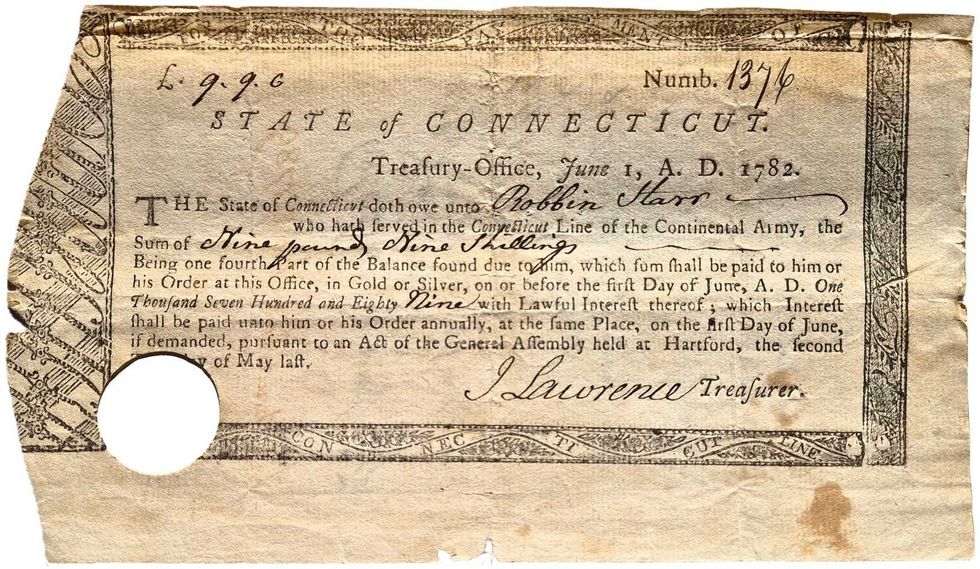 Pay Bill for Robin Starr’s service in the Continental Army.Courtesy the Alex Breanne Corporation
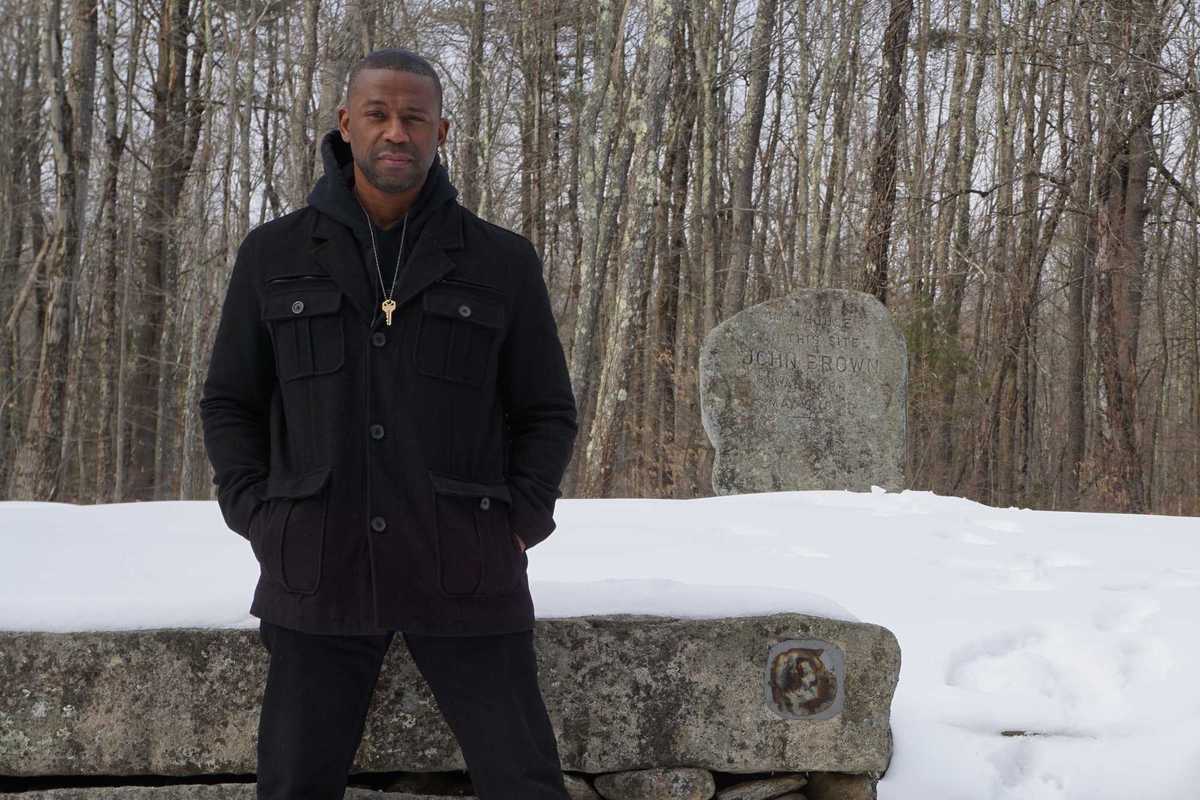
 John Mills speaking at Quinnipiac University.Courtesy the Alex Breanne Corporation
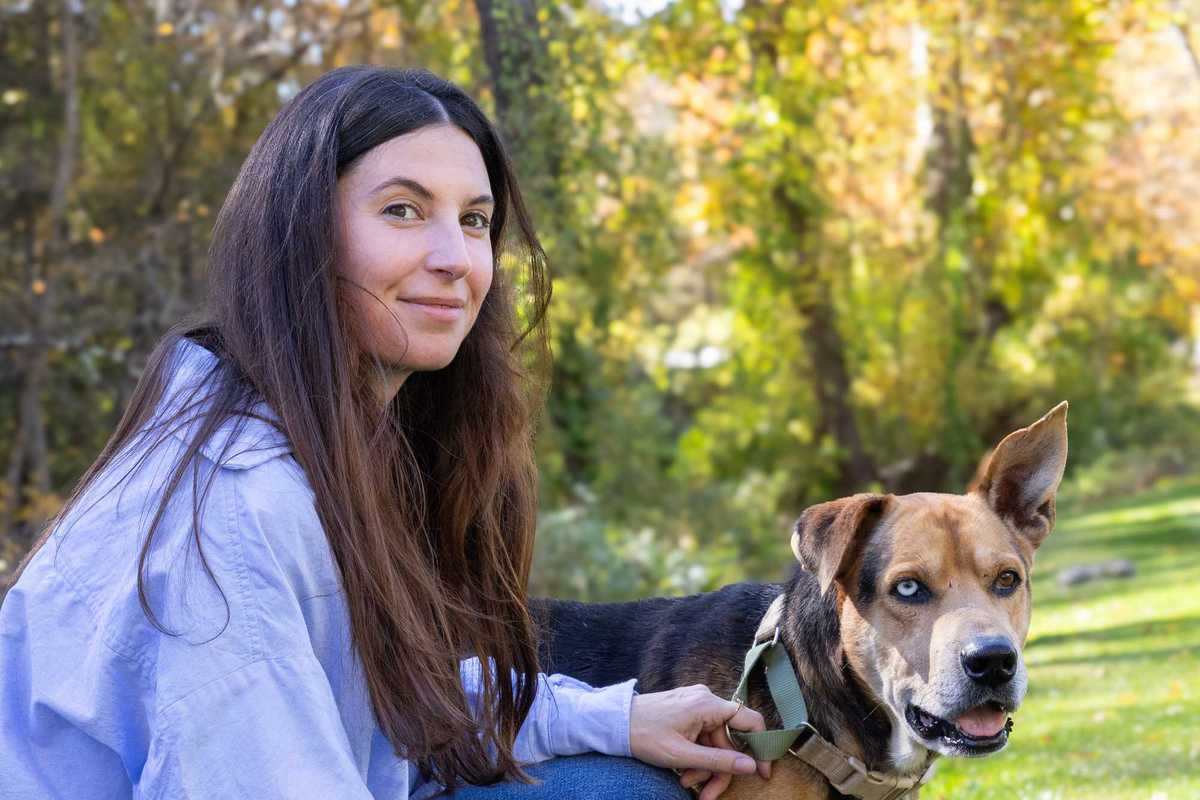
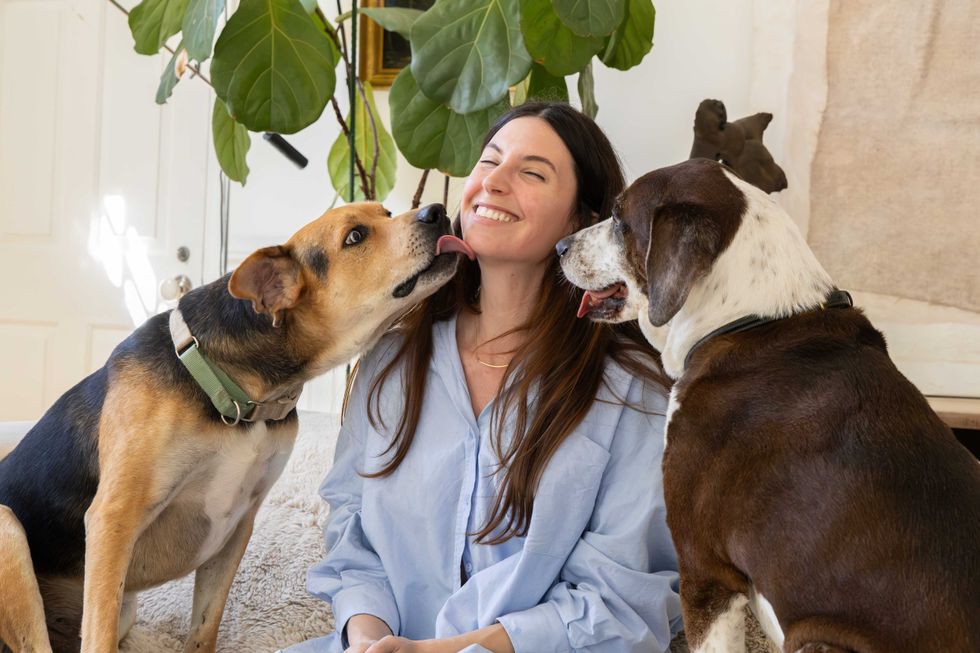 Stephanie Saetta,with her rescue dog George and Blue (left), a shepherd mix awaiting his forever home.Madi Long