FALLS VILLAGE — In early summer, the Connecticut General Assembly passed a law establishing a new cutoff date for kindergarten registration.
Starting in the fall of 2024, students entering kindergarten must be five years old by Sept. 1, rather than Jan. 1, which was the previous requirement.
According to a memo released July 7 by the Connecticut state Department of Education (DOE) and the Office of Early Childhood (OEC), approximately 9,000 students will be affected by this change because they will not turn five by September.
Under the new legislation, parents can petition school districts to admit a child under the age requirement. The school district would carry out an assessment of the child.
Before this change, Connecticut was the only state with a cutoff as late as January. Data from the National Center for Education Statistics shows that all other states have age-cutoff requirements in early fall. Maine and Colorado have the latest dates, on Oct. 1, while other states see cutoffs in August or September.
The impetus behind the change focused on the developmental readiness of children. Many educators believe kindergarteners entering school at age 4½, versus those closer to six, face a large learning gap. They say that younger children are not ready for the demands of kindergarten. The effect of the pandemic has pushed many children 2-3 years behind average learning trajectories, and school programs demand more of their students, they said.
On the other hand, teachers find it difficult to meet the needs of all students if a large number is struggling because of age gaps. The well-being of teachers is important, as the historic strain of the pandemic affected them, too.
The downside of the change in the age cutoff is the immediate pressure put on day care. Questions have been raised about whether these organizations have enough resources to meet the potential needs of the 9,000 children who will not enter kindergarten?
Additionally, there is the fear that lower-income families will not have the funds for an extra year of early child care.
One expert’s view
Lifelong educator Mary Lou Cobb, who founded The Cobb School Montessori in Simsbury, Connecticut, and was its head for 45 years, said, “The Montessori program…is about whether a child is academically, socially and emotionally prepared. Interestingly, this tenet seems to be at the center of the new law for public education.”
Cobb, who also started Cobb Education Consulting, LLC, an advisory firm, acknowledged that her expertise sits in the world of private education, but added, “The state legislature’s decisions under the Department of Education is something we pay attention to, despite our independent school focus.”
The Montessori is not driven by age but by the readiness of the child, which is defined by listening, cooperation, sharing, self-help, and vocabulary skills — primarily.
Cobb said she has seen public schools become rigorous in the past decades, switching from more play-based programs. She also mentioned the effects of the pandemic and technology.
“I don’t know if the pandemic had anything to do with the state’s decision, but I do know that culturally our children are more exposed to computers. All teachers want to see children sit patiently through a lesson and be good listeners.”
These factors are in step with the logic that, today, younger children are not ready for more challenging programs.
Cobb acknowledged the law’s imposition on lower-income families. She remembered a conversation with a local physical therapist, who was thrilled, alongside his wife, a hairstylist, that their child was starting kindergarten, as they simply couldn’t afford day care.
“The Independent School sector is different because we don’t follow state rules, but there is a correlation,” Cobb said. “Families might say, ‘I’ll put my child in this private school because maybe they’ll take my child at this age and not wait.’”
Still, Cobb concluded, “We want to do what’s best for the child — not to exclude the family, but having the gift of time is an important thing, rather than putting children in situations where they’re not succeeding because they don’t have the skill-set yet.”
Early day care response
One of the largest shifts of the legislation will be the role of day care centers. Executive director at the Canaan Child Care Center (CCCC), Fran Chapell, said, “I think it makes sense that this change happened.”
Chapell taught kindergarten for many years at Town Hill School and for half a year at New Canaan Elementary School, so she’s seen programs advance in private and public settings.
“Kindergarten has changed so much…everything is happening sooner,” Chapell said. It’s become more challenging, she said, and schools are adapting to the jump, focusing on the question of whether or not children are developmentally ready for rigor.
Chapell referred to the unique Early-K program at North Canaan Elementary School. Children who turn five in October are put in the program, so they have an extra year of preparation before kindergarten.
Chapell doesn’t know what will happen to the Early-K program with the new legislation, but it is important as it highlights the concern schools already had for younger children. Their heed, in a way, forewarned the state’s decision.
Chapell’s CCCC is the only School Readiness Site in the region. It has accreditation through the National Association for the Education of Young Children (NAEYC). As a result, CCCC develops a special curriculum and assesses children like elementary schools, to determine what education they need in terms of specific development. Chapell’s teachers must have at least a bachelor’s degree in education.
Consequently, CCCC receives state funding to help families afford the service. There are 20 school readiness slots; those families pay between $10 to $100 a week.
Chapell said, “I feel we are prepared for the change, but I know the financial piece is a big one for parents.”
Accordingly, her efforts to aid the strain are transparent. She writes a lot of grants. The Salisbury Rotary Club provided a grant for school supplies, the Northwest Community Foundation provided a grant for winter clothes. The grants also extend to siblings and family members related to CCCC’s students, and the center takes children from anywhere in the state.
Chapell said, “Ever since COVID, we finally have the money we need. We became an essential worker, when it was very difficult to get any kind of recognition in our field. I can pay my staff more; we’re getting equipment supplies.”
Still, CCCC is a shining example of success in the field. Chapell is a consultant for child care centers that need advice on grant writing or on other avenues of advocacy.
She maintained, “The state’s going to have to recognize a lot more children will be in child care centers. I believe the money’s going to be there, but we will have to fight for it.”
Region One Superintendent Lisa Carter declined to comment fully on Region One’s response to the legislation. She said in an email that she will be working with Boards of Education on plans for the 2024-2025 school year and will publicize plans later this fall.





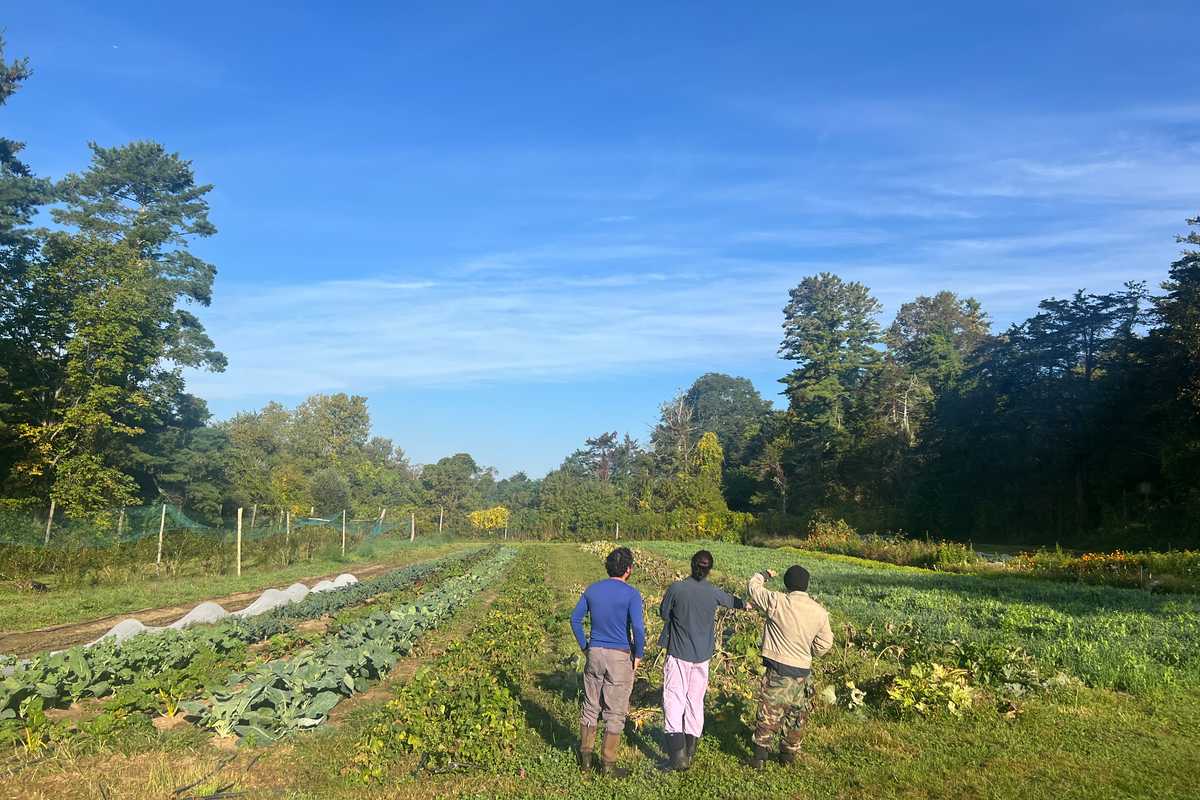
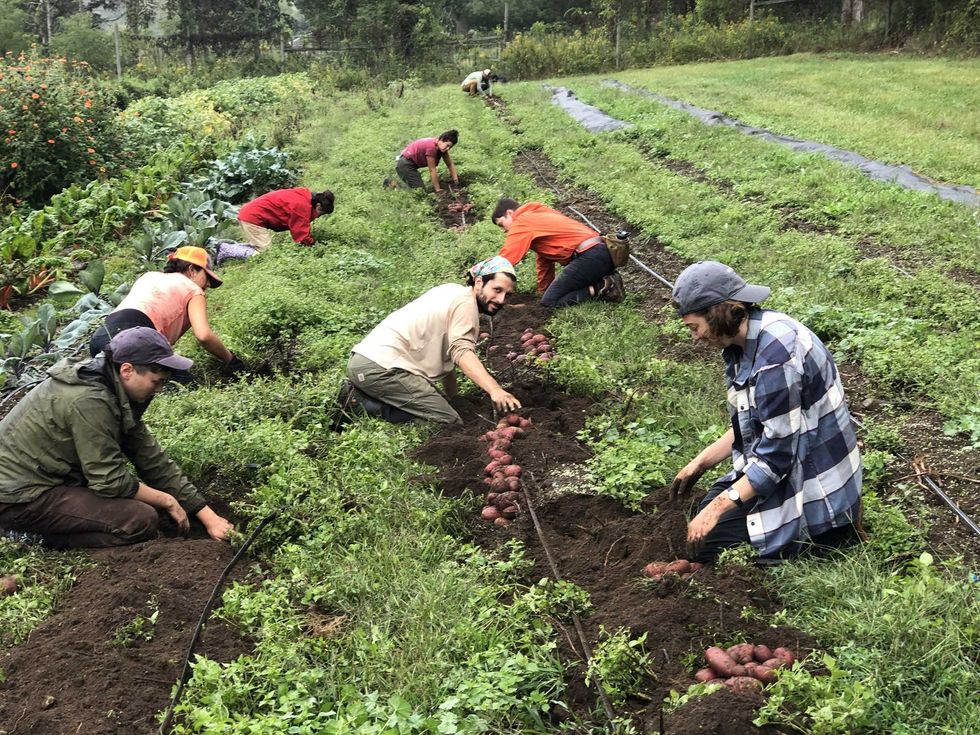 Fall storage crop harvests amid soil building cover crops at Adamah Farm in Falls Village. Janna Siller


 The Found Footage Festival is a “celebration of the videos that time forgot.”Provided by Found Footage Festival