How a New Book and a New Film Ignite Nostalgia for Old Books, Films

This is how we do it: Kenneth Branagh’s new “Death on the Nile” film might send viewers back to enjoy the (better) 2004 version starring David Suchet.


I am not one of those people who thinks that nothing new can ever improve on a beloved old favorite.
And to be honest, I’m not even that much of a fan of Agatha Christie’s mystery stories and novels.
But two new entries into the mystery entertainment genre make me feel that the older versions were better.
First up is the new novel by Anthony Horowitz, who is one of my favorite mystery writers — but not in print. He’s the writer behind many of the best Agatha Christie BBC productions, and the creator and writer of the completely genius “Foyle’s War.”
He is also the writer of the very popular Young Adult Alex Rider adventures.
‘A Line To Kill’
Generally I have enjoyed his new mystery novels, two of which feature Susan Ryeland, a retired publishing executive; and two of which feature Horowitz himself, and the fictional detective Daniel Hawthorne.
The newest title in the Hawthorne series is “A Line To Kill” (which is a publishing “in” joke; Horowitz likes “in” jokes and puzzles within puzzles and stories within stories).
The first two mysteries in this series were fine but a little rough around the edges. In this newest title, it became clear to me that even Horowitz, who wrote so many great television mystery scripts, hasn’t quite nailed down what Christie did so well, in creating the character of Hercule Poirot.
As much as Poirot is egotistical and annoying, he’s also lovable in his own way, and his brilliance is apparent. When he solves a mystery, you feel as though he truly and actually is smarter than everyone else.
Sherlock Holmes is the same way: Annoying but admirable.
Horowitz’s detective Hawthorne is mainly offensive, and doesn’t seem particularly gifted as a crime solver. He comes across mainly as what English detective novels often call “a plod.”
The latest Horowitz/Hawthorne mystery, while perfectly fine and enjoyable, makes me above all nostalgic for Christie and for Hercule Poirot and his sidekick, Captain Arthur Hastings.
In sum, if you’re undecided about whether to try out the new Horowitz book, I’d politely say, “Have you read all of Agatha Christie’s yet?”
‘Death on the Nile’
I have similar feelings about the lush new “Death on the Nile” from director/actor Kenneth Branagh.
There have been many versions of this film and they’re all charming in their own way, but this one falls short. The casting in particular seems like it was done blindfolded, with darts; and while we know that Branagh is a gifted director, his gifts are not wildly in evidence in this latest film version of a classic Agatha Christie.
And so in addition to saying, “Have you read the original Christie novel?” for this one, I’d also suggest that you find the “Death on the Nile” starring actor David Suchet. His versions are unparalleled, in my opinion.
You can find most of the Suchet productions on DVD at your local library, on various streaming services and sometimes on Hoopla, which is the streaming service offered by most of our area libraries. You can also find many full-length Suchet Poirot’s on YouTube.
The Branagh version is not available on streaming yet, but apparently will be on either HBO Max or Disney Plus.
Aly Morrissey
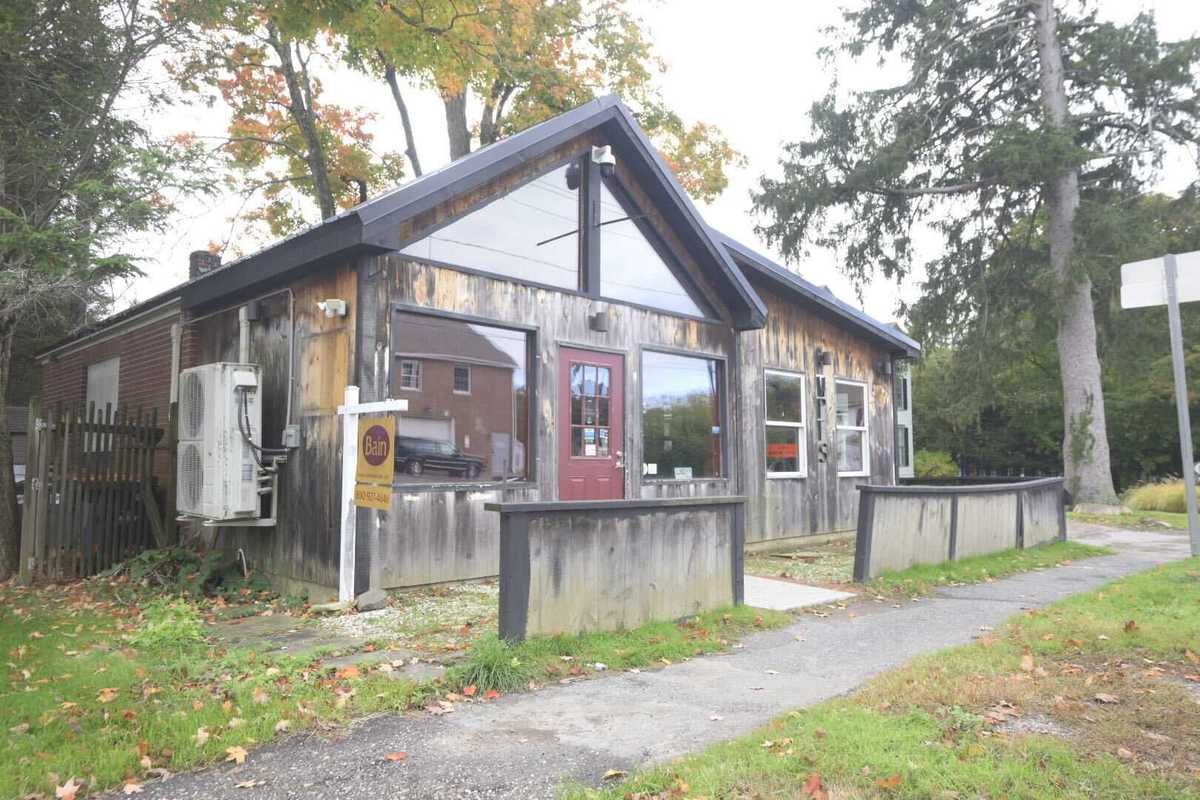
If you’ve driven down Main Street in Millerton, you’ve passed the former home and shop of one of the village’s earliest female entrepreneurs. At a time when most businesses were owned by men, Mary Kisselbrack made a name for herself in the late 1800s as a well-respected milliner and dressmaker.
On April 11, 1891, train conductor George Kisselbrack purchased a 124-by-232-foot vacant lot at 54 Main St. and hired locally renowned builders Beers and Trafford to design what would become their home and Mary’s business.
In a historical document, “A Beckon Call to a Village,” the house was referred to as “one of the handsomest, architecturally, in the village.” With gables, pointed roof lines and delicate shades of colors on its exterior ornamentation, the document noted that “no stranger passes it without an admiring glance.”
Today, the home still stands, and recently operated as a restaurant called Manna Dew Cafe, which closed its doors in 2023.
Mary Kisselbrack operated her business out of the west side of her home and developed a reputation for her skill, style, and business acumen.
“Mrs. Kisselbrack spares no pains in satisfying her patrons,” an 1890s Telegram article, the village’s newspaper at the time, said.
Kisselbrack’s reputation earned her customers from different parts of the country — some as far away as Florida — in addition to regular clients from Salisbury, Lakeville, Sharon, Amenia, Pine Plains, Copake and Hillsdale.
“With a woman of the long experience and exquisite taste of Mrs. Kisselbrack at the head of the millinery and dressmaking business, we may be sure that our wives and daughters will be reasonably supplied with the most stylish bonnets and dresses,” the article said.
In her 1905 obituary, Kisselbrack was described as a “self-made woman” who possessed “more than ordinary ability.”
On Oct. 5, 1905 — just over two months shy of her 56th birthday — Kisselbrack died following a severe, three-week illness. According to an obituary that appeared in the Millerton Telegram, she suffered a fibrous tumor and peritonitis.
“While she was not afraid to die, she lamented leaving home and loved ones,” the obituary said. “She talked of dying and of her funeral arrangements as calmly as if going away on a visit.”
Nathan Miller
Millerton’s business community will soon see the completion of a public wastewater system, addressing what local officials and business owners have called a major constraint on commercial development in the community for decades.
The $13.8 million project, which is expected to serve the core of the Village of Millerton and a commercial stretch of the Town of North East along U.S. Route 44, represents one of the largest infrastructure investments in the community in decades, and brings an end to calls for a sewer system that stretch back to World War II. Officials say the system will safeguard local waterways while creating a foundation for long-term economic stability.
Millerton trustee Matt Soleau, who has been working closely on the wastewater project and also operates a local full-service custom building firm, said in February that both residents and businesses are constrained by outdated septic systems, particularly on smaller lots where upgrades cannot meet modern health standards.
The proposed wastewater district aims to serve the core of the village, including its business district, as well as the commercial section of the Town of North East along Route 44 extending from Cumberland Farms to the New York-Connecticut border. Properties within the proposed service area currently rely on individual septic systems, including tanks with leach fields, and outdated systems like seepage pits, cesspools and holding tanks.
Village officials said many properties are limited not by zoning alone, but by septic constraints.
“As a result, many homes cannot legally add bedrooms, create accessory dwelling units or convert existing structures,” Soleau said.
Under the proposed system, most properties would retain their existing septic tanks if they are code-compliant and in good working condition. If a tank does not meet current standards, a new one would be installed as part of the project.
The existing tanks will still be used to collect solid waste, but liquid waste will travel through the municipal system to a treatment center. Treated wastewater will then be returned to Webatuck Creek.
Existing leach fields would be taken out of service and left in place, allowing property owners to reclaim that land for landscaping, driveways or ADUs.
For businesses, many commercial properties rely on old septic systems that are already maxed out, which makes it difficult or impossible to open water-heavy businesses like restaurants, cafes, salons or fitness studios.
Officials also emphasize the environmental benefits. A modern, up-to-date wastewater system will protect the natural environment, including the Webatuck Creek that flows right through the village.
Village officials say the construction phase will aim to limit disruption throughout the village and town, proceeding in targeted segments, with defined areas opened for installation, restored, and then closed before crews move on. The goal, Soleau said, is to allow normal activity to continue as much as possible throughout the process.
“Protecting the safety of our residents and visitors, preserving continuity of local businesses, maintaining access, and retaining residents’ quality of life throughout construction are non-negotiable priorities,” Soleau added.
The project hit major milestones this year, with village officials securing needed funding from a congressionally-directed spending grant of just under $4 million announced in February. That additional federal funding represented the last chunk of money needed to move the project forward.
Officials expect to begin construction on the system next year, with a tentative completion date targeting 2028.
Additional reporting provided by Aly Morrissey.
Graham Corrigan
Wooden beams made from tree trunks comprise the load-bearing structure under Millerton’s Moviehouse.
There are a handful of buildings that have stood the test of time over Millerton’s 175-year history. But if there’s one that stands out as a singular representation of the town, it’s the Millerton Moviehouse and its iconic clock tower.
Built in 1903 as a grange hall, it was soon converted into a movie theater with a second-floor ballroom. It was one of a handful of buildings that came to define the town in the following decades, standing tall across the street from the Episcopal Church and Millerton Inn, next to Terni’s, and up the hill from Millerton’s train station.
When a fire destroyed the local department store and other storefronts on the north side of Main Street in 1955, the Moviehouse became a landmark that represented the village’s early history.
It fell into disrepair in the 1970s and was briefly run as an adult theater. Marian and Carr Ferguson bought the theater in 1974, hoping to revive its status as a first-run theater and remove the pornographic element. Their four teenage daughters ran the theater for two years before the Fergusons sold the Moviehouse to Carol and Robert Sadlon in 1978.
“It was a single theater with 300 seats. There was no heat, no air conditioning,” said Carol Sadlon when asked about the state of the theater when she and her husband purchased it.
The Sadlons worked hard to improve the facilities over their nearly 50-year tenure. They added heat, air conditioning, and a second screening room. In 2012, they replaced the 35mm projection systems with a digital system.
But when COVID hit in 2020, the Moviehouse was an early casualty. By November 2020, the property was on the market, and the whole concept of movie theaters was in question.
Vaccines arrived in early 2021 — and a buyer for the Moviehouse followed soon after. The new co-chairs, David Maltby and Chelsea Altman, made the purchase in February 2021 and reopened the theater as a non-profit.
Its new non-profit status allowed the Moviehouse’s operators to seek grant funding. They initiated a massive renovation campaign that included redesigning both floors and adding an elevator. They also replaced the signage, and upgraded the seating this past April.
This past month, the Moviehouse received $99,000 as part of a grant provided by the New York State Council on the Arts that will pay to renovate and stabilize the 120-year-old building.
Looking forward, general manager Jeremy Boviard has big plans for the Moviehouse’s future. “What excites me about the possibilities looking forward is that we continue our positive trajectory as a regional arts center,” Boviard said. “We want to reach a wide variety of demographics, and continue to grow in lockstep with the needs of our community.”

Want more of our stories on Google? Click here to make us a Preferred Source.
Aly Morrissey
Ralph Fedele sits at a desk in the historic Irondale Schoolhouse, which he led the effort to relocate to downtown Millerton.
“It was in dire straits. Right on the road, but beautiful. I remember thinking, ‘Wouldn’t that be a great building to move into the village?’” —Ralph Fedele
A one-room schoolhouse sits on Main Street along the Harlem Valley Rail Trail, offering an opportunity for locals and visitors to step inside a piece of living history.
The Irondale Schoolhouse that now sits in downtown Millerton was not originally located on Main Street. The building was first constructed in 1858 along what is now Route 22 in the Irondale section of town, defined by Irondale road and the Old Mill that still sits along Webatuck Creek. At the time, the schoolhouse was one of 14 that served the Town of North East’s children.
Starting in 2015, the building was disassembled and moved — piece-by-piece — thanks to the efforts of a local organization called the Friends of the Irondale Schoolhouse and a Millerton resident that has dedicated much of his life to the community and preserving local landmarks.
That man is Ralph Fedele, a revered figure in the community both for his efforts to restore, maintain and educate people about the former schoolhouse and for more than a decade serving on the North East Town Board.
Fedele moved to Millerton from New York City 37 years ago, in 1988, and has since worn many hats – volunteer, historian, advocate, elected official – yet he still doesn’t believe he’s earned that title.
“I’m a transplant,” he said matter of factly. “I’m from the city.”
Years after settling in Millerton full time, Fedele was driving north on Route 22 when he spotted an old, classic building and couldn’t stop thinking about it.
“It was in dire straits,” he recalled. “Right on the road, but beautiful. I remember thinking, ‘Wouldn’t that be a great building to move into the village?’”
That moment would eventually turn into Fedele’s lasting legacy.
Fedele joked that people may have thought he was crazy during the lengthy restoration. “I was a tyrant,” he said with a laugh. “I really made sure that we were able to get it done.” The effort required coordination with the state, the county, village and town officials, and his newly assembled nonprofit board.
As a self-proclaimed history buff, Fedele didn’t stop at the restoration. He found a list of students in old records and did what any determined historian would do. He opened the telephone book and started making calls.
Eventually, he tracked down one of the schoolhouse’s original students – Mary (Mechare) Leitch – who, at the age of 101, returned to the building after renovations were complete.
“It was a marvelous time,” smiled Fedele. “I was so happy to see her.”

Leitch died on Dec. 24, 2025, at the age of 103.
Leitch was born in Millerton in 1922 and grew up on Winchell Mountain in the hamlet of Irondale. Her early schooling was at Irondale’s 1858 one-room schoolhouse until it closed in 1930. She was proud of having been the last person to attend the school. From the third grade onward, she attended school in the Millerton school district.
“If you sit still, you will rust,” was a favorite Leitch saying, perhaps inspired by the Irondale district and the area’s iron industry.
Leitch delighted in the outdoors and in the company of animals and people, caring for many dogs—especially Jack Russells—and cherishing the horses that were part of her long, vibrant life. An avid sportswoman, she enjoyed deer hunting and fishing, keeping her licenses current right up until her passing. She was a longtime member of both the Jack Russell Club of America and the Dutchess County Professional Horsemen’s Association.
In 1958, she married William “Billy” Leitch of Millbrook, a professional horseman, sharing a love of the sporting life and enjoying active membership in the Millbrook Hunt Club. Billy pre-deceased her in 2015.
Nathan Miller
Millerton’s former Water Department building, ravaged by fire, as it awaited demolition in summer 2025.
Nearly 18 months after a fire destroyed Millerton’s Public Works building, which housed the Highway Department and Water Department, construction is expected to begin within weeks on a new Water Department facility and pumphouse.
The new building would restore the village’s full water pumping capacity and allow officials to end the state of emergency declared after the fire. Village officials are also planning a separate Highway garage, with details of that project still being finalized.
Fire project manager Caroline Farr-Killmer has been in charge of replacing the building since the fire destroyed it. In June, she said construction could begin on the new Water Department and pumphouse once the plan is approved by the Dutchess County Department of Health.
Millerton Mayor Jenn Najdek said she expects construction to start as soon as the designs get approval from the health department.
Officials described the new Water Department building as an urgent need. Farr-Killmer explained the village’s water system has been functioning with just one operational well, causing concerns about potential water shortages at that wellhead and its longevity. The village cannot operate the second well until it is enclosed in a structure, Farr-Killmer said.
Najdek originally expected Board of Health approval to come in early June, but as of Thursday, July 9, the plans are stalled as health officials deliberate the plans.
Despite the stall, Najdek doesn’t expect the project to affect Millerton’s plans for the week-long celebration of Millerton’s 175th birthday set for July 11 to 19.
Since the fire last winter, property restoration firm BELFOR has been working to clear and prep the site for a brand new set of buildings.
Farr-Killmer explained the Water Department building, which will house one of Millerton’s municipal wells, must now be a separate structure from the Highway Department building due to environmental and health regulations. Municipal wells require up to a 200-foot buffer from other structures to prevent drinking water contamination.
In the weeks after the fire, Farr-Killmer visited the charred building almost daily and documented damage to the structure and inventory. She said the fire itself was only the beginning, and pointed out that navigating insurance, rebuilding plans and deadlines have been hidden challenges.
Graham Corrigan
NorthEast-Millerton Library
A new initiative at the NorthEast-Millerton Library aims to digitize a collection of photographs, newspapers and other historical materials documenting the community’s early history.
Once completed, the collection will be available online and will include photographs, yearbooks, newspaper microfilm and slides reflecting the area’s past. The materials come from personal collections as well as archives from the Millerton News and its predecessor, the Millerton Telegraph.
Library Director Rhiannon Leo-Jameson has been overseeing the project. “It’s fascinating to see what makes it in,” she said. “There’s lots of landscapes and scenery, and little moments from town, like children jumping rope. Those sometimes have a hand-written caption, like, ‘having fun on the first nice day of the year.’”
Momentous occasions are also included — politician Robert Moses pops up during a campaign tour through the region, and Hudson Valley native Franklin Delano Roosevelt is a recurring figure. A member of his security detail was from Millerton.
The selection of what is being posted online involves a process that still relies on the discernment of the human eye. “I was surprised at how manual it still is,” Leo-Jameson said. “They spot check a reel to determine the image quality and aperture, then they scan the whole reel, then they send it to a second company who will manually segment the news articles.
Once the images are fully digitized, they’ll be available on the Hudson River Valley Heritage website at hrvh.org. Yearbooks dating back to 1951 from Webutuck School District and Millerton Union Free High School are already available. “There are so many names I know from working in the community,” said Leo-Jameson, “and it’s amazing to see how young they were.”

Want more of our stories on Google? Click here to make us a Preferred Source.

Want more of our stories on Google? Click here to make us a Preferred Source.