David Charles Wilburn


FALLS VILLAGE — David Charles Wilburn, 75, of Falls Village, died peacefully surrounded by his family on March 23, 2025, at Vassar Hospital, Poughkeepsie, New York.
David was born on Aug. 5, 1949, in Asheville, North Carolina. He grew up with his older brother, Randall Wilburn, and was raised by his father, Harold Charles Wilburn, and his mother, Marcene Hicks Wilburn. He was educated at Georgetown Preparatory School in North Bethesda, Maryland, The University of Notre Dame du Lac in South Bend, Indiana, and St. John’s University School of Law in New York City, New York.
He began his career as an attorney at The Tennessee Valley Authority, where he met his wife, Sally Scott Wilburn. The two were married at First United Methodist Church in Jackson, Tennessee on Nov. 29, 1980. It was shortly after that David and Sally, two lifelong Southerners, both with families with the deepest of Southern roots extending back to the English and Scottish Colonies of the 1600s, made a lifelong change — they became permanent East Coasters. They moved to the Upper East Side of Manhattan, where David had a career in corporate and municipal finance, as Vice President at Kidder Peabody and UBS (then United Bank of Switzerland), and later as Managing Director at Paine Webber.
With plans for a family, in 1987 David and Sally bought a Queen Anne-style brownstone on Strong Place in Brooklyn’s Cobble Hill neighborhood, which became the childhood home for their two sons, Alexander and Clayton, and their daughter, Katherine. Their three children were all born at New York University Hospital in Manhattan and christened at Grace Episcopal Church in Brooklyn. In 1998, David and his family moved full time to the second home where they had enjoyed so many summers and Christmases, a Colonial Revival house listed in the Register of Historic Homes of Sharon, Connecticut.
In the Northwest Corner of Connecticut, David was an active and eager community member, especially when it came to athletics. His efforts shaped Salisbury Youth Hockey into the program it is today, including naming the team the Redhawks and designing the original logo with his son, Alexander. He spent many frigid, early winter mornings with a hot coffee in hand, shuttling his two hockey players, Clayton and Katherine, to play in weekend games across New England through their grade school and high school years.
Beyond team sports, David was enthusiastic about giving his children a rich cultural education, whether through old films, photography and art exhibits, productions of Shakespeare and New York’s American Ballet Company — and of course, classic sci-fi, including “The Empire Strikes Back” and “Star Trek: The Wrath of Khan.” He instilled a love of the outdoors in his children as well, and in fatherhood enjoyed downhill skiing, fishing, doubles tennis and scuba diving in the Caribbean. He loved to golf, a passion he inherited from his own father, and spent many early summer mornings on Hilton Head Island, South Carolina, golfing with son, Clayton, his father-in-law, the late Dr. Barnett Scott, his brother-in-law, David Scott, and his nephew, Andrew Scott.
In 2007 David embarked on an unexpected venture and brought his love of the culinary arts to the public when he opened the New American-style restaurant Chives in Lakeville, Connecticut. Favorably reviewed in the New York Times in 2008, Patricia Brooks wrote, “The crisp, neat, fresh-looking little place is enlivened by water glasses in electric Giverny blue” and later complemented the “seared yellowfin tuna and soba noodles, baked Westfield goat cheese salad; asparagus risotto, crispy-skin Loch Duart salmon, pan-seared Maine diver scallops and house-made ice creams.” The tough-as-nails Lakeville Journal food critic Marsden Epworth even complimented the restaurant’s “magazine-cool presentation.”
David and Sally shared a love for home restoration, and the pair could be seen over the years working together as a team on interior renovations and decorating (they were both great fans of the late Mario Buatta), as well as spending their warmer days out among the many pastel peonies, dahlias and roses in their garden.
In the couple’s later years, they bought their shingle-style home in The Historic District of Main Street in Falls Village, Connecticut. David served as treasurer of the Falls Village Community Development Corp., and was elected to two terms on the Falls Village Board of Finance. Especially in his later life, David was a passionate progressive, who believed in economic, racial and housing equity, and that it was the role of the community to look out for those in need.
David is predeceased by his parents, Harold and Marcene Wilburn, his older brother, Randall Wilburn, as well as his departed buddy, the Wilburns’ chocolate Labrador retriever, Jasper, named after the artist Jasper Johns.
He is survived by his wife, Sally Scott Wilburn, and his three children, Charles Alexander Wilburn, Clayton Scott Wilburn, and Katherine Wilburn Lasacco. David was in attendance (and is remembered for his excellent speeches) as Clayton married Elizabeth Teitzel Wilburn in Nashville, Tennessee in 2018, and his daughter Katherine wed Jeremy Lassaco in Ocean Grove, New Jersey, in 2021. David became a grandfather for the first time upon the birth of Jeremy and Katherine’s baby girl, Scarlett Joan Lassaco, on April 19, 2023, and again on Oct. 1, 2024, upon the birth of Clayton and Elizabeth’s daughter, Sophie Madison Wilburn.
The Kenny Funeral Home has care of arrangements.
A private family service is planned for the spring.
In lieu of flowers please make a memorial donation to David’s cherished local library, the David M. Hunt Library, 63 Main St., Falls Village, CT 06031.
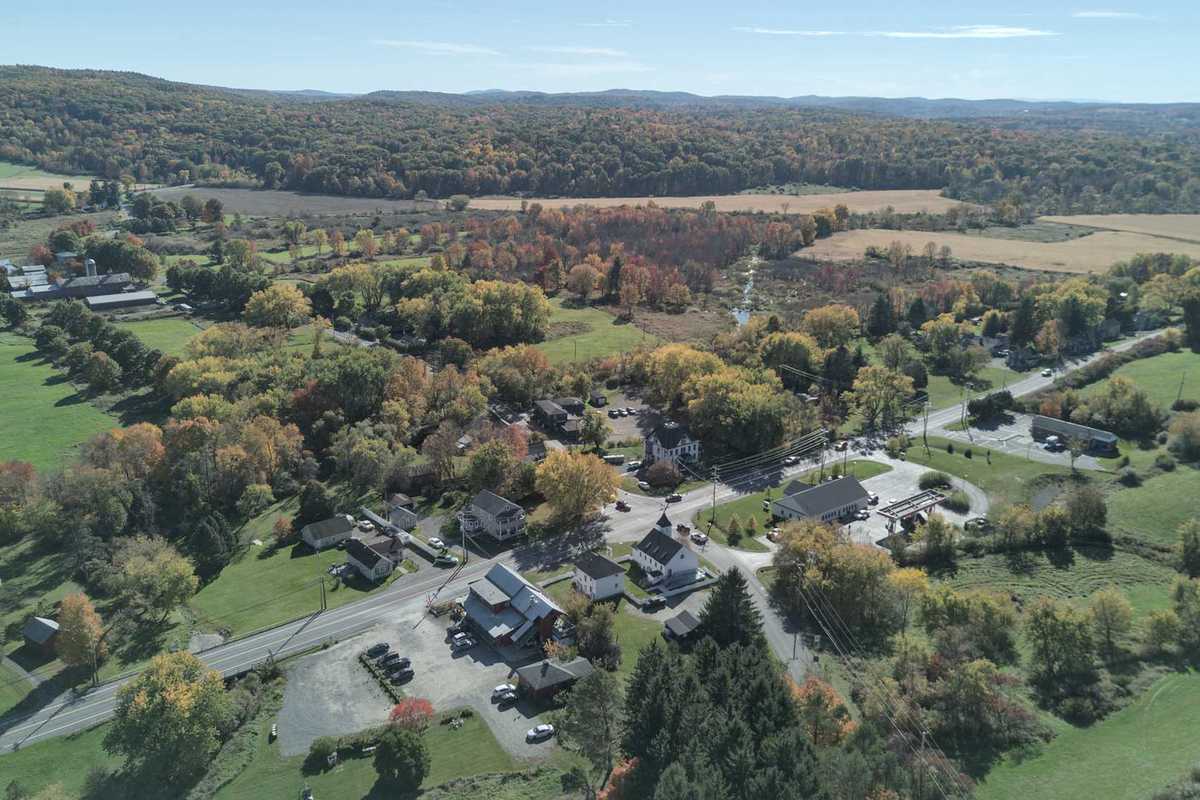
Millerton firefighters clean off their trucks at the firehouse garage on Century Boulevard after the annual Santa Run on Saturday, Dec. 6.
MILLERTON — As the holiday season ramps up and the calendar year winds down, the Millerton Fire Company is reflecting on a year with record-high call volume and clear objectives for 2026.
This year, the all-volunteer department surpassed 425 calls — the most the department has seen in at least eight years. Fire officials said the number far exceeds recent annual totals, and there has been a year-over-year increase.
Not only does the department respond to fire emergencies and rescue calls, but it also plays a critical role in emergency medical services, especially in a region grappling with slow ambulance response times, limited support from the county and shifting ownership of private services relied on by the town and village.
With a new leadership lineup, taking effect Jan. 1, both the fire company and district will enter the new year with deep experience across fire, EMS and military backgrounds — and with a renewed focus on training and community outreach.
Fire Chief Keith Roger, who has been a firefighter for 35 years, will continue as chief for the second consecutive year — his third term overall. Roger held the position back in 2005 and 2006.
“I’m looking forward to working with these guys and handing down what I’ve learned,” Roger said, noting that his leadership approach is more about teaching and preparing others to rise through the ranks.
On the less stressful calls, he said he intends to let newer officers take command while he stands close by to guide them. “My focus is now helping them move up the chain.”
Roger will also organize and facilitate training, which occurs on a near-weekly basis.
“Our goal is to ensure everyone’s training is up-to-date and that they receive the best possible training,” Roger said.
Company vice president Chris Reyes, who will also serve as 1st Lieutenant, said Roger’s return provides stability and momentum.
“I’m re-energized having him back as Chief for a second year,” said Reyes, who joined the team in 2020. “It really feels like we’re building off of a fresh foundation.”
The department emphasized the strength of its incoming command staff, which includes career firefighters, veterans with military leadership experience and longtime volunteers who have trained together for years.
Reyes described the fire company as a tight-knit and supportive team — even after a contested captain’s race during the December elections — and called the department a second family.
“When a call comes in, people from every walk of life suddenly come together and speak the same language to protect our community,” said Reyes. “It’s magical.”
In the coming year, leadership expects to maintain its focus on rigorous training, including skills drills, ladder work, air-pack practice, hose advancement, basic life support and CPR refreshers. Nearly all members are New York State-certified in CPR and AED. The company is also anticipating the purchase of a new rescue truck, though delivery is likely 18 months away.
The Town of North East’s Boulevard District — a stretch of Route 44 between Millerton and the New York State border — is the town’s largest commercial zone. The proposed zoning rewrite would allow mixed-use buildings with residential apartments above ground-floor retail.
MILLERTON — A group called “Save Millerton” has sparked debate over the Town of North East’s proposed zoning overhaul, circulating disputed claims about transparency, enforcement, and the town’s long-term direction.
The group recently published two half-page ads in The News that have drawn wide attention — and criticism from town officials and volunteers — as residents try to understand the 181-page rewrite currently under review. The ads raised concerns about the new zoning code and the process behind its creation.
The claims raised by Save Millerton have prompted many residents to scrutinize the draft code, released Nov. 18, while leaving others confused as they navigate competing interpretations of what the zoning overhaul would permit.
Town officials, meanwhile, say they are finalizing the product — a process that has already taken several years — to modernize an outdated zoning code adopted in 1977, with the goals of supporting local business and creating new housing options. However, Save Millerton organizer Tyler Graham argues the process has lacked transparency and the draft raises questions that have not been adequately explained.
To understand the debate, The News spoke with Graham, who lives on Cooper Road, and Town Supervisor Chris Kennan about the issues at stake, the origins of Save Millerton, and the group’s goals.
What is ‘Save Millerton’?
Graham described Save Millerton as an informal effort made up of a small number of residents concerned about the zoning rewrite and future enforcement. The News could not independently confirm the number of participants.
Graham said he has been speaking with other residents and collecting email addresses through his website, www.savemillerton.org, where he plans to post documents and commentary related to the zoning process.
He said the campaign’s purpose is to call attention to gaps in enforcement, demand greater transparency, and question the speed at which the rewrite is moving toward adoption. The effort stems partly from a long dispute on Cooper Road, where Graham and several neighbors allege that an illegally constructed dwelling has gone unenforced for years.
Graham said requests for information about the case were “stonewalled,” leaving residents frustrated. Kennan declined to discuss the issue, calling it decades-old and complicated, and said the Town has retained outside counsel.
Graham said that experience fuels his skepticism about the zoning overhaul.
What are Save Millerton’s claims?
One of Save Millerton’s claims is that the proposed update of accessory dwelling units (ADUs) could accelerate residential density in ways that change the town’s character. Graham said allowing accessory units could have major consequences.
Town officials disagree. Kennan disputes that view, noting that strict septic requirements significantly limit where ADUs can be built. He emphasizes that accessory apartments already exist in the current code and that most homeowners will not have the capacity to add a unit even under a more permissive framework.
A second concern Save Millerton highlights is the possibility of “big-box stores” or large-scale commercial development entering North East. Graham said most residents he’s spoken with prefer driving to Poughkeepsie or Great Barrington for large retail and want Millerton to retain its small-town character.
Kennan counters that such fears are unrealistic, given the parcel sizes in the commercial districts and the area’s low population density. He noted that the commercial parcels in North East are far too small for stores on the scale of a Walmart or Costco.
However, he noted that “many residents would welcome new shopping options.”
The Town’s view
Town officials maintain that the overhaul stems from recommendations in the 2019 Comprehensive Plan and years of work by the Zoning Review Committee, which has held nearly 100 meetings. Kennan said the code is intended to support business growth and expand housing opportunities — not transform Millerton into something unrecognizable.
“I hope those who took the time to follow the process will appreciate the effort and attention to detail that went into the revisions,” Kennan said. While acknowledging that residents have “every right to express their views,” Kennan said the Save Millerton ads contained “misinformation and errors,” citing, for example, a reference to a “new Village Hall” rather than a new Town Hall.
Bill Kish, a volunteer and member of the Planning Board and Zoning Review Committee, also expressed frustration with the advertisements. “As somebody who spent five years working as a volunteer to try to develop the best possible commercial zoning, I’m taking into account as many points of view as possible,” he said. “However, I find it disturbing that this series of advertisements appeared at the very last minute, seemingly designed to throw a hand grenade at the whole process.”
Next steps and enforcement going forward
Kennan acknowledged longstanding concerns over the town’s reputation of lackluster zoning enforcement. “Zoning enforcement is a repeatedly mentioned concern, and has been for decades,” he said. “The Town intends to address this and continue to make improvements.”
The first public hearing on the zoning overhaul is scheduled for Jan. 8, 2026, at North East Town Hall at 19 North Maple Ave. Kennan has emphasized that additional public hearings will be scheduled as necessary. Residents are encouraged to read the zoning draft online at townofnortheastny.gov/zoning-review-committee/ or in person at Town Hall. Digital and hard copies are available.
Chocolatier Christophe Armero and his wife, Jennie Baird, handcraft small-batch Mudgetown Chocolate in Millerton. Free tastings will be available at Tri-Corner Feed in Millerton on Saturday, Dec. 13, at noon and 3 p.m.
MILLERTON — There’s wine tasting, beer tasting and even coffee tasting – but Millerton is adding something sweeter to the mix. A craft chocolate tasting event will mark the debut of Mudgetown Chocolate on Saturday, Dec. 13, at Tri-Corner Feed. Two free tastings will be held at noon and 3 p.m.
Mudgetown Chocolate is made in Millerton by Sharon-based chocolatiers using cacao beans sourced from all over the world. Saturday’s event will mark the official launch of the small-batch line at Tri-Corner Feed, one of the only places it will be available.
“Our goal is to delight the community with something special,” said Christophe Armero, chocolatier and founder of Mudgetown Chocolate. He describes his product as a “delicious, locally made chocolate that can’t be purchased anywhere else.”
The business began as a retirement passion project for Armero, who spent 38 years in the sugar industry. After moving full-time to Sharon in 2020 from Riverside, Conn., he and his wife, Jennie Baird, began experimenting with chocolate in their barn in 2022. “I realized quickly that it’s very easy to make mediocre chocolate,” Armero joked.
After becoming more interested in the process, he grew determined to master the craft. In 2024, he landed an internship at Dandelion Chocolate in San Francisco, where he learned the tricks of the trade.
“It was a bit intimidating because I was this older guy and all the other chocolatiers were young and very professional,” he laughed. “But they taught me a lot.”
Today, Armero can speak fluently about each step of the chocolate-making process, from sourcing the bean and fermentation to roasting, cracking and “melanging,” most of which is done right here on South Center Street in Millerton.
Tri-Corner Feed’s incubator kitchen
Tri-Corner Feed has a bustling storefront where community members can find locally sourced produce, nutrient-dense groceries and even a chai latte – all with sliding scale prices. And there is just as much action happening behind-the-scenes in their fully licensed commercial kitchen.
It’s here that entrepreneurs and early-stage businesses like Mudgetown Chocolate can roll up their sleeves and create products in an affordable space without the burden of high startup costs.
Armero uses a small, 1-kilogram roaster in Tri-Corner’s kitchen, followed by a cracking and winnowing setup that uses a shop vac to suck out the shells and leave the nibs behind. Then, nibs spend 48 hours or more in a granite stone melanger, where they break down and release natural cacao butter. During this part of the process, the bitterness softens and new flavors develop.
Locally made, globally sourced
Armero and Baird purchase cacao beans directly from small farms and fermentaries in countries like El Salvador, Colombia and Uganda. The couple even traveled to Ecuador to visit one of their producers, prioritizing direct relationships whenever possible, which sets them apart from other commercial producers.
Armero said he hopes to bring more local partners into his chocolate business for future creations. “We’ve made some fantastic chocolate infused with whiskey,” he said, adding that he also has a vision of creating a chocolate bar with crunchy bread crumbs. His goal is to partner with local distilleries and bakeries to make this a reality.

Commercial chocolate vs. craft chocolate
Armero said the key differences between commercial chocolate and craft chocolate are “scale and objective.” Big-brand names rely on facilities designed to transform commodity beans into large quantities of uniform chocolate designed to meet the brand’s distinct taste.
Unlike these chocolate giants, Mudgetown Chocolate and other craft makers work in small batches, coaxing the best flavors out of beans. You might get a slightly different flavor with each batch. With only two ingredients in their dark chocolate – cacao and sugar – the results are highly dependent on the bean itself.
Armero said, “We’re always trying to get the best out of the beans.”

A sensory experience
Armero and Baird describe their upcoming chocolate tasting as a full sensory experience, explaining that tastes can last from 30 seconds to a minute and evolve in that time.
“You get the top notes first, which are usually floral, lighter notes,” said Baird as she bit a chunk of chocolate. “Then you get the mid-notes which tend to be chocolatey and nutty, and then you get the end notes.”
The couple instruct tasters to crunch first, then let the chocolate melt on your tongue. They recommend breathing in through your mouth and out through your nose for the full effect. And, whatever you taste, Armero and Baird say it’s correct. “Everyone’s different,” Armero said. But everyone is right because it’s entirely subjective.”
The chocolate tastings are free and open to the public. They will take place at Tri-Corner Feed at 56 South Center Street in Millerton.
AMENIA — Revisions to the town regulations outlining the separate roles and structures of the Planning Board and the Zoning Board of Appeals (ZBA) will be considered at public hearings on Thursday, Dec. 18, at Town Hall, beginning at 7 p.m.
Amendments to the local code seek to clarify the structure of both boards, along with the appointment of alternates, training, attendance and the process for removing members. Residents are invited to comment on the proposed regulations during the public hearings or to provide written comments in advance.
The five-member ZBA, whose members serve five-year terms, would be expanded with the addition of two alternate members appointed by the Town Board for one-year terms, should the changes be adopted. If a ZBA member is absent or must recuse due to a conflict of interest on a particular application, the chairman would seat an alternate in their place.
Requirements for four hours of training annually would apply to all members, as well as alternates under the new code.
Under the proposed attendance requirements, ZBA members may not be absent for more than three consecutive meetings or for more than eight meetings within a calendar year.
Under the amended codes, the seven members of the Planning Board would serve for seven-year terms. The Town Board would appoint two alternate members, each for one-year terms. Four hours of training would be required for all members annually. No member would be allowed to be absent for more than three consecutive meetings or a total of five meetings in a calendar year.
Copies of the proposed local laws can be viewed on the town hall website at https://ameniany.gov.