CORNWALL — On Nov. 7, with only a few weeks training, Elizabeth England walked the entire 26.2 New York City Marathon, an epic undertaking. We began an inside look at what it’s like to take part in one of the most famous races in the world in our issue of Nov. 18 (find it here). This is part two, which begins with a study of how to keep up calories during the day-long marathon.
The night before the marathon, England (who is a resident of Manhattan and of Cornwall) “carb loaded” with pasta and broccoli.
On race day, she ate peanut butter and banana on Ezekiel whole-grain bread and drank coconut water. She tucked two RX bars into her new fanny pack, along with her phone and her charger — she carried her charger because she knew that playing music would keep her motivated and moving and she didn’t want her phone to die on her before the finish line.
England had hoped to begin the race at around 10 a.m. so she wouldn’t be walking through possibly deserted city streets at night in the dark.
The race organizers had other plans for her, however. In some small races, the walkers start the course ahead of time. Not so at the New York City Marathon: The fastest runners leave first. After that, successive waves come to the start line. England and the other walkers were at the end of the list.
“I was in Wave Five. Our start time was at noon.”
Imposter syndrome at the Javits Center
The waves are assigned and race bibs are distributed at a preliminary event at the Jacob Javits Center, an enormous convention and events venue in Manhattan.
“You have to show your vax card and a drivers license to get in. It’s like when you’re in the pre board for an airline flight. You’re not really at your destination yet, and all of you are on the same overnight flight — and some of you are much better prepared for the flight. I’ve never been with so many fit, intense-looking people in my life.”
But, she was quick to add, everyone was friendly and supportive.
“I met a guy who does 7- minute miles; I can’t do anything in 7 minutes. When he saw that I was in Wave Five he said ‘Whoa, when do you start?’ And I said you’ll be showered and having brunch by the time I start. He was very sweet and said, ‘No, you’re going to be great,’ and then he got very granular about nutrition products. Everyone has booths there. Jack Rabbit had an island of snacks, the gels and potions you’re supposed to eat during the race.
“It’s a whole world. I’d been super excited when I’d walked in.”
But being around all the pro marathoners, “I began to have imposter syndrome. It was traumatic.”
What helped her overcome her anxiety: Remembering that, in the end, she was taking part in the marathon as a way to come to terms with her grief over the loss of her father.
Race Day: The ferry
On Sunday morning, England her two race partners “were on the last ferry to leave Manhattan, at 8:45 a.m. After that the ferry is open to the public, so if you miss that ferry you’re on your own. But we made it and got to Staten Island, where they herd you like little cows onto a bus to Fort Wadsworth.
“We got there around 10:15 a.m. and then had a long wait.”
Dunkin’ Donuts has a booth at the start, “you can get coffee and a bagel.”
The average athlete might not think of those as great things to ingest before a vigorous workout. There are, England noted, portable lavatories all along the race route but, “everyone is peeing fast. The porta-potties are gross.”
Without going into too much detail, England had selected her race pants with this in mind. “No tights.” Instead she wore comfortable athletic pants from Outdoor Voices.
Each racer is given a plastic bag, about the size of the largest zipper-seam food storage bag.
“You can only bring what fits into that bag.” England had a rain jacket in her bag. Many other people started off the morning in warm clothes that they then peeled off.
“There are blue bins there and people throw their sweats into the bins, and they’re then donated to the community.”
When Wave Five was called to the start line, “They play ‘America the Beautiful’ over the loudspeaker, there’s a cannon shot and the announcer said, ‘You’re the last wave. Go!’”
Bonking
England knew that there would be sections of the race that would be both mentally and physically challenging. Mile 16 is famously difficult. “At Fort Greene, I started to cry, I turned by 4th Avenue near BAM and I started to cry.”
At that point, the road was narrow and lined with people who put out their hands to slap five to runners to encourage them along. And everywhere there were cow bells.
“The Hassidic neighborhood was fascinating. I was told that when you reach that part of Brooklyn, the women are not allowed to be scantily clad.”
And “they can’t even look at you” if you’re a woman in running gear.
Women would turn to look away as the runners passed through; some continued to cross streets through the athletes, acting as though they didn’t exist.
“The shunning was very interesting. Everywhere else there was so much energy. I was thinking of my Dad and growing up in the ‘Jewish Berkshires. It was interesting to be in this neighborhood that was so Jewish but so unlike my Dad.”
The sections of the race on Manhattan, as you near the finish line, are particularly challenging, of course.
Harlem was excruciating.
“I definitely talked to my Dad through Harlem: ‘This is hard, the top of my foot is hurting, there’s no one around.’
“But there was this little family in Harlem with a sign that said, ‘We have kisses! Do you want a kiss?’ I had my name on my shirt, and they said, ‘Come on, Lizzy, do you want a kiss?’ They were chocolate kisses. It was manna.
“It was very hard for me at about Mile 24. You have to walk along Central Park South and then re-enter the park. It’s psychologically tricky because you enter the park and you think you’re done and you’re not. You have two more miles to go.
“I’d heard of bonking, when your body loses all its energy, your body can keep moving but your mind is out of it.”
There were also runners whose bodies were barely moving. England said her instinct was to want to stop and help everyone she saw who was struggling, but she realized, “everyone is doing their own thing.” It’s not a group activity; it’s quintessentially New York City in the sense that you’re surrounded by a mass of people and yet you are very alone.
England’s husband met her at two spots along the race course, at Mile 16 and again as she entered Central Park. Her two friends had dropped behind her at the start of the marathon, and had re-entered toward the end (their names are not officially recorded).
“They were done by sunset.”
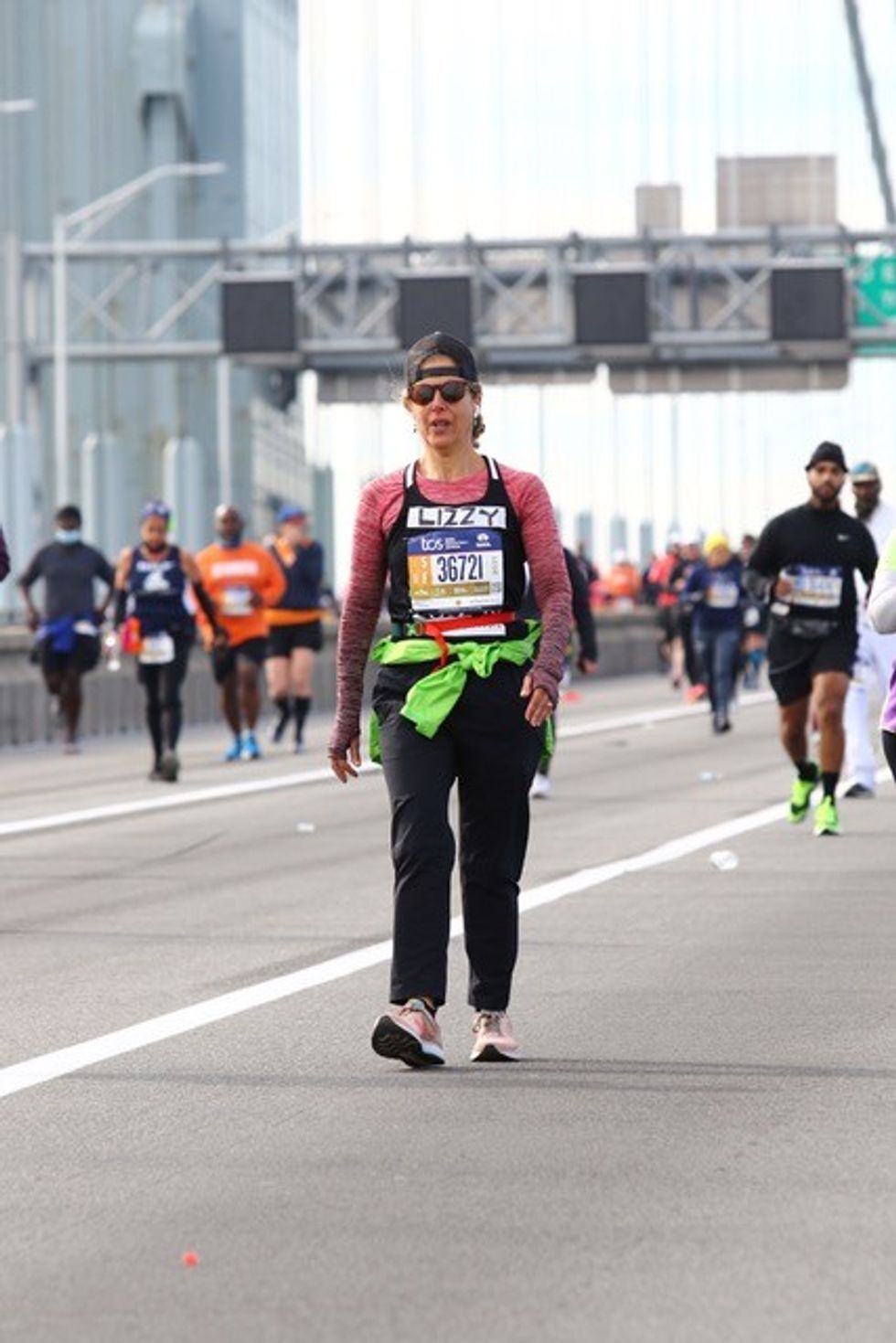
England had set a goal of trying to finish the race in seven hours. Her time was 6 hours 45 minutes and five seconds.
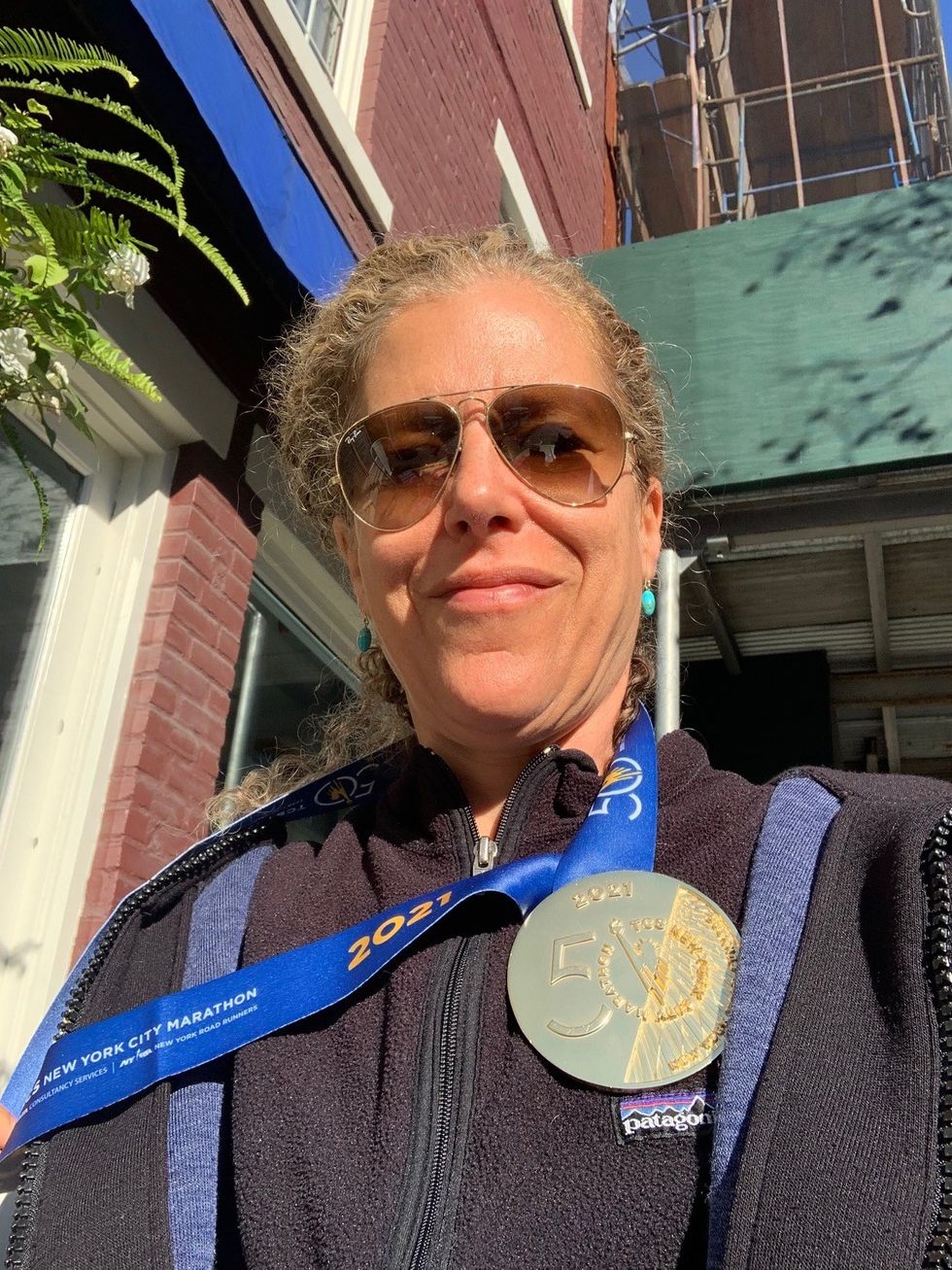
“At the end I got a little blue fleecy Marathon poncho; they didn’t do the silver Mylar blankets. And I wore my medal all day on Monday.”
The Motherland
More important even than the medal, though, was the journey the Marathon offered through her life.
“My mom moved down here from Berkshires and I lived with my Dad in Lenox. I was born in 1963, so in the 1970s I would travel Route 7 to come visit her. I always knew New York City, it was my mother, so I loved it. But i hadn’t been to all the boroughs; so part of the marathon was going to all the boroughs, my Motherland.”
And of course, her father.
In the end, she realized of the Marathon, “This all makes sense to me, this is how I would mourn my Dad. He was such an athlete, always moving. My Dad was my everything.”
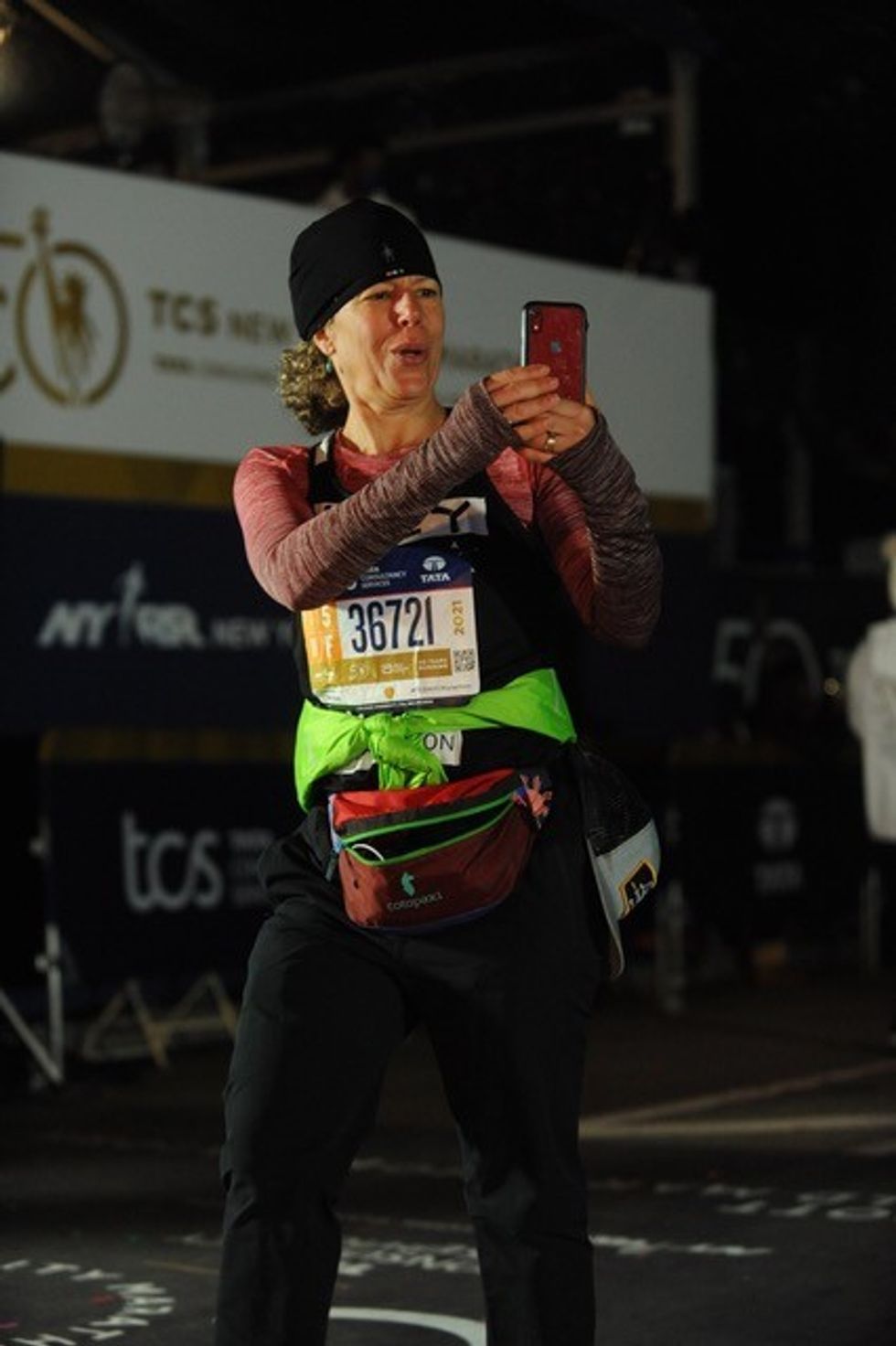
Photo courtesy Elizabeth England
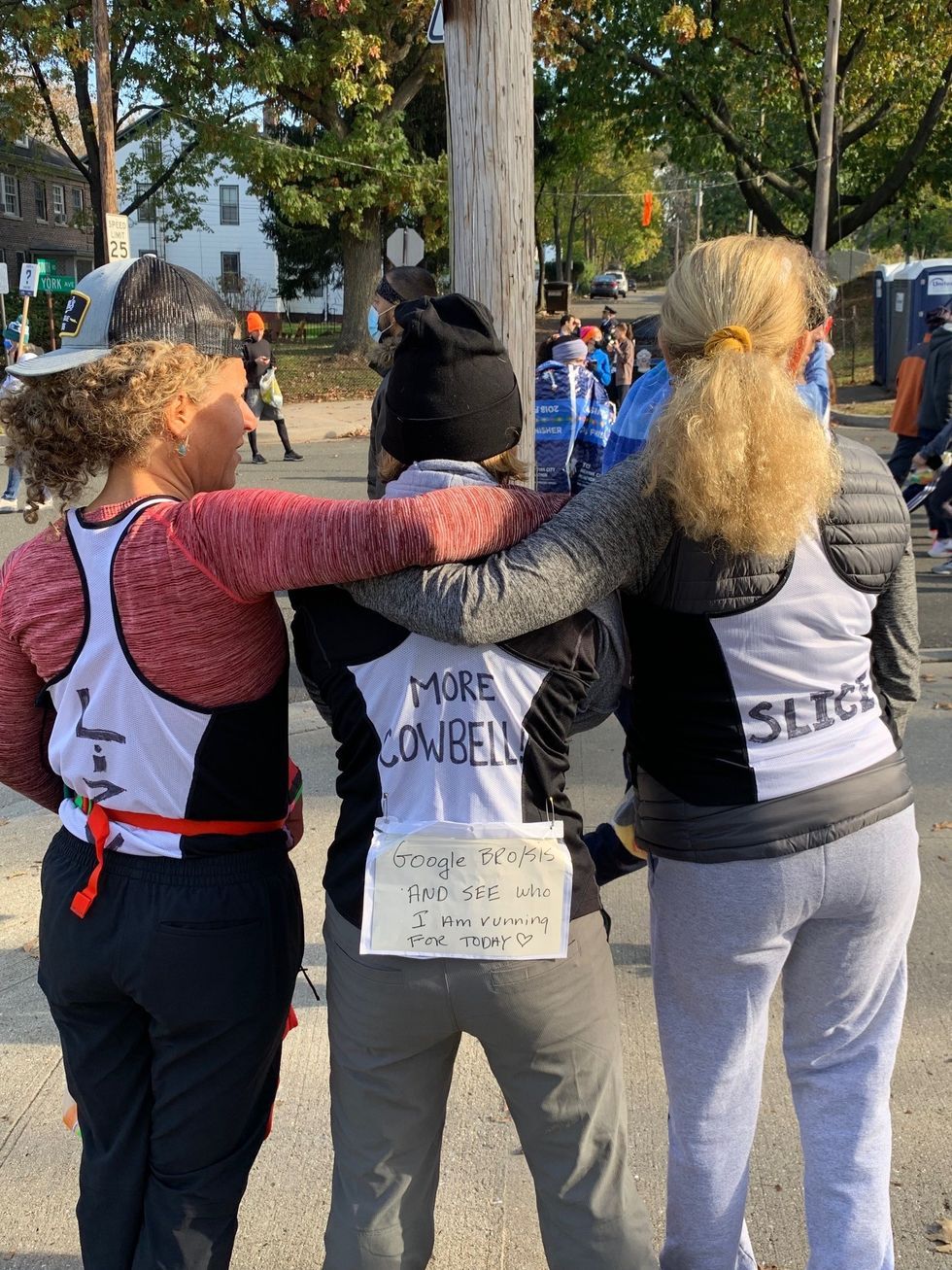
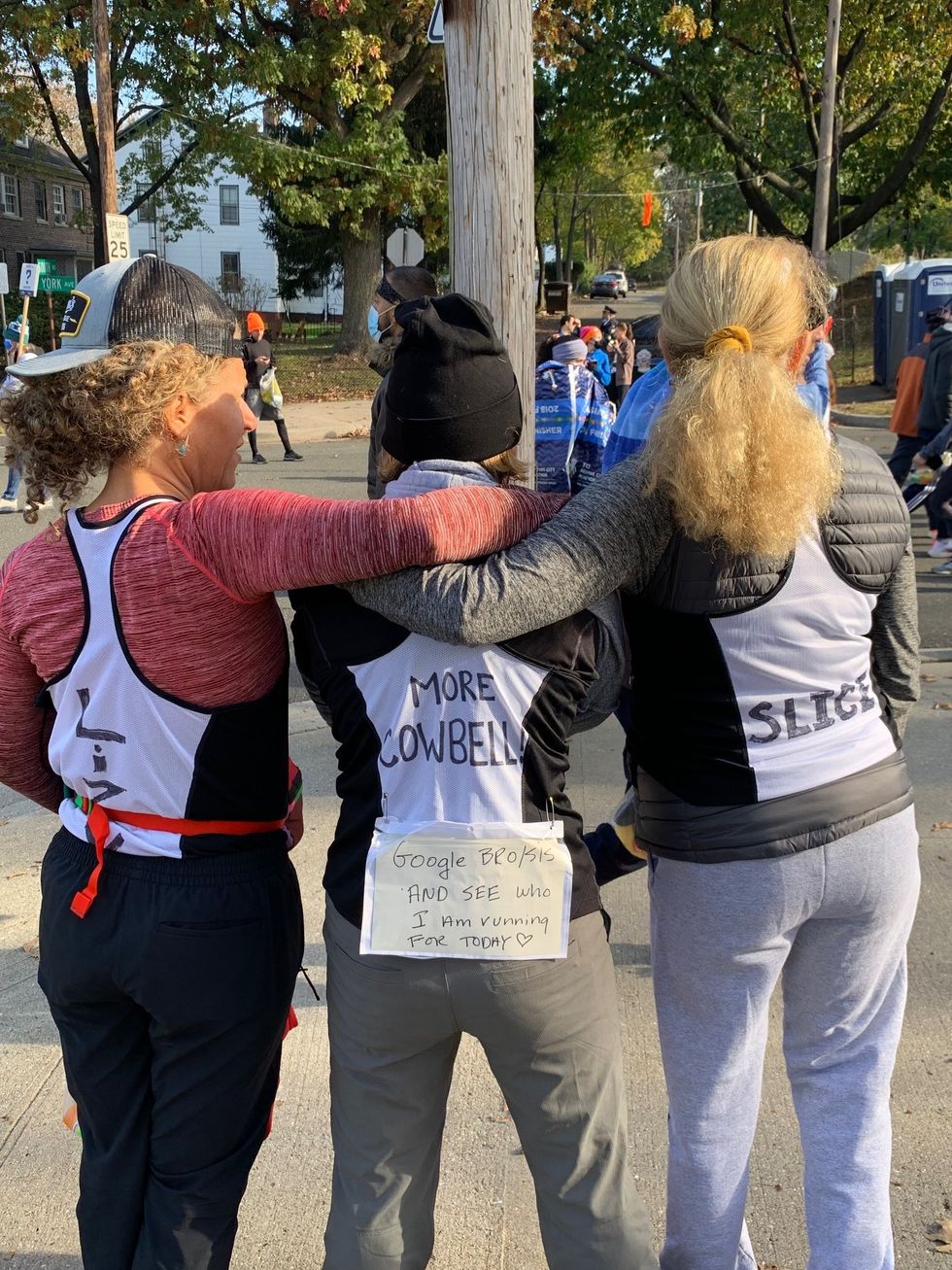
Elizabeth England, a resident of Cornwall and New York City, walked the New York City Marathon with Alice Gottesman, far right, and Marti Meyerson, center, to raise funds for Bro/Sis. Photo courtesy Elizabeth England
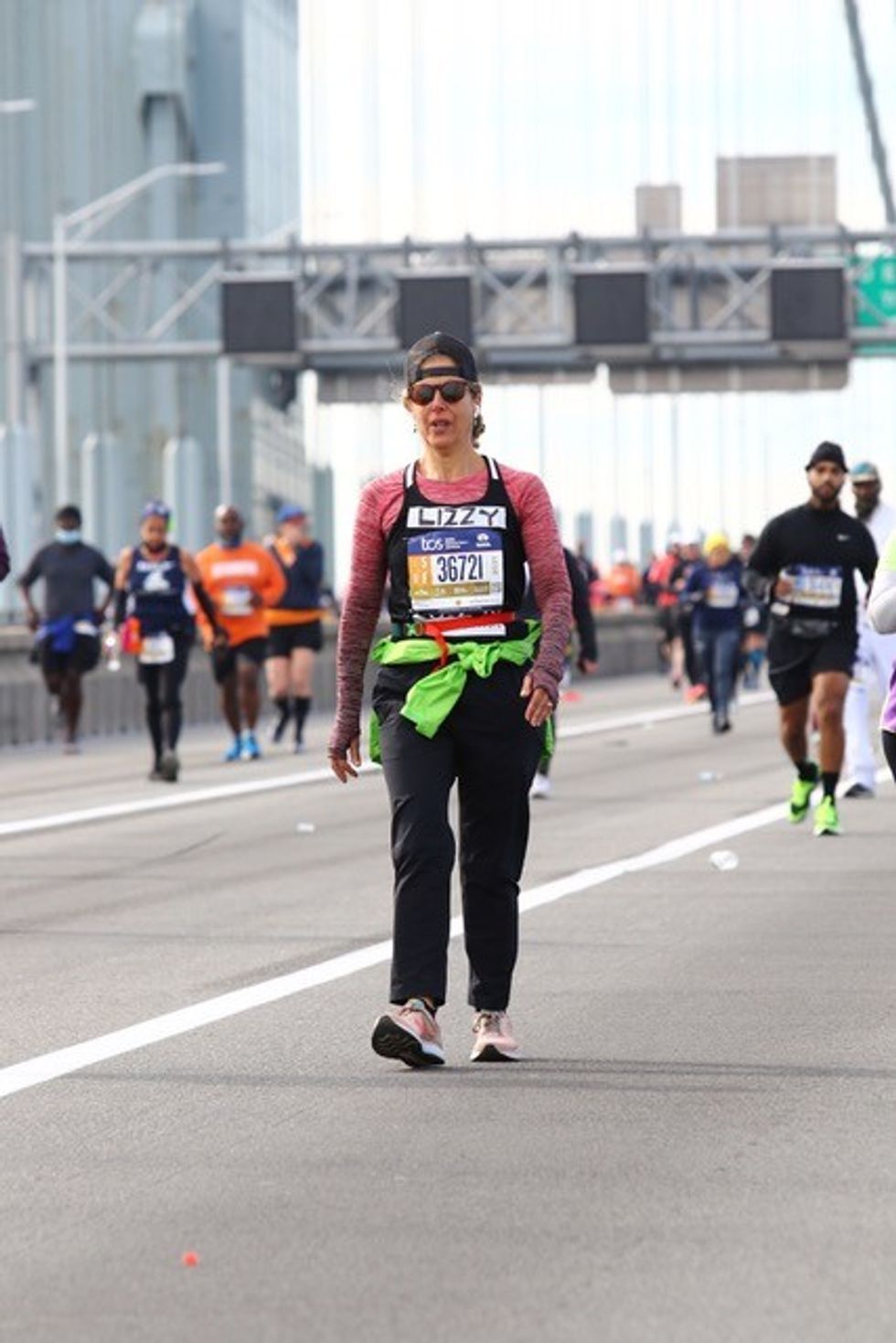
Elizabeth England kept up a steady pace as she moved through the boroughs while walking the New York City Marathon, ending her trek in under her goal of seven hours. Photo courtesy Elizabeth England
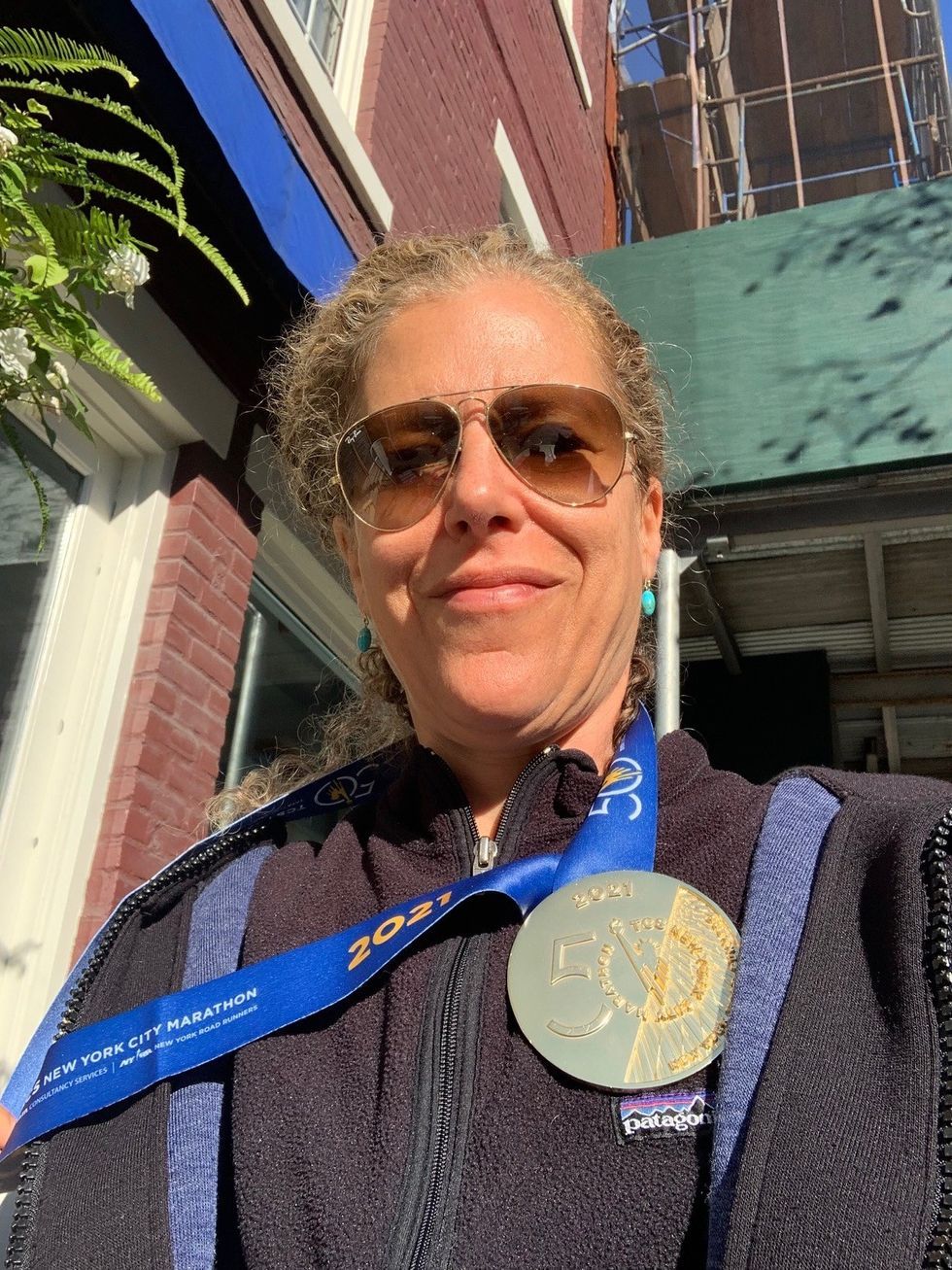
She wore her medallion, for the entire next day. Photo courtesy Elizabeth England
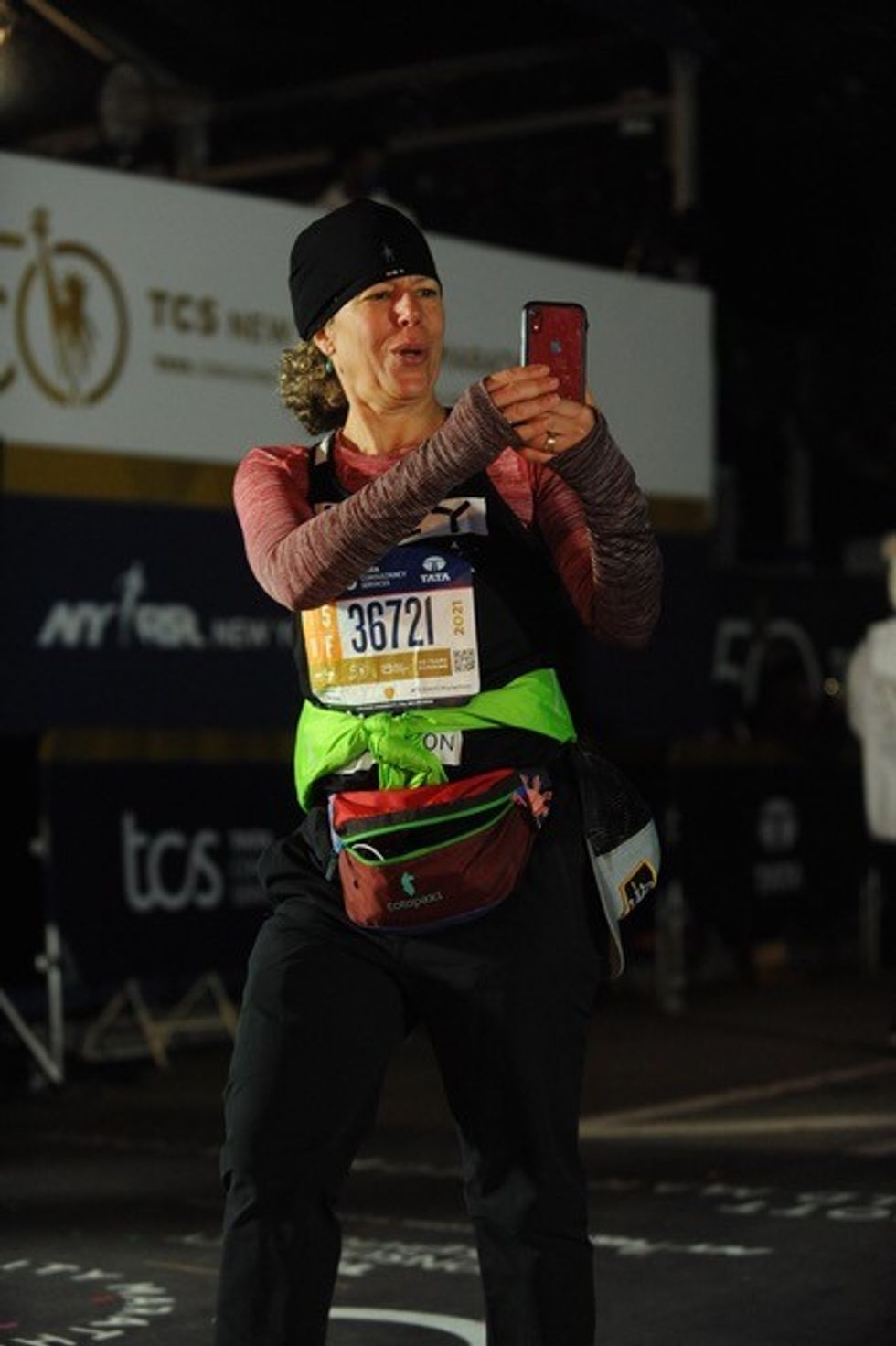
Photo courtesy Elizabeth England

 Dick Hermans in the Oblong Bookstore on Millerton’s Main Street in 1985.Provided

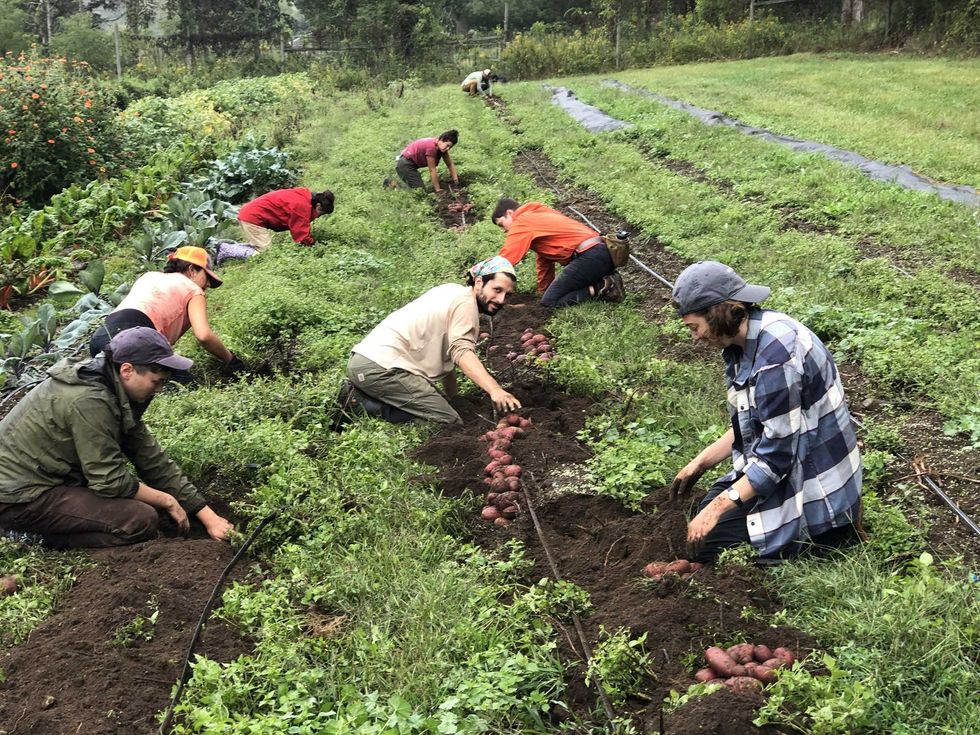 Fall storage crop harvests amid soil building cover crops at Adamah Farm in Falls Village. Janna Siller