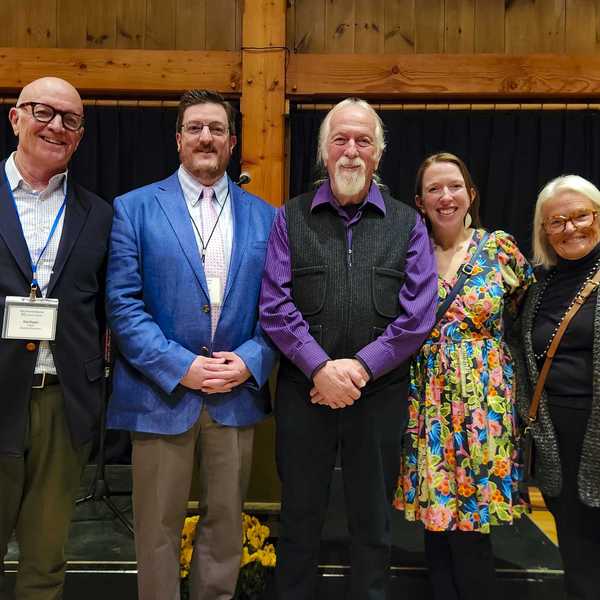
Close Encounters With Music invites its audience to embrace the magic and mysticism of December’s darkness with a thematic concert titled “Nocturne — Night and Dreams,” held at the Mahaiwe Performing Arts Center in Great Barrington, Mass., on Sunday, Dec. 3, at 4 p.m.
With selections that include Frédéric Chopin’s “Nocturnes” piano solos and Wolfgang Amadeus Mozart’s original composition of his ensemble chamber serenade “Eine kleine Nachtmusik” (“A little night music”), Close Encounters’ artistic director and internationally acclaimed cellist Yehuda Hanani has organized an evening based around the connective poetry of these pieces.
“In one aspect, night represents the sun going down; there’s quiet, silence, and a sense of healing,” Hanani said. “People draw close together, and you get a release from the brightness of the sun’s heat. You get into the domain of the subconscious. So, this one aspect is soothing, peaceful, and full of fantasy and dreams. And then there is the other side, the ‘dark side of night,’ if you like. And that’s when you get a sense of the sinister, the menacing, the terrifying, the unpredictable things that go bump in the night. There’s a scary part of the night, and ancient mythology and artists all recognize this duality. The same is true for the moon, which represents rebirth, regeneration, and the lunar cycle, but also presides over lunacy and death.”
No night-themed concert would be complete without Ludwig van Beethoven’s “Piano Sonata No. 14,” later popularized in Germany as “Mondscheinsonate,” or “Moonlight Sonata” in English. Famous for its melancholy opening adagio sostenuto, a ghostly, wordless chant, the sonata is both morbid and romantic.
“‘Moonlight Sonata’ is, of course, a magical piece of music, and it starts with a hypnotic slow movement,” said Hanani. “Beethoven was a classical composer. He started as a student of [Austrian composer Joseph] Haydn, but he had such a forceful personality and an amazing, audacious imagination. He bent the whole of music history. He started as a Haydn follower, and he ended up being a romantic hero.”
The ensemble will include Hanani joined by pianist Fabio Bidini, violinists Kobi Malkin and Grace Park, violist Luke Fleming, and double bassist Lizzie Burns. Baritone John Viscardi, who has sung with the New York City Opera, will perform arias from Charles Gounod’s French opera, “Roméo et Juliette.” William Shakespeare’s romantic tragedy has been adapted to music many times, including the oft-performed “Romeo and Juliet” ballet composed in 1935 by Russian pianist Sergei Prokofiev and an orchestral work by Pyotr Ilyich Tchaikovsky. Still, Gounod’s opera, which had its premiere at the Théâtre Lyrique in Paris in 1867, remains sweepingly passionate with its grand melodies.
In addition to arias and sonatas, Close Encounters With Music will display prints of a few evocative works to enhance the mood further. “The Sleeping Gypsy” by post-Impressionist French painter Henri Rousseau is an 1897 oil painting depicting a passing lion in a moonlit desert and a slumbering mandolin player, unaware of any danger. Rousseau was a self-taught artist who painted in the flat style of Primitivism, with simple, two-dimensional compositions. The other hanging work will be “The Nightmare” by Swiss artist Henry Fuseli, who was a professor of painting at London’s Royal Academy of Arts. Drawn to darkness and infatuated with the supernatural, Fuseli’s 1781 oil painting is a memorable depiction of a midnight haunting, with a demonic incubus hunched over a woman restless in sleep. The painting was prominently featured in the 1986 period film “Gothic,” a fictional account of Percy Shelley and Mary Godwin’s fateful stay with Lord Byron at Villa Diodati. Hanini fittingly described Fuseli’s beguiling work as “a pre-Freudian, psychosexual kind of terrible dream.”
For tickets to “Nocturne — Night and Dream” at Mahaiwe Performing Arts, go to www.cewm.org








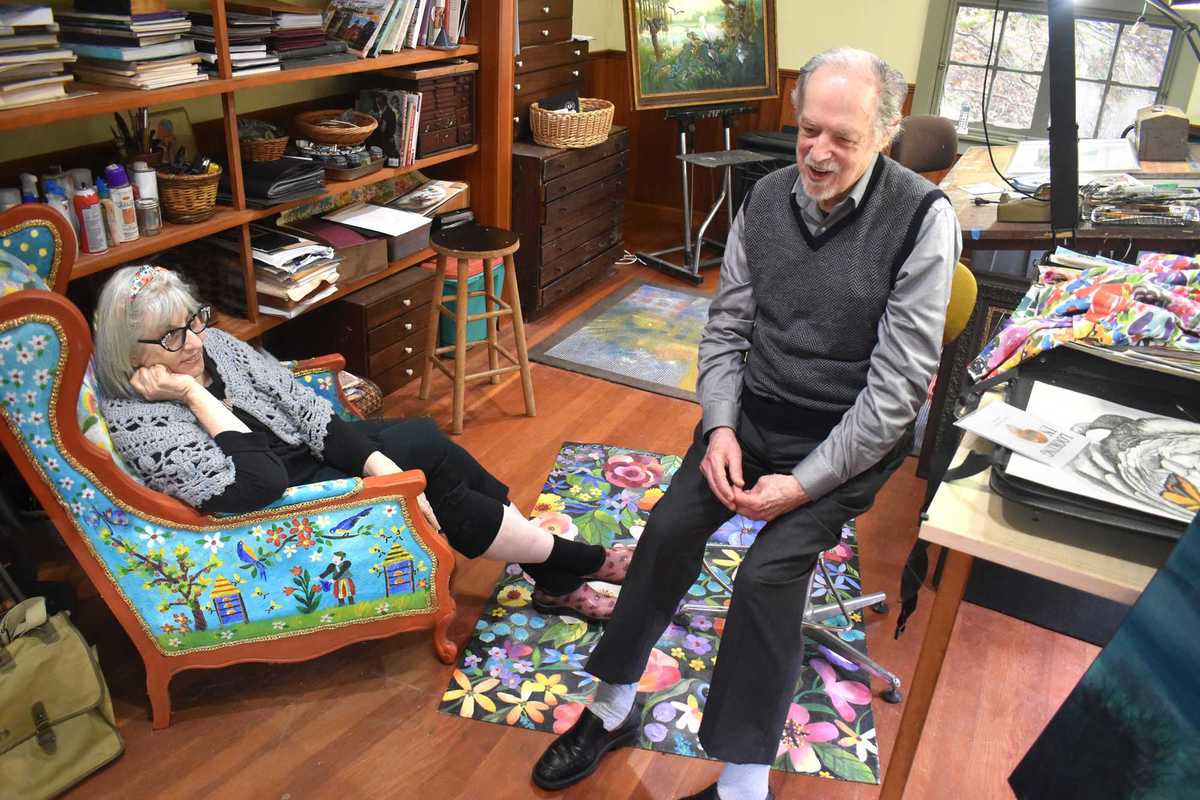
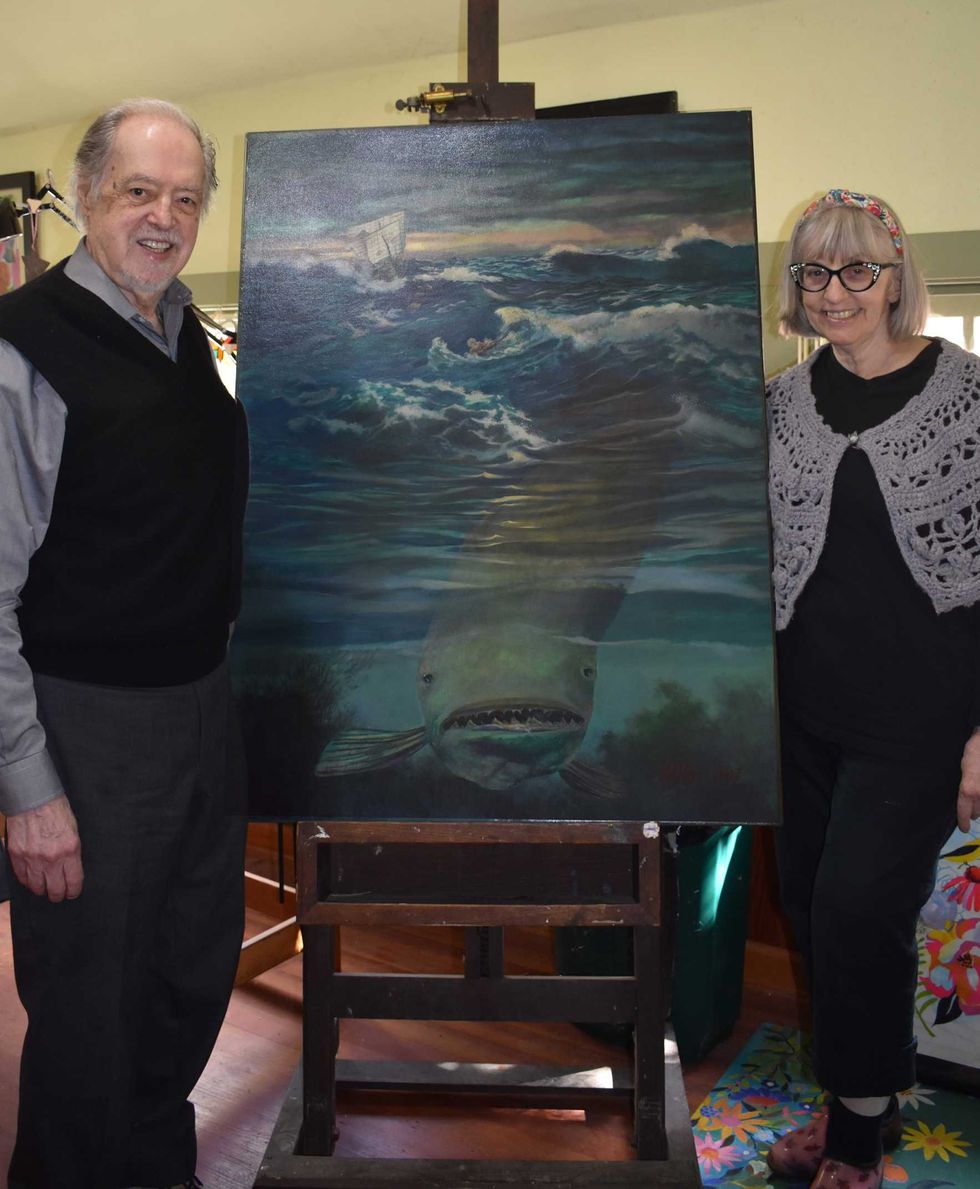 Justine and Victor Valla in their studio with a painting of Victor’s,”Jonah and the Whale.” Robin Roraback

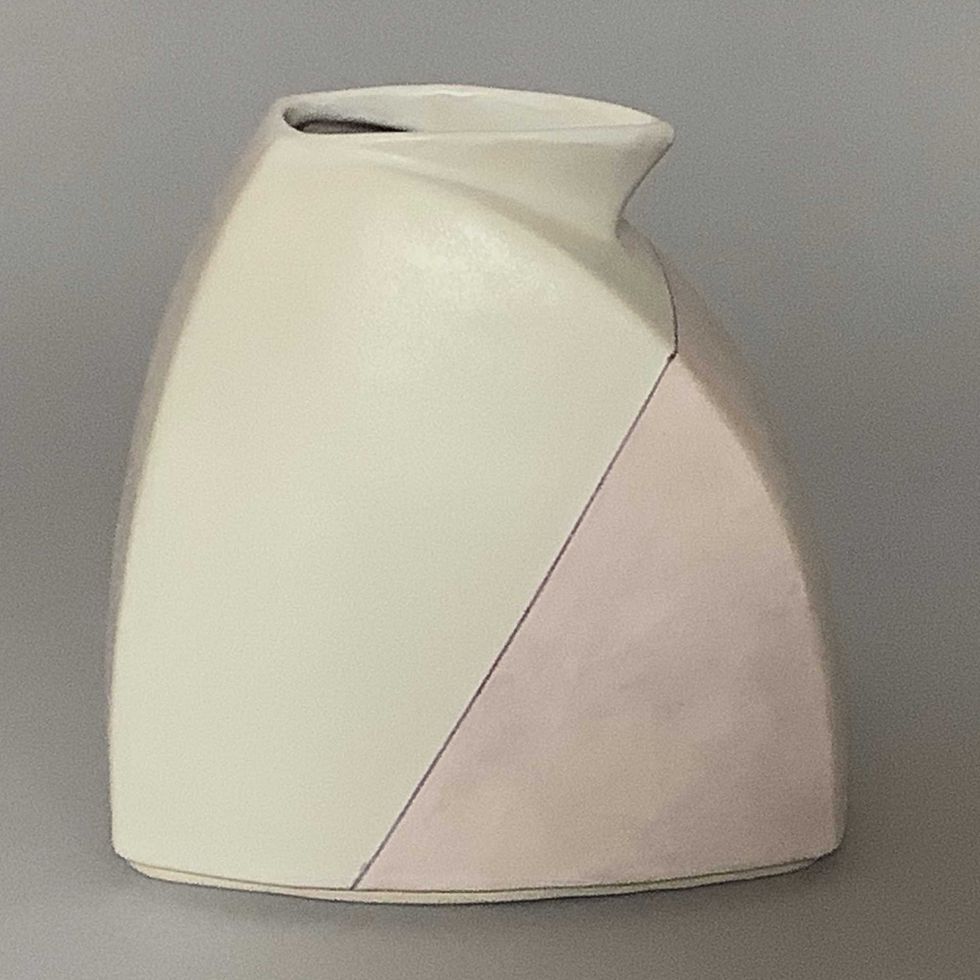 A ceramic vase by Kathleen Heidemann.Provided
 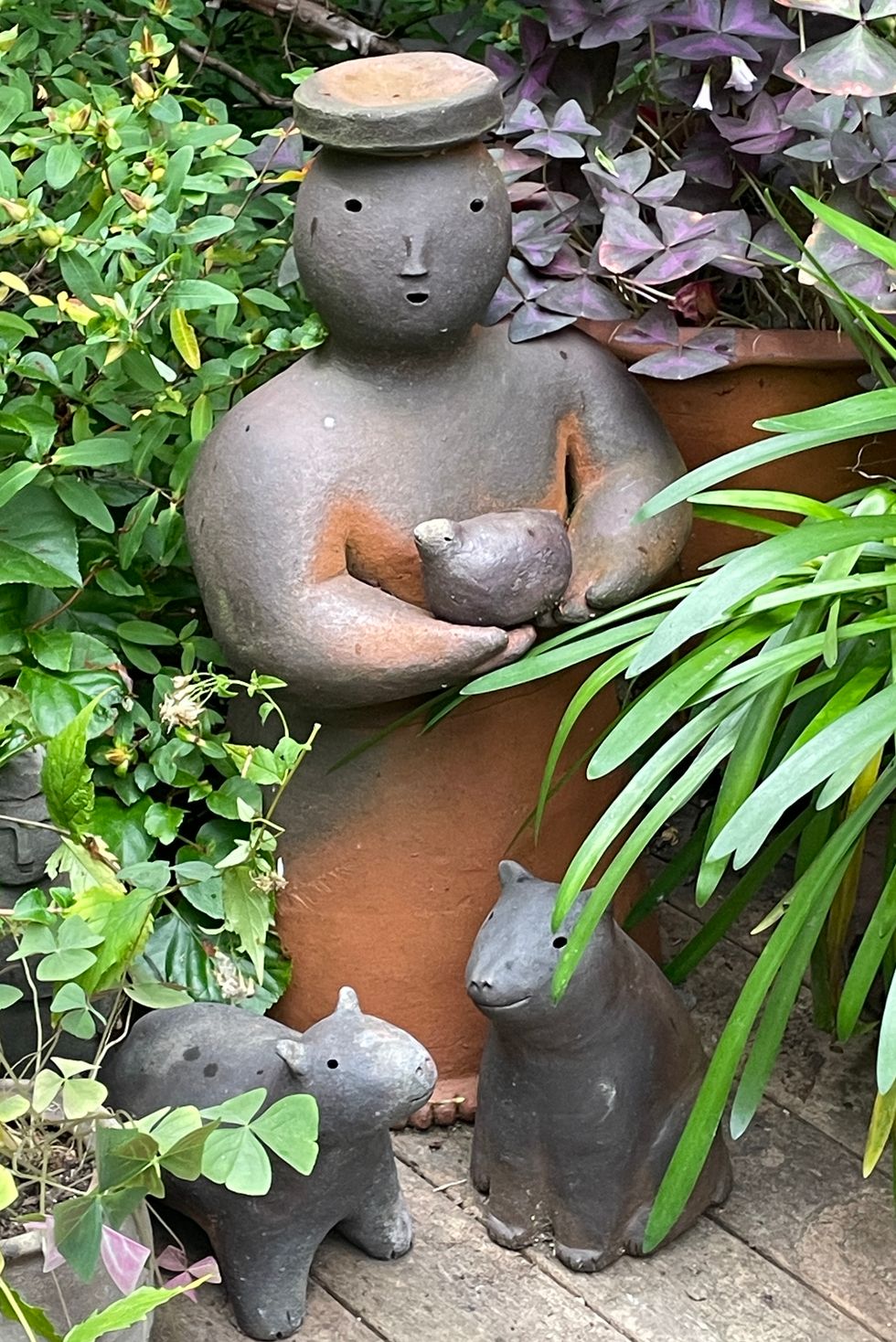 Joy Brown’s delightful ceramic sculptures.Provided