AMENIA — Two current subdivision applications were discussed at the regular meeting of the Planning Board on Thursday, Sept. 25, both progressing toward public input phases but needing more clarity on environmental and visual impact.
Cascade Creek
Representing developer Hudson River Housing, a Poughkeepsie nonprofit, was Senior Planner Peter Sander of Rennia Engineering who provided a summary of the plans for the conservation subdivision along Cascade Road. A conservation subdivision allows for reduced lot sizes, Sander explained.
Plans call for 28 residential lots with two parcels allocated to provide underground utilities, including common wastewater treatment. Potable water supply would be sourced from on-site wells.
The conservation analysis was accepted by the Planning Board in June, Sander noted, adding that the area is surrounded by similarly-sized lots.
“We believe that the application is ready for action and scheduling of a public hearing,” Sander said.
“A voluminous amount of material has been submitted,” agreed Planning Board engineer John Andrews who said that the studies embedded within those materials appear to show no information that would lead to an adverse environmental impact.
Those materials include a traffic study, ecological study, discharge analysis, archeological assessment and an analysis showing conformity with the town’s comprehensive plan for development, Andrews said.
Board attorney Paul Van Cott noted, however, that before scheduling a public hearing, the board would still need to arrive at an environmental determination of whether there exists any significant adverse impact.
Board member Ken Topolsky said that he continues to have concerns about density, visual impact, and whether the housing would be defined as affordable housing or workforce housing. He also had concerns about impact on the nearby creek and the effect of stormwater runoff, as well as the effect on bog turtle migration.
Hearing the concerns, Sander asked the board to provide him with a written listing, feeling also that the concerns were answered by data contained within the materials already submitted.
“[HRH] is an organization that wants to benefit the community,” Sander said.
Continuing his concern about traffic and public safety, board member Walter Dietrich noted that 28 homes could produce 56 cars making daily trips. He also noted the absence of streetlights in the planning.
“How does that not impact?” Dietrich asked.
Agreeing with Dietrich, board member James Walsh noted the number of vehicular accidents in that area, close to Freshtown Plaza.
“Streetlights would make for more visual impact,” Sander noted, a topic that is already a “hot issue.”
Planning Board chairman Robert Boyles expressed concern on behalf of the fire company about the capacity of the planned hydrants, feeling that the water volume might be insufficient to extinguish a house fire.
By unanimous accord, the board agreed to discuss the application again at their Wednesday, Oct. 22, meeting, giving Sander time to extract and summarize the data from submitted documents in response to board concerns.
Keane Stud
Taking a step toward review of the visual impact of plans to subdivide Keane Stud acreage, the Planning Board learned that a “scope analysis” has now been submitted for their consideration.
Representing the Keane Stud developers was attorney Diana Kolev, Partner of DelBello Donnellan Weingarten Wise Wiederkehr, LLP, of White Plains. Since June, the developers have worked to define environmental and visual impacts of the proposed subdivision, advised by the board’s visual consultant George Janes.
Attorney Van Cott explained that the scope analysis needs to be “owned by the board” and he suggested a public meeting to introduce and review the information.
Accordingly, the board voted unanimously to publish the scope analysis on the town website and to schedule a review and discussion of the document at its next scheduled meeting on Wednesday, Oct. 8. Board member Nina Peek recused from the vote; board member Jamie Vitiello was absent.




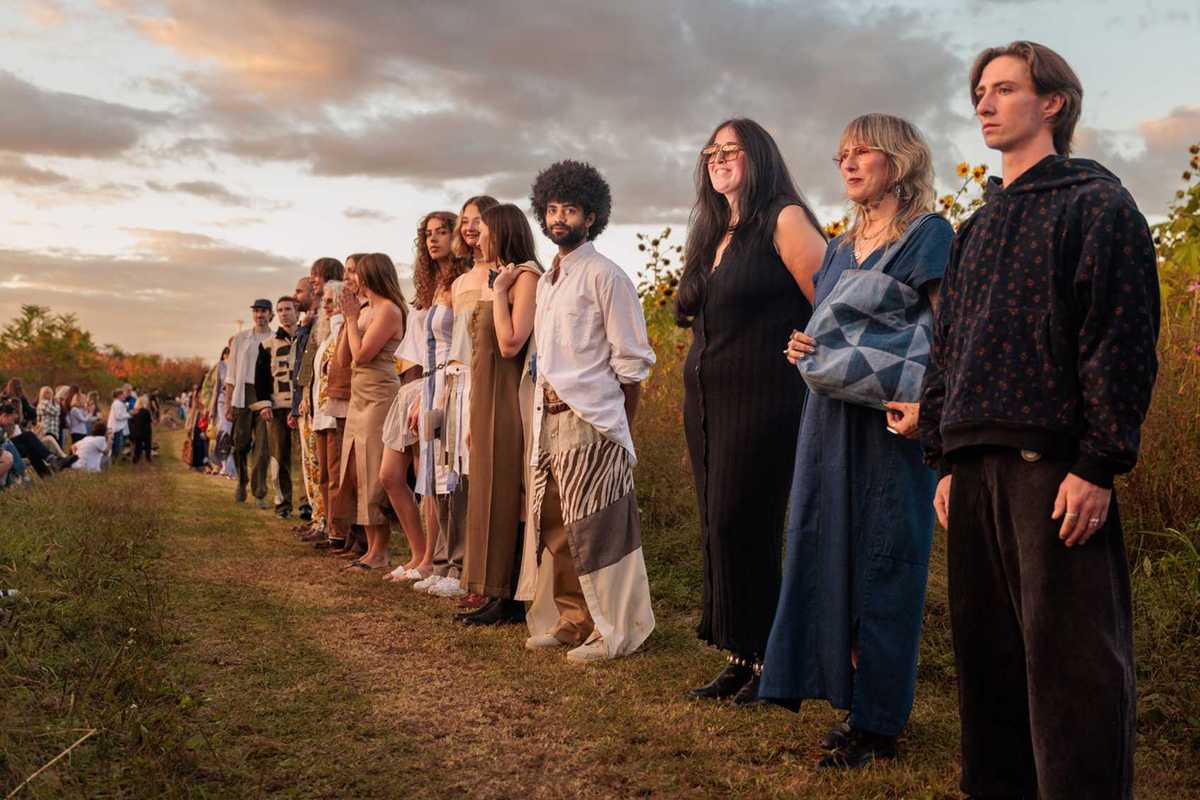
 Models walk the organic runway at HVSFW. Ilan Harel

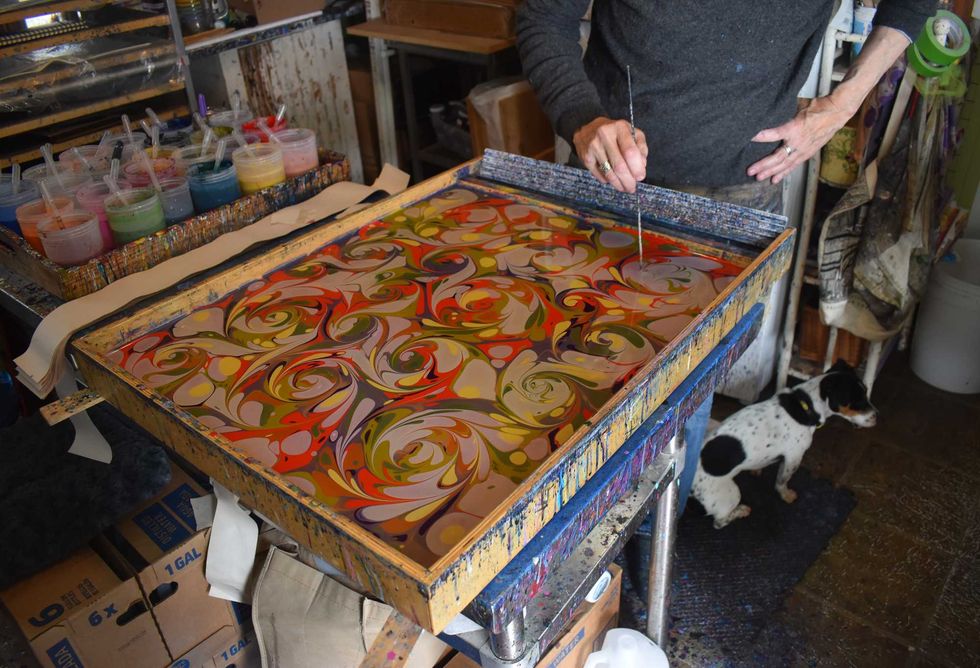 Susan Schneider, owner of Shandell’s, creates a variety of products with marbleized surfaces in her Ashley Falls studio.L. Tomaino