Before “Echoes in the Margin,” Delano Dunn’s new solo exhibition at Troutbeck in Amenia opened, the artist sat down with curator and artist Mickalene Thomas for a conversation at the Wassaic Project on Wednesday, June 24. Their wide-ranging discussion offered an intimate look into Dunn’s practice while situating the work within broader questions of history, memory and representation.
Presented by the Wassaic Project, the exhibition brings Dunn’s richly layered paintings into conversation with Troutbeck itself, the historic estate long associated with artists, writers and civil rights leaders, including W.E.B. Du Bois, Langston Hughes and many more.
Thomas, an artist whose multidisciplinary practice spans painting, collage and installation, first met Dunn when she was his graduate adviser at the School of Visual Arts. “I think your work needs to be out there more,” she said, noting the urgency of this collection in the current socio-political moment.
Dunn’s layered collages often begin with an image unearthed from flea markets, used bookstores and forgotten archives.
“I go to secondhand shops, old bookstores, any place that looks like it has history in it,” he said.
Sometimes, he explained, an image becomes the centerpiece of a work. Other times it simply sparks an idea.
“There’ll be an idea that pops into my head. I’ll read something or hear music or a lyric, and then I’ll think, ‘I’ve got to find an image that matches that.’”
His color palette also carries its own history.
“I grew up in L.A. during the L.A. riots,” Dunn said. “I would sit on my porch as a kid. I was watching the neighborhood burn, but the sky was beautiful.”
He still paints with those saturated blues, reds and oranges.
“Color can transport you. Color can make you feel safe, or happy or scared,” he said. “Those colors made me feel safe.”
For Dunn, Troutbeck’s own layered history became an active part of the work. Learning that the estate had hosted W.E.B. Du Bois, Langston Hughes, Ida B. Wells and generations of civil rights leaders informed his direction.
Dunn was given access to Troutbeck’s archives and found handwritten notes by Langston Hughes, and writings by Du Bois and Wells that found their way into the exhibition.
“There was a letter between Amy Spingarn and Martin Luther King Jr.,” Dunn recalled. “To be in its presence and hold it... you don’t see communication like that every day.”
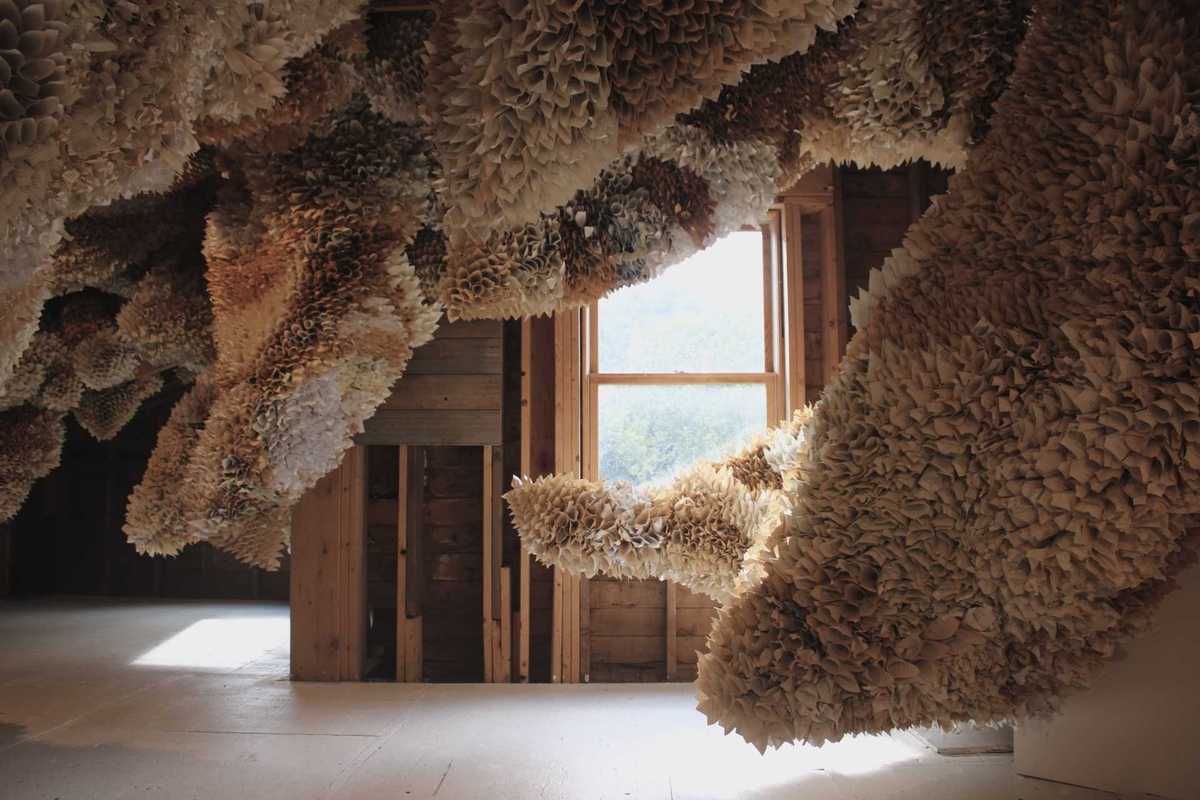
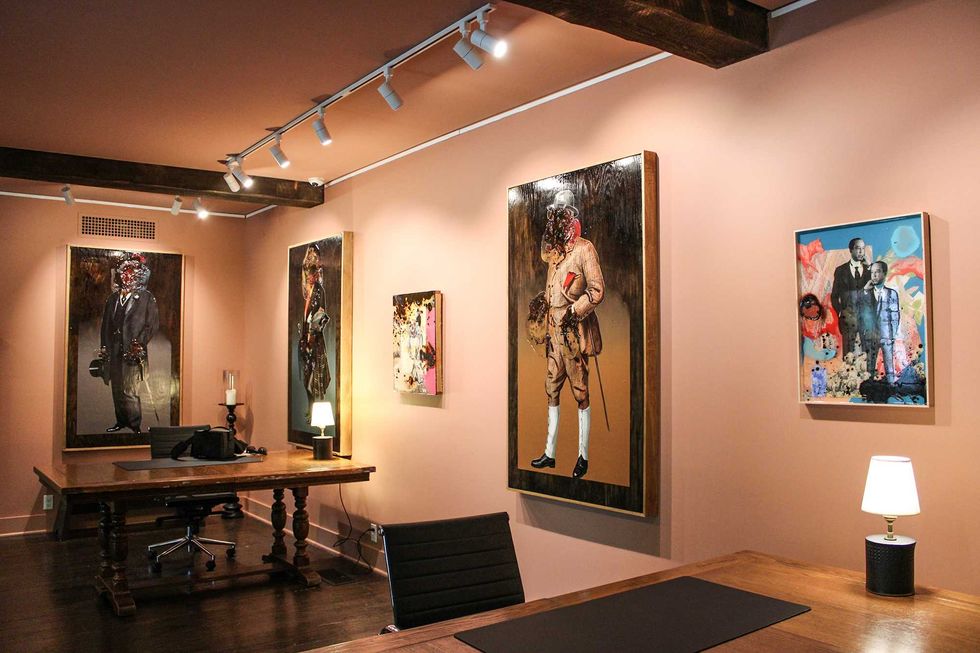 Delano Dunn’s “Echoes in the Margin” at Troutbeck.Natalia Zukerman
Much of Dunn’s work invites viewers to dig deeper into history rather than accept simplified narratives.
“I want them to look at it and go, ‘Wow, this is really amazing and interesting and colorful and beautiful,’” he said. “And then I want them to be terrified shortly after that.” He accomplishes this through bold, colorful, and often playful compositions that draw the viewer in before revealing their more complex historical underpinnings. As Thomas wrote, “Dunn’s compositions invite viewers to sit within that tension and take it in.” That impulse toward deeper investigation extends to Dunn’s own children, who are often his first audience.
“They’ll ask, ‘What is this? Why does this person look the way they look? Why are you using that color? Why are you using glitter?’”
Those conversations, he said, become lessons in looking beyond appearances.
Thomas framed collage itself as a kind of storytelling practice —“the gathering of information… piecing things together”—and praised Dunn’s ability to translate research, memory and visual pleasure into a unified language. She also underscored the importance of creative joy in the process. “If you’re going to your studio and you’re not having fun,” she said, “you shouldn’t be doing it.”
Dunn said one of the biggest misconceptions he hopes to challenge is the idea that there is a monolithic Black experience.
“There are so many different perspectives out there. This is just one of them,” he said. In the same breath, Dunn said he adopts the label “Black artist” because “it would make my Grandpa proud.”
The nearly two-hour conversation shifted seamlessly between humor and history, studio practice and social commentary, ultimately returning to what both artists believe art can accomplish: encouraging curiosity, complicating familiar stories and inviting viewers to question what they see.
As Dunn put it, “History is so much more nuanced than what we’re taught. There’s so much more going on below the surface.”



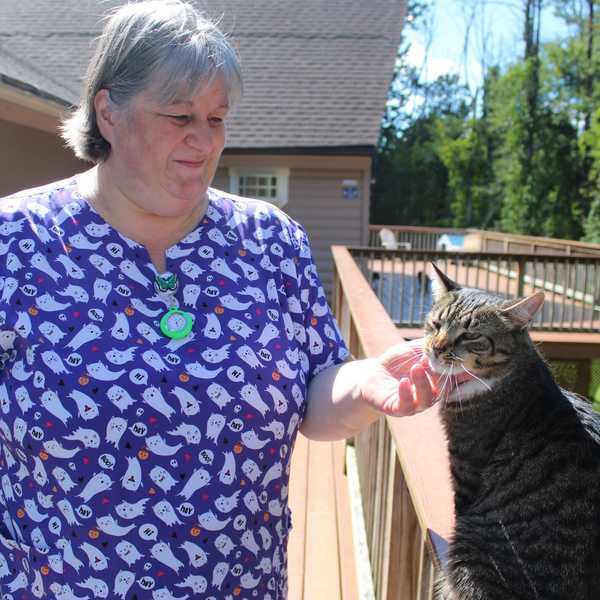
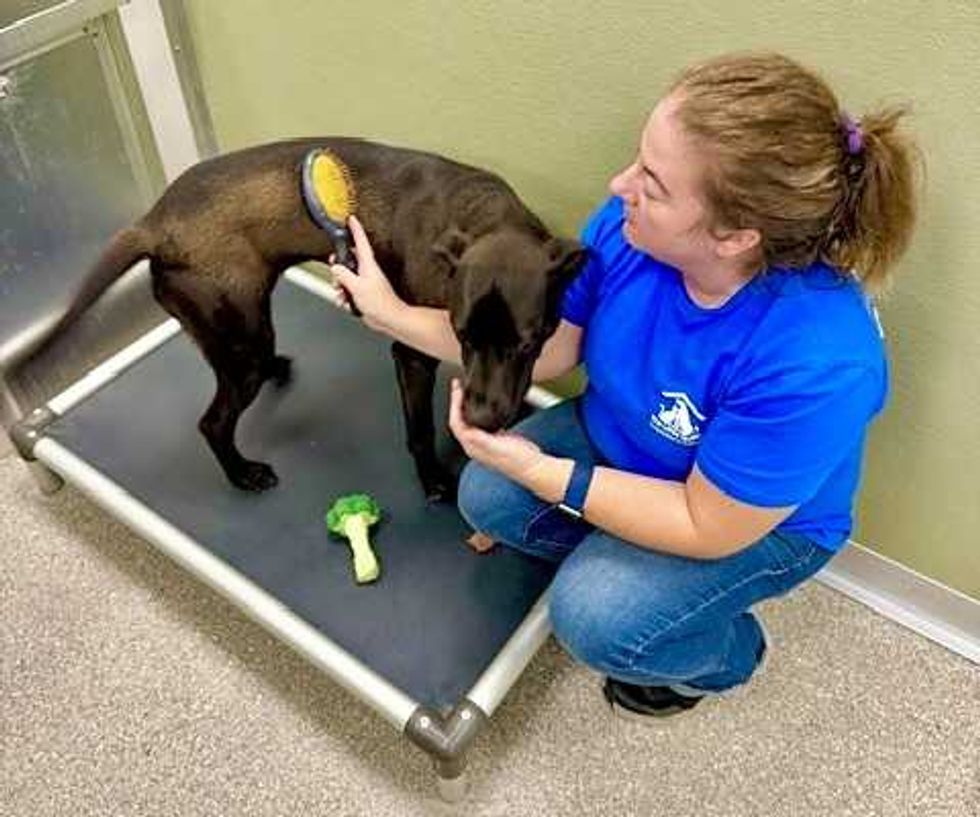 Tiffany Lemelin, shelter manager, brushing Marsala upon arrival.Provided
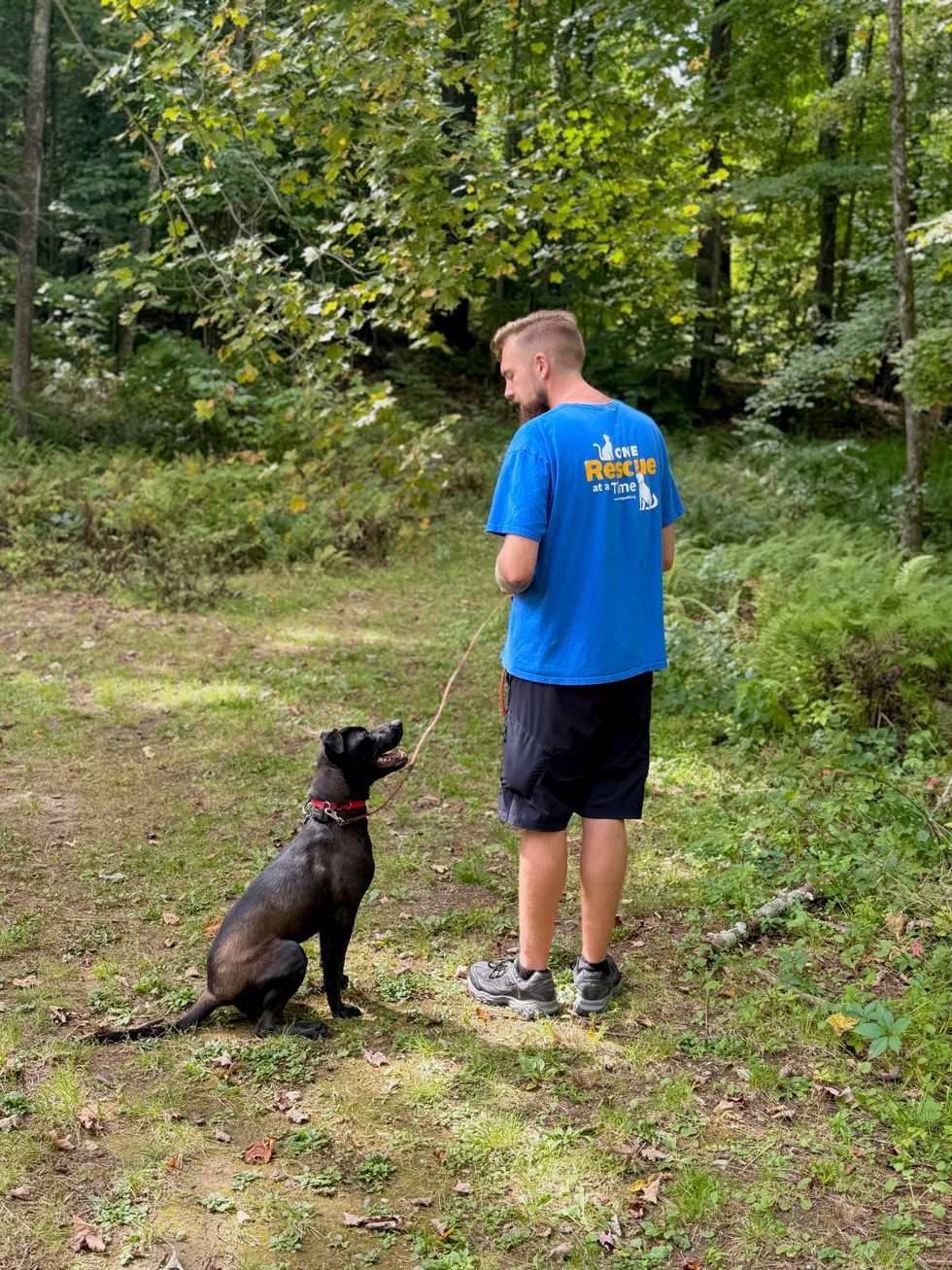 Michael DeBarba, certified dog trainer working with Marsala.Jennifer Almquist
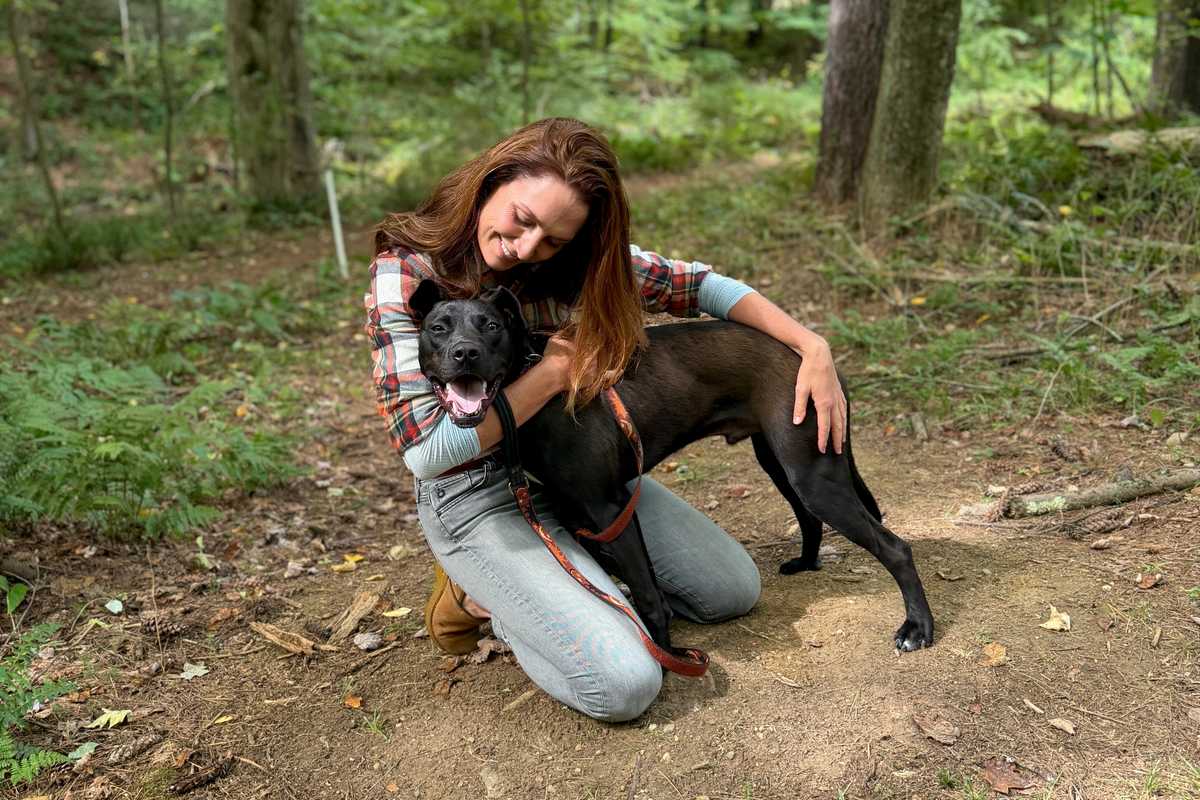 Marsala wins a heart.Jennifer Almquist
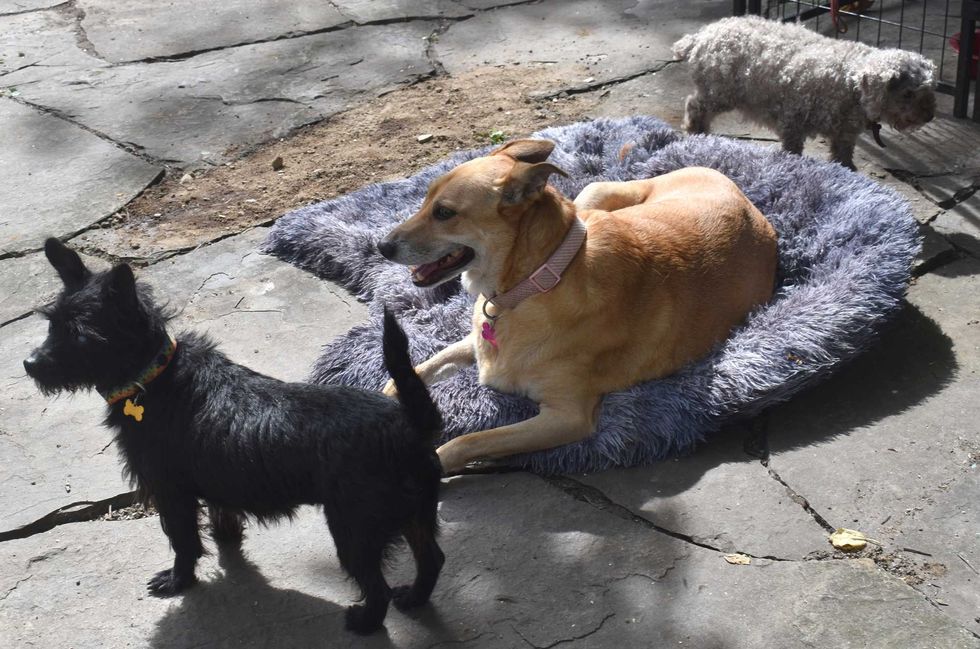 Sadie, center, a Carolina dog, plays with her friend Negra, a terrier mix. Bella Linda, the small poodle, has since been adopted.L. Tomaino
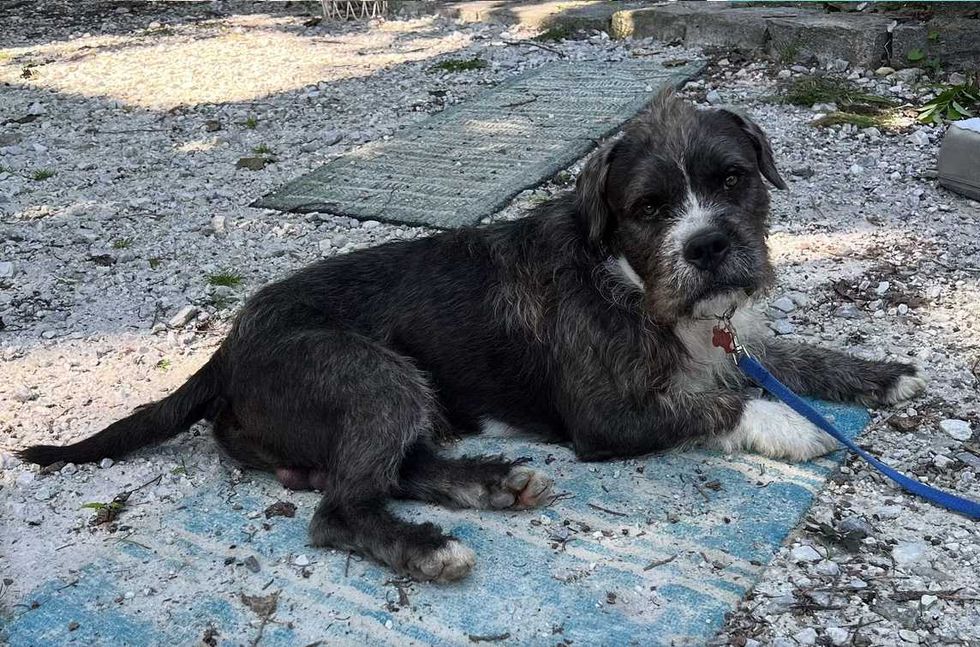 Wesley, a young, exuberant mix, is looking for an active home.L. Tomaino
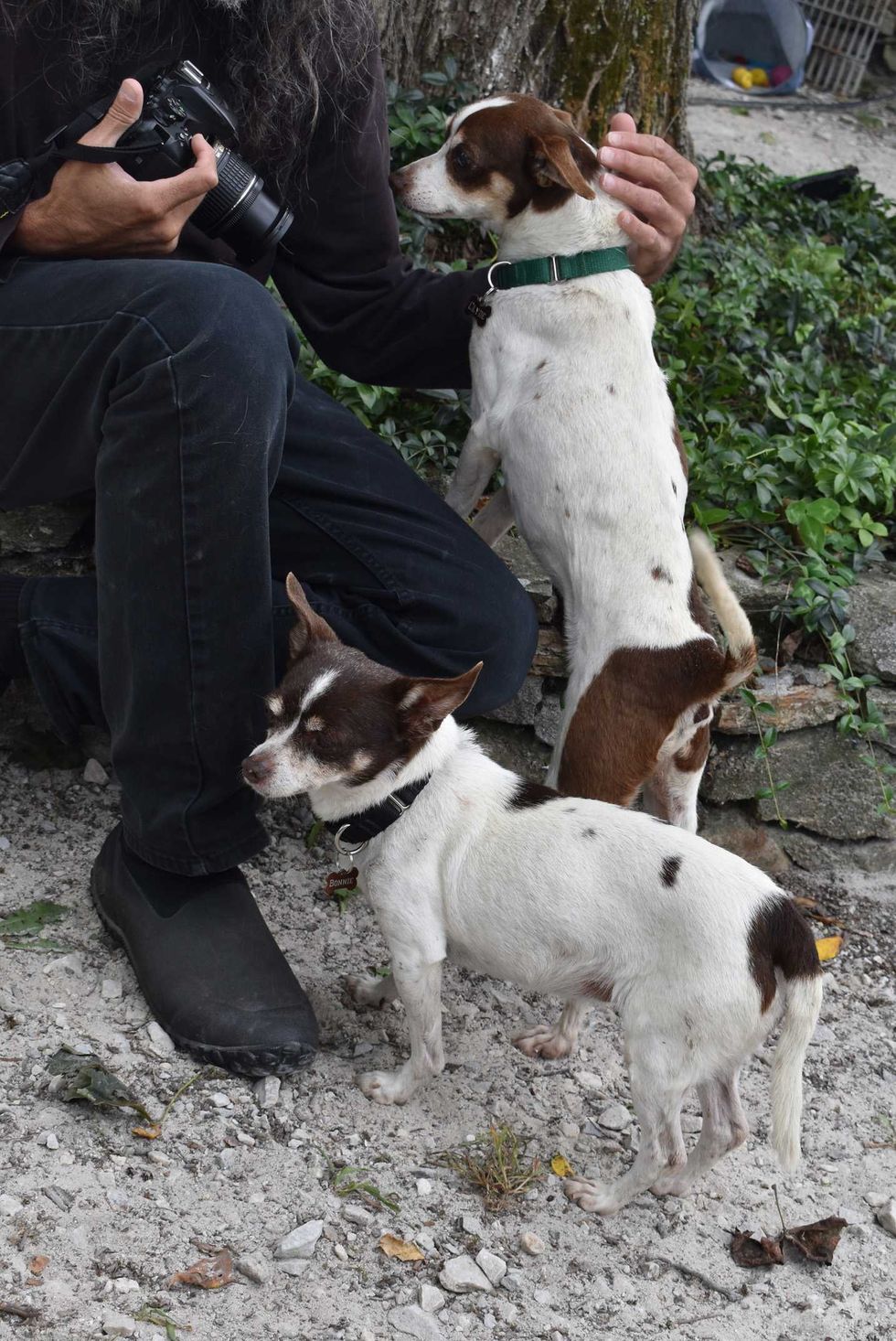 Bonnie and Clyde, an affectionate terrier pair.L. Tomaino