CORNWALL — Anne Attfield Hubbard, 91, formerly of Cornwall and Bronxville, New York, passed away at her home in Delray Beach, Florida, on Sept. 10, 2024. She was the wife of the late Thomas Johnson Hubbard, also of Cornwall and Bronxville.
Anne was English by birth, born in Liverpool on June 6, 1933. With the onset of World War II, and aerial attacks on British port cities, a program was organized to bring children to America for the duration of the war, to be cared for by American families. A great many British children crossed the ocean by ship (some accompanied by their mothers, others not) and were accepted into American homes. Anne, her younger sister Gillian, and their mother made the crossing in 1941 and were welcomed in the home of David and Harriet Dickenson of Binghamton, New York.
As it turned out, the sisters didn’t return to England after the war’s end in 1945. They had been attending school in Binghamton, making friends and adapting to the new surroundings. When their parents’ marriage dissolved, and with their mother moving west to begin a new life and family in Colorado, it was decided that Anne and Gillian should remain with the Dickensons in Binghamton, so as to cause the least amount of disruption to their lives.
Anne thus enjoyed an American family upbringing, while keeping in contact all her life with her English relations. She attended the Baldwin School and Smith College, traveled abroad in exchange programs to Denmark and the former Yugoslavia, trained as a secretary at the Katherine Gibbs School in New York, and was employed at a New York law firm where she met Tom Hubbard, a lawyer and Navy veteran. The couple married in 1958.
Anne and Tom lived first on Manhattan’s Upper West Side before moving to Bronxville in 1961 with a growing family. With dogs in the front of the car and four children in the back, they decamped on weekends to Cornwall, where Tom had been raised. While he practiced law during the week in New York, Anne raised the children and volunteered on behalf of Planned Parenthood and other Westchester County charities. In summer, with children away at camps, Anne invariably went abroad with Tom to visit her family in England and travel throughout Britain and France, taking care to mail back an endless stream of postcards crammed with details.
Later in life, Anne and Tom made cause with a great many cultural and charitable organizations. Their commitment to service work was exemplary; they were honored in return by a host of enduring friendships. The New York Botanical Garden, Smith College, Peconic Land Trust, Preservation League of New York State, the Cary Institute, Scenic Hudson and the National Trust for Scotland were just some of the recipients of Anne and Tom’s devotion.
In Cornwall, Anne quietly left her mark on behalf of conservation, affordable housing and the underprivileged, and was a loyal supporter of Cornwall’s Library, Child Center, Historical Society and United Church of Christ. When the Marvelwood School moved in 1995 from the Village of Cornwall to its present location in Kent, Anne and Tom were important participants in the effort to preserve the Village’s character by re-purposing the former campus buildings as residences.
With the onset of Parkinson’s, Anne demonstrated ever more strength and commitment to her family, friends and charitable work. She was determined that the disease would not stop her from carrying on with life. With Tom’s unending help, she continued with a remarkable measure of grace, “retiring” only after his death in 2017.
Anne is survived by her children, John, Daniel, Harriet and David, their spouses, and by grandchildren Kevin, Sarah, Max, Emily, Annie, Iris and Ava; by her sister, Gillian Attfield, and half-brothers Ward and Hugh Cheney and their families.
Plans for a memorial service will be determined at a later date.

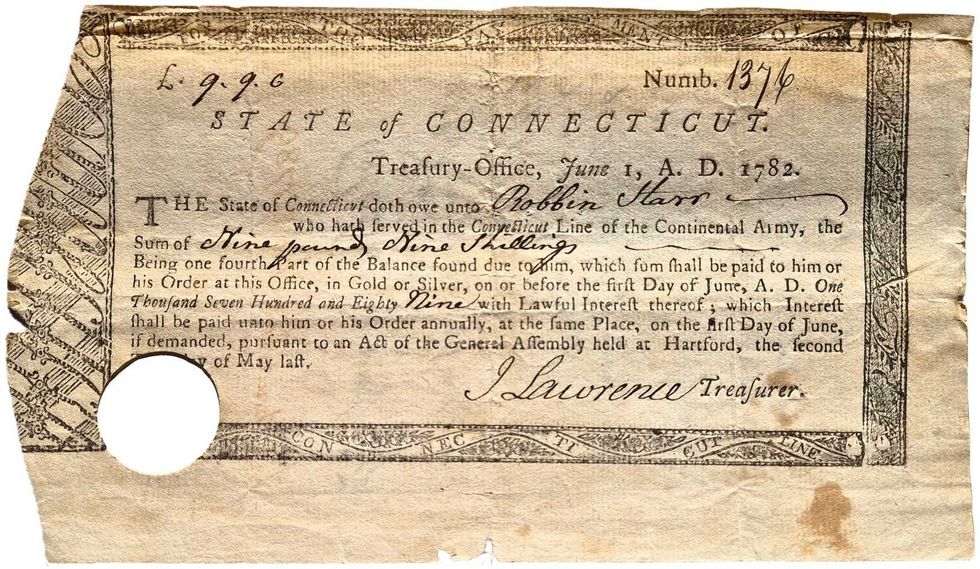 Pay Bill for Robin Starr’s service in the Continental Army.Courtesy the Alex Breanne Corporation
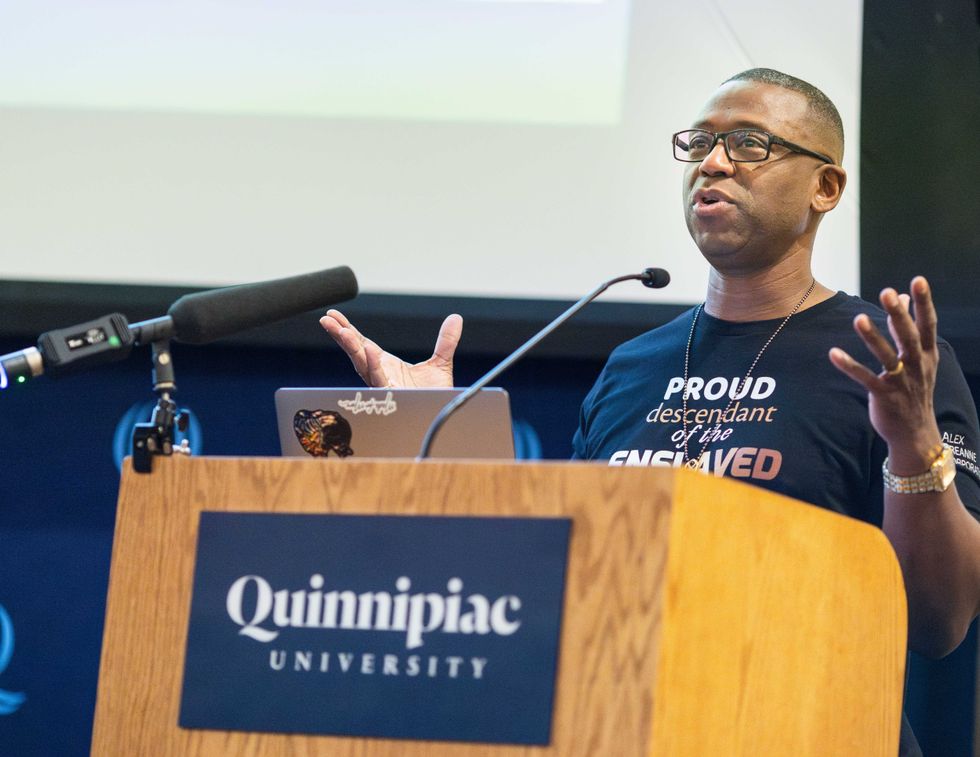 John Mills speaking at Quinnipiac University.Courtesy the Alex Breanne Corporation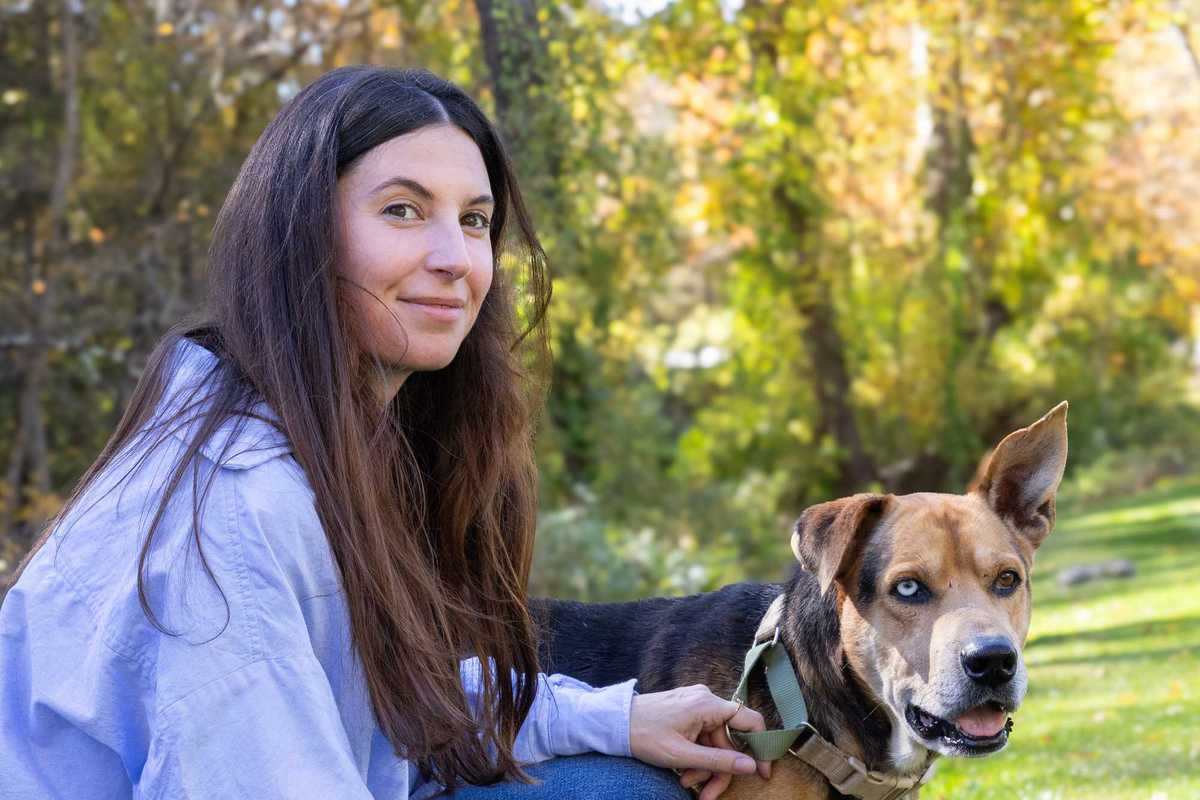
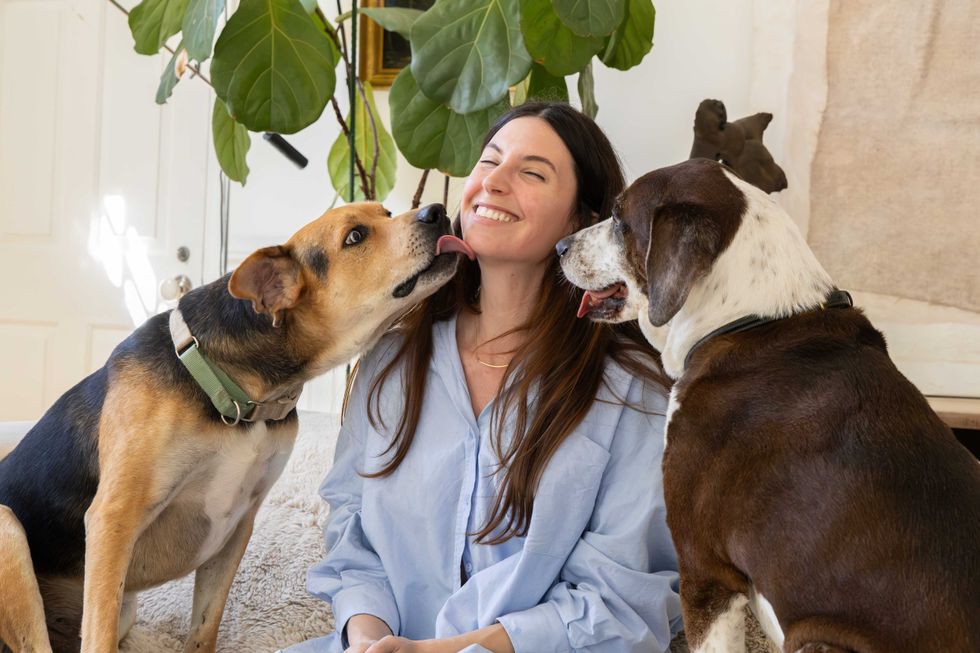 Stephanie Saetta,with her rescue dog George and Blue (left), a shepherd mix awaiting his forever home.Madi Long