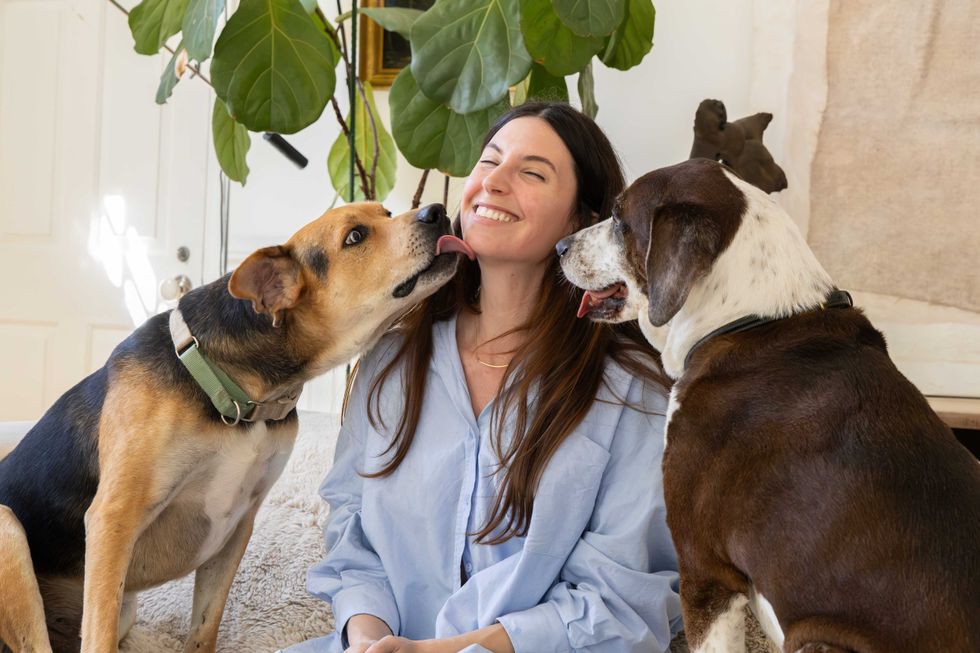
Elizabeth Wing, ND at Violet Hill Naturopathic Clinic in Sharon
Natalia Zukerman


Elizabeth Wing, ND at Violet Hill Naturopathic Clinic in Sharon
“The body’s natural state is health and if it’s not healthy, we always ask: why not? We’re trying to help the body heal itself.”
— Elizabeth Wing, ND
Perhaps you’ve driven by the house on route 41 in Sharon that is undergoing a paint job transformation, blooming slowly into a deep, resonant purple. This is Violet Hill Naturopathic Clinic, run with deep care by Elizabeth Wing, Doctor of Naturopathic Medicine, who is devoted to tending to the whole person — body, mind and spirit. At Violet Hill, medicine is a conversation and a return to balance.
“Naturopathic medicine approaches the body and healing differently,” Wing explained. “The body’s natural state is health and if it’s not healthy, we always ask: why not? We’re trying to help the body heal itself.”
Originally from Rhinebeck, the purchase of her new home and business at 40 Gay Street was serendipitous. “We moved here in the height of COVID,” said Wing. “We didn’t have housing worked out, and by some miracle, we got this house.” The building, formerly a doctor’s office, seemed meant to be.
A graduate of naturopathic school in Seattle, Wing brings extensive experience to her practice. She primarily treats endocrine disorders, digestive issues, and autoimmune conditions, with a particular focus on reducing inflammation and improving overall health.
“New patient appointments are anywhere from 90 minutes to two hours,” said Wing. “We go through a full health history and there’s a lot of time for education around how certain things in the body are connected. For example, why your gut problems could be connected to your eczema, or how gut problems can also end up with some hormone dysregulation.”
The clinic offers unique services, including quarterly CT thermography imaging and constitutional hydrotherapy, which every new patient receives for free. “It helps calm the nervous system and helps with detoxification,” Wing explained. “This treatment has been shown to increase white blood cell count for several hours afterwards.”
Wing is accepting new patients and the wait time for an appointment is generally less than two weeks. “I’m personally pretty committed to trying to be as accessible as possible,” she said. “I try to be really good about responding to messages. That old kind of country doctor feel is kind of what I have in mind.”

Jacquelyn Drain
Farming in the U.S. has changed dramatically over the past 50 years, as consolidation and difficult economic conditions have reduced the number of active farms nationwide by nearly 30%.
New York has been especially affected. The state lost 10% of its farms between 2015 and 2025, nearly twice the national rate during that period. Farmers in northeastern Dutchess County attribute much of the decline to rising labor and equipment costs that many operations can no longer afford.
Turbulent weather has also caused a loss of crops. After the freeze in April, New York State Senator Michelle Hinchey is calling on the Secretary of Agriculture to provide low interest loans to farmers who experienced crop loss because of the extreme conditions.
Following the nationwide implementation of tariffs and high gas prices in the area, output costs have skyrocketed. This has impacted items such as packaging, machines and parts for equipment, which are essential for farmers, throwing off their losses to profit ratio, decreasing their net income. Finding and paying employees a livable wage is another issue facing these businesses with a high cost of living and the seasonal nature of working in this industry.
The Hudson Valley has also migrated away from dairy farming, a once thriving industry in the area, to more industrial and community supported agriculture models in order to survive.
Sarah Chase owns and operates Chaseholm farm in Pine Plains, one of the few remaining dairy farms in the area. Chase expressed these concerns regarding rising costs. After taking over her family’s dairy farm in 2013, she has had to raise prices to combat increased expenses.
“There didn’t seem to be much of a way around it, especially because our employees continue to need increased wages with their costs going up too,” Chase said. “Everything is expensive and that makes it harder to farm.”
Julie Schroeder, owner of Silamar Farm in Millerton, is considering selling after significant changes in the industry. The commonality of farmers leasing land rather than owning property due to high costs has changed the culture significantly.
“When we bought the farm in 1963, there were 49 mostly dairy farms in North East,” Schroeder said. “Now, there are very few farmer-owned farms that haven’t sold their development rights.”
Sisters Hill farm in Stanfordville, owned by the Sister of Charity of New York, is closing after 27 years as a part of the congregation’s downsizing which began in 2023. Dave Hambleton has been a Farmer and Director of the property since its opening and has trained nearly 70 apprentices during his time there. Without having ownership of the property despite running the farm for the last nearly three decades, Hambleton is feeling the effects of land easements.
In the Hudson Valley, small businesses have been vital in keeping farms alive. By consistently purchasing from and working directly with farmers, local restaurants and grocery stores have been able to forge a mutually beneficial relationship.
Tri Corner F.E.E.D., a food market in Millerton, is bridging the gap between farmers and shoppers who are often priced out of eating locally. The store offers a sliding scale for pricing, ensuring that people of all incomes can afford locally grown, healthy food.
“Food at the price that the farmers need to receive is sometimes inaccessible for a large amount of our community that have interest in local food,” said Blake Myers, director of food programs for Tri Corner F.E.E.D. Industrial growers are able to achieve higher economies of scale due to their increased output and in turn offer lower prices for customers.
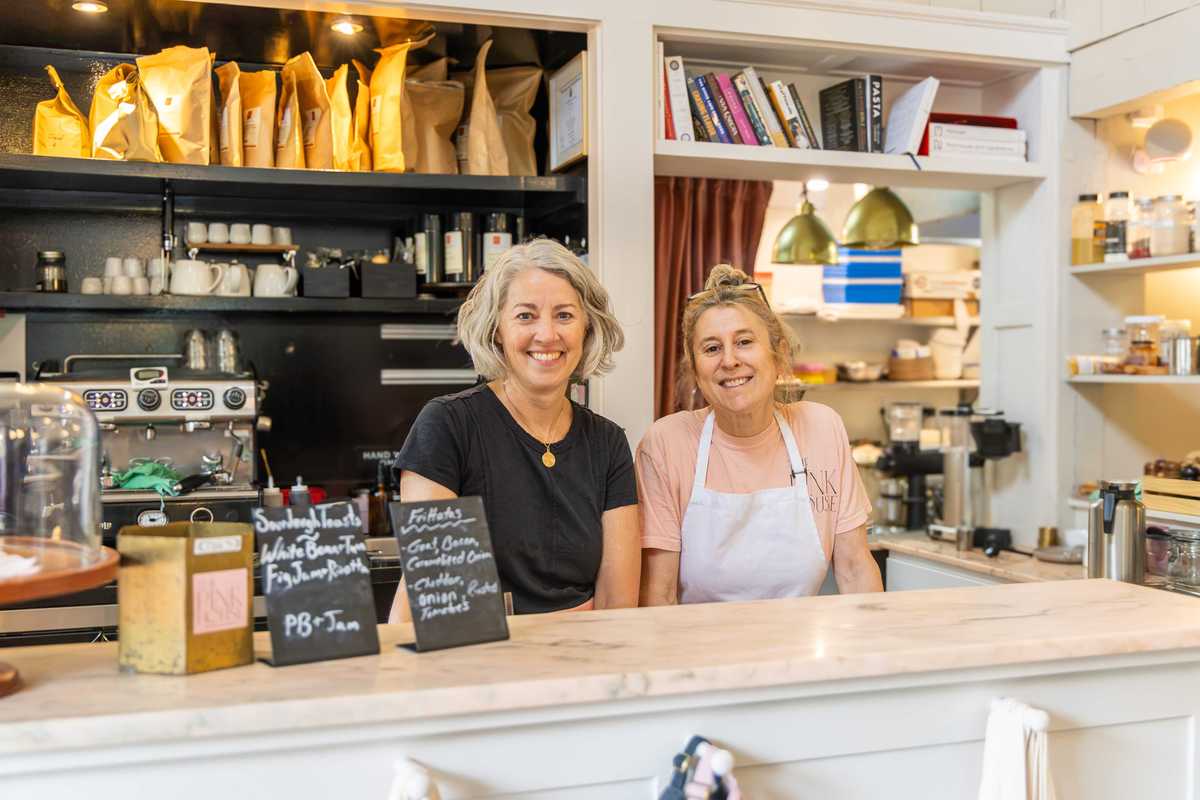
Full Circus Farm, owned and operated by Miriam and Mark Stonehill, primarily sells their fruit and vegetables to local farm stores such as Tri Corner F.E.E.D.and Big Rock Market in Stanfordville.
“One of the great things about working with local farm stores is that they aren’t dictating our prices, we set our prices,” Mark Stonehill said. “There’s a lot of farmers that aren’t in that lucky position.”
Farm to table restaurants also have been a resource for farmers in the area. Willa, a Millerton restaurant specializing in sourcing locally grown ingredients, opened in 2023. Willa prides itself on showcasing a menu that changes nearly every day based on seasonal availability.
“We are really blessed where we’re located in this area because there is such a bounty of small scale organic farmers and we’re able to source from such a close radius,” said Alanna Broesler, co-owner of the restaurant.
Despite these efforts to support local farms, some restaurants must source their food from greater distances to make up for the recent decline in output. Pasture Kitchen, a farm to table restaurant in Millerton, gets approximately 60% of their food from farms in the Hudson Valley, citing availability issues for this widened radius.
“It definitely does make you have to work a little bit harder to find those networks and they might not always be as close to home as you hope,” said Will Lanier, a manager at the restaurant.
Farmers also face challenges when working with local restaurants and stores. Full Circus Farm has moved to working with larger distributors such as the Hudson Seed Company in addition to local businesses.
“It can be really tough to work really closely with another business and then they go out of business,” Stonehill said. “That’s one of the challenges of farming and selling locally is that it’s a difficult business environment for other small businesses.”
In light of these hardships, interest and support from the community is largely valuable in sustaining local farms despite the current turbulent conditions.
“I could not do what I do without interest from community members and where their food comes from,” said Sarah Chase. “It’s the only reason I exist.”
With these difficulties and significant changes in the industry, some farmers are persevering for the love of the game.
“There is a lot of joy in farming and we do it not because we are making millions as farmers,” Stonehill said. “We do it because we love the lifestyle. We love our 5-year-old and 7-year-old getting to grow up on a farm and know where their food comes from and understand in a really special way the natural world and how we as humans fit into that natural world.”
Jacquelyn Drain
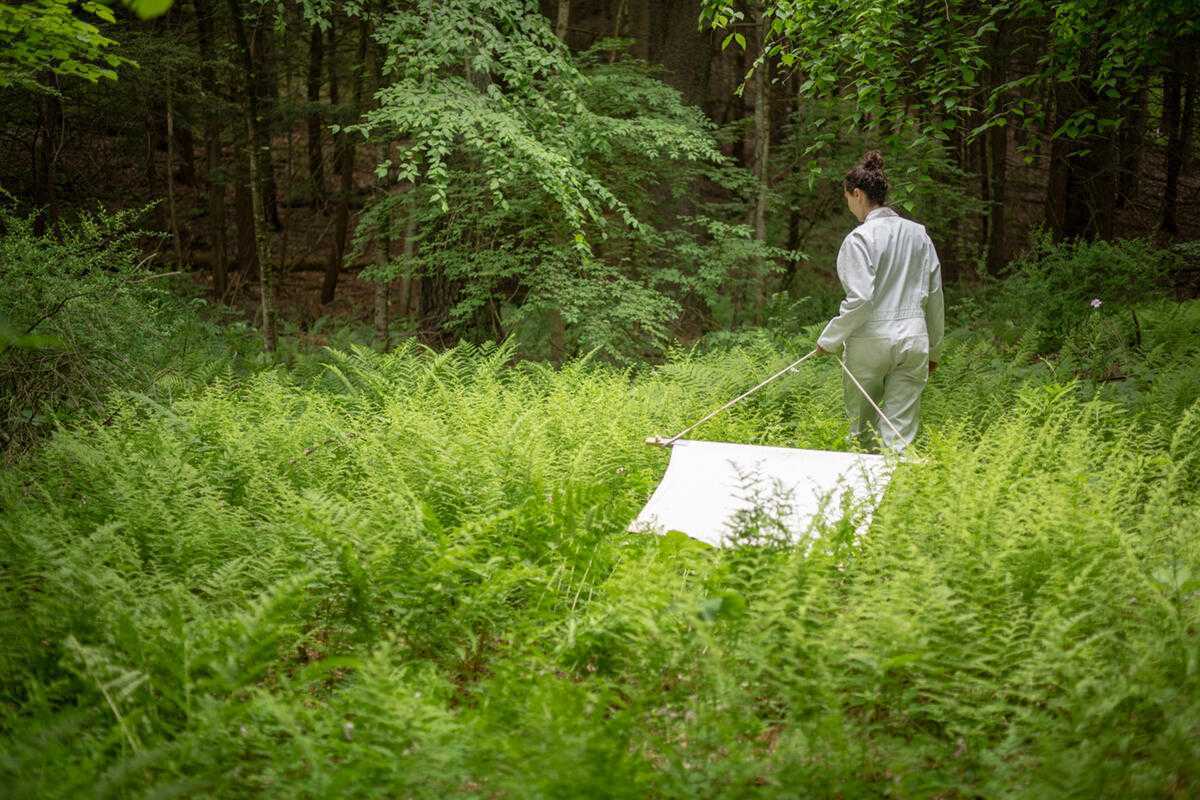
The retreat featured frequent walks through the woods around Yale Camp to take inspiration from nature.
FALLS VILLAGE, Conn. — I know nothing about nature aside from my reverence for its beauty. I took one environmental science class nearly four years ago but that is the extent of my knowledge. Despite this I had the pleasure of being surrounded by not only nature enthusiasts but also experts at the inaugural Yale Camp Writers Retreat held at Great Mountain Forest.
The background of the retreat was an essential, calming character. The rustic and historic Yale Camp, founded in 1940, is nestled amongst 6,500 acres of woods on Canaan Mountain. With 15 hiking trails, the forest is home to beautiful scenery and creatures.
The retreat was created by author Tom Shachtman in honor of local writer Hal Borland. Borland lived on a farm on Weatogue Road in Salisbury, Conn., towards the end of his life where he wrote all but one of his classic books such as “When the Legends Die” and “High, Wide and Lonesome.”
All the retreatants varied heavily in background but we all came together to discuss the common interests of writing and nature. From corporate finance to lawyers to students, we all brought our individual expertise into the discussion and connected at meals and free time, forming genuine social bonds with strangers over a single similar interest.
After arriving around noon on Friday, I set up my bunk, introduced myself to my roommates for the weekend and began to outline my goals and mindset heading into the retreat. There is no better setting to journal than sitting on a porch in a rocking chair looking out at the vast trees and rolling hills of the Northwest Corner.
The first day I went on a guided nature walk to Old Man McMullen Pond. There was a perfect reflection of the light blue sky and bright clouds on the still surface as rushing water poured over a beaver dam next to the pond. I sat on a bench looking out at the magnificent sight in awe.
Over the course of the weekend I attended three different sessions led by varying nature writers. Todd Davis, a writer, poet and environmental science professor, discussed the importance of the natural world and how he conveys it in his writing, connecting nature to human experiences without exploiting it. Former Director of the Sharon Audubon Center Eileen Fielding gave a beginners’ explanation of ecology, which was personally much needed, and provided examples on how to communicate scientific information to be easily digestible for readers.
The most enlightening experience for me was poet and environmentalist Evelyn Reilly’s session on Ecopoetics, an idea created by poet Jonathan Skinner referring to how writing can change our relationship with the environment. In preparation for this session I was instructed to bring a nature poem by another writer that I enjoyed and a poem of my own creation. Before this assignment, I hadn’t written a poem since probably third grade. It was a daunting task, to say the least. But I put my head down and told myself it doesn’t have to be profound, you don’t have to be the next Mary Oliver, just write something. After I wrote it, my mom insisted on seeing it and when she began reading it out loud to my dad, I ran into the other room plugging my ears to not cringe at my work.
I showed up to the session on the second day, palms sweating, 14 copies of my poem in hand as well as a Rupi Kaur poem from her collection titled “Home Body.” Toward the end of the session, after discussing what it means to be an ecopoet and analyzing several examples, we broke off into groups of three to discuss. When it came time to discuss my poem after hearing from some of history’s greatest, I was shocked to receive positive feedback. Though I greatly desired approval from my peers, concerningly, I realized as they were reading it that it didn’t matter. I was happy with the message it conveyed and its connection between human life and nature. It didn’t need to be one of the great works of art, it worked well and that’s all that matters.
This retreat marked a much needed time of reflection, grounding and reconnection to why I write.
Having attended a religious high school, retreats are not a new experience for me. However, this was my first time being embedded in nature with the sole focus of writing. My relationship with creative writing is similar to that of an old friend whom I drifted apart from because I had neglected to give it attention and time. This three-day experience gave me the opportunity to reconnect with what it means to be a writer.
Despite being hugely out of my comfort zone surrounded by many new people — all of whom are much more experienced than myself — I received a sign that I was in the right place.
My favorite movie is “Dead Poets Society” and the film introduced me to the book “Walden” by Henry David Thoreau. In the movie, the main character paraphrases a line from the book which reads, “I went to the woods because I wished to live deliberately, to front only the essential facts of life, and see if I could not learn what it had to teach, and not, when I came to die, discover that I had not lived.” Reading the book has always been on my bucket list but landed on the back burner for many years.
The first night of the retreat featured a raffle for campers to choose from a selection of books. When my name was called toward the end I approached the table and my eyes immediately darted to a 1939 copy of the book. I immediately grabbed it and couldn’t put it down the rest of the weekend. I knew that book was there for me and I was in the right place to learn how to suck out all the marrow of life, as Thoreau professes.
Jacquelyn Drain
Lilly Simons and Lauren Simons are proposing to turn the building at 185 Route 44 into an eight-unit apartment building. The structure once served as a restaurant and then as office space but has been vacant for several years, Lauren Simons said.
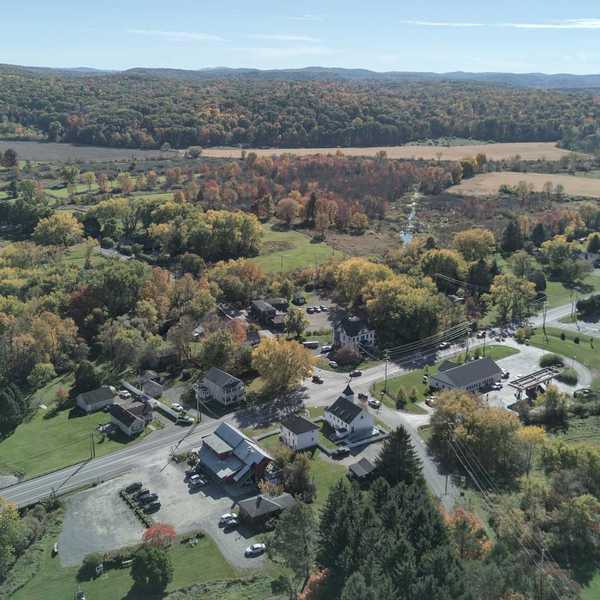
MILLERTON — The Greyhouse Apartment conversion occurring on 181-185 Route 44 made progress this week toward bringing the first housing to the Town of North East’s boulevard district following the area’s rezoning in April.
The North East Planning Board continued discussions on site plans for the apartments at their meeting on Aug. 12. The project, proposed by local petroleum distributor GRJH Inc., seeks to convert a former office building into eight apartments. Plans call for five one-bedroom apartments, two two-bedroom units and one studio.
At the meeting, mother-and-daughter duo Lauren and Lilly Simons presented on the changes made to plan drawings following the board’s last meeting on July 22. Since the meeting, the owners have agreed to install one EV charging station per the zoning requirements. Additionally, an inspection was done and concluded that the septic tank is not compromised in any way.
Despite these changes, there is still more that must be done in order to finalize the plans.
The town’s zoning law requires that a sidewalk be installed in front of the complex because it is in the boulevard district. However, there currently is no sidewalk along Route 44 to connect to at either edge of the property.
“We really can’t incorporate sidewalks without the rest of the development happening alongside with our budding property,” said Lauren Simons. “Do you want us to put a four foot sidewalk in front of our property going nowhere?”
Without existing sidewalks to connect to, consistency and location are large issues if individuals decide for themselves where and when sidewalks are installed.
“You’re basically saying whoever does it first decides for everybody where it’s gonna be,” said Dale Culver, chairman of the board. “What if the guy that finally starts the sidewalk decides ‘I don’t like their trees so I’m gonna put the sidewalk here,’ and then they are forced to take out those trees. I can see it happening.”
To curb this confusion, the board will draft an addendum for all plans moving forward until grants are found to create a pathway across Kelsey Brook and to install sidewalks on the road. The passage will state that property owners understand that they will be financially responsible for adding sidewalks in accordance with what the town decides in order to ensure consistency.
“Until we have a way for crossing Kelsey Brook, it is ludicrous to talk about putting sidewalks in,” Town Supervisor Chris Kennan said.
There was significant debate on whether or not the complex is required to provide an affordable housing unit. The zoning law states that if a complex has 10 apartments there must be one affordable housing unit. Beyond 10 a rounding system is used, meaning if there are 16 apartments that translates to 1.6 which would then be rounded up, requiring two affordable units. Confusion stemmed from whether or not the rounding applied to properties with fewer than 10 apartments which would then require the Simons to include an affordable unit.
“It’s just common sense to me that the language is crystal clear,” said Board Member Leslie Farhangi. “Less than 10 means no affordable housing unit needed therefore it stops, you don’t even go to the next section to consider rounding.”
The plans also include an office space on the first floor. The board stated that because the complex is not to be used for business purposes, it must be clearly defined that the office will not be rented out and will be used as a leasing office.
The board directed that before the next meeting, GRJH Inc. must present clarified information about the proposed lighting. Additionally, they must add the phrase “on site rental office use” to the plans to specifically define the proposed leasing office.
A public hearing has been set for Aug. 26 on the condition that the outlined changes be made to the plans with submission to the board at least a week before the hearing.
“We don’t want to hold the project up if it is going to create sorely needed units in our town,” Culver said. “But knowing on your end that the details have to be there.”

Want more of our stories on Google? Click here to make us a Preferred Source.
Graham Corrigan
PINE PLAINS — The Pine Plains Planning Board met last week to discuss the new grocery store at 7723 S. Main St., hear a request for timber harvest at 3228 Route 199, and review site plans to settle an easement dispute at 2775 Church St.
Only one of the three went as planned — the South Main street owners postponed their appearance, and site plans for the easement on Church Street were not submitted in time.
Plans for a timber harvest on Route 199 moved forward. Christopher Prentiss, representing Lower Hudson Forestry Company, detailed plans to harvest 42 of the property’s 78 acres. 426 trees will be removed, and 25 log trucks will complete the job in about six weeks.
The property has been managed by the New York Department of Environmental Conservation since 1988. No harvesting will occur within 800 feet of the wetland on the property’s eastern border.
A public hearing will be held on Sept. 9 at 7:30 p.m.
Drainage dispute on 199
Elsewhere in the meeting, a property dispute between two properties adjacent to Stissing Mountain Jr./Sr. High School continues to drag on.
The property owners, Gallatin Barn Creations Inc., were represented last week by attorney Thomas Angell. They allow Ceen Properties, an industrial lot behind their property, an easement for their driveway. Gallatin Barn Creations is asking Ceen to widen and pave the driveway — and cover the maintenance for 10 years. After that, the cost will be split between the two owners. They’re also asking Ceen to improve the new drainage system, replacing the old with a new one, designed by a professional engineer.
Those plans have yet to materialize. At the Planning Board’s August meeting, Ceen representative Wesley Chase was apologetic. “The plan of attack was to bring the map with the amended application,” he said. “But after speaking with the board, I did not have time to get the application.”
Ceen is currently navigating another dispute. In April, they appeared before the Planning Board after propane tankers were sighted in their lot. When it was initially approved in 2022, the space was planned for campers and boats. The town issued a violation order for parking propane trucks at a site not approved for that use.
“I don’t know what the rules and regulations for these trucks are, but that would have been explored in a site plan and special permit review process,” Planning Board Attorney Warren Replansky said at the time.
In the months since, Ceen has been working on a full survey of the site with a detailed site plan. But the town will have to wait another month to see it. Gallatin’s representative claims the driveway is twice as wide as the allowed 10 foot easement. Additionally, they claim Ceen built a retention pond that drains from Ceen’s property into Gallatin’s.
“My client and Ceen’s ownership have been friends for decades,” Gallatin’s representative said. “He was trying to work something out for them, and I don’t think it’s unreasonable.”
“It pains me to see members of the community at each other’s throats,” said Planning Board Chair Michael Stabile.
Stissing Farms continues rental violations
The meeting closed with a discussion on the rental properties at 34 Town Centre Road. Known as Stissing Farms, the collection of condominiums was not initially approved as rental units. The Planning Board considered sending the owners a violation notice, and noticed that the original application had changed multiple times before landing on condominiums.
The board resolved to contact the property owners and ask them to meet with the board before progressing to a violation notice.
Millerton News
WEST CORNWALL — Jeff Rosati, 72, of West Cornwall, Connecticut, passed away peacefully on August 11, 2026.
Born in New Milford on January 18, 1954, Jeff was the devoted son of the late Kathren Valtrum.
After graduating from New Milford High School, he began his career with Eversource as a meter reader, dedicatedly serving the company for 42 years before retiring in 2014 as Chief Garage Mechanic.
In 1979, during a chance meeting while getting a haircut, Jeff met the love of his life, Bernetta (Marshall). Their love story was one for the record books, sharing a deeply devoted marriage of 45 years.
In 1983, Jeff and Bernetta found their forever home in Cornwall, building a life centered on hard work and quiet kindness.
In his retirement, “Little Jeffy” was happiest being outdoors or in his barn. He loved tinkering on projects, tending to his garden, and caring for his hummingbirds. A treasured friend who was always willing to lend a helping hand, he could often be found happily mowing the lawn or pulled over roadside on his beloved John Deere tractor catching up with neighbors.
Jeff will be profoundly missed by his loving wife, Bernetta; the Marshall family of Crane, Texas; and countless friends across Cornwall who held him dear.
A Graveside Service will be held at North Cornwall Cemetery, Rattlesnake Rd., West Cornwall, CT on Thursday August 20 at 11:00 a.m.
Memorial donations may be made to St. Jude Children’s Research Hospital, 501 St. Jude Place, Memphis, TN 38105.
Millerton News
AMENIA — William (Bill) O’Connell died peacefully surrounded by family at Sharon Hospital on Aug. 12, 2026, due to complications of cancer. Bill was born into a large Irish Catholic family in Bay Shore, New York, on March 3, 1964. After Bill completed kindergarten, the family moved upstate, settling on Depot Hill in Amenia, New York, where he was a lifelong resident. He attended Catholic School at Immaculate Conception, transferring to Webutuck Middle School in the sixth grade. He graduated from Webutuck High School in 1982.
As a child he was an avid (obsessed) fisherman, asking for a new fishing pole every year for his birthday. He was given permission to skip school every opening day of fishing season. He cherished fond memories of growing up as a “Depot Hill Gang” member. He enjoyed playing soccer, basketball, and baseball throughout high school. While hitchhiking home from his job as a lifeguard at the Millerton Town Pool, good looks and charm got him discovered. First as a print model, then as an actor in eleven television commercials and as an extra in a couple of movies. Anyone who knew him at that time was fair game for a ride to the train station or directly into the city for the many auditions he went to. He was a painter by trade, working in partnership with his brother Michael, at O’Connell Painting for many years serving the tri-state area. Bill was adventurous, loved to travel, and spent several months on a walk-a-bout through Australia and New Zealand. Bill was always up for a concert, a Giants game, or picking the freshest berries on the way to a cool fishing spot. He was well known locally at many recreational leagues for indoor soccer, darts, pool, cards, and golf. He was quite a competitor at everything he enjoyed. Bill and Michael organized the annual O’Connell Paint Can Open for many years, with loyal enthusiasts flying in to attend year after year. In the latter years, complications from multiple ailments made his life increasingly difficult, dulling his natural shine. The bright spot of that time was how patient and attentive he was while caring for his mother, Frankie. Being present in her daily life so she could remain at home. This obituary was lovingly composed by his siblings, who loved him dearly.
Bill was predeceased by his parents, John & Evelyn O’Connell, and is survived by his three siblings; Karen Grimaldi (Mark) of Salisbury, Connecticut, Michael O’Connell of Florida, and Kathleen Lacko of Casper, Wyoming; two nieces and three nephews, Connor Washburn (Hannah), Mickaela Grimaldi, Liam Girmaldi, Kenny Lacko, and Marykate Lacko, dozens of cousins, and countless friends who will miss him tremendously.
A graveside service and burial will take place on Thursday, Aug., 20, 2026, at 11 a.m. at Immaculate Conception Cemetery in Amenia, New York. Rev. Andrew O’Connor will officiate. A reception in Bill’s honor will follow at the Amenia Steakhouse. Memorial contributions may be made to the Amenia Fire Company & Rescue Squad, P.O. Box 166, Amenia, NY 12501. To send an online condolence to the family, flowers to the service or to plant a tree in Bill’s memory please visit www.conklinfuneral.com Arrangements have been entrusted to Scott D. Conklin Funeral Home, 37 Park Avenue, Millerton, NY 12546.

Want more of our stories on Google? Click here to make us a Preferred Source.

Want more of our stories on Google? Click here to make us a Preferred Source.