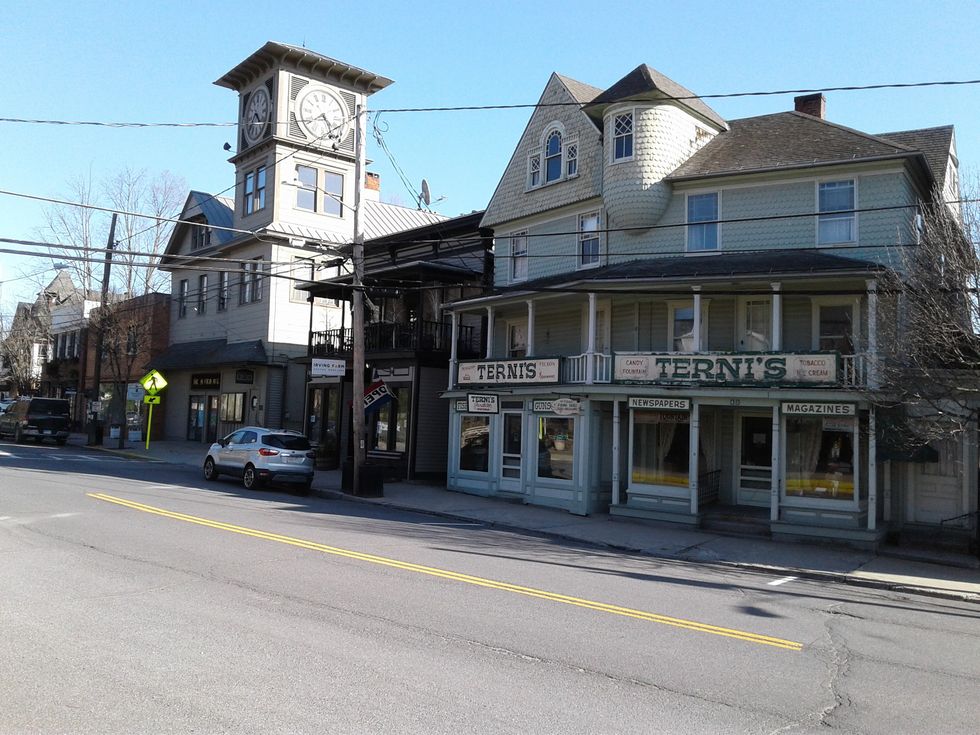
With so many changes taking place in the world today, including in our local business communities, The Millerton News has been taking a closer look at how the village of Millerton has evolved in the years leading up to the present day. The paper has been running a multi-part series on the many alterations that have taken place in the Millerton business district since it was first established in the late 1800s. This is the third and last part in that series.
Part III
MILLERTON — Today, of course, the hip village of Millerton offers many amenities and resources for locals and visitors alike — from the scenic Harlem Valley Rail Trail (HVRT) just steps from the Main Street shopping district to the oodles of antiques shops to the trendy spots where one can pick up anything from a 100% natural Pyrenean Duck Down duvet cover for a mere $1,533 at Westerlind to an 8 oz. jar of Meyer Lemon Rosemary Jelly from Les Collines at The Dig for a more reasonable $16 to a catnip seed packet from the Hudson Valley Seed Co. at Oblong Books & Music for an affordable $3.99 — but the one thing shoppers won’t find in Millerton these days is a grocery store.
Sans supermarket & sewer
In 1971 brothers Skip and Robert Trotta, who own the Millerton Square Plaza on Route 44 heading east toward the Connecticut border, opened the Millerton Super grocery store at the plaza; it later became the Great American, then Grand Union, and lastly, the space was leased by the owners of the successful Sharon Farm Market in neighboring Connecticut who opened it as the Millerton Fresh Market in 2017. However, the store’s model did not do well in New York and it closed in 2019.
Millerton has been without a supermarket- ever since — creating a huge void in its ability to remain self sufficient and forcing local residents to rely on convenience stores, farmers markets, food delivery services, specialty shops and food pantries for sustenance. None of these are practical for a community that wants to be 100% independent and build up its reputation as a place where economic development can thrive.
The village is also without a sewer system, which the Village and Town Boards have been actively pursuing; the Millerton Business Alliance (MBA) just launched a petition drive during the weekend of April 17, “to build support for the creation of a wastewater disposal system” in the business district.
Oblong Books & Music co-owner and HVRT Association President Dick Hermans, who was recently tapped to be on the town’s Economic Development Committee, said he’s confident a “grocery store will be on the top of their agenda,” words the town supervisor has himself confirmed to this newspaper. Hermans, who is also active with the Millerton Business Alliance, said he firmly believes a wastewater solution is essential for future economic development.
“I would just like to see the septic water disposal happen because it really would inspire people to fix our properties a little more and to fix up older buildings in town,” he said.
Hermans owns the Oblong property at 26 Main St. and has invested in his building over the years, making regular repairs to the older structure and improving property values in the village’s business district as a result.
Other Main Street upgrades and additions
Improvements are also being made right now at The Moviehouse, which was just sold on March 15 by longtime owner Carol Sadlon. Sadlon founded the theater and arts space with her late husband, Robert, in 1978. She sold the iconic entertainment venue to Connecticut buyers David Maltby and Chelsea Altman. The pair has big plans, which will keep the theater as an anchor in the business district and as a draw for residents from around the Tri-state region.
It’s one of the many reasons why Gillian Osnato, who is also from over the border but now lives in Millerton, said she decided to open a confectionery and ice-cream shop on Main Street — smack in the middle of the COVID-19 pandemic. Osnato named her shop Candy-O’s; it’s located at 28 Main St. She spoke of the village’s other attractions.
“I definitely think the Rail Trail is a really unique and exciting feature that draws people to the town, and then there’s The Moviehouse,” she said, “when it opens up again it will be a really fun and exciting thing to have, especially because as a kid that’s what we did, you would go to the movies and you would get excited to do that. Otherwise you had to travel so far.
“This really is a tourist town, even before the pandemic. You can’t go over the border to Lakeville or to Salisbury or Sharon even. The closest tourist hub is Great Barrington, Mass.,” she said. “This has become the spot, and it’s the kind of place where having grown up here and seeing it evolve is kind of amazing.”
Osnato’s father, Sal, owns the T-Shirt Farm, just a few stores down, at the corner of South Center Street and Main, where he sells all sorts of T-shirts that can be customized with graphic iron-on images along with sweatshirts and mugs and other novelty items. He’s been a Millerton merchant for years and encouraged his daughter to open, even though it was an unusual business climate. The risk was well worth it, she said.
A surprisingly good time to start a business
“There wasn’t anything like it,” said Osnato of her candy store. “We knew it would be a good fit… having sweets and everybody loves ice cream… Go to any destination town and there will be a shop like mine.”
In fact, Osnato has been so successful since opening on March 19, mainly catering to families with children after 3 p.m. on weekends, that some days she serves 100 people or more.
“I think people are ready to just indulge, in the best sense of the word,” said the new businesswoman, who praised her fellow Main Street merchants for being so supportive.
She also said, while realizing that business today is not like in the old days when everybody knew their neighbors and shopkeepers, she is getting acquainted with her regulars.
“I know a lot of them… and track new and returning customers; I’m getting a lot of returning customers and have my regulars already,” she said. “I already know what they’re going to get before they walk in the door. I have one gentleman who gets two scoops of vanilla with hot fudge and whipped cream. It’s great, it’s kind of really cool to see them; you get to know your customer by what they like and what they’re excited about. If they like a special candy I’ll order it for them.”
Shopping local
Osnato said she also makes it a point to shop locally herself, and support her fellow merchants.
“I just bought a birthday present for my sister at Demitasse next door, then I went to The Dig. I love the bakery, and obviously I love my dad’s shop; I love shopping locally,” she said. “Obviously there are things you can’t get locally but people are starting to fill the void. You can go into The Dig or Demitasse and get a toothbrush made of wood or recycled materials that is eco-friendly, and that’s good. Then there’s the bookstore, which I love. The only thing we really need is a grocery store. I get my lunches all the time at Irving Farm or the diner, and get dinner take-out. It’s nice to get to know the people in the community.”
Part of the next generation, having just turned 32 on May 4, Osnato said shopping locally is incredibly important to her.
“The idea of supporting businesses locally that need our support is great; instead of shopping on Amazon I said I’ll go see what I can get in town and support merchants locally,” she said. “I think that empowered me in a way, and I saw how everyone was successful.”
One thing she would really like to see added to the business community besides a grocery store? A shoe store.
“Just the other day I thought I need a pair of shoes and wished we had a cool small shoe store,” said Osnato. “We need something like that. We need to bring back all those small merchants that you see in those busy popular towns because locals shop there as well as people visiting and people like to see that uniqueness.”’
Which is the ultimate balance long-time residents, business owners and their workers, as well as the newcomers who fall into those categories seemingly want to strike — to create a community that provides for everyone — all of whom seem to fall into the broad definition of “locals” and all of whom clearly feel an ownership and a love for the village of Millerton.


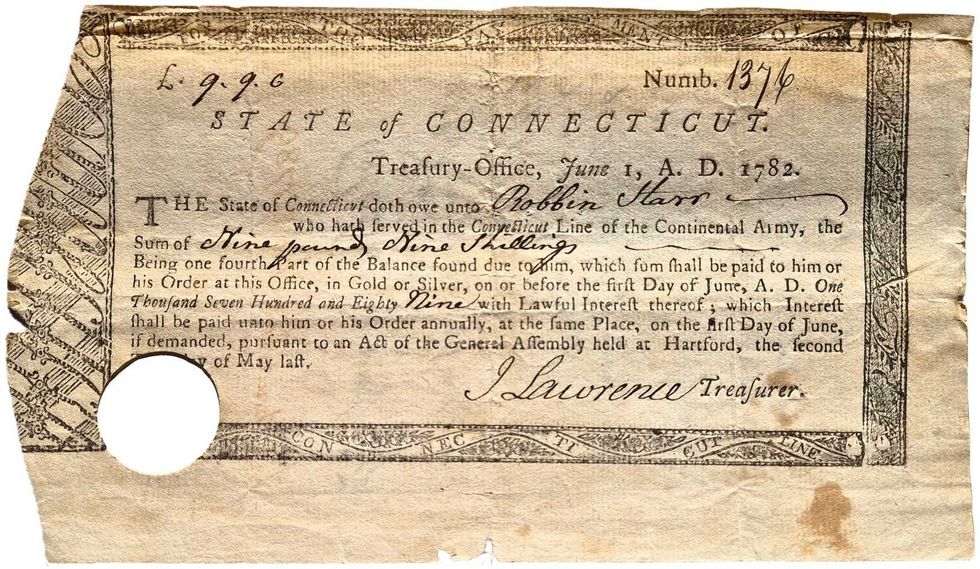 Pay Bill for Robin Starr’s service in the Continental Army.Courtesy the Alex Breanne Corporation
 John Mills speaking at Quinnipiac University.Courtesy the Alex Breanne Corporation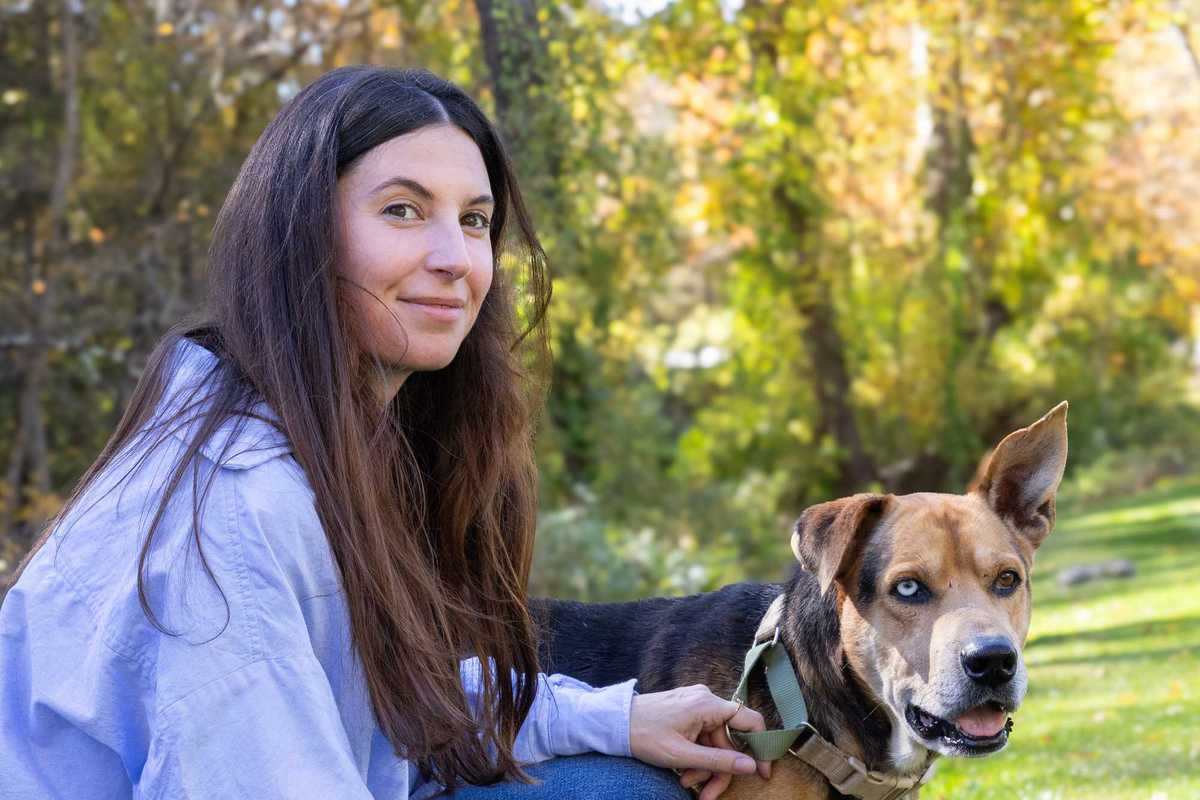
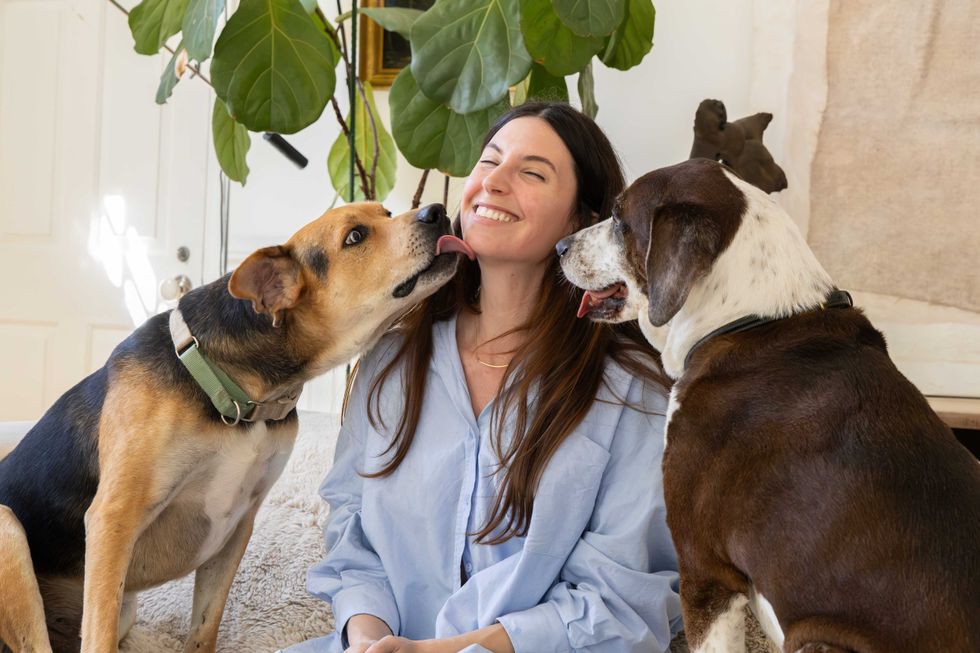 Stephanie Saetta,with her rescue dog George and Blue (left), a shepherd mix awaiting his forever home.Madi Long