MILLERTON — The difference of opinion regarding the Millerton Police Department (MPD) and its worth is again voicing itself, with some supporting the MPD and all it does to protect the community and others charging it’s overzealous in its enforcement of local laws — minor and major.
The issue has been raised at recent Millerton Business Alliance (MBA) meetings. At one such meeting on Thursday, Sept. 13, village Trustee Christine Bates spoke against the department’s practices, claiming its enthusiasm winds up costing local merchants business.
Bates, who also addressed the issue briefly at the September Village Board meeting, explained why she takes umbrage with local police practices.
“What I hear, and from almost anyone I ask, and these are people who live in the village, and long-term residents who live here, is that [they] avoid going into the village because [they’re] going to be hassled. People complain about disrespectful treatment, and the village merchants say that they feel their business is affected by the police presence,” she said.
Adding fuel to the fire, Bates reportedly told Village Board members that both Dutchess County Executive Marcus Molinaro and Dutchess County Sheriff Adrian “Butch” Anderson are unhappy with the MPD.
In an email dated Sunday, Sept. 2, obtained by The Millerton News and sent from Bates to her fellow board members, which was addressed to Mayor Debbie Middlebrook, Bates called for a Village Board meeting on the subject. She said county officials had been talking about the MPD.
“In a public meeting, Molinaro and Butch Anderson commented on the ‘problem’ with the Millerton police,” she wrote. “We need to act to protect the village and exercise police oversight.”
Dutchess County Sheriff’s Office spokesperson Capt. John Watterson said Bates’ statement was untrue.
“Sheriff Anderson did not make any negative comments about the Millerton Police Department at that meeting,” said Watterson. “He has a great deal of respect for the Millerton Police Department with Officer-in-Charge Rudin and always enjoyed a close working relationship.”
The perceived problem
What’s at issue, said Bates, is the Village Board doesn’t have a really good sense of what the police department is doing with its time. During regular monthly department reports presented to the board, Millerton Police Officer-in-Charge David Rudin provides a rundown of police activity, including the number of arrests made that month. But, said Bates, she’d like to have the report include all incidents, including when people are stopped but not ticketed, when people are ticketed, arrests (and the reason for those arrests) and complaints that the department deals with on a regular basis.
“We don’t receive any kind of reports on people that are just stopped and not given a ticket,” Bates said.
One specific charge made by the trustee is that the police are too strict when pulling over drivers suspected of driving while intoxicated (DWI). Bates said merchants claim the department’s reputation for being on the hunt for drunk drivers, especially around local restaurants and bars, is keeping customers at bay.
“The village merchants are up in arms,” stated Bates in her email to the mayor.
Restaurateur Eleanor Nurzia, owner of 52 Main, leveled similar complaints at the MBA meeting.
“Based on my experience and based on the feedback I’m getting… there’s definitely a propensity of concerns,” she said. “There are people that are getting pulled over for nuisance concerns. There’s a lot of this going on and people are sharing this with me.”
Doing a job
Rudin, for his part, said that his men do their jobs, and a large part of that is keeping tabs on what’s going on in the village. But, he said, his officers don’t overstep their bounds.
“I don’t micromanage,” said Rudin, “but I do ask the guys to try to give warnings. But if somebody turns around like they’re not doing their job… That’s the job of the police, to make traffic stops.”
The top cop added that tracking all of those stops doesn’t make a lot of sense.
“I’m not certain it serves a purpose to keep track of stuff like that unless somebody is giving you money for a grant,” said Rudin, who added the department does keep track of the sex and nationality of those stopped by officers — a habit that began after a study was conducted years ago. “That’s pertinent information. We don’t want anybody to think we’re targeting people because of the color of their skin or gender.”
Rudin added that “there will be a way to determine how many traffic stops are made eventually,” but until then it’s not a priority, or even a necessity.
The benefits of a local force
As with most things, the department enjoys support just as it faces criticism. Those who support the police praise the MPD for doing its all to keep the roads — and the community — safe.
Realtor Brad Rebillard sees a lot of people who evaluate the pros and cons of Millerton — people looking to buy property in a nice neighborhood or in a bustling business district. He said there are advantages to having a dedicated local police force.
“As a Realtor and property owner in the village of Millerton, if you asked me if the village police force is an asset, I would say ‘Yes, because they represent the entire community,’” he said. “My statement is I do believe there is a need… and I think it’s an asset for Millerton compared to other communities.”
For many, having a local, dedicated police department is a major bonus. After all, not all towns or villages do. Locally, Pine Plains has a police force, as does Millbrook. Amenia does not, nor does Dover, Copake, Ancram or Hillsdale. Instead, many area residents rely on the New York State Police (NYSP), the Dutchess County Sheriff’s Office (DCSO) or, further north, the Columbia County Sheriff’s Office. The DCSO is based out of Poughkeepsie with a small substation in Amenia. The NYSP has its Troop K barracks in Millbrook, with a small outpost in Dover Plains.
Though both the state police and the sheriff’s office are often relied on by local municipalities- — and both have strong records of fighting crime and keeping communities safe — they can’t cover all of Dutchess County all at once. So, when a call comes into 911, it might take upwards of 30 minutes for a deputy or trooper to respond, according to Rudin. A local officer can respond in a matter of minutes.
That time is precious, he said, as Emergency Medical Services (EMS) can’t enter a crime scene and provide care until it’s deemed safe by police. That could mean vital time lost while waiting for authorities to arrive.
A PR problem?
Village Trustee Matt Hartzog was at the September MBA meeting, as well as at last month’s Village Board meeting. He said the village is getting a bad rap.
“My main concerns are that there’s a perception that the Millerton Police Department has a public relations problem, because people complain,” he said, adding “it would be great if we knew a little more about the type of crime that’s happening.”
And that’s what Bates wants. To know when police respond to an incident, if it’s for domestic violence, a drug overdose or harassment or, if a traffic stop, if it’s for DWI, speeding, not using a blinker or something else. Those statistics, she said, would help the Village Board better judge how the MPD is performing.
Though the mayor didn’t make a formal statement on the issue, she did have a brief exchange with Bates at the Sept. 17 board meeting. At that time, Middlebrook told Bates that she was not planning to comment on the actions of the MPD. She did say, however, that she and village Trustee Jenn Najdek “have had some conversations,” but “are not in a final position where we are ready to discuss” the matter.
In that short conversation, which was on the record, Bates pressed on.
“My point is the two of you are looking at the police department,” she said.
“I don’t know how I want to interpret what you are saying because I don’t know what that means, ‘looking at the police department,’” responded Middlebrook. “But Jenn and I are having some discussions on some things that we think we might like to see happen in the future.”
After both meetings, Bates told this paper that “everybody is in favor of getting rid of DWI drivers.”
She continued.
“I certainly think our police are overly vigilant, probably. But it seems like we’re getting fewer DWI arrests, so maybe that’s good,” she said. “But I think what the merchants were saying at that [MBA] meeting is that it’s affecting business. And I have heard from many well-heeled friends of mine, who say ‘I don’t go into the village because of the police.’ People who keep our commerce alive are not people who live in the village. They’re people from Connecticut, and weekend people, so… it’s just perplexing why the police… continue to behave in this manner.
“And we don’t know about all the great things they do either,” Bates added, noting the MPD deserves praise for a lot of its actions — many of which she said remain unknown to the Village Board. “I think more information, and more transparency, could only be helpful.”



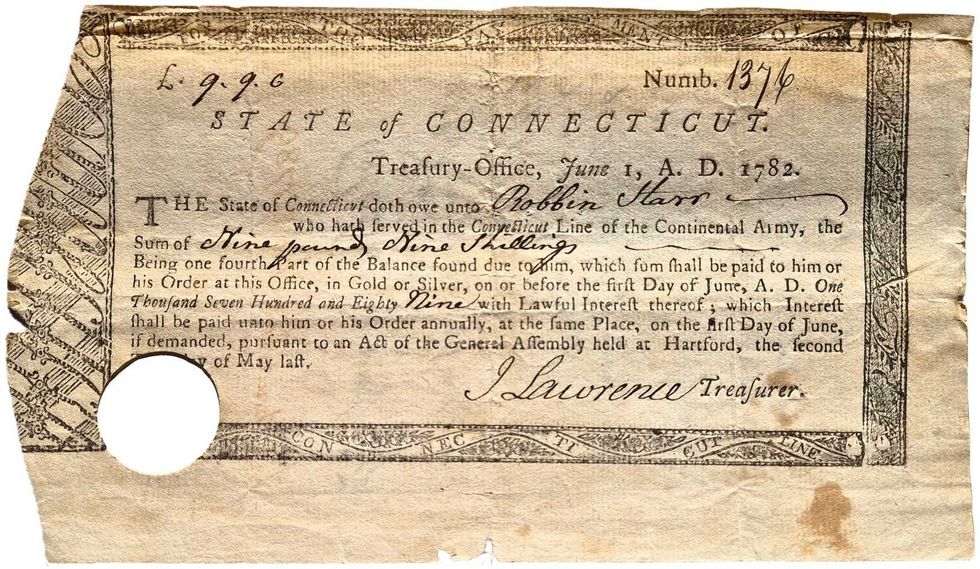 Pay Bill for Robin Starr’s service in the Continental Army.Courtesy the Alex Breanne Corporation
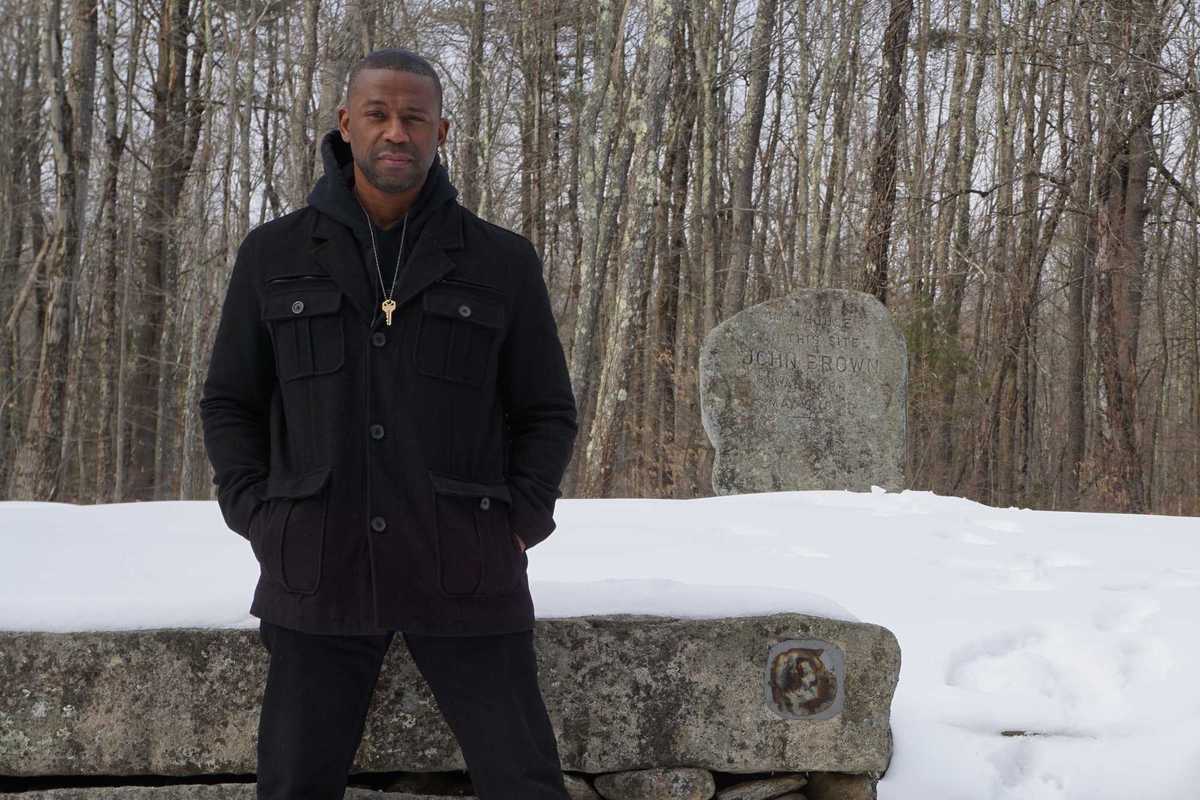
 John Mills speaking at Quinnipiac University.Courtesy the Alex Breanne Corporation

 Stephanie Saetta,with her rescue dog George and Blue (left), a shepherd mix awaiting his forever home.Madi Long