When television started, commercials were permitted at the top of the hour, between shows. Soon the advertisers, seeing the success of this new publicity tool, insisted on a more regular appearances of their message. After a transition (when even Lucy could be seen hawking the sponsor’s product every 15 minutes), the Federal Communications Commission, heavily lobbied by money interests, mandated that commercials must appear at least every 20 minutes. And then the networks increased the number of ad slots and sold them at considerable profit.
The golden years of television were the ‘60s and ‘70s — a controlled concentrated audience, few channels to watch and advertisers desperate to jump on the bandwagon of sales, marketing, and broadcast profits.
By the late ‘70s, with more sets in operation, the viewership numbers were staggering, 10 times more people watched a hit show then as now and profits soared. The production budgets for shows like “The Mary Tyler Moore Show,” “M*A*S*H” and others were, in real dollar terms, three times even what “The Big Bang Theory” had to spend making classic 21st-century programming. I made an ABC Special in 1988 which had 22 million viewers. If you attracted that many viewers today, you’d be the king of all Hollywood.
So what happened? The advent of cable, more channels, and other types of viewing ruined this bonanza for the networks. Suddenly their viewer numbers started to plummet. Profits fell. What to do? Increase the revenue stream, add commercials. By the mid-‘90s, each one-hour program in a series ordered (one that I created) had to be “not more than forty-five- and one-half minutes.” Half hour series were delivered at 22 minutes, leaving eight minutes of commercials per half hour, or 16 minutes per prime time viewing hour – just over a quarter of an hour, per hour! Now, it’s even worse — you get to watch one hour of television with 20 minutes of commercials in one form or another.
Already, everything you see, everything you receive on TV, comes down the line. The problem is, with you now directly paying the supplier, how do the commercials fit in? Besides product placement, what the streamers are after is your profile, your identity, your likes and dislikes. If you watch home improvement shows, or football, or celebrity shows, you’ll get social media, email advertising, web advertising tailored to what they assume is your characteristics.
And it’s going to get worse. Facebook and Twitter (X now), TikTok, Instagram, Spotify and all the rest trade in your identity and profile. As they add “biometrics” to your profile — and sell that to third parties — as you walk by a McDonalds or Target display, you will be facially recognized and an ad with your name on it will pop up, tailored to your likes and dislikes.
Newest TV sets already on the market have built-in video cameras to help you Zoom or FB-connect with friends and family, all the while monitoring, with AI, your habits and desires. Drink a Coke while watching football? If your local regular supermarket purchase did not show your profile regular purchase of Coke, the next thing you’ll see during that football game is a touchdown across a superimposed Coca Cola line followed by an onscreen ad – click here! — to add Coke to your shopping list.
All your tastes and needs will be tailored, sculpted to fit a lifestyle fed by commercial interests, managed by AI programs, advertised to persuade you what you really need, and you never have to get out of that BarcaLounger ever again except for bathroom calls, at which time the AI will see you get up and will pause your program until you’re back, ready to sit back and consume what advertisers deem is what you should really want.
Peter Riva, a former resident of Amenia Union, now lives in New Mexico.




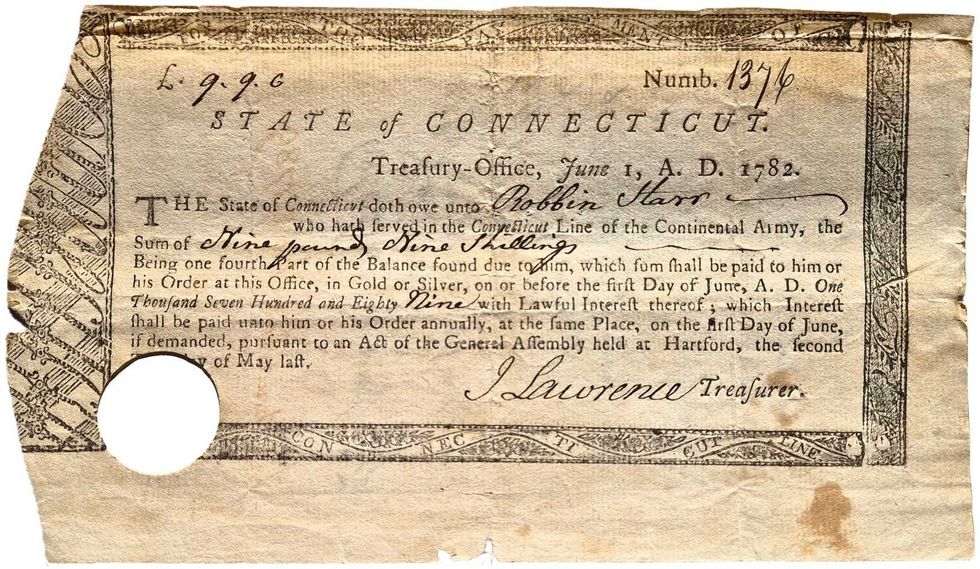 Pay Bill for Robin Starr’s service in the Continental Army.Courtesy the Alex Breanne Corporation
 John Mills speaking at Quinnipiac University.Courtesy the Alex Breanne Corporation

 Stephanie Saetta,with her rescue dog George and Blue (left), a shepherd mix awaiting his forever home.Madi Long