Despite the nearness of timing this editorial has to Halloween, and the fact it’s based on a graveyard, there is absolutely nothing ghoulish about our singing our praises for the newly designated not-for-profit Friends of Spencer’s Corners Burying Grounds (FOSCBG) — and our wishing them happy hunting as they dig around the approximately 320-year-old cemetery trying to dust off old tablets, right tilted tombstones and trying to learn as much about the historic site as possible.
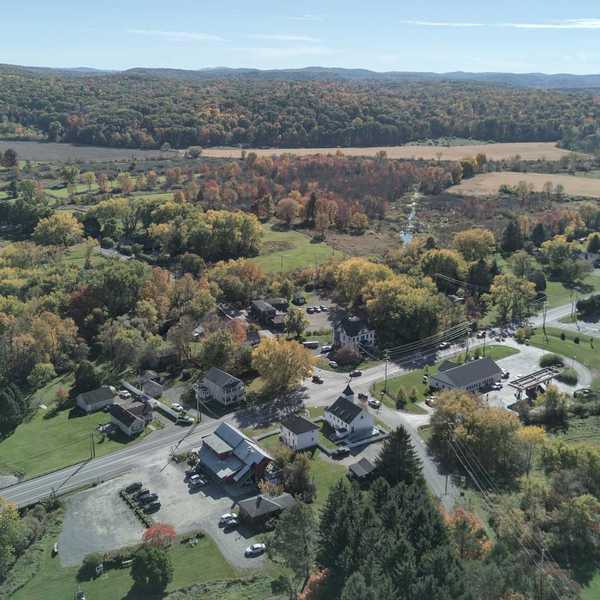
The lovely graveyard from the 1700s on Merwin Road in the town of North East is recognizable by the low stone wall that protects what is a deceivingly large, nearly 2-acre site. It has about 500 people buried there, according to FOSCBG Vice President Ralph Fedele. Fedele is a local history buff and the very individual responsible for the magnificent one-room 1858 Irondale Schoolhouse at the Main Street entrance to the Harlem Valley Rail Trail. (We should note that feat included locating the nearly-forgotten schoolhouse; arranging funding for its purchase; relocating and transporting it 2 miles into the village; overseeing its renovation; planning for its reopening; turning it into a nonprofit educational center and tourist attraction; spearheading its continued maintenance and operation; as well as organizing its own FRIENDS group and establishing and chairing its Board of Trustees.)
In addition to Fedele’s assistance with the FRIENDS group at Spencer’s Corners, another avid history lover, Claire Goodman, is its stalwart president. She has clearly jumped in with both feet.
Growing up in England, Goodman did many grass rubbings with her equally enthusiastic sister. They would travel around their native Norfolk, “where the history is very well maintained,” according to Goodman, “and I just got interested in cemeteries and preservation and who lived there. So I came out of early childhood with a love of churches and ancient sites. And I’m always thrilled to see burying grounds… out in the open, near a field… it can be rather glorious out in the landscape, but it can become rather decrepit, like what happened to ours in Millerton.”
That’s why Goodman, Fedele, and a host of others have joined forces to form the not-for-profit 501(C)3, which will allow them to partake in charitable activities without being taxed. That will let them raise funds to spruce up the cemetery — and then hire a professional who can use “something called a D2 biological solution, which is sprayed onto stones to clean the stones without hard rubbing, so it won’t destroy all of the rubbing on there,” explained Fedele. “It will take a lot of time and a lot of effort.”
The hope is to start that process in the spring.
While local monument artisan and repairer Bruce Valentine has been helping out, said Fedele, “his instinct” is that “a company that does nothing but restore monuments” will likely be called in to work on the project over a period of years.
“It will take some time,” forecasted Fedele, who added he’s hopeful the entire community will get behind the project, as so many residents have family members buried there. He said it’s a way to connect the present with the past in a rapidly changing world.
“It tells something about the early development of the area… we want to preserve [our] history,” he said. “This is a way of doing that.”
Spencer’s Corners Burying Ground is no longer an active cemetery; it was decommissioned in 1987 and ceded to the town of North East.
Until FOSCBG gets its Employer Identification Number (EIN) from the IRS, donations may be sent to the North East Historical Society at North East Historical Society, Inc., P.O. Box 727, Millerton, NY 12546 and marked “Spencer’s Corners Burying Grounds Project.”

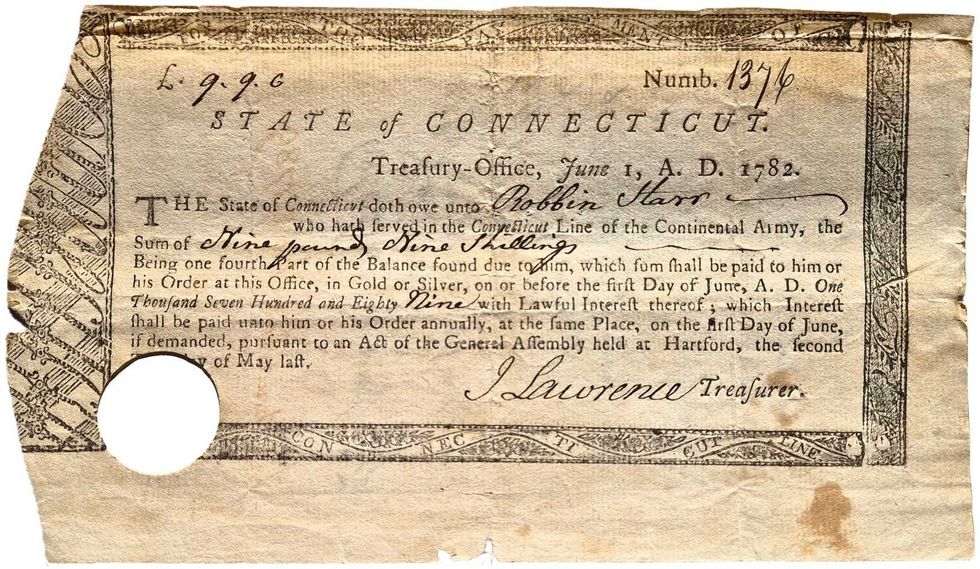 Pay Bill for Robin Starr’s service in the Continental Army.Courtesy the Alex Breanne Corporation
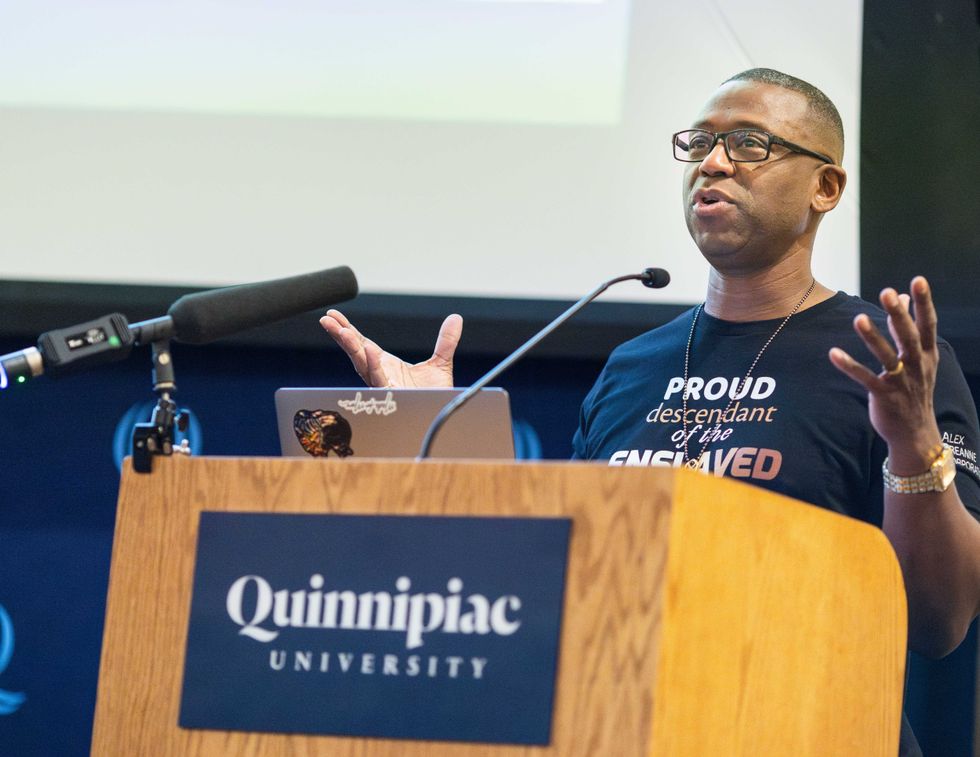 John Mills speaking at Quinnipiac University.Courtesy the Alex Breanne Corporation
 Stephanie Saetta,with her rescue dog George and Blue (left), a shepherd mix awaiting his forever home.Madi Long