Latest News
Surveillance cameras, empty Town Board seat, Rail Trail etiquette
Nathan Miller
Mar 04, 2026
Brian Walsh and Flock
Based on comments by my neighbors in Pine Plains, including those who spoke at the February 19 Town Board meeting, I am not alone in my frustration over Supervisor Walsh’s refusal to answer questions about his interactions with Flock Safety. It seems to me that it is incumbent upon our Town Supervisor to explain his actions in a way that is understandable, and to address questions that his statement provoked.
Among those questions are: By what authority did he agree even to a limited trial of four cameras in our town? What made him tell Flock on February 5 that the camera installations were “going to get done” just days before he instructed them to halt all activity? In his statement at the meeting, Mr. Walsh said that he was referring to the County doing this deal. On what basis did he think that the County would agree to “get[ting it] done”? With whom in County government had he conferred about the cameras? And why did he refer to the population as being a “blue area, right now, unfortunately.”? What prompted him, a few days after the conversation about the deal “get[ting] done” to instruct Flock to cease all activity? Did Supervisor Walsh consult with Town Attorney Warren Replansky before authorizing Flock to install the four test cameras? Did he consult with the other Town Board members? Did he consult with Mr. Replansky or other Board members before he told Flock that it would “get done”? Will he agree to refrain, as Pine Plains resident Matthew Lebaron proposed, from signing or authorizing any such future agreements without “communications made to the public about these agreements, all [of which to] be given to us with good warning over multiple communication streams”?
Pine Plains resident Keary Hanan asked a more fundamental question: “[H]ow does this town board plan on restoring the trust of this community after this egregious breach of honesty and trust with its constituents?”
Michael Cooper, a Pine Plains Volunteer Fire Department colleague of Mr. Walsh, said that Mr. Walsh’s “words are being misrepresented, and I would encourage anyone who has problems with what he has to say to examine what he has in fact done.” Excellent point, but how on earth can we examine what Supervisor Walsh has done when he refuses to explain it in a way that makes sense or to answer questions?
Pine Plains residents deserve to be treated with more respect from the Town Supervisor than to passively receive a statement that raises more questions than it answers.
Amy Rothstein
Pine Plains
Déjà Vu — all over again: Miller should fill seat
In January 2024, Amenia’s Town Board needed to decide what to do about a seat made vacant by the election of one of its members to the job of Supervisor. In the past, the Board would vote for a citizen to take the seat until the next election. Many in the community thought it made sense to vote for Vicki Doyle. She had lost the election by just 10 votes and was a long serving, effective Councilwoman. She was the runner up and therefore the logical choice in terms of the voters’ preference. That selection was blocked by two members of the Board. Eventually, Nicole Ahearn was voted on to fill the seat. Very sadly, in February 2025, Paul Winters - who had joined the Board in 2024 - died of a heart attack. The fifth seat on the Board was again vacant. The members decided not to fill the position to avoid the contentious debate about how to fill the seat a year earlier. Now, Amenia again has a vacant seat. Rosanna Hamm was elected supervisor in November which leaves her seat as a Councilperson available.
In the 2/26/26 edition of the News it was reported “Board divided on filling vacant seat”. We are back where we were in 2024, except this time it’s Charlie Miller who lost by one vote. It makes absolutely no sense to me why the Board cannot come together and ask him to take the open seat until the Nov 2026 election winner is seated in Jan 2027. His service to the town is outstanding. He was instrumental in finally getting the construction of the highway garage started. Ask Megan Chamberlin. He also helped to untangle and fund the water district after years of mismanagement. He’s secured new revenue: $368,000+ in grants, $190,000+ in investment returns, $1.6 million for workforce housing, 2 NYS grants: $600,000 for the new Highway Garage Salt Shed and $2,731,995 for Water District Capital Improvements. He accomplished all this largely as a volunteer. I need to return to Vicki’s not being asked to take the vacant seat when she lost by just ten votes. That made no sense then and not selecting Charlie makes no sense now. There are certainly Amenia voters who were angered by Charlie’s placing a signed, stamped front sheet on an already approved budget proposal instead of having the town clerk do that herself. It is my understanding that he wasn’t trying to sneak something by the Board. The document had been approved. He recognized and apologized for what was in my mind a clerical mistake. The bigger mistake would be not to be mindful of his vote count and ALL that he’s done and will do for the community we all love.
Jim Wright
Warden, St Thomas
Interim Executive Director,
Food of Life Pantry
Amenia
How much spying should the County do?
In light of the recent events regarding the Flock surveillance company, our community needs to have a discussion about how much spying Dutchess County should be carrying out on its residents in the first place. The Advanced Real-Time Crime Intelligence Center, operated by a special office within the Sheriff’s Office, collects data from live cameras, license plate readers, officer body cams, and other surveillance tools distributed across the county. Politicians claim that they only use warrantless mass surveillance for legitimate law enforcement purposes, but if we’ve learned anything from the state of our country right now, we should have learned not to simply trust the things politicians say. We should also know by now that politicians have very little respect for our civil liberties, especially our right to privacy.
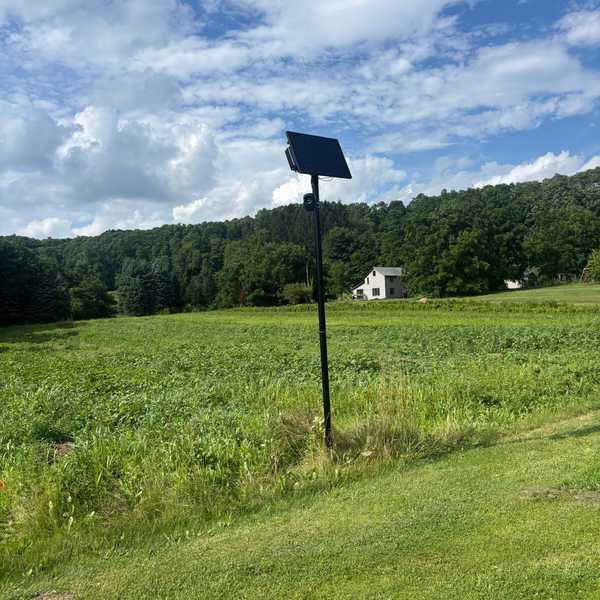
The real cause for concern is not that there are license plate readers on public streets, but that we have no idea how much data is being collected on us and who is able to access it. The Sheriff’s Office is coy about what makes up the intelligence center, but we do know that Flock is responsible for over 400 license plate readers and cameras just in Dutchess County according to the company’s own transparency portal. Outside of our county, Flock operates a network of tens of thousands of cameras across the country and has contracts not only with local governments, but state agencies and private security firms as well. Flock claims that they don’t have contracts with ICE and the federal government, but reporting from Jason Koebler and Joseph Fox at 404 Media concluded that data had been unwittingly accessed by third-party agencies with the stated reason as “ICE,” “Immigration,” or “ERO” (Enforcement and Removal Operations). This evidence heavily implies that the federal government uses connections with compliant local law enforcement agencies to gain side-door access to data generated by any Flock-connected organization.
The surveillance unit built by the county to spy on its citizens with the help of a vendor of questionable ethics was certainly not free and it makes the taxpayer wonder if they are getting a raw deal. Surely this multi-million dollar panopticon has yielded some results, though, right? No - Flock’s own website admits that the nearest major crime solved by their software is in New York City (citation 2) and since installation about a year and a half ago, Dutchess County police departments have only solved 3 hit-and-runs with the data (citation 1). Is it worth it to live under constant, expensive surveillance just to solve one more hit-and-run every six months?
Additional information
404 Media Link: www.404media.co/ice-taps-into-nationwide-ai-enable...
Transparency Portal (citation 1): transparency.flocksafety.com/dutchess-county-ny-so
This does include a state police hit-and run and a missing persons case from Florida, but it isn’t made clear why those are credited to the Dutchess County Sheriff.
Dutchess County Referral Portal (citation 2): refer.flocksafety.com/community/dutchess-county-community-connect
Robert Holmes
Beacon
Rail Trail care, signage needed on bridge
July 23, 2025, was a beautiful summer morning. I loaded my bicycle and headed for Harlem Valley Rail Trail. I was on one of the narrower wooden bridges when I heard someone say “On your left.”
I had never had a cyclist pass me from behind on the bridges before. I pulled my bike closer to the side of the bridge. I was out for a leisurely ride, but the gentleman that came up behind me was all business.
There were vines growing over the side of the bridge so I rode back toward the center of the bridge after he passed. Another cyclist, who did not announce himself, came up on me quickly. I pulled back to the right, and when I did my handlebar caught the fence.
I fell down.
The cyclists came back as I lay on the bridge, with the bike wrapped around my legs. They got the bike off me. I grabbed the fence and pulled myself up. My helmet still sat on my head. In shock, I stumbled around the bridge. My right arm was bleeding and my left leg was badly bruised. My neck hurt – like a really bad stiff neck. I called my husband and told him where to meet me.
Unable to walk, I rode my bike the last mile as the two cyclists followed me. My husband took me directly to the hospital. A CT scan showed I had broken my neck at C2, called the “Hangman’s Fracture.” I was transported to Hartford Hospital. The break appeared stable so I was put in a neck brace, told I was very lucky not to be dead or paralyzed, and that I needed to follow up with an orthopedic surgeon.
That began the longest six and a half months of my life. The neck brace was a 24/7 fixture. If I didn’t heal I’d need surgery to put rods and screws in my neck. The whole experience was traumatic and grueling.
By the grace of God, my 66 year old neck decided to heal eventually. My body will never be as it was before, and I lost over six months of life. I tell this story because my life was forever altered in a second by the behavior of others.
Many people use and enjoy the Rail Trail. If you see an elderly person on a leisurely ride, or a family with children, please take a moment to respect their right to do so without being placed in life-changing danger. I know that the cyclists who passed me did not want to harm me, but a moment’s impatience and disregard for me nearly cost me my life. I hope Dutchess County Parks will at least put signs up at the bridge approaches asking cyclists NOT to pass from behind. Sometimes we just need a little reminder to be considerate of others. Is it really so much to ask?
Rachel Lamb
Lakeville
Keep ReadingShow less
Webutuck Little League registration closes March 13
John Coston
Mar 04, 2026
All smiles after a May game in 2024, as Webutuck’s Crown Energy players exchange game-over handshakes with the Taconic Brewers.
Photo by John Coston
MILLERTON — The 2026 Webutuck Little League season registration is underway for games that will be played starting in the spring.
Players are still needed to fill out teams – from T-ball and coach-pitch minors, to majors and minors baseball and softball. This year, once again, there will be a girls’ softball schedule, according to Scott Russo, league president.
Volunteers also are needed. Opening day is scheduled for April 11.
Most games likely will be played at Beekman Park in Amenia, and the league hopes to schedule at least one game under the newly installed lights at Eddie Collins Field in Millerton.
Fees for players have been reduced this year to $25 and $40 due to support from community sponsors.
The league’s Facebook page includes a link to online registration: leagues.bluesombrero.com/webutucklittleleague under the “Sign Up Now” tab. To email the league, write to: webutucklittleleague@gmail.com
The Webutuck Little League is formally affiliated with Little League Baseball and Softball, the global program. Its season is bookended by an Opening Day celebration that amounts to a party for players and parents, and by a year-end celebration when play wraps up and players receive trophies, hot dogs, hamburgers and ice cream.
Keep ReadingShow less
Amenia Fire Company steak bake postponed to April 25
Nathan Miller
Mar 04, 2026
The Amenia Fire Company on Mechanic Street in Amenia.
Photo by John Coston
AMENIA — The Amenia Fire Company is postponing their Steak Bake to Saturday, April 25, from 4 to 6 p.m. at the firehouse.
The meal includes mashed potatoes, corn, salad, dinner roll and a dessert. Diners can pre-order a meal by calling Shawn at 845-418-8633. The meal is eat-in or take-out. Tickets are $25.00 each and are available from any fire company member.
The firehouse is located at 36 Mechanic St., Amenia.

Want more of our stories on Google? Click here to make us a Preferred Source.
From founding to incorporation: Millerton’s early years
Aly Morrissey
Mar 04, 2026
A photograph from 1910 taken by Millerton native Lorin Eggleston shows the original Millerton Hotel on North Center Street.
Photo Courtesy Library of Congress
MILLERTON — Much of what we know about Millerton’s founding years survives in the musty, timeworn pages of documents compiled by local historians. Now historical artifacts themselves, some of these volumes were written for their own time — not with a future readership in mind. Nevertheless, a clear picture remains of how and why Millerton was formed, and of the people and businesses that fueled its early growth.
Millerton was founded in 1851 — a full decade before the Civil War — at a moment when railroads were transforming rural economies, the nation was expanding westward and tensions over slavery were mounting. The first 25 years of Millerton were characterized by speed, with an almost overnight transformation from farmland to railroad hub.
According to A Beckon Call to a Village, a 2001 history compiled by former North East Historical Society president Diane Thompson, leaders in the Town of North East — which was founded in 1788 — understood the opportunity a rail line could bring.
A meeting was held at the Wakeman House, home of local farmer Walter Wakeman, where a small group of men began laying out plans for a village that did not yet exist. Among them were Alexander W. Trowbridge, Col. John Winchell, Walter Wakeman, Platt A. Paine and Gov. Alexander Holley.
Wakeman himself played a crucial role, selling a 66-foot strip of his farm – nearly half a mile long – to the railroad. Additional acreage followed to accommodate a depot, engine house, sheds and extra track.
Civil engineer Sidney Miller is credited with bringing the railroad to Millerton in 1851. According to historical documents, he was so well regarded that the village was named in his honor.
On September 1, 1851, the first train rolled into Millerton.
“Silence gave way to harsh noise as the path of the track was dug,” reads a passage in Railroads Dutchess County, NY 1848-1907 by William P. McDermott, written from the perspective of resident Eliza Lawrence who witnessed the transformation of Millerton. “The loud din of rail spokes hammered into wooden ties.”
Iron feeds industry
Iron production played a key role in Millerton’s early growth. In 1854, the Millerton Iron Company established a major foundry – a factory where metal is melted and poured into molds – in the area known as Irondale.
By 1882, the plant employed about 150 workers and by 1890 it was producing up to 12,000 tons of pig iron annually. The raw iron was used to manufacture cast-iron products, including railroad car wheels.
Irondale grew into a small industrial hamlet with a general store, grist mill and post office.

A village takes shape
With the railroad established, Millerton quickly expanded.
In 1852, just one year after the first train arrived, the Millerton Hotel was erected on North Center Street behind what is now the Oakhurst Diner. Built by Alexander Hawley, Alexander Trowbridge and James Winchell, the two-story building catered to rail passengers and visitors.
Under later owner A.J. Pulver, the hotel was modernized with steam heat, hot and cold running water, baths and even a billiard room – luxuries more often associated with city hotels. For roughly 50 years, it stood as a symbol of Millerton’s growth before being dismantled in 1936, its materials salvaged during the Great Depression.
Other hotels followed, including George Greathead’s Central Hotel in 1865 and the Brick Block Hotel, erected by James Conlan in 1872.
That early period saw the construction of a Greek Revival-style commercial building that housed E.W. Simmons & Co., Millerton’s first general store. Opened in partnership with Harvey Roe of Spencer’s Corners, the store sold groceries, lumber and building supplies.
When Roe relocated, Simmons continued to operate it alongside his clerk, James Finch, who later took over the building and sold furniture and general items for four decades.
As Millerton grew, so did its civic and spiritual life. Before their church was built in 1859, members of the Methodist Episcopal congregation gathered for services inside the Simmons building. Over time, the structure also housed a post office and a private school. That building was renovated in the 1980s and today serves as offices and commercial space at the intersection of John Street and North Center Street.
By the mid-1860s, Millerton’s commercial district continued to expand. In 1865, prominent builder Ambrose Beers constructed an Italianate-style carpenter shop that would later become home to Dewitt “Dewey” Husted and his wife, Etta. For 18 years, it operated as a confectionery and bakery. The building evolved, later serving as a sporting goods store and furniture annex, and after a 2008 renovation is now home to Elyse Harney Real Estate.
In the 1870s, what began as a single rail stop had matured into a full-blown commercial center with hotels, merchants, churches, tradesmen and more. In 1875, R. L. Valentine established an undertaking and funeral business that continues to operate today, one of the longest-running businesses in the village.

Millerton is incorporated and elects its first mayor
By 1875, Millerton was formally incorporated and recognized as a municipality. Kneeland J. Munson became the village’s first mayor.
One of 12 children, Munson was educated in New York, Connecticut and Massachusetts. After spending time in Kentucky, Iowa and Indiana, he returned home where he lived in a property known as “Sunnyside,” a residence on the corner of Main and Maple in Millerton. A North East Historical Society yearbook produced in 1975 to celebrate the village’s centennial said the house was demolished in 1964 to make way for an A&P.
In just 24 years, Millerton had transformed from farmland to railroad outpost to incorporated village, with even greater expansion waiting in the decades to come.
The village’s oldest building faces demolition
The Wakeman Home – believed to have been built around 1770 – remains one of Millerton’s oldest surviving homes, though its future is uncertain.
Located at 5953 N. Elm Ave., opposite the Four Brothers Pizza Inn on Route 22, the home is now unrecognizable from its original days. It was within these walls that local leaders are said to have met in 1851 to lay plans for the new village and chose the name “Millerton,” honoring engineer Sidney Miller.
In August 2024, Village Building Inspector and Code Enforcement Officer Ken McLaughlin said demolition proceedings had begun in coordination with the building’s current owner. Nearly two years later, however, the building still stands.
Keep ReadingShow less
Millerton’s namesake made an impact while never living here
Nathan Miller
Mar 04, 2026
Sidney Greene Miller stands for a portrait. The civil engineer, for whom Millerton was named, helped bring the New York and Harlem Railroad to the Town of North East in 1851, a development that spurred the village’s growth.
Photo Courtesy Millerton 175 Committee
MILLERTON — The arrival of the railroad in the Town of North East in 1851 is heralded as the moment Millerton became a place — ushering in a boom period for the area that transformed it from a sparsely populated farming community into a hub of commerce.
That moment was brought about by Sidney Greene Miller along with his associate civil engineers in their work as contractors for the New York and Harlem Railroad. After his work, Millerton quickly grew from an insignificant hamlet in North East to the center of the town’s activity within just 25 years.
The railroad’s contribution to the village’s growth, along with Miller’s reported congeniality according to a 2001 history of the village produced by the North East Historical Society, led village founders Alexander Trowbridge, Col. John Winchell, Walter Wakeman, Platt Paine and Connecticut Governor Alexander Holley to name Millerton after the civil engineer when it was officially formed in 1875.
But other than that claim from the North East Historical Society, not much else is known about Miller. Sarah Hermans, an amateur historian who grew up in Millerton, said public documents on him are sparse, but she found enough to roughly map out his life from records available online.
Miller was born in New York City in 1817 where he was raised by Sylvanus Miller. An obituary for Miller when he died in 1900 said his father, Sylvanus, was a judge and census records list his profession as “lawyer.”
Miller became a civil engineer, serving as a partner of Morris, Miller and Schuyler when that company was contracted to expand the New York and Harlem railroad north from New York City to Albany. Records show Miller lived in New York City in the early 1850s when the Millerton stop was built, but he didn’t stay there long.
Census records indicate Miller left New York State within the decade. He, his wife and three children moved to Westport, Connecticut, in 1854 and then to Virginia in 1856. There, Miller and his wife, Sarah Williamson, had three more children.
Miller and his family were forced out of their home in Alexandria, Virginia, when the United States Army seized the house to use as a hospital during the Civil War.
By 1870 the family had moved to Savannah, Georgia. Documents from Miller’s life are sparse, but records indicate that building railroads caused him to move his family frequently. Within just ten years, Miller and his family, now including a grandson, were recorded as living in Chatham Township in New Jersey in 1880.
Digitized New York City directories from 1882 available at familysearch.org list a Sidney Miller, engineer, living at 205 S. 5th Ave., though it’s unclear if that’s the same Sidney Miller that helped build railroads across the country. Miller did move back to New York City at some point before his death in 1900, as shown by death records and an obituary published in the New York Times.
Miller was buried in Green-wood Cemetery in Brooklyn.
Hermans’s research on Miller started by accident, she said, while researching a friend’s family history. She said she thought Miller would have been a local before she started researching, but soon found out he never even lived in Millerton.
“I was delighted and shocked to find out that he was actually a ‘city person,’” Hermans said.
But there wasn’t much more that could be gleaned from online documents, Hermans said.
“If you want to find somebody, you better find somebody who the descendants have done work on,” she said.
Hermans said the biggest hurdle in her amateur historical pursuits is accessing primary documents. She relies on the internet to access digitized documents because she works almost exclusively from home. And not every historical record has been scanned.
Sidney Miller’s death certificate is one of decades worth of death certificates from Manhattan that have yet to be digitized. New York City has been working to scan birth certificates, death certificates and marriage licenses and publish them online, but large collections of the documents have yet to be processed.
“If you’re just doing it from your armchair, you’re limited to what has been scanned,” Hermans said. “What has been made accessible to you.”
Keep ReadingShow less
North East home prices edge higher while sales slow
Christine Bates
Mar 04, 2026
The home at 5878 S. Elm Ave. was sold privately off market in January for $280,000, well below its assessed value of $311,600.
Photo by Christine Bates
MILLERTON — The median price for a residential property in the Town of North East, including the Village of Millerton, rose to $465,000 for the 12 months ending Jan. 31, 2026 — a modest 7% increase over the past two years.
Two years ago, the median stood at $435,000. It fell to $400,000 for the year ending Jan. 31, 2025, before rebounding to its current level.
While prices have edged upward, sales activity has slowed. A total of 26 residential properties sold in the town and village combined during the 12 months ending Jan. 31, 2026, down from 37 sales in the prior year and 29 sales in the 12 months ending Jan. 31, 2024.
The Village of Millerton alone showed stronger price appreciation than the broader town. The median residential sale price in the village climbed to $410,000 for the year ending Jan. 31, 2026, up from $385,000 a year earlier and $315,000 for the 12-month period ending Jan. 31, 2024— a 30% increase over that period.
Despite the price gains, transaction volume within the village declined over that period. Only six residential properties sold in the past 12 months, compared with 11 sales in each of the prior two years.
Inventory remains tight. As of late February, only six homes were listed for sale in the Town of North East, along with nine parcels of vacant land. Within the village, just one house was on the market, along with two commercial properties on Main Street.
Village of Millerton December and January property transfers
5842 Elm Ave. — 3 bedroom/2 bath house built in 1913 sold to Jose Efrain Sanches for $337,500.
5878 Elm Ave. — 4 bedroom/2 bath house on 0.4 acres sold to 5878 South Elm LLC for $280,000.
4 Park St. — 3 bedroom/2.5 bath house sold to Amy Butowicz for $365,000.
27 Meadow Lane — 3 bedroom/2 bath ranch built in 1982 sold to Lisa Cappelli for $410,000.
Town of North East December and January property transfers
1388 Route 83 — 4 bedroom/4.5 bath house built in 1880 sold to Thomas William Taylor for $820,000.
17 Forest Lane — 4 bedroom/3.5 bath home on 10.24 acres sold to Anna Tuong Vy Dinh for $1.25 million.
Deer Run Road (#324134) — 4.61 acres of vacant land with views sold to Sion Boney IV for $230,000.
Route 44 (#552232) — 1.48 acres of vacant commercial land next to Bank of Millbrook sold to RWE Investments LLC for $400,000.
437 Mcghee Hill Road — 3 bedroom/2 bath home built in 1820 on 31.6 acres sold to Alexa Sara Irish for $1.13 million.
* Town of North East and Village of Millerton property transfers for December 2025 and January 2026 are sourced from Dutchess County Real Property Office monthly reports. Details on property from Dutchess Parcel Access. Actual parcel numbers indicated by (#___) are included for properties without specific street address. Current market data from One Key MLS. Twelve month median values and sales activity from New York State Sales Web of all residential properties transferred which includes single family, multi-family, estates and mobile homes. Compiled by Christine Bates, Real Estate Advisor with William Pitt Sotheby’s International Realty, Licensed in Connecticut and New York.
Keep ReadingShow less

Want more of our stories on Google? Click here to make us a Preferred Source.
loading