We will get through this
On March 1 I traveled to New York City by train, enjoying the locomotive’s steady rocking and mechanical cries while reading a book and eavesdropping on conversations of nearby passengers. It was a beautiful morning — calm and mild for March in the Northeast — and my brother and I decided to weave our way through a sea of strangers instead of hailing a cab or waiting for a bus to transport us to Madison Square Garden, where we watched the Philadelphia Flyers thump the New York Rangers.
Despite our team’s loss, we were in good spirits back at the station readying to catch our return train. I don’t get to Grand Central Terminal often, but when I do, I’m awed by its magnitude, architecture and decor. It has the feel of a museum. I can’t help wanting to zip about the hollow mass in my power wheelchair looking to discover something new. I smile as I imagine the amount of time and labor expended to build such a magnificent structure designed over a century ago.
On this day, my brother introduced me to the Whispering Gallery. He stood at the base of an arch while I sat a considerable distance away at the opposite end listening. He spoke softly, and over the persistent murmur of human traffic I heard his words as clearly as if he were speaking directly into my ear. I was giddy.
Chatting with an MTA employee, I saw a mother and daughter wearing corrugated medical masks. It was a strange sight, as no one else was wearing such attire. Even though my sister-in-law, a nurse, had stuffed my brother’s pocket with two masks and hand sanitizer, we, along with the MTA employee, were not too concerned.
In the following weeks, face masks and gloves, social distancing and self-quarantining became the new norm as the coronavirus (COVID-19) swept across the nation, infecting over a million people and killing tens of thousands; unemployment skyrocketed; political rancor infested social media and national news organizations; and municipalities went eerily silent. It’s been like living in a novel crafted by Stephen King.
Through it all, I’ve been looking for glimpses of peace and hope. I’ve found it in the kind gesture of a friend who delivered a pizza and placed it on the doorstep; the absence of telemarketers incessantly ringing my phone; universal praise for first responders and healthcare providers; approved, bipartisan economic stimulus packages; a sunny street lined with daffodils; and a relieved Mother Earth breathing in a swath of fresh air.
In time, our nation will heal, and I look forward to once again attending a New York Rangers’ game and visiting Grand Central Terminal, where an enormous flag, attached to a wall in the aftermath of 9/11, serves as a reminder and symbol of American grit and resilience.
Stephen Waite
Millerton
County executive deeply grateful to MRC volunteers
I have often said that in Dutchess County, we care. During this global pandemic we have seen so many people step up to face these new dilemmas, but few have risen to the challenge in the way our Medical Reserve Corps volunteers have. I have been overwhelmed by the dedication and commitment to service of all of our MRC members. This is a testament to who we are as a community.
Last week we celebrated National Volunteer Week and I hope everyone will join me in continuing to thank everyone who has donated their time and efforts to supporting Dutchess County’s coronavirus efforts. Through #DutchessResponds or the Medical Reserve Corps, county residents have volunteered thousands of hours of time to support their community. Prior to the coronavirus pandemic, the Medical Reserve Corps of Dutchess County (MRC) already boasted one of the most robust and active volunteer ranks in the entire state of New York. Following the outbreak of COVID-19, the MRC has seen a dramatic rise in its already active membership.
Last year, Dutchess County MRC Coordinator Joe Ryan announced at the annual MRC Thank You Banquet that MRC members recorded more than 4,000 volunteer hours. As of mid-April this year, MRC volunteers have logged more than 3,250 hours. If this pattern continues, the MRC will shatter records in training, volunteer hours and recruitment.
The MRC of Dutchess County has over 700 active members, 200 of whom have joined since March 2020. The time and effort these members (both with and without formal medical training) have put in so far has helped to keep Dutchess County residents healthy and safe. The MRC is active in multiple coronavirus endeavors in the county, including:
• Staffing more than 230 shifts at Dutchess County’s Coronavirus Call Center totaling nearly 1,000 hours;
• Delivering groceries and/or medication orders to those in isolation;
• Assisting in monitoring and testing hundreds of individuals exposed to COVID-19;
• Over 70 volunteers trained to staff Dutchess County’s Recovery Center at Dutchess Community College;
• 15 MRC members trained to assist in the Medical Examiner’s Office;
• Providing medical assistance to guests at the homeless shelter currently located at the Dutchess County Jail and Law Enforcement Center campus;
• Assembled hundreds of Personal Protection Equipment (PPE) kits; and
• Assisted with a number of other logistical operations and in the Emergency Operation Center.
Both medical professionals and non-medical volunteers are needed in Dutchess County’s coronavirus relief efforts. If you’d like to volunteer your time as a member of the MRC, or you’d like to donate funds to our efforts, visit www.DutchessNY.gov/DutchessResponds.
To all of the MRC volunteers, I thank you from the bottom of my heart and I thank you on behalf of all the residents and your neighbors in Dutchess County.
Marc Molinaro, Dutchess County Executive
Red Hook
We can learn to be brave from local heroes
We never know what we have until it’s gone.
We used to have a grocery store, a family clothing store, a department store, a sporting goods store and hotels. Stores came and went, but there were always stores and businesses.
Times change.
We still have book and gift shops, antique/design stores, an antiques center, a frame shop, an auto-parts store, an auto-repair shop, restaurants, a hardware store, a movie theater, salons, local food and art emporia, a florist, real-estate offices, a furniture store, a printer, an appliance store and a TV store. Gas stations with convenience stores, a drug store — and more!
We have town government, a fire department, a library and a Community Center; civic organizations, an American Legion; a Presbyterian church and a Baptist church.
Now we have empty streets. Stores, library, churches — just about everything — closed.
We are thankful that grocery stores are open, and restaurants and food pantries feed people. We are grateful that health care facilities are open as is the U.S. Post Office. The staff of these stores and organizations show us how to be brave and carry on; they demonstrate how prudent measures control the spread of the COVID-19 virus.
Shouldn’t the rest of our businesses and organizations follow suit? We’ve learned to keep distance; let’s open restaurants at lower capacity and let merchants open shops a few customers at a time. Let’s open churches and widely space people in the pews. Let’s not touch everything the way we used to; when we bring stuff home, let’s wipe it down and wash our hands again. Let’s take our temperature and wear face coverings, and if we’re vulnerable, we’ll stay home.
Shouldn’t we learn from our grocery, government and health-care heroes how to be brave? Aren’t we still the land of the free, home of the brave?
Rowena Fenstermacher
Millerton
A tribute to community caring
It is hard to find the words to properly thank my friend and neighbor, Lana Morrison, for her many acts of kindness during these trying times.
I have not needed to leave my home since March 16th. Lana calls to check on me and does all my shopping and errands. I will forever be in her debt.
I pray other seniors in our community have similar stories to tell.
Pat Kelly
Millerton
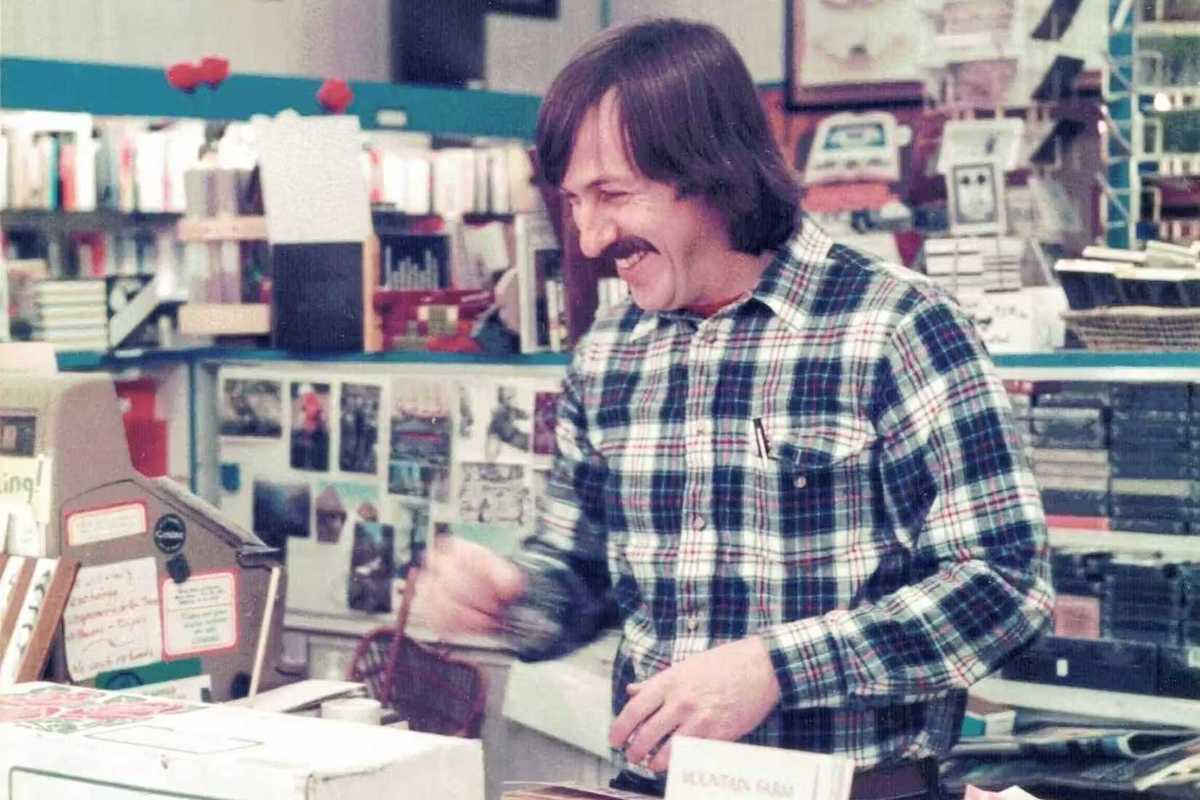
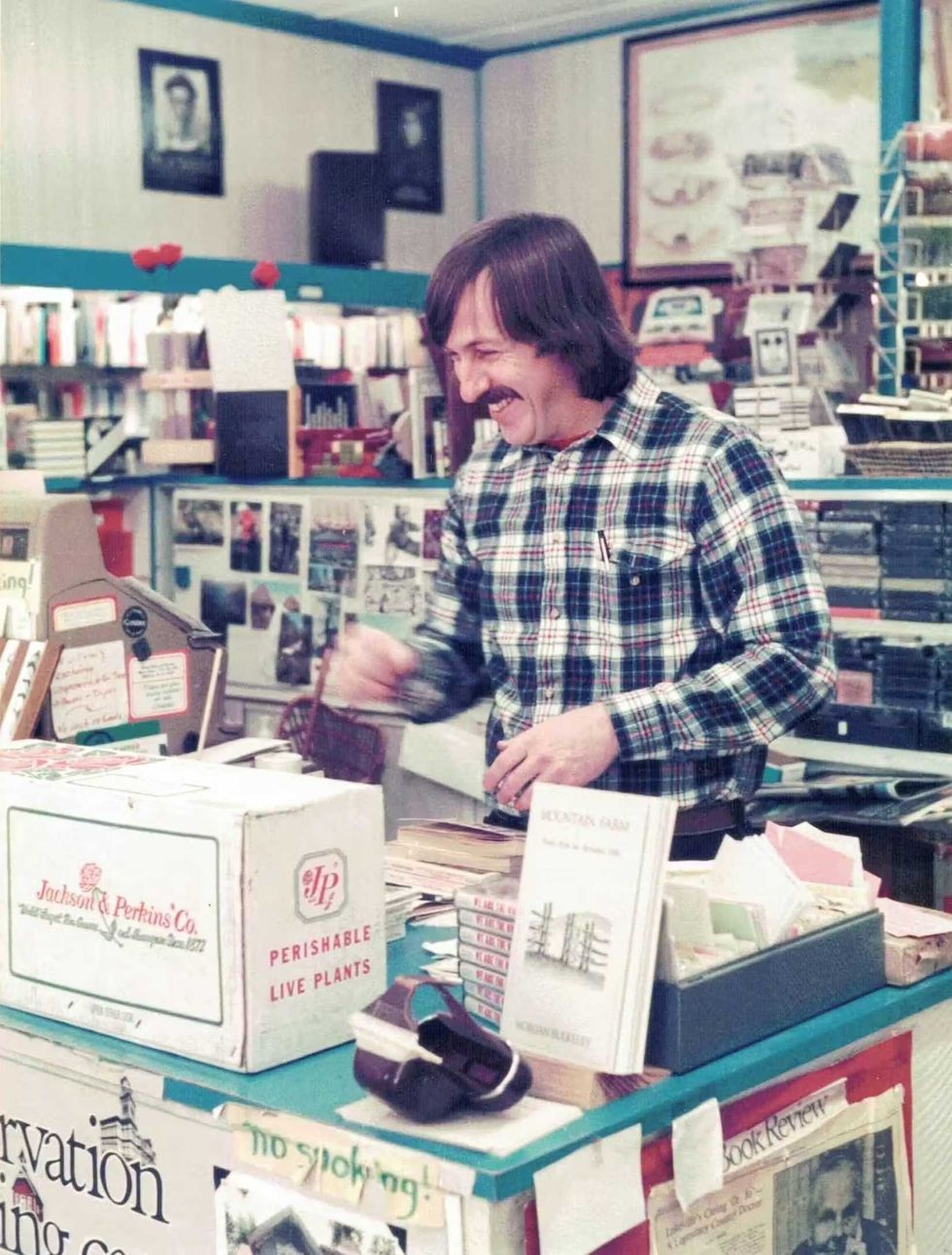 Dick Hermans in the Oblong Bookstore on Millerton’s Main Street in 1985.Provided

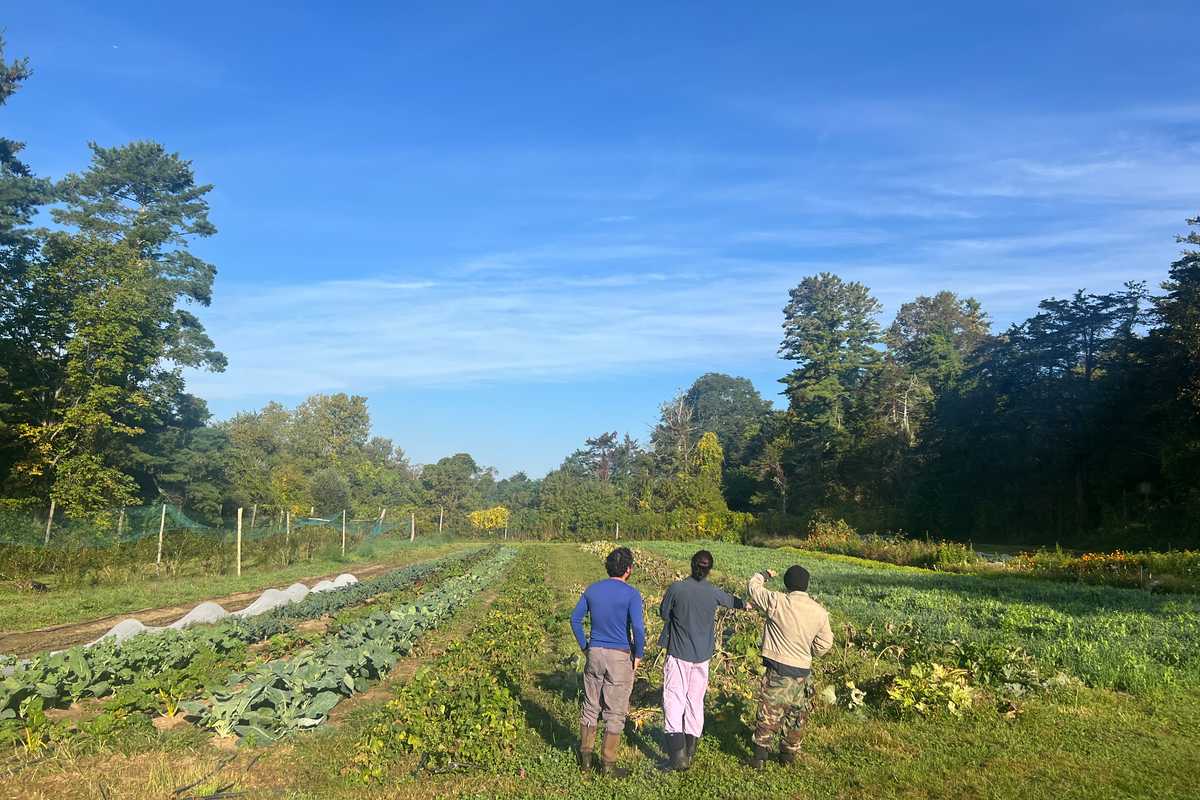
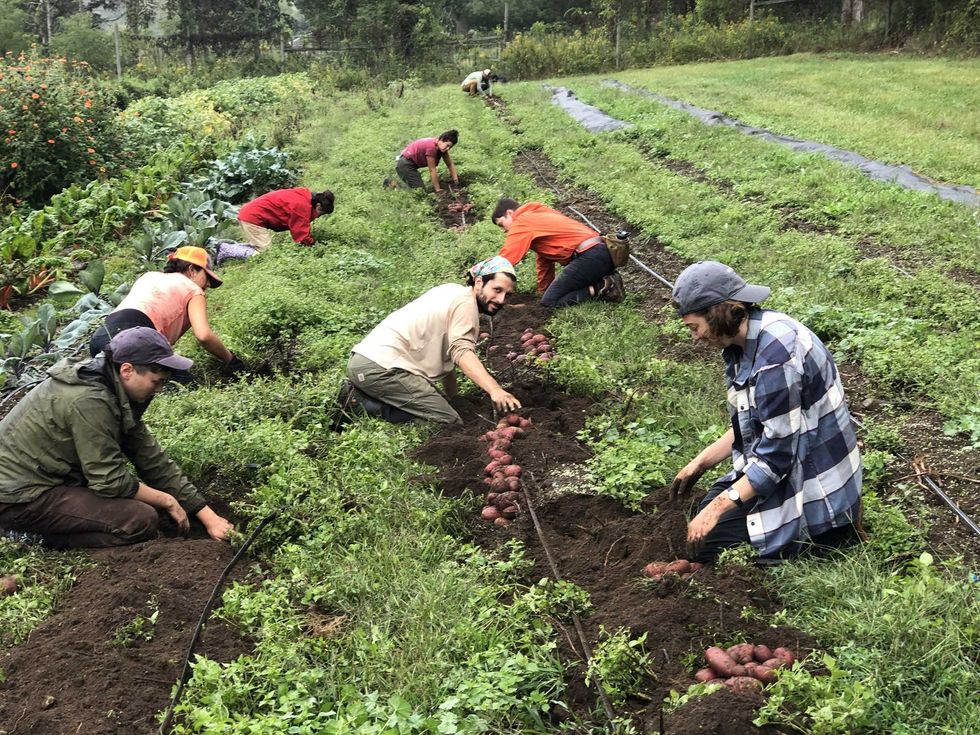 Fall storage crop harvests amid soil building cover crops at Adamah Farm in Falls Village. Janna Siller