

The Black Sea, which recently received in its depths the Russian battleship Moskva, on its way to join the battle against the Ukrainians, was anciently the setting of another Black Sea voyage that did not end well. This was the voyage of the Argo, celebrated in the third century BC epic Argonautica, composed by Apollonius Rhodius. The epic relates the launching of the 50-oar ship, the Argo, manned by 55 Greek heroes and led by Jason, half-brother of the king of Iolous, on the west coast of Italy.
The king hoped that, by sending Jason on a long and dangerous voyage to bring back the golden fleece of a ram from a distant Black Sea kingdom, he would never return — which may remind readers of King Claudius’ plot to get rid of Hamlet. The Argo was a magical ship, which, equipped with a prow that, prefiguring modern technology, could both speak and guide the ship on its long journey from the west coast of Greece through the Bosphorus into the Black Sea, then north to the kingdom of Colchis, now the Republic of Georgia. There, with the assistance of the king’s witchy daughter, Medea, who falls in love with him, Jason steals the golden fleece and sails for home, with Medea.
What happened upon the return of the Argo is the subject of Euripides’ Medea. Composed and performed a century before Apollonius wrote the Argonautic, it describes Medea’s rage when Jason deserts the woman whose help has been invaluable in obtaining the golden fleece and, who, once safely home, spurns or ditches his foreign wife and marries the daughter of King Creon of Corinth. Furious, bitter, and vengeful, Medea murders her two sons by Jason as well as Creon and his daughter, to whom Medea has given a gold diadem which, when donned, releases “a fearful stream of all-devouring fire,” killing the young bride. Medea leaves the scene of her crimes in a cart drawn by dragons.
What has happened to the Black Sea* in our time is another tragic story, as reported by the August 5, 2019, press release from DFWatch**, an online newspaper based in Tbilisi, the capital of Georgia, and published by Georgian NGO Journalists for the Future. The headline reads: “The Black Sea contains toxic concentrations of several pollutants, a new study has found,” the study being a reference to the Joint Black Sea Survey, which the Government of Ukraine was carrying out in accordance with the EU-Ukraine Association Agreement study. Presented in Odessa on July 29, 2019, it found that insecticides, pesticides, biocides, pharmaceuticals, flame retardants, and industrial pollutants were among the major pollutants. The report further states: “124 chemicals dangerous for the sea ecosystem and human health were identified in the study. 83% of the marine litter found in the Black Sea is plastic.”
As if that wasn’t enough bad news, the report notes: “The cancerous substance benzo(a)pyrene, commonly found in soot, is present in the Black Sea in levels exceeding its toxicity threshold.” One can only expect that Putin’s “special operation” in Ukraine will further pollute a sea ringed by Ukraine to the north, Russia and Georgia to the east, Turkey to the south, and Bulgaria and Romania to the west — and finish off whatever aquatic life is left in the Black Sea.
*Black Sea: Google offers a list of possible explanations for why the sea is called “black.”
** The initials stand for Democracy & Freedom Watch, www.dfwatch.net.
Jon Swan is a poet, journalist and former senior editor of the Columbia Journalism Review. His writing can be found at www.jonswanpoems.com.






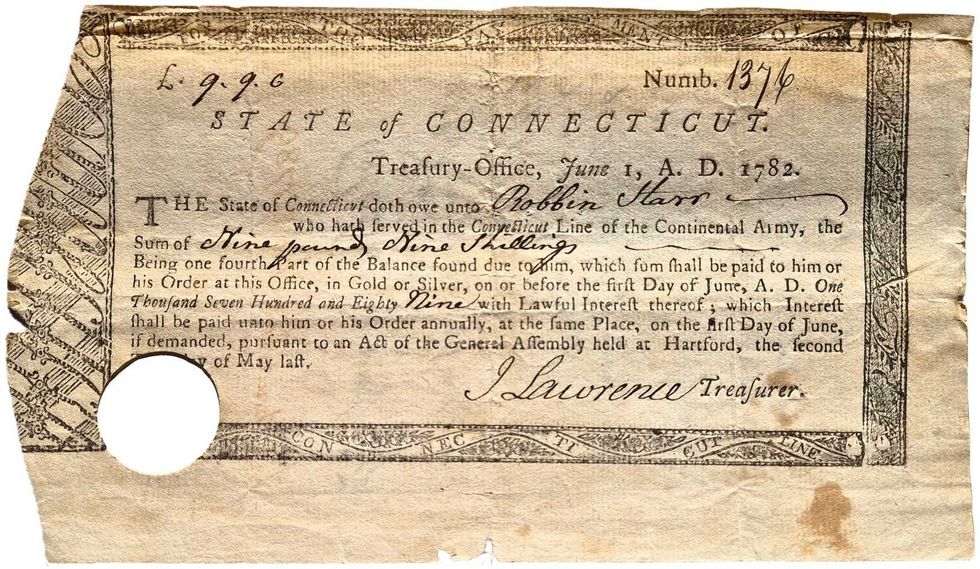 Pay Bill for Robin Starr’s service in the Continental Army.Courtesy the Alex Breanne Corporation
 John Mills speaking at Quinnipiac University.Courtesy the Alex Breanne Corporation
 Stephanie Saetta,with her rescue dog George and Blue (left), a shepherd mix awaiting his forever home.Madi Long









Will Putin’s war finish off the myth-rich Black Sea?