Newspapers are done. That’s the story these days. And this message has been repeated year after year over the last two decades as more than 2,500 weekly publications in the United States either closed or merged with other papers as a way to survive.
Since 2004, the number of daily newspapers fell from more than 7,000 to about 5,000. Daily newspapers also declined in number and some dailies became weeklies as a way to survive. By some estimates, the country is set up to lose one-third of its newspapers by 2025.
The pandemic wasn’t the death knell that many expected, but just the same the number of newspapers that closed kept the same pace — about two per week.
This all means that about one in five Americans lives in what is called a news desert, a place where there is no authoritative source of news and information about the community, other than social media. There are issues with social media that include its “addictive by design” nature, as well as its role in spreading misinformation.
As a plus, it can be seen as promoting creativity and community health, even as experts weigh its effect on the mental health of young people and adults.
Today, it is estimated that one in five Americans lives in a so-called news desert, or in a place that is at risk of becoming one, where there is limited access to local news.
Northwestern University’s Medill School of Journalism in Evanston, Illinois, reports that the vast majority of the 360 newspapers that shut down since the end of 2019 were weeklies serving small communities. And in many places, the surviving papers made major cuts to staff and circulation. An estimated 75,000 journalists worked in newspapers in 2006, and now that is down to 31,000, according to Northwestern.
But everywhere you turn these days there are signs that readers want a local newspaper — that newspapers are not done, whether they exist in print or digital form.
It was big news last week for readers of more than 20 daily and weekly newspapers in Maine that the nonprofit National Trust for Local News would buy the papers, including the Portland Press Herald, as a way to preserve their independence along with staffing and readership. The mission of the National Trust for Local News is to create a future where local news thrives and people benefit from community-centered journalism.
The Lakeville Journal and The Millerton News both have embarked on the nonprofit path with the goal to be nonpartisan and dedicated to public service. We aim to serve our community with news and information that matters to our readers. We also are sharing news with other nonprofits and like-minded organizations to give readers the fullest news report possible, week-to-week, and online when important news breaks. We have shared news with CTMirror.org, The New Pine Plains Herald, The Berkshire Eagle, Norfolk Now, and possibly more to come. On Sunday, August 13 we will host community nonprofits for a day of celebration and information sharing in Salisbury on Academy Street. Mark calendars.
Last fall, we became members of the Institute for Nonprofit News. Its vision is to build a nonprofit news network that ensures all people in every community have access to trusted news. According to INN, nonprofit news is experiencing sustained, multi-year growth, and the sources of local coverage have increased over the past four years.
Our readers want more. We want to give them more. We are on the right path to do that.




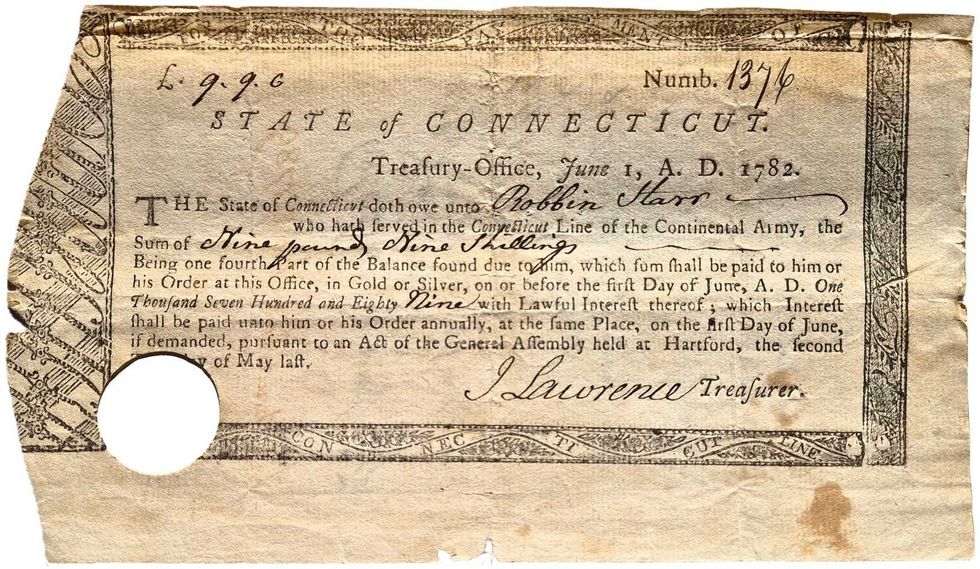 Pay Bill for Robin Starr’s service in the Continental Army.Courtesy the Alex Breanne Corporation
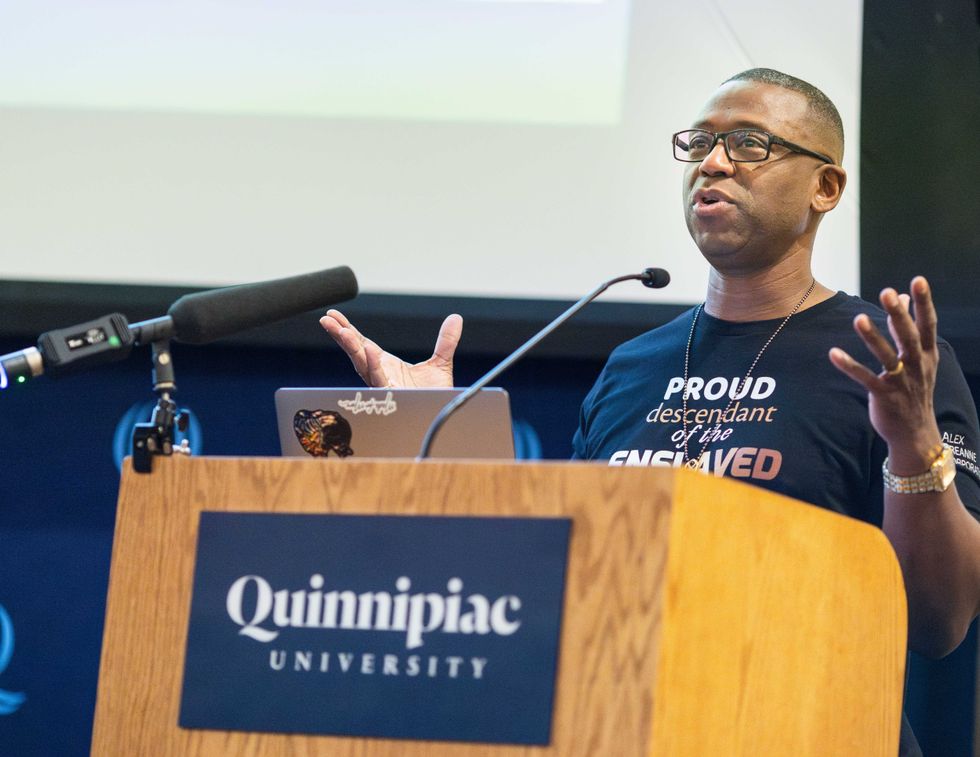 John Mills speaking at Quinnipiac University.Courtesy the Alex Breanne Corporation
 Stephanie Saetta,with her rescue dog George and Blue (left), a shepherd mix awaiting his forever home.Madi Long