Fire on Ancramdale’s Rabbit Tail Road

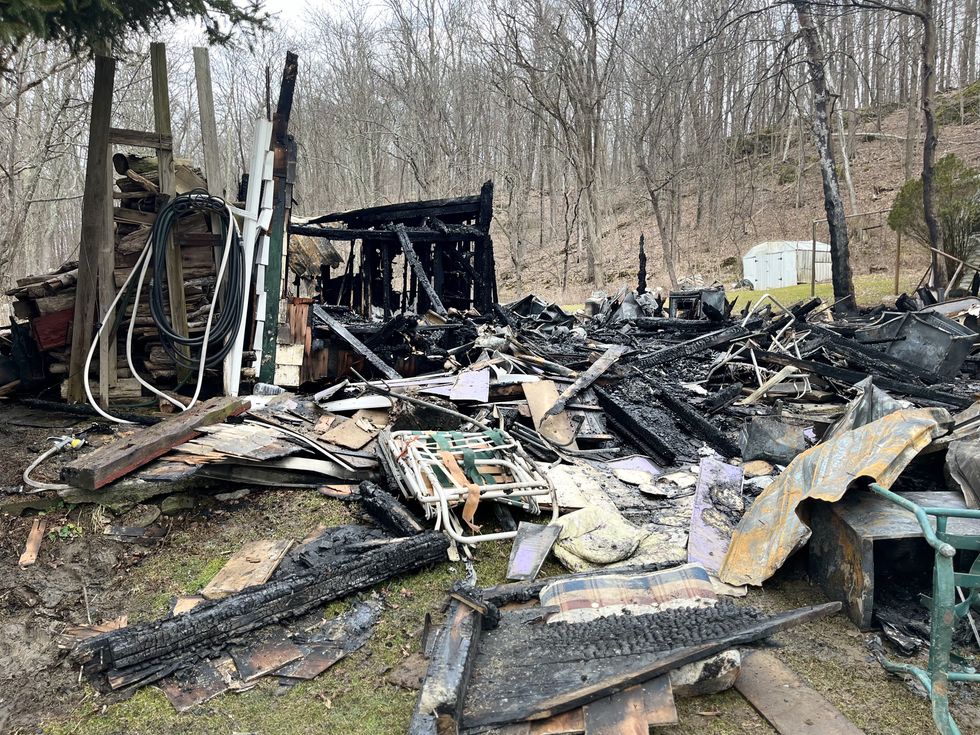
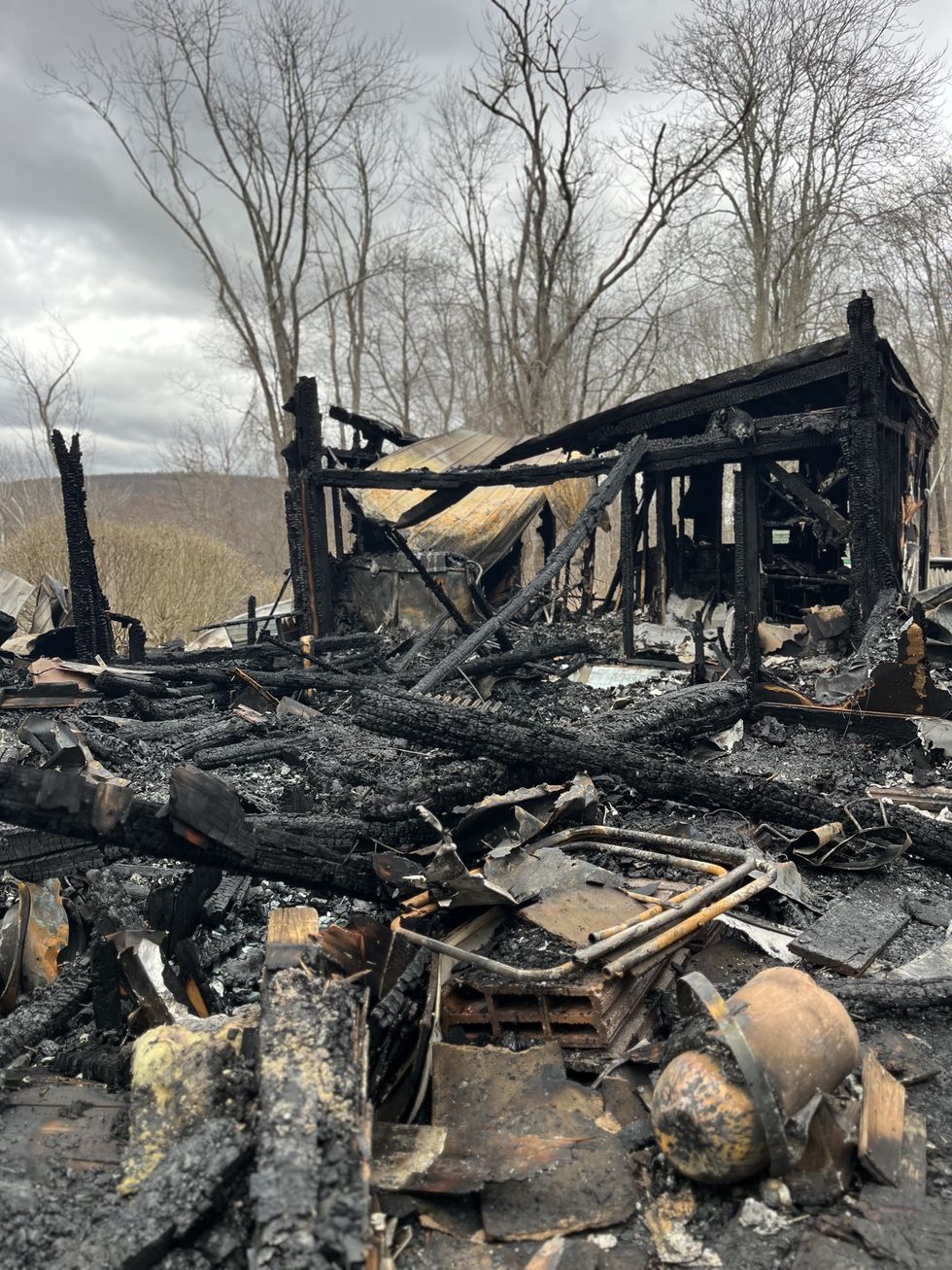
Fire destroyed the house at 116 Rabbit Tail Road in Ancramdale Monday, March 4.
Natalia Zukerman


Fire destroyed the house at 116 Rabbit Tail Road in Ancramdale Monday, March 4.
ANCRAMDALE — On the morning of Monday, March 4, a fire destroyed the home at 116 Rabbit Tail Road in Ancramdale, a hamlet of Ancram.
Fire trucks from Ancram, Taconic, Copake, and Pine Plains all responded to the scene but there was little that could be done.
“The fire was so far advanced when we got there, there wasn’t really much we could do,” said Ancram Fire Chief David Boice. “If there’s no alarm system present in the house, like a central alarm system, and you’re waiting for people outside to notice it, the fires are always pretty intense before we get notification,” Boice explained.
The homeowner, John Haynes, was not home at the time, and no one was injured. Hines could not be reached for comment.
The cause of the fire is unknown, but it is under investigation by the Ancram County Cause and Origin Team, “which is standard procedure,” said Boice.
This story has been updated to correct the spelling of the homeowner's name.
Millerton News
MILLERTON — North East Town Board members are preparing to start the search for a new Highway Superintendent nearly three months after longtime Superintendent Bob Stevens’s death in April.
The North East Town Board is set to vote on the job posting at a regular meeting scheduled for July 9 at 7 p.m. Board members are expected to remove a town residency requirement in order to widen the pool of candidates.
Board members raised concerns last week regarding the proximity of prospective hires, citing the emergency contact role of the position in the town’s hazard mitigation plan. The posted job description will highlight the necessity of candidates residing close to the town without specifying an exact allotted mile or time measurement. The acceptable distance will be determined on a case by case basis when sifting through applicants, board members said.
The Town of North East’s Highway Superintendent position is appointed rather than elected, making the town an outlier in Dutchess County.
This proposed change to in-town residency requirements will only affect the superintendent position, not other future town hires. If approved on July 9, the changed local law can be implemented immediately following the meeting’s conclusion, board members said.
Hiring will not be conducted until August following the meeting on Aug. 13.
The board is in the process of finalizing the official job posting. It still must be determined if state law requires that a salary range and benefits package be included in the listing. The town’s 2026 adopted budget recorded an annual salary of $75,000 for the position.
The listing will be posted both in the newspaper and online at the hiring website Indeed.com.
Millerton News
Steven Bluestone’s passive house in Hillsdale, New York on July 3, 2026. Passive houses are gaining ground in the Hudson Valley.
HILLSDALE, N.Y. —Two Hillsdale residents are using a lightweight form of concrete rarely seen in the United States to build highly energy-efficient passive houses, hoping to demonstrate a different approach to residential construction.
Consultant Dan Levy has been in the passive house industry for over 15 years, and has built two houses that meet passive house certification standards. He has joined forces with Steven Bluestone — a construction company owner who has built five passive houses and three passive apartment buildings over 13 years — over an appreciation for a type of concrete that’s 80% air.
Passive houses are homes designed to use as little energy as possible, reducing the demands for heating and cooling. They aim to be airtight with double or triple-paned windows and built to work with the sun by having wide overhangs that block summer rays but allow a low winter sun to enter the home.
Levy thinks one of the best building materials for the high-efficiency homes is a type of concrete that’s up to 80% air, but is sturdy enough for multi-story buildings. Autoclaved aerated concrete is a lightweight building material originally developed in 1923 in Sweden. Made from sand, lime, cement, and aluminum powder, the concrete is 75% to 80% air and durable for structures, Levy said. It also has a higher fire rating than regular concrete.
While passive houses are not always built using aerated concrete, Levy and Bluestone have used it for their own homes.
Levy and Bluestone met around 10 years ago in Woodstock, New York, when Levy was building one of the first passive houses using aerated concrete in the U.S. in 2014. He felt relieved when he met Bluestone, as Bluestone had the same idea.
“It’s been so nice to have an ally,” Levy said. “It started to reach the point, finally, where people don’t think I’m crazy. Because if Steve Bluestone can do it, then Dan Levy can do it.”
Bluestone and Levy built the first two certified passive houses using AAC in the country, finishing construction just weeks apart.
Levy has since left his passive Woodstock home and lives in Hillsdale, where he’s built himself another passive house using aerated concrete. Construction took two years, but Levy moved in during early 2025 before it was finished.
Proper insulation is vital in a passive house to ensure inside temperatures remain stable and energy usage stays low, Levy said.
In a traditional wood frame house, insulation fills the middle of the wooden studs — which isn’t optimal, Levy said. In a passive house, insulation should be continuous on the outside, rather than interrupted by studs. In Levy’s home, six inches of mineral wool, an environmentally safe material, line the aerated concrete. Stucco covers the outside of his home, as wood can support mold.
“You couldn’t come up with a simpler building,” Levy said.
Since passive houses are airtight, or as close as possible, bugs and mice are almost nonexistent in Levy’s home, he said. Pollen and dust inside the home is also rare.
Bluestone has lived in his home for 12 years, and is currently building an addition. He used a different insulation than Levy, but both homes use aerated concrete for the structure. Bluestone’s house is also airtight and the structure doesn’t support moisture build up or mold.
Using proper building materials and insulation, passive houses are built so the indoor temperature is consistent, otherwise known as mean radiant temperature. Maintaining inside temperature ensures that comfort is maintained throughout the house and energy usage isn’t dedicated towards temperature differences on surfaces or near doors and windows.
“In the middle of the winter, the walls are kept warm by the heating system because the air is warm,” Bluestone said. “Hopefully no one has a telescope, but I can walk around in my birthday suit when it’s 0 degrees outside, and I’m really comfortable everywhere in the house.”
Both Levy and Bluestone said that AAC and the passive house model could be used to support apartment buildings and multi-story homes. Levy’s house is a duplex, and he does short term rentals in his spare rooms.
“People come to experience it and learn about how this is built or just come to have a comfortable place to stay,” Levy said.
AAC remains relatively uncommon in U.S. residential construction, but it is widely used throughout Asia, the Middle East and Europe, according to a January 2026 report by Strategic Market Research.
“The attitude in the United States is, if this was so good, why isn’t everyone else using it? Well, everyone else is using it. They just don’t live in the United States,” Levy said.
China has over 2,000 AAC plants, while the United States has two. According to Levy, using AAC is about comparable in price to using wood framing.
“I’ve been trying for years to show people we actually can build better buildings,” Levy said.
In addition to supporting an energy efficient home, AAC is reusable. After a house is demolished, AAC can be recycled to make more.
Bluestone has 30 solar panels on his house, and Levy will be implementing solar panels in the near future. Once Levy’s solar panels are hooked up, his house will be close to net zero energy usage, he said. Both houses use systems to limit energy usage in water, heating and lighting.
In Bluestone’s house, a button heats the water before it’s dispensed from the faucet. This limits water waste while waiting for the temperature to rise.
“It’s a little bit here and a little bit here,” Bluestone said. “Passive houses actually have a lot of rules, and one is related to that. They want to make sure that the amount of time that you’re running the water, the sink to get the hot water, is minimal.”
According to Bluestone, passive houses are gaining popularity in the Hudson Valley not just for costs, but because the people who live in the region are more environmentally cautious. That’s why Bluestone became interested in building passive houses and using AAC.
“I think it’s the right thing to do. I do believe in global warming and how it’s gonna affect us, how it is affecting us,” Bluestone said.
Leila Hawken
Residents and visitors gather at Millbrook assisted living facility The Fountains to hear “We the People,” a production of the Fountains Radio Workshop, on Friday, July 3. The event was fittingly in celebration of the nation’s 250th anniversary.
MILLBROOK — A local group that regularly performs original radio plays at an assisted living facility celebrated the nation’s 250th anniversary with yet another original staging.
The Fountains Radio Workshop tipped its hat to the nation’s 250th anniversary by presenting “We the People,” on Friday, July 3. There were 22 in the cast and a capacity audience out front.
Project director and Fountains resident Marge Wardrop created a verbal tableau that traced familiar quotes beginning with a reading of the Declaration of Independence punctuated by a chorus of “We the People.”
“Who are we, the people?” asked announcer Jim Wardrop.
The answer began with a quote from George Washington, followed by quotes from American heroes, well-known historic figures and the not so well known, but all contributing to the tested fabric of history as people met the challenges of their times. Those times included the early years of the young country, various periods of war, the Depression, the long civil rights movement and its heroes, all the way up to a modern-day voter, mindful of the responsibility of being one of the nation’s people.
Sound work was by Janet Robinson.

Want more of our stories on Google? Click here to make us a Preferred Source.
Christine Bates
Sited on 0.17 acres, 5 Center Ave. is a renovated Victorian home built in 1890 which sold last month at its listed price of $449,000.
MILLERTON — The 12-month trailing median price for any residence in the Town of North East was $410,000 at the end of June 2026. This includes all types of residences — from single-family homes and mobile homes to estates on large acreage — in both the Village of Millerton and the Town of North East, but excludes land and commercial sales. The median price for village homes, which are generally on smaller parcels, was $420,000.
The town’s $410,000 median is lower than the $437,000 median recorded for the 12 months ending June 30, 2025, but well above the 2023–24 median of $369,000. In contrast, village home prices have steadily increased over the past three years, rising from $365,000 in 2024 to $392,000 in 2025 and $420,000 in 2026 as more renovated homes came on the market.
The number of residential sales in North East on a rolling 12-month basis has remained within a three-year range of 25 to 40 annually, including the village. A total of 28 residences were sold in the 12 months ending June 30, 2026, compared with 30 sales in the period ending June 30, 2025, and 37 sales in the 12 months ending June 30, 2024. Village sales have fluctuated from year to year, with 12 sales in the 12 months ending June 30, 2024, six in 2025 and 12 in the most recent 12-month period.
Currently, there is roughly a one-year supply of homes on the market. As of July 1, approximately 27 single-family homes were listed for sale. Seven were listed above $1 million, while five were listed below the current median price of $410,000. By comparison, 10 parcels of land were listed on the MLS, with asking prices ranging from $49,000 for a building lot to $3,495,000.
North East and Millerton Sales May and June
5 Central Ave. — 3 bedroom/2 bath home in the Village of Millerton sold on June 25 for $449,000.
20 South Center St. — 2 bedroom/1 bath, 1,000 square foot home in the Village of Millerton sold on June 15, 2026 for $299,000.
5846 S. Elm Ave. — 4 bedroom/2 bath home in the Village of Millerton sold on June 9 for $261,500.
5 Red Cedar Lane — 3 bedroom/2 bath home sold on June 9, 2026, sold for $415,000.
Smithfield Road — 12.09 acre lot sold on June 3, 2026, for $175,000.
147 Lake Lane — 2 bedroom/1 bath seasonal cottage sold on May 14 for $149,000.
24 Dutchess Ave. — 3 bedroom/2 bath home in the Village of Millerton sold on May 7 for $509,000.
151 Lake Lane — 2 bedroom/1 bath cabin sold on May 4 for $190,000.
710 Smithfield Road — 23.89 acres of land sold on May 1 for $190,000.
* Town of North East and Village of Millerton recorded real estate sales and market activity from March 1 to June 30, 2026, derived from First Key MLS and other on-line recent sales information. Private transfers will be added when they become available. Details on each property from Dutchess Parcel Access. Current listings from One Key MLS and other online sites. Compiled by Christine Bates, Real Estate Advisor with William Pitt Sotheby’s International Realty, Licensed in Connecticut and New York.
Millerton News
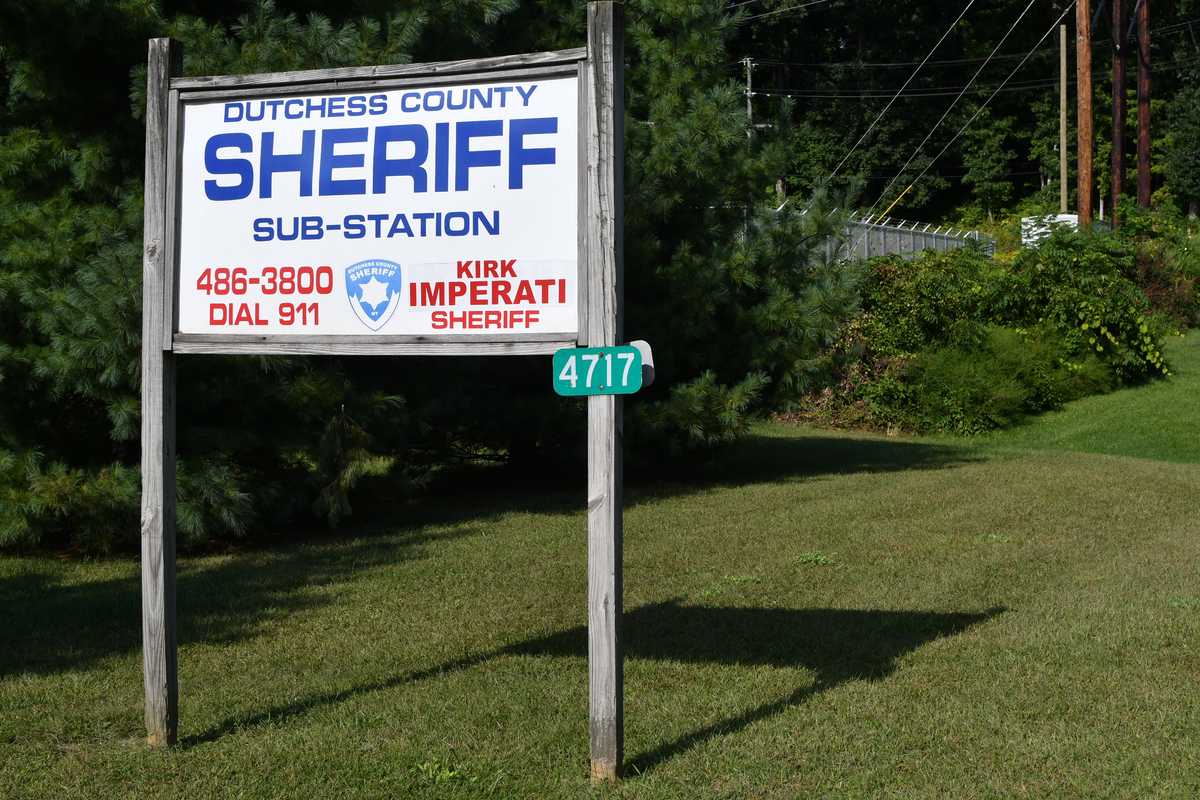
Dutchess County Sheriff's Report — Thursday, July 9
Dutchess County Sheriff’s Office Harlem Valley activity report June 29 to July 4
June 30 — Deputies DeRosa arrested Joseph Salbino Depina, age 39, in the Town of Pine Plains after it was discovered that he was wanted by the City of Poughkeepsie Police Department who held an active warrant for his arrest. Depina was turned over to the City of Poughkeepsie Police Department.
June 30 — Deputies responded to the Pawling train station for a found bicycle that had been in the area for 2 weeks. Bicycle stored at the Pawling substation. Contact 845-486-3800 with more information.
July 1 — Deputies responded to 66 Sharon Road in the Town of North East for a report of a trespasser at that location. Jesse E. Harvey, age 40, was cited for trespass and is to appear in the Town of North East Court at a later date.
July 2 — Deputies to Route 22 in Amenia to investigate a domestic dispute between a mother and a daughter. Matter resolved without further police intervention
July 3 — Deputies investigated a report of aggravated harassment in the Town of Dover. Caller reported they are receiving threats of bodily harm via e-mail after denying payment to send a face photo to the suspect via a fetish website. Investigation on-going.
July 4 — Deputies reports the arrest of Courtland E. Molineaux, age 44, for Driving While Intoxicated subsequent to a traffic stop on Route 22 in the Town of Pawling. Molineaux to appear in the Town of Pawling Court at a later date.
PLEASE NOTE: All subjects arrested and charged are alleged to have committed the crime and are presumed innocent until proven guilty and are to appear in local courts later.
If you have any information relative to the aforementioned criminal cases, or any other suspected criminal activity please contact the Dutchess County Sheriff’s Office tip line at 845-605-CLUE (2583) or email dcsotips@gmail.com. All information will be kept confidential.
Graham Corrigan
North East Town Hall will be open on Thursday, July 2, for people who need a cool place to sit and sip water. The Town Hall is located at 19 N. Maple Ave. in Millerton.
Community cooling centers are opening across Dutchess County as extreme heat brings temperatures into the high 90s.
Many libraries, town halls and community facilities are serving as cooling centers, offering air-conditioned spaces, drinking water and restrooms. Temperatures are expected to reach triple digits in some areas of the county this week.
The centers will not be open this weekend. All locations will be closed on Saturday, July 4, and Sunday, July 5, for the holiday weekend.
Northeast-Millerton Library, located at 28 Century Blvd., will be open and air-conditioned during its normal business hours — 11 a.m. to 6 p.m. — Wednesday, July 1, to Friday, July 3. The North East Town Hall, at 19 N. Maple Ave., will be available as a cooling center Wednesday, July 1, and Thursday, July 2, between 9 a.m. and 5 p.m.
The Pine Plains Community Center, located at 7775 S. Main St. above the Pine Plains Free Library, will be open 24 hours a day from Wednesday through Friday. The Free Library downstairs is open noon to 6 p.m Friday, and Town Hall, at 3284 Route 199, is open 8 a.m. to 3 p.m. on Wednesday and Thursday.
The Stanford Free Library, located at 6035 Route 82, will be open Monday through Friday from 9 a.m. to 7 p.m., and Stanford’s Town Hall at 26 Town Hall Rd is available from 8 a.m. to 1 p.m. on Monday through Friday.
Extreme heat can cause dehydration and heat stroke. Residents are encouraged to remain inside or under shade whenever possible and drink plenty of water.

Want more of our stories on Google? Click here to make us a Preferred Source.

Want more of our stories on Google? Click here to make us a Preferred Source.