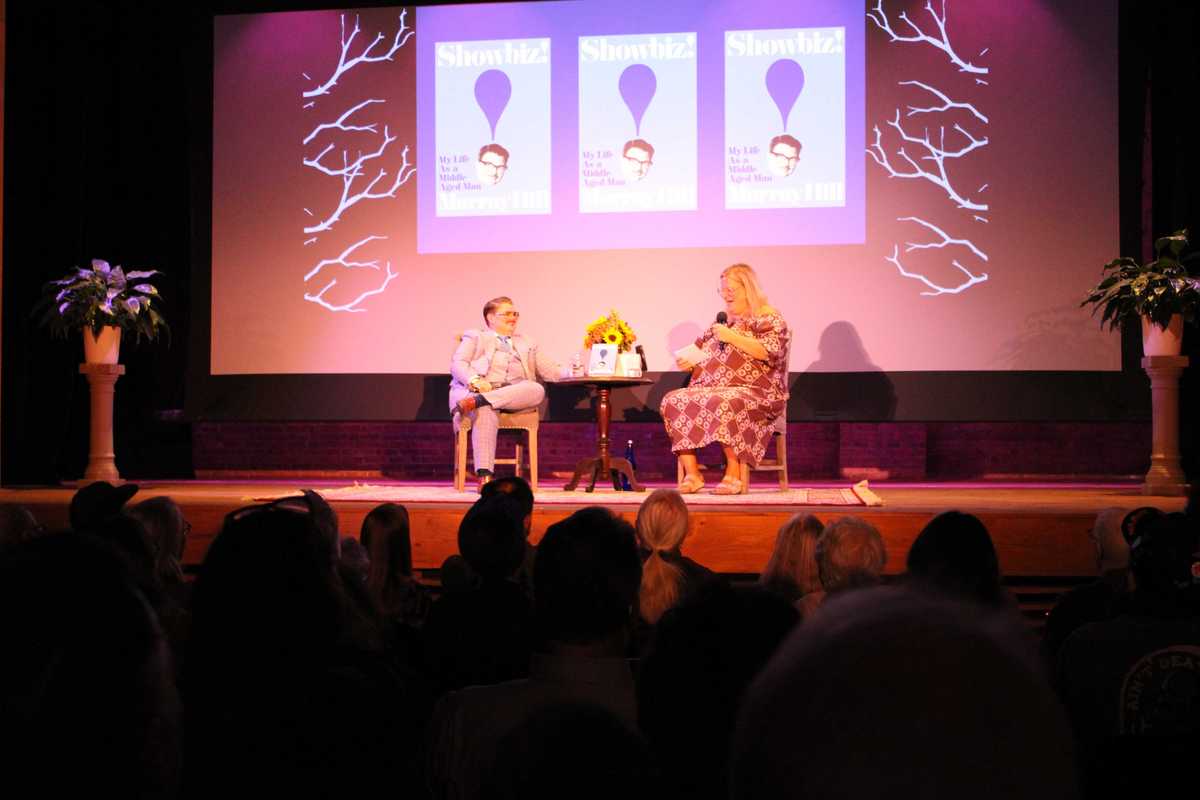
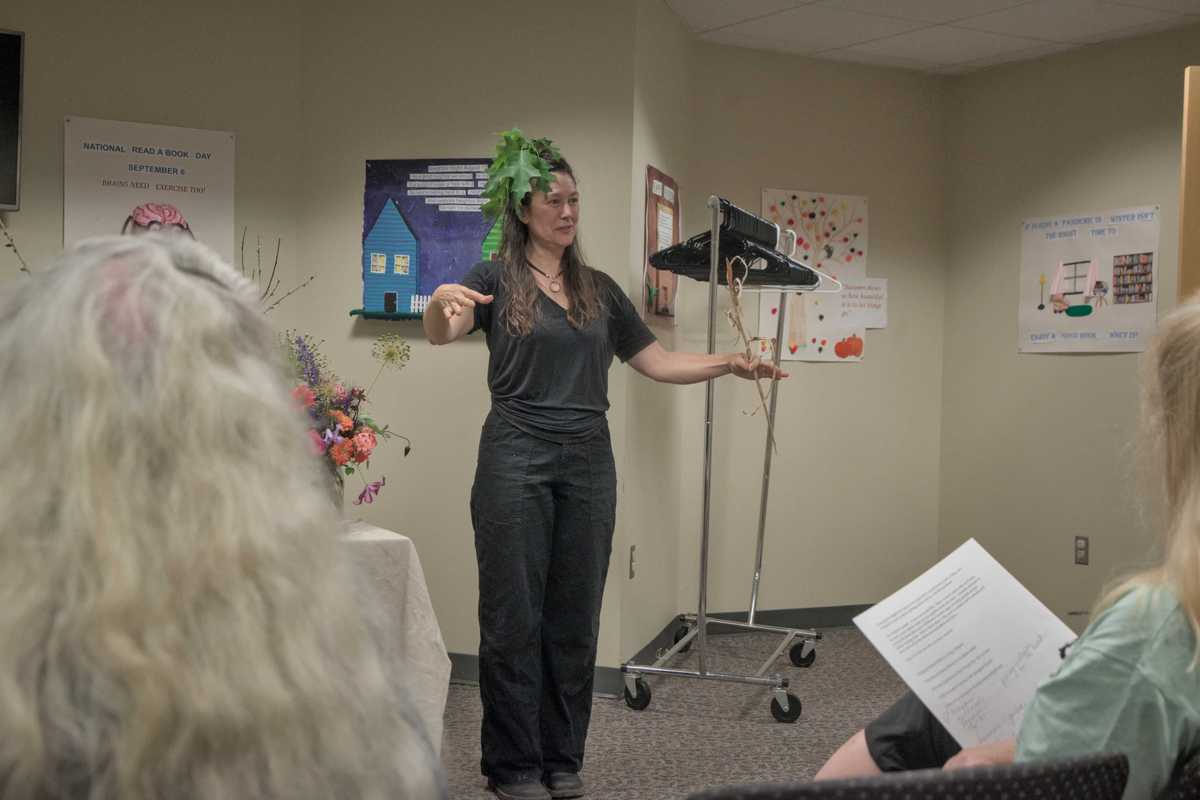
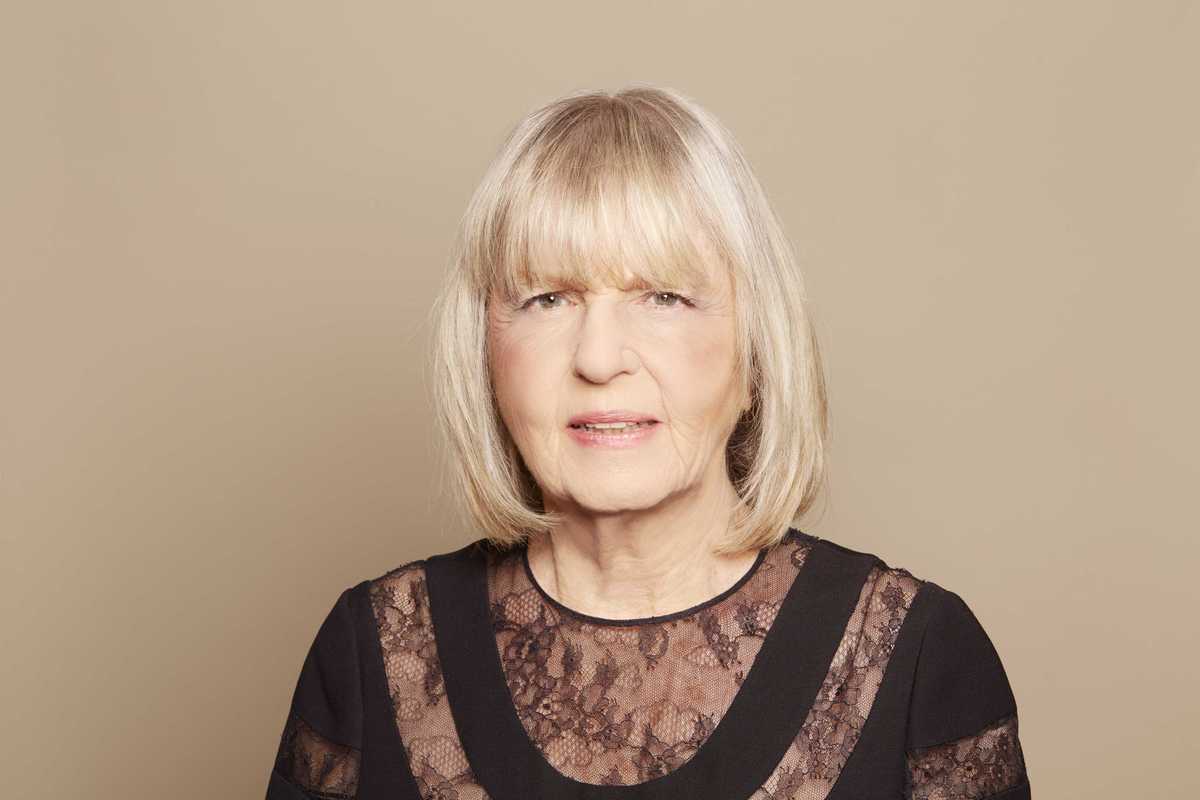
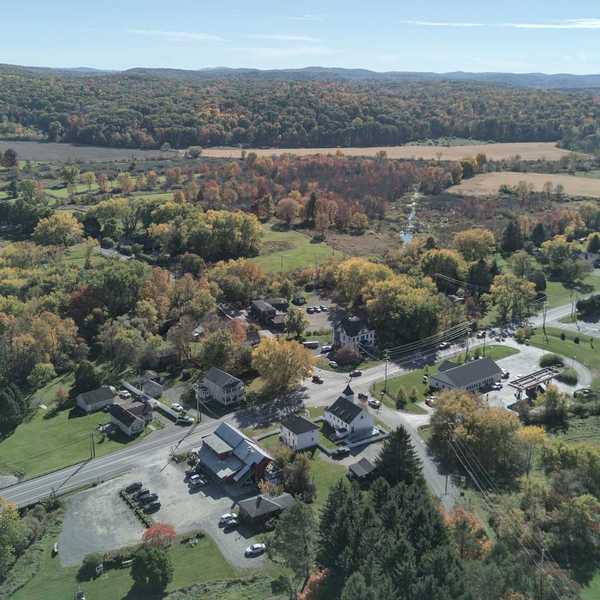
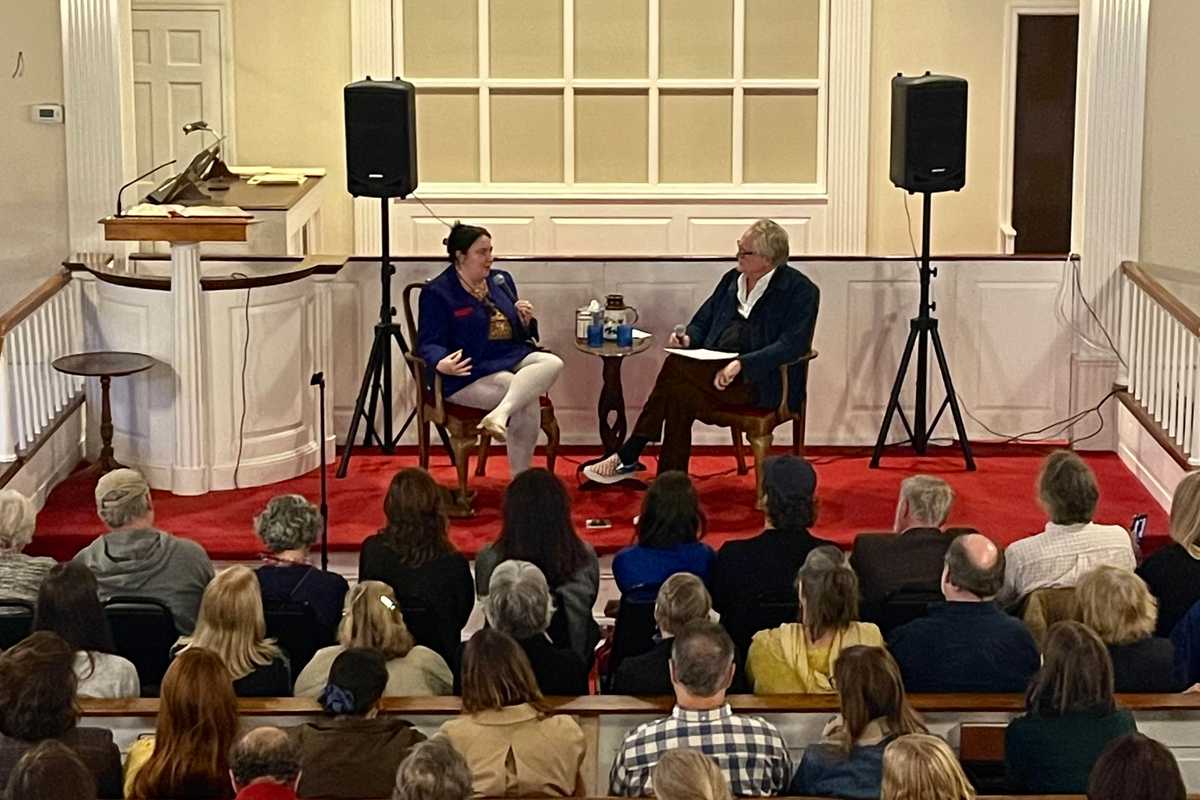
On Sunday, Sept. 13 at 3:30 p.m. at the Hotchkiss Library of Sharon, 10 Upper Main St., author Annik LaFarge will explore the layers of history hidden within Frederic Church’s Olana. From Ice Age geology and Indigenous history to the Hudson River School and Church’s vision for his “greatest work of art,” LaFarge will trace the forces that shaped the celebrated Hudson Valley landscape. Using historic and contemporary photographs and maps, she will discuss her book, “Composing Olana,” and the artist, explorer and visionary behind Olana. Register at hotchkisslibraryofsharon.org
Latest News
“Come From Away,” a story of kindness at Sharon Playhouse
Natalia Zukerman
Sep 09, 2026
“Come From Away” cast in rehearsal. (Back Row L to R): Jeffrey Konowitch, Meagan Lewis-Michelson, Max Bennett-Parker, Michael F. McGuirk, Tracy Liz Miller, Ricky Oliver, Cherish Love, Willie Marte (Front Row L to R) Cameron Sirian, Chelsie Nectow, Erin Lindsay Krom, Sophie Nassiri
Lynette Shy
Twenty-five years after the events of Sept. 11, 2001, the Sharon Playhouse is staging a musical about what happened in the aftermath — and about an extraordinary act of kindness in a small Newfoundland town.
“Come From Away,” the Tony Award-winning musical by Irene Sankoff and David Hein, runs Sept. 11 through 27 and concludes the Playhouse’s 2026 MainStage season. Directed by Hunter Foster, with choreography by Krystyna Resavy and music direction by Eric Thomas Johnson, the production tells the true story of the thousands of airline passengers who suddenly found themselves stranded in Gander, Newfoundland, after U.S. airspace was closed following the terrorist attacks.
Thirty-eight planes carrying approximately 7,000 passengers were diverted to Gander and surrounding communities. Almost overnight, the local population nearly doubled. Residents opened their homes, schools and churches to strangers from around the world, providing food, clothing and shelter — and, eventually, friendship.
The musical transforms those events into a story that balances humor and heartbreak. A company of 12 actors portrays dozens of characters as the passengers and residents navigate fear, confusion, culture shock and unexpected connections. The score draws on Newfoundland’s traditional music and includes songs such as “Welcome to the Rock,” “Me and the Sky” and “Somewhere in the Middle of Nowhere.”
“Come From Away feels especially meaningful for us to present this year,” said Sharon Playhouse Artistic Director Carl Andress. “Twenty-five years after September 11, this extraordinary musical asks us to remember that terrible day by telling a story about the very best of humanity — the kindness of strangers, the strength of community, and our capacity to take care of one another when it matters most.”
The cast includes Chelsie Nectow, Max Bennett-Parker, Meagan Lewis-Michelson, Erin Lindsay Krom, Tracy Liz Miller, Jeffrey Konowitch, Willie Marte, Cameron Sirian, Ricky Oliver, Sophie Nassiri, Michael F. McGuirk and Cherish Love.
“Come From Away” opened on Broadway in 2017 and received seven Tony Award nominations, winning for Best Direction of a Musical. The Sharon production features scenic design by Christopher and Justin Swader, costume design by Kathleen DeAngelis, lighting design by Aidan English and sound design by Graham Stone, with Bobbie Zlotnik handling wigs and makeup.
The Sharon Playhouse will conclude its 2026 season in December with its sixth annual Holiday YouthStage production, a new adaptation of Lewis Carroll’s “Alice in Wonderland,” running Dec. 11 through 20.
“Come From Away” runs Sept. 11 through 27 at the Sharon Playhouse. Tickets are available at SharonPlayhouse.org. The theater cautions patrons to purchase tickets directly through its website rather than third-party sellers.
Keep ReadingShow less
A local escape at Cornwall Bridge Coffee
D.H. Callahan
Sep 09, 2026
John Zeiser and Jane Carlen at their Diedrich IR-3 coffee roasting machine.
D.H. Callahn
In the shadows of the historic Cornwall Bridge, something tasty is brewing. It’s the morning pot that roaster John Zeiser is preparing for his wife, Jane Carlen. They’re the owners of Cornwall Bridge Coffee.
Upon first hearing the name, the covered bridge in West Cornwall might spring to mind, but that’s not actually the Cornwall Bridge. Hundreds of people drive over the Cornwall Bridge on Route 7 every day, but few know what lies beneath it. The top of the bridge is so featureless that casual drivers could miss the fact that they’re even driving on a bridge at all. But from the river, there’s a whole other scene. The underside of the bridge is quite remarkable, leading to its addition to the National Register of Historic Places in 2004
It was built in 1930 by C.W. Blakeslee and Sons, a construction company so prolific that it is credited with helping shape the landscape of the Northeast. The bridge, also known as Bridge No. 560, consists of six open-spandrel concrete arches which reach over 670 feet. For something so utilitarian, made mostly of concrete, it’s actually quite pretty when you take the time to appreciate it.
It works as a wonderful mascot for Cornwall Bridge Coffee.
Zeiser learned to roast coffee beans when living in Los Angeles, while Carlen worked toward her Ph.D. in statistics from UCLA. He was getting serious about the process but put his budding infatuation on hold while he and his wife moved to Litchfield County, where he grew up, in 2020. The house they moved into in Cornwall Bridge had a garage that was zoned for commercial use, but with a baby on the way, they weren’t in a rush to set anything up. Once they’d settled into parenthood, though, they decided to put their passions to work.
Zeiser loved his days roasting coffee. The couple had bonded over their love of a quality cup when they met on the West Coast. They also wanted to find more ways to contribute to their new community in Cornwall. Zeiser is on the board of the Cornwall Chronicle, and Carlen is on the board of the Cornwall Child Center. Having seen how community can grow around food, the couple purchased a Diedrich IR-3 coffee roasting machine. It didn’t take long to see that Zeiser’s skills hadn’t faded.
Roasting coffee is one thing. Building a business is quite another, and the two academics had very little experience in growing a brand. To help give them an identity, they tapped into their home and their values. The couple truly appreciates the underappreciated. When deciding how to present their brand, they wanted that to shine through. And there were few better examples than the often-overlooked Cornwall Bridge.
The Bridge isn’t fancy, but it sure gets the job done. The same can be said for Cornwall Bridge Coffee. The roastery is operated out of the couple’s home in a space that is part personal art gallery, part bean storage and part roasting facility. All their packaging is compostable. Their logo is a simple design featuring the bridge’s underside, which was made for the company by artist and friend Candacee White. The beans are sourced from farms that focus on sustainable practices. Other than the beans themselves, everything else is local. Half of their deliveries are made on foot, as the roastery is close enough to the Cornwall Market, their largest vendor, to drop off their orders by hand. Additional vendors, including the Local in West Cornwall, are all within driving distance, and deliveries can be combined with trips to drop off the kids at school to reduce the company’s carbon footprint. They even roast to order, further reducing waste from beans that haven’t flown off the shelf.
This local focus isn’t just due to a small, growing brand’s potential reach. It’s built into the company’s DNA. Zeiser is heavily influenced by the “artistic/literary ideas of regionalism.” Their blends, River Road and Red Vienna, are both local references. Even their nascent beginnings were hyperlocal, first selling their beans at the Cornwall Village Farmers Market.
For a company so focused on their immediate surroundings, it sure can take you on a journey. Its beans, which can’t actually be grown in Northwestern Connecticut’s climate, are imported from Papua New Guinea, Brazil, Rwanda, Colombia and Ethiopia, and every cup can work as a little escape. A peaceful moment to enjoy your morning and appreciate the little things in life. Especially for new parents.
To learn more and browse their offerings, head to cornwallbridgecoffee.com.
Keep ReadingShow less
A marriage of memoirs
Natalia Zukerman
Sep 09, 2026
Jack Sheedy’s two memoirs share characters, themes and places.
Provided
Can two books get married? Author Jack Sheedy wants to find out and on Wednesday, Sept. 16, at 6 p.m. at Torrington Library, his memoirs “Sting of the Heat Bug” and “In My Father’s Tire Tracks” will be joined in a tongue-in-cheek wedding ceremony.
The evening will feature a humorous PowerPoint presentation, prerecorded vows, commentary and a Q&A, followed by a signing of both books, which will be available individually or as a discounted set.
Sheedy, a Harwinton resident, contributor to these papers and former news editor of The Catholic Transcript, has given “Sting of the Heat Bug,” originally published in 2012, a complete makeover for its relaunch. The revised edition includes a new cover by Torrington artist Dennis Baccheschi, a table of contents, chapter titles, a prelude and epilogue, color photographs, streamlined prose and a new design that echoes “In My Father’s Tire Tracks,” his 2024 memoir.
The books share some of the same people and themes, including road trips to Wisconsin and California, but Sheedy says there is enough new material to make reading both worthwhile. “There is no repetition that would make the reader think, ‘Wait, didn’t he say the same thing in the other book?’” he said.
As for the wedding? “It’s a way to have fun and be entertaining,” Sheedy said. By “marrying” the memoirs, he hopes to show how the characters and personalities that appear in both books can become more fully known when readers encounter them in each.
Torrington Library is at 12 Daycoeton Place. Books will be available at special pricing; cash, check or Venmo only.
Keep ReadingShow less

Want more of our stories on Google? Click here to make us a Preferred Source.
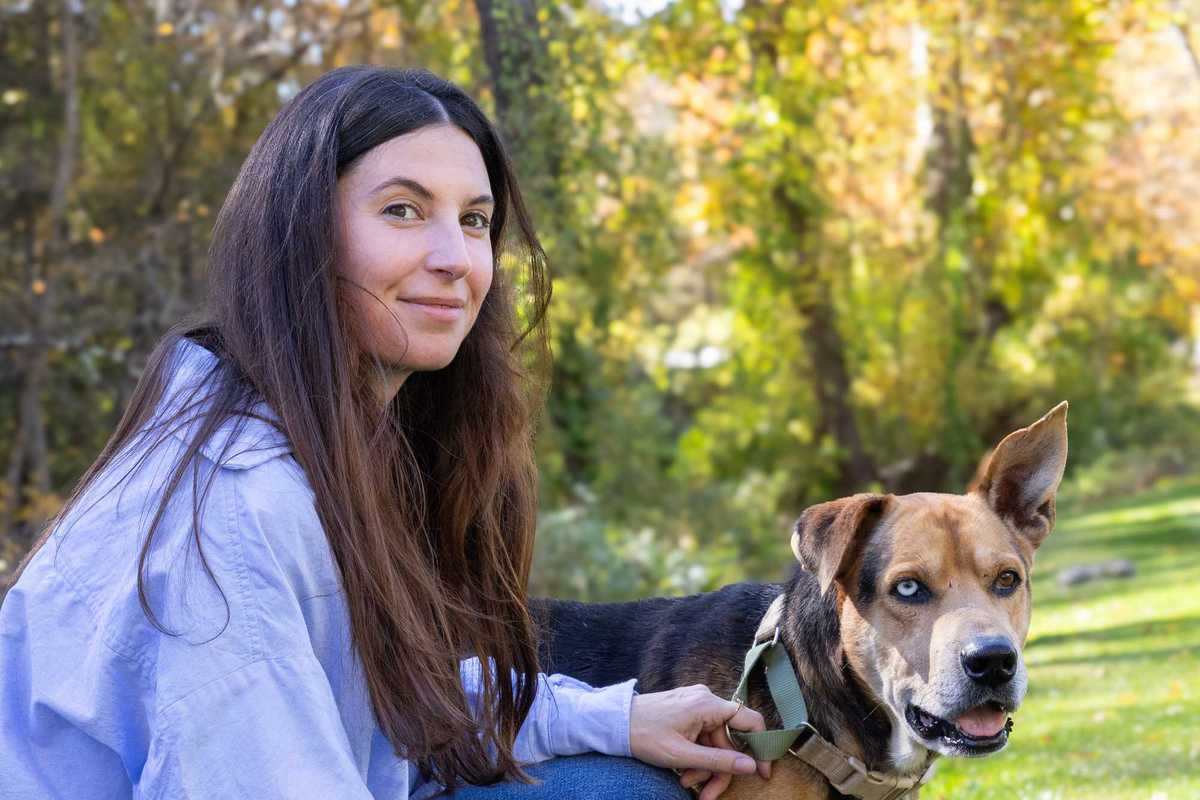
Curated finds at Half Shell Vintage
Sally Haver
Sep 09, 2026
Pearl Elsbach, owner and proprietor of Half Shell Vintage in North Canaan.
Provided
Pearl Elsbach, owner and proprietor of Half Shell Vintage in North Canaan, has amassed a curated group of designer clothing, fine jewelry, housewares and timeless objects such as art and rare books. This store is hardly your usual antiques and vintage clothing store; it has a website featuring every item currently on offer, with price and description included. Customers can shop both online and in person at the storefront in North Canaan, Connecticut.
When asked where the store’s name came from, Elsbach explained, “I’ve always loved the famous birth of Venus painting by Botticelli, ‘Venus in the Half Shell,’ where Venus is pictured as the pearl, and I love the sea, so all together it’s a fun play on my name and the visuals that really speak to me.”
When first-time customers survey this vintage store’s unique offerings, the number one question Elsbach gets is, “Where do you source your items?” As she explained, “I’m in a unique position where the collection I’m sharing is made up of pieces most people won’t have access to. A lot of shops mainly source from thrift stores or estate sales, but I’ve been lucky enough to work with private collectors and artisans to rehome pieces they are ready to let go of.”
Elsbach was a born entrepreneur, starting her own business as a private organizer at age 13. She and her sister began selling their clothes online in 2018 as a hobby. When her grandmother, a lifelong collector of clothing and jewelry, died right before COVID, Elsbach began the business that is now flourishing, selling the collection online. “Both my grandmothers have inspired me to cherish well-made pieces and to cultivate a collection that will stand the test of time and trends,” Elsbach explained.
Elsbach’s background dovetails perfectly with her chosen profession. As the pandemic was winding down and she was living in New York City, Elsbach was working part time for a jewelry company, which gave her valuable exposure to that trade and a heightened awareness of quality and value. “Jewelry has always been a passion of mine,” she said. “The lasting power of metal and stones as well as the talismanic property of jewelry. Where my personal collection has always focused is on ‘vintage’.” To deepen her expertise, Elsbach earned her certification from the Gemological Institute of America, gaining a deeper understanding of jewelry as both an art form and a valuable commodity.
Elsbach initially opened her vintage business in a small storefront in Great Barrington. When that rental was no longer available, she decided to host a multivendor flea market, titled “413 Flea” in the Great Barrington Fairgrounds. “It was an attempt to counteract the soaring costs of operating a small business in the Berkshires and give community members an affordable space to come and sell their wares.” The flea market was very well received and since, Elsbach has hosted three more.
“When a storefront in Canaan opened up, I took a leap of faith,” Elsbach explained. “The town has given me such a warm welcome, and the new shop feels the truest to my vision.”
Half Shell Vintage is located at 11 Railroad St. in North Canaan, Connecticut. For more information and to see the inventory, visit half-shell-vintage.com.
Keep ReadingShow less
A whole new R.S.V.P. in West Cornwall
D.H. Callahan
Sep 09, 2026
Chef Bolivar Hilario outside R.S.V.P. in West Cornwall, Connecticut.
D.H. Callahan
Bolivar Hilario is a total food nerd. He’s obsessed with the possibilities of fresh ingredients and studies the ways different processes used by different cultures can result in totally different flavors. Now, as the new executive chef and owner of R.S.V.P. in West Cornwall, Connecticut, he’s planning to explore it all.
Since its beginnings, R.S.V.P. has been a popular spot for serious foodies. Modeled after a French dinner party experience, chef Guy Birster and co-owner Charles Cilona were a two-man operation of no-fuss dining. The menu was unpredictable and uncompromising, favoring flavor over the comforts of other fine-dining establishments of comparable caliber. A famous New York Times review headline read: “Regulars Say R.S.V.P. Does Everything Wrong Except for the Food.” The tables and chairs were mismatched; the room itself seemed almost cobbled together from disparate endeavors. The only thing that mattered was the food.
Hilario is taking a slightly different approach. The redesign of the room has been carefully considered, as have the utensils and dishes. While Birster specialized in French cuisine, Hilario’s skills and palate are more internationally based. His family is Mexican, he trained under a chef who fastidiously studied Japanese techniques, and he’s worked in a wide variety of kitchens himself. Add to all that his approach to fresh, local and seasonal ingredients, and you have the perfect storm for some incredible dishes.
But food wasn’t always Hilario’s passion. He found it almost by accident. While he credits his mother and sisters for helping develop his taste for real food instead of the junk his childhood friends were eating, it wasn’t until working as a dishwasher at a chain restaurant in Florida that he noticed the possibilities of what food could be.

The kitchen caught his attention, and he was quickly asking the chefs why they did what they did. He’d poke and prod, asking why not substitute this ingredient for another. But even the most experienced chefs weren’t allowed to mess with a corporate menu. Instead, Hilario started experimenting with his own food. He’d come in early and use the tools of the industrial kitchens to learn how ingredients worked together to create surprisingly different results.
Soon, his passions had grown too big for the constraints of the corporate restaurants that dominated Florida’s food scene. So, he packed his bags and headed for New York City. While still working his way up, he found the city was more encouraging of innovation and curiosity than Florida had been. The chefs he worked with took his ideas seriously, but more importantly, they had the freedom to put those ideas on a menu. It was then that Hilario became obsessed with the radical potential of ingredients, techniques, textures and flavor combinations. It was then that his interests turned almost academic, reading about and absorbing all the knowledge other chefs were willing to share.
When he came to Connecticut, a whole new world opened up. First at Ore Hill and Swyft in Kent, he took the opportunity to meet the farmers growing his ingredients. By the time he’d worked his way up to becoming the executive chef at Community Table in New Preston, he was wowing everyone who walked in, including voters for some serious awards. In 2025, with a menu designed by Hilario, Community Table won Restaurant of the Year and Best Restaurant in Litchfield County from the Connecticut Restaurant Association. Then, in 2026, Hilario himself was named a semifinalist for the James Beard Best Chef in the Northeast award.
But now he’s out on his own. Following in the footsteps of R.S.V.P.’s founders, the restaurant is still a blind tasting menu, and flavor is still king. When you request a reservation, Hilario will email you, asking about allergies or aversions. He can cook around almost any dietary restriction and even finds some of them an exciting challenge. After that, there are no more decisions. You’ll eat what he makes, and what he makes is sensational. The blending of ingredients and regional highlights will wow diners with every bite.
The price, however, is something that might deter many potential diners, especially in a recession. But if you can afford to drop a few bills on a special dinner, it’s well worth it. Hilario argues that “it’s better to pay for good food at a restaurant than it is to pay for bad food at the doctors’ office.” And good food with good ingredients is certainly what they’re serving at R.S.V.P.
The restaurant opened on Sept. 1 and will have an abbreviated menu available for half price on Tuesdays. Wednesday through Sunday will feature the full menu, and all nights are B.Y.O.B. To learn more and request a reservation, go to rsvpdining.com.
Keep ReadingShow less
The Turd
Cheryl Heller
Sep 09, 2026
Fox caught on the trail cam at the compost pile.
Provided
Our compost pile has always been a community gathering spot. It’s where messages are exchanged, meals shared, habits and idiosyncrasies of close neighbors observed and celebrated.
Every day, except when the snow is deep enough to fall into our boot tops, we trudge out to a spot at the edge of the woods behind our house to deposit peels, cores, outer leaves and trimmed ends remaining from our cooking. Every year, we turn it and spread the nutrient-rich soil it produces, feeding vegetable beds, bushes and trees.
We still have much to learn about gardening and caring for multi-acre native gardens with snacks and habitat for local wildlife. For example, composted surplus lettuce seeds produce small circular salads surrounding every tree and bush on the property. Fall-composted tomatillos produce so many volunteer plants around the yard we could open a salsa stand. That’s the flora.
On the fauna front, observing what becomes of our composted items is an ongoing source of fascination. Watermelon rinds are picked clean over several days, showing progressively smaller bite marks, with probably the chipmunks having to settle for whatever little hot pink flesh the bigger biters leave behind.
Eggshells are always worth pushing around during the night, on the off chance they are not completely empty.Lychees, though exotic, are delectable, and portable enough to take back to a den or nest. Grapes, it goes without saying. A past-its-sell-by-date block of firm tofu was snapped up without a crumb remaining. (Probably by the same individuals who dug up every soybean I planted before they could sprout.)
I have read the articles that advise against feeding wild animals. I know the delicate line we’re treading but don’t believe a few food scraps will fool our many resident bears into thinking they can count on us for a regular dinner or make them want to get closer to us in any way.
So it’s extremely rare that I put animal protein out to compost —less than once a year. But I had a few ounces left of line-caught, Alaskan slow-roasted salmon that we were not going to come back to, and I could not justify denying a less-fussy eater the enjoyment of it. Plus, I hate to waste food.
Out of consideration, I kept the salmon separate from the daily remains from our French press, assuming that, given a choice, only humans or an Asian palm civet would prefer to have their salmon served with coffee grounds. To that end, I deposited the salmon a few feet away from the big pile, elevated on its own tree stump. I must admit, it looked tempting. And it made me wonder if the cliché that we eat with our eyes first applies to other creatures as well.
More-than-human beings have very few options for communicating with people, since we are so dense and oblivious to their signals. Lacking opposable thumbs, pens and pencils are out of the question. When they want to comment negatively on something, they can’t ghost us (the preferred method of office colleagues, in my experience), since we wouldn’t notice, and wild animals pretty much always want nothing to do with us anyway. Their vocalizing is lost on us because we’re too insensitive to interpret what they’re saying. That leaves them with biting, which gets our attention but is impractical most of the time. And the turd, a unit of communication that seems to hold meaning in any language.
For example, our first dog, Truman, lived with us in the Back Bay area of Boston. Every day on the Charles River Esplanade he met other dogs of myriad sizes and breeds. The protocol was inviolate. Sniff butts, take turns peeing on a nearby tree, be friends. Following this protocol demonstrated goodwill and confirmation of shared values for peace and freedom among the pack. Democracy in action. One day, a generously-haired Pomeranian (or something) broke protocol. He sniffed butt and then pooped. Truman was incensed and revealed a side of his personality that was new to us. He growled and lunged at the offender. But more interestingly, he developed a hatred for bushy dogs that he continued to nurture for the rest of his life. Just seeing a bushy dog across the street set him off. One bad experience became a hard-to-shake belief about an entire population.
The morning after my slow-roasted salmon offering, there was nothing but a fish oil stain where the salmon had sat on the stump’s pale flesh. But in its place, carefully placed, was a turd.
I deduced that the response came from a member of the fox family that lives just up the hill. I have caught them on trail cameras. And, I know they would not likely be sharing turf with the coyotes who live down near the wetlands. Coyotes are about the only other locals from whom the deposit size would fit, as it were.
But what did it mean? “Thank you”? “Here is my review.” “Hey, from now on this is my stump?” “ I was so excited to find this I couldn’t control myself?”
I have no doubt the fox knew we were having a conversation. And that the fox’s understanding was much more nuanced than my own limited grasp of information. My best guess is that after I said, “Here’s some salmon,” he said, “I was here, this matters, this is mine.” I put out a piece of fish, he gave it meaning and place, communicating to his entire skulk about status, territory, health, relationships and opportunity.
As I’ve been working on this essay, a good friend sent me links to several articles in today’s Financial Times, principally on why sustainability and concern for the environment have fallen out of fashion.
Every species is better than we are at reading the signs.
Cheryl Heller is a designer, educator and business strategist who pioneered the field of social design and founded the first social design MFA program at the School of Visual Arts. She lives in Norfolk.
Keep ReadingShow less

Want more of our stories on Google? Click here to make us a Preferred Source.
loading