Thank you!
Your support is sustaining the future of local news in our communities.

Copake plans open meeting Sept. 14 to air ideas for NYS grant

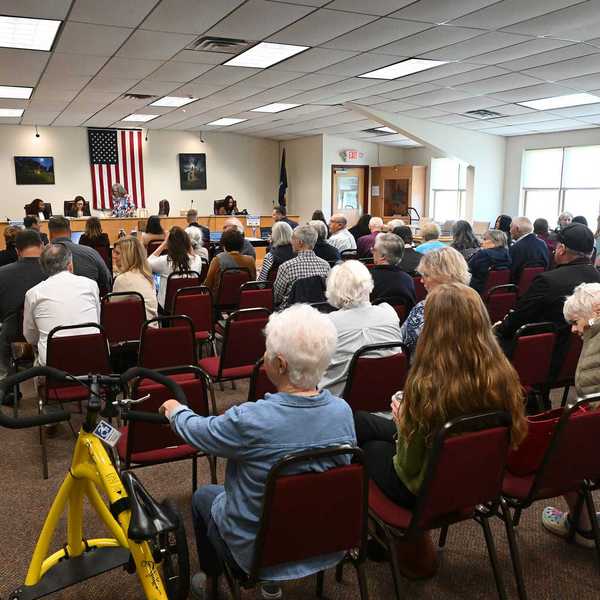
COPAKE — As Copake citizens gather at an open meeting at the Town Hall at 230 Mountainview Road, on Saturday, Sept. 14, from 11:30 a.m. to 1 p.m., they will be doing so with hope to fine tune a proposal which could bring a $4.5 million grant to revitalize the community.

Town Supervisor Richard Wolf said the town is vying for one of two grants from the state’s NY Forward program which is designed to help small towns improve in a number of ways.

Copake was not successful when it applied for last year’s program, but Wolf feels that although it is a challenge, this year, “We are likely to have a good shot.”

With a due date of Oct. 18 for proposal submission to the state, he says “preparation time is very short, so we’re busy at work on getting this organized.”

As this is the second time around for Copake, Wolf says, “We have a good idea of some of the proposals that we want to do, assuming that the folks who were involved in them last time around are again preparing to participate, so we have a good base of things we intend to do. What we’re hoping that we’ll hear at the first meeting is support for those ideas as well as some new ones.”

The town has set a deadline of Sunday, Sept. 15, the day after the meeting as a deadline for new proposals so, “we can get those ideas in so we have some time to develop them.”

He explained, “What we are looking for are quality proposals that can have the most important impact on what they call ‘placemaking,’ which means sort of strengthening the ‘downtown’... to make it easier for pedestrians to transverse it and to make it more appealing for people to come town and to be pedestrians in it.”

With the ultimate aim of stimulating economic growth by creating jobs and affordable housing, Wolf made it very clear that this grant would have an impact on the entire area, and so he is hoping as many residents as possible become involved.

According to the state’s description of NY Forward, the program for which Copake is applying, was “not designed to fund one large, expensive project. Rather, NY Forward applicants should develop a full suite of synergistic projects…that may include one or two substantial anchor projects supplemented by a variety of smaller supportive projects.”

Wolf says the town is hoping to gain as much support as possible for the proposal by both this meeting and a second one which is as yet unscheduled.

Extensive information, as well as a link to submit proposals and to complete a survey is available at copakewaterfronts.com/nyforward.


Latest News

The timeless appeal of the American farmhouse

Modern farmhouse designed by Tina Anastasia.

Miki Scarfo
The best farmhouse spaces feel rooted in warmth and history, even when they’re newly built.
— Tina Anastasia

They dot the landscape, standing beside winding country roads and rolling fields, their silhouettes as recognizable as church steeples and old stone walls. For hundreds of years, the American farmhouse has held an important place in the country’s architectural history, especially in New England, where these homes feel deeply connected to the land itself.

Their enduring appeal may have less to do with the trends farmhouse style inspired and more to do with the comfort these homes create. Farmhouses offer a sense of warmth and authenticity, along with a design style that feels approachable rather than forced.

Keep ReadingShow less
Taiga brings Siberian-inspired dining to Hudson

Taiga is located at 119 Warren St. in Hudson.

Provided
We never wanted Taiga to feel like a traditional restaurant. We wanted it to feel emotional, immersive and deeply personal — almost like stepping into another world for a few hours.
— Vlad Larvin

Walking into Taiga in Hudson for the first time did not feel like walking into a restaurant — it felt like stepping into a memory. As a Russian immigrant who grew up between cultures, I did not expect to find a place that evokes such a specific emotional response, both familiar and cinematic. Candlelight flickered against dark wood and vintage wallpaper while old Soviet-era music played softly in the background. The scent of herbs, smoke, tea and fresh blini filled the air — at once unfamiliar and deeply nostalgic. It became clear almost immediately why people speak about Taiga as more than simply a place to eat.

What makes Taiga unusual is that the food is only part of the experience. The restaurant was created by Vlad Larvin and his partner, Waldemar Sirko. Larvin, originally from Biysk, a small town in Siberia’s Altai region, worked in photography and fashion design before opening Taiga — fields that continue to shape every part of the restaurant today. Every detail — the lighting, photography, textures, music, pacing of the evening and even the scent in the air — feels intentionally designed to create emotion and atmosphere, not just visual style.

Keep ReadingShow less
Ancram Center opens restored Annex building

The ribbon-cutting ceremony for the opening of The Annex at Ancram Center of the Arts. From left, Dan Sternberg, Ancram Center board member; Stephen Futrell, Ancram Center board member; Mary Barthelme, HCR; Kit White, APG; Andrea Barnet, APG; Crystal Loffler, HCR; Assemblymember Didi Barrett; Paul Ricciardi, Ancram Center Co-Director; Cathy Redlich, Ancram Center board president; Jeff Mousseau, Ancram Center Co-Director; Colleen Lutz, Ancram Town Supervisor; Jane Plasman, Ancram Center board member; Ivy Epstein, Ancram Center board member; Sheryl Boris-Schacter, Ancram Center board member; Lindsay Turley, NYSCA

B. Docktor

The Ancram Center for the Arts marked a major milestone May 22 with a ribbon-cutting ceremony celebrating the opening of The Annex, a restored 1780s building adjacent to the organization’s original Opera House theater in Ancram’s Historic Hamlet District.

Founded in 2016, Ancram Center for the Arts has built a reputation for presenting adventurous contemporary theater and community-centered programming in an intimate setting.

Keep ReadingShow less
google preferred source

Want more of our stories on Google? Click here to make us a Preferred Source.

Finding a home on the range

Finding a home on the range

Flynn Ryan on the Range.

D.H. Callahan

Before Flynn Ryan, the owner of the Millerton Driving Range, moved from Arizona to Lakeville as a high school freshman in early 2020, he had only a passing interest in golf. He was a football guy in Arizona, but when he found out practice for the Housatonic Valley Regional High School athletes was an hour away, he joined the golf team.

A couple of years later, while working on a school assignment to improve the community, Ryan noticed the old driving range. The weeds and grass were up to his eyes. With no connections and no experience, he walked into Talk of the Towne Deli next door, asked for the landowner’s number and called him right there from the parking lot.

Keep ReadingShow less
William Kinsolving reimagines the Rhinelander Affair

Author William Kinsolving explores race, class and privilege in his new historical novel, “Black and White and Read All Over.”

Andrew Bavis
What historical fiction allows is [to imagine] what’s between the lines of history, what the historian is forbidden to do.
— William Kinsolving

A century ago, the infamous case of Rhinelander v. Rhinelander, also known as the Rhinelander Affair, shook American society. The trial pitted mixed-race maid Alice Jones against the Rhinelanders, one of New York’s oldest and most powerful old-money families, drawing national attention. Now, 100 years later, the trial and the lives of those involved are brought back into focus in new ways in William Kinsolving’s latest novel, “Black and White and Read All Over.”

The book explores the dynamics of power and privilege within a deeply racist and classist society through the lens of what the author describes as “a uniquely American Cinderella love story done in by money and family power.”

Keep ReadingShow less
Scot Galliher: Joining conservation and agriculture

Scot Galliher at Silver Mountain Hay in Millerton.

Provided
Farming is not a job. It’s a lifestyle. — Scot Galliher

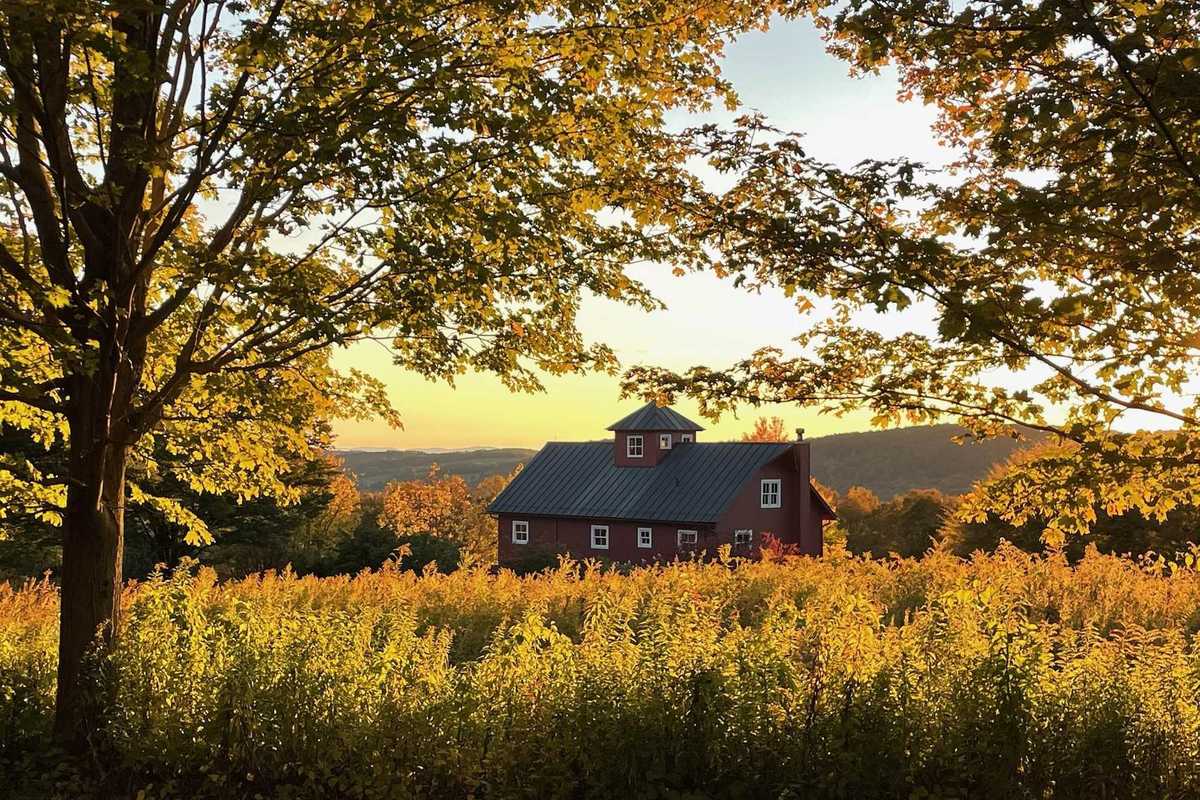
From the fields of Silver Mountain Hay in Millerton, Scot Galliher monitors moisture levels in horse feed, oversees the restoration of historic farmhouses and discusses the architectural details of the towering red barn that has become a local landmark. Two decades ago, he was working on Wall Street after leaving a career analyzing satellite data for a NASA subcontractor. Today, Galliher owns one of the area’s most distinctive agricultural operations — a farm he purchased not simply to grow hay, but to preserve open land threatened by development.

Unlike many farmers who inherit generations of family land, Galliher arrived at agriculture through conservation. After returning from abroad, he already owned another nearby farm and often passed the Silver Mountain property while driving his wife to the Wassaic train station. At the time, development pressure in the region was intensifying, and a developer had reportedly been close to purchasing the land before the deal fell through. Galliher stepped in soon afterward.

Keep ReadingShow less
google preferred source

Want more of our stories on Google? Click here to make us a Preferred Source.

google preferred source

Want more of our stories on Google? Click here to make us a Preferred Source.