Copake holds 4th Annual Cupcake Celebration

Winner of the kids’ competition at the 4th Annual Cupcake Celebration was Lyra Cochrane, 9, with Kate Lanphear, a judge.
Janet Mackin

Winner of the kids’ competition at the 4th Annual Cupcake Celebration was Lyra Cochrane, 9, with Kate Lanphear, a judge.
COPAKE — Sugar filled the air at the Fourth Annual Copake Cupcake Celebration on Sunday, June 23 at the Copake Grange Hall.
Starting at 11 a.m. cars began to line Empire Road as the Copake Grange was transformed into the “Cupcake Grange” fundraiser organized by the Friends of the Copake Grange.
One thousand cupcakes!
That’s how many of the hand-sized delights were prepared this year by 46 bakers organized by the Grange’s Paulette Bonano.
“Copake rhymes with cupcake,” said Janet Mackin, “This is my dream come true.”
“It’s always sold out,” Mackin said as she recalled that at last year’s event 716 cupcakes were sold a the going rate: $1 per.
Veronica McTiernan, president of the Friends of the Copake Grange, handled ticket sales and barely had time to answer questions as a steady stream poured into the hall.
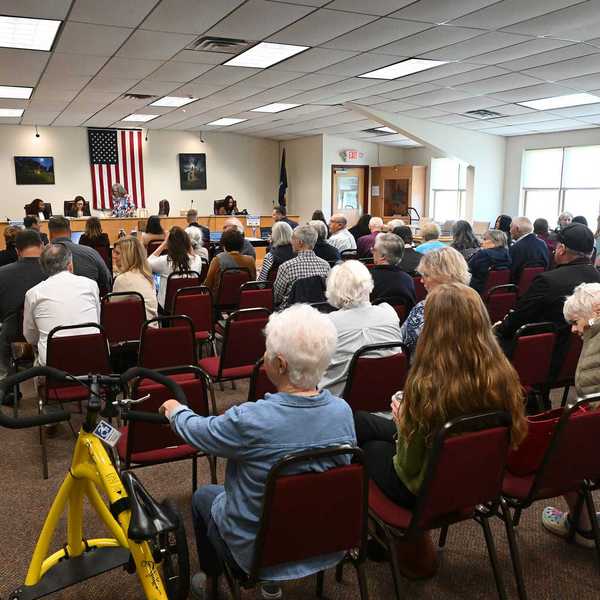
Cupcake lovers of all ages crowded up to the tables, exchanging their $1 tickets for the sweets that they placed very carefully into cardboard containers. The confectionary congregants were entertained by Harry Hussey and Lenny Bardham of the House Band.
Children milled, seemingly agog at the display of rows and rows of cupcakes, and parents and grandparents seemed to be mostly in charge of the selection process. Some tried their luck at the Wheel of Fortune supervised by Vicki Sander and Liz Fenamore.
Judges — Caden Cochrane, Kate Lanphear and Seung Suh— stood by in the mix, carefully tasting and examining entries.
Stephanie Rabin was winner of “The Ultimate Copake Cupcake” with a gluten and dairy free “Put the Lime in the Coconut” cupcake, a reference to the Harry Nilsson song. The People’s Choice award went to Madeline Silverman for a “Blueberry Crumb Cupcake.”
Lyra Cochrane, 9, won the Children’s Award. Last year’s winner was Natalia Coleman, 8, of San Diego, California, who was visiting with grandparents Steve and Dana Colman of Copake and making a cameo appearance on the floor, but not competing.
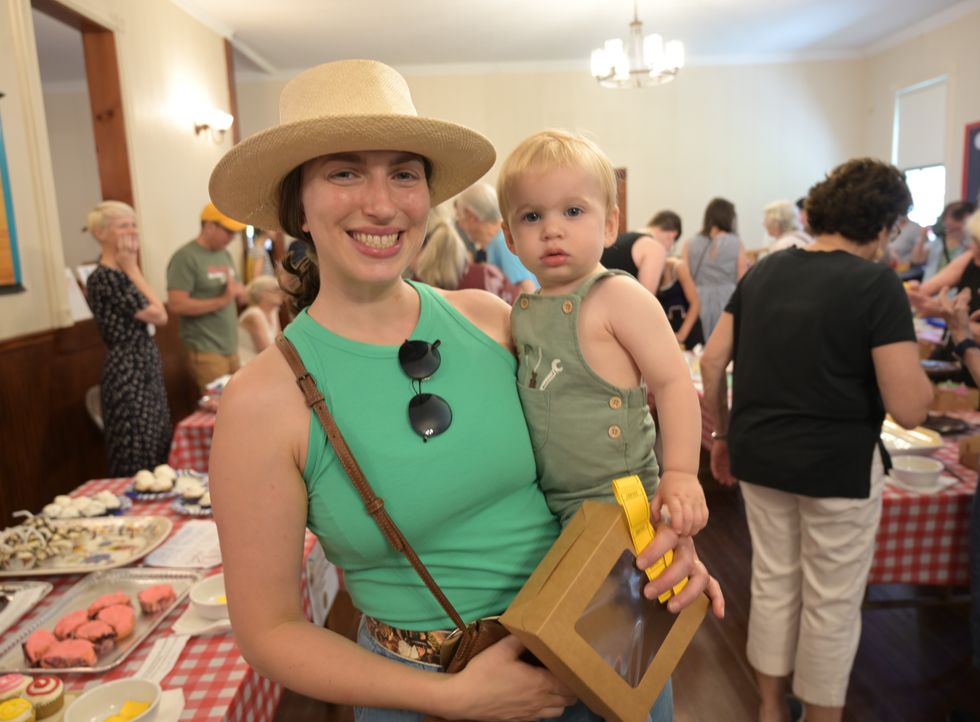
Sylvia McLaughlin of Copake had her arms full with 1 1/2 year old Jackson hoisted on one arm and a fistful of tickets and a cardboard container in the other. It wasn’t clear how she would proceed.

Natural light can be a powerful tool for wellness.
Wellness is often framed as something we do — a dog walk, a yoga class, a healthy resolution. But as we retreat indoors in winter, we are reminded that wellness is also something we live inside. Our homes quietly influence how we breathe, sleep, focus and feel — sometimes for better, sometimes not.
Interior design for wellness is less about color and style trends and more about intentional choices. Specialty designers create spaces aligned with the health-first framework of the World Health Organization’s guidelines. But with some basic knowledge, homeowners can borrow from that playbook and embrace wellness at home.
One of the most overlooked elements of a healthy home is air quality. In winter — especially this one, thanks to seemingly endless frigid temperatures — windows stay shut. As a result, heating systems run constantly and indoor air can become more than just stale. Many common household items — synthetic rugs, vinyl flooring, pressed-wood furniture, harsh cleaners and scented room sprays — release volatile organic compounds, or VOCs, that linger long after use or installation. Headaches, poor sleep and respiratory irritation are often traced back to what is quietly circulating in a home’s air.
Choosing natural materials makes a measurable difference. Wool rugs, for example, are naturally stain-resistant, biodegradable and free of the chemical treatments found in many synthetic alternatives. Wool helps trap airborne pollutants because it contains keratin, a naturally occurring protein that interacts with those particles, improving indoor air quality over time. Solid wood furniture, natural stone and low-VOC paints offer similar benefits, especially in bedrooms and living spaces where we spend the most time.
Light is another powerful wellness tool. Natural daylight regulates circadian rhythms, lifts mood and improves focus. Keep window treatments simple during the day. Trim back heavy drapery. Position seating to catch morning or afternoon sun. Even reflective surfaces — a mirror opposite a window or a lighter wall color — can amplify daylight without adding glare.
Just as important as letting light in is knowing when to shut it out. Good sleep thrives on darkness. Bedrooms benefit from blackout shades or lined drapery with minimal light bleed at the sides. Correctly measured and installed window treatments are key to blocking streetlights, early morning sun and winter glare off snow. Layering a rattan Roman shade with light-filtering drapery panels allows flexibility — bright and airy by day, cocooned and calm by night. This balance between exposure and protection is central to wellness-focused design.
Scent and atmosphere matter as well. Candles may seem like a small detail, but they play a significant role in air quality. Many are made from paraffin wax, a petroleum byproduct that releases toxins when burned. Beeswax or soy candles, especially those scented with essential oils rather than synthetic fragrances, burn cleaner and more slowly. I follow a simple, non-scientific rule: If a candle smells unbearably overpowering when the lid comes off, the ingredients are likely problematic. Price point can also be an indicator — not always, but inexpensive often means artificial and unsafe.
Sound and softness also contribute to well-being. Hard surfaces amplify noise, subtly increasing stress levels. Area rugs, upholstered furniture, curtains and bookshelves help absorb sound, making a home feel calmer. In open-concept spaces especially, these elements can dramatically improve comfort without altering architecture.
Finally, consider what you see first and last each day. Clutter increases cognitive load; calm visuals allow us to rest. Edit surfaces, simplify and restock nightstands and create intentional pause points — a chair by a window, a softly glowing lamp beside a favorite book, a clear kitchen table that feels welcoming in the morning.
Designing for wellness does not require a full renovation. It begins with awareness: what you breathe, what you touch, what you see in the quiet hours.
As winter lingers, summer is already taking shape at the Sharon Playhouse, with local auditions this weekend for the upcoming theatrical season under the watchful eyes of casting director Judy Bowman and artistic director Carl Andress.
“Every time you do a local search, new people crop up,” said casting director Judy Bowman. “People who have moved here, people who hear about [the Playhouse]from friends, people who started as actors and then raised families and want to come back into the business.”
The hopefuls will have five minutes and are asked to prepare a piece of musical theater (classical or contemporary). If all goes well, they could be asked back the following week for a dance audition.
Every second counts. Bowman’s process is simple and every second counts. “I really need to know how they audition, what they’re like as people when they come into the room and interact with the theater,” she said.
If it doesn’t work out this time around, Bowman encourages positivity.
“Sharon Playhouse isn’t year-round, but I am. I have plenty of other projects, and they should come in and put their best foot forward.”
For more information and to schedule an audition, visit sharonplayhouse.org
The Orchestra Now celebrates the Lunar New Year with its annual Sound of Spring concert, welcoming the Year of the Horse with conductor Jindong Cai on Saturday, Feb. 14, at the Fisher Center’s Sosnoff Theater at 3 p.m. For more information, call 845-758-7900, or visit fishercenter.bard.edu
Amenia's pump house at the end of Lavelle Road.
AMENIA — The town’s Water Committee made some headway in planning a three-phase capital improvement project centered on the Amenia hamlet’s water district infrastructure at its first meeting of 2026.
Committee chair Bill Flood, who was re-elected to the post at the Wednesday, Feb. 4, meeting, reported that representatives from Albany-based civil engineering firm Delaware Engineering are managing planning and grant applications for the project.
Amenia’s Town Board has earmarked a total of $1.6 million for the first phase of the project. That first phase covers the replacement of the Lavelle Road pump house and repairs to the two wells that serve the municipal water district.
A new, prefabricated pump house will replace the old one.
Engineers are expected to provide a Phase One project schedule in advance of the March Water Committee meeting, along with a payment schedule.
State grant funding has been approved for the three phases of the project. A Water Infrastructure Improvement Grant in the amount of $2,731,995 and a Community Resiliency, Economic Sustainability grant in the amount of $118,000 have been awarded, although several compliance steps must be met in the coming months before the grant funding can be expended to retire the bond, Flood explained.
Further discussion focused on the wisdom of creating a reserve fund for the Water District. The Town Board would need to approve the establishment of a reserve fund that could include a schedule for future maintenance costs.