This is it, folks, the year when you actually have a legitimate excuse to stay home for Thanksgiving and the winter holidays and cook whatever you want. There is no pressure this year to include all the main and side dishes that your sister and your mother and your Aunt Suzanne consider an irreplaceable part of the season.
Have some fun. Experiment.
This year, my plan is to make a meringue topping for my pumpkin pie. And to make peach stuffing for my turkey (which I’m going to try and brine this year. Finally.).
The year of large turkeys
And remember, everyone, that the turkeys we eat this year were probably conceived and planned and hatched before everyone knew that the Centers for Disease Control and Prevention was going to tell us that big holiday meals are a bad idea (and that traveling across the country to go to a big holiday meal is an extra bad idea).
What this means in terms of your holiday meal planning is that grocery stores and poultry vendors are likely to have a lot of very large birds in stock that they will have trouble selling; while it will be harder than normal this year to find a small bird.
There are probably a lot of ways to plan around this. Perhaps you can cook a large turkey ahead of time and share it with elderly neighbors on your street, who won’t be able to join their younger family members for the holiday.
Or perhaps this is the year when you decide to roast a chicken instead of the larger fowl, which is (as you know) much easier to cook. You can still stuff it — although remember that our federal food experts recommend that you not cook the stuffing inside the bird. If you must, be sure to use a food thermometer to check that the stuffing has reached a safe temperature of 165 degrees (that’s for bread stuffing).
Put your feet up, and relax
Many of us, especially those who have clocked in more than 50 years worth of Thanksgiving and other holiday feasts, will prefer to have someone cater their meal.
This has been a very difficult year for caterers, so no doubt your chef of choice will be very happy to hear from you. Ask if he or she or they would be willing to make a meal for just you and your (small) household; and if not, then think about maybe (again) sharing a catered meal with your neighbors.
The caterer can cook one turkey and divide it in half (and how lovely to have a professional carve that big ungainly roasted bird for you) and package it up for you to safely deliver to your meal partners.
It’s not just Thanksgiving
If you plan to celebrate Hanukkah with potato latkes, hiring a caterer means you don’t have to do all the shredding and frying and cleanup. Latkes re-heat beautifully, in the oven or in a nonstick skillet or in a regular skillet with a little oil.
And again, once your food pro has cooked three or four latkes, he or she or they might as well keep going. So … make plans with a friend or neighbor to share the bounty (you can even split up the apple sauce and sour cream).
Assigning all the hard stuff to a professional will leave you more time and emotional bandwidth to make something absurd — like a meringue topping for your pumpkin pie.
Or, as my friend, the caterer Sarah Weinberger from Campbell Falls Kitchen in Southfield, Mass., is planning to do for the holidays: You can use your meringue to make a pavlova, which is basically meringue topped with fruit and whipped cream. Sarah is making spiced pavlova with pumpkin mousse; find out more at www.campbellfallskitchen.com.
How to make meringue
Novices underestimate the importance of two things when making meringues: the quality of the eggs and the amount of time you need to spend beating the whites.
First, there are many vendors of really exceptional fresh eggs in the region. Chances are you drive by one all the time and have never thought to stop and shop. For meringues, it’s worth it; the cost should be roughly $5 for a dozen. Some farms make bigger eggs than others; if the eggs in your carton look small, add an extra egg to what the recipe calls for.
If the eggs aren’t pristine when you buy them, you 100% must clean them gently with warm water before you crack them open, so your eggs don’t get infected with dirt and debris from the barnyard.
Second, we think of meringues as very light and delicate, but in fact they are (like ballerinas) deceptively tough, which is appropriate since the pavlova dessert is named for the Russian prima ballerina Anna Pavlova.
This is just a quick summary of meringue knowledge. Two more in-depth explanations can be found at www.joyofbaking.com, an excellent website; and on YouTube in a video posted by the Johnson and Wales cooking school called “The Secrets of the Perfect Meringue.”
Use an actual recipe to get the measurements right. Most likely, you will need superfine sugar, which is regular sugar that you’ve run through the food processor for about 2 minutes.
Your egg whites need to be at room temperature (leave them out for at least 30 minutes after you’ve separated them). Your mixer and beaters need to be absolutely pristine. You should really clean them with vinegar to be sure there is not a trace of grease or fat on them.
You can use cream of tartar to stabilize the eggs — or you can use a pinch of salt (not big pebbles of sea salt; use the finer stuff such as Diamond Kosher or Morton’s).
Start with just the whites in your mixer bowl (and seriously, no yokes) and beat for about 2 minutes. Add your tartar or salt. Keep beating at medium until you reach the soft peak stage, which is where most of us make the mistake of stopping.
Soft peak means that if you take the beaters off and turn them upside down, the egg whites will curl over backward and form a hook.
At this point, add your sugar in three or four installments and then leave your mixer running on medium for several minutes. You’re incorporating air at this point; the more air the better.
You’ll know you’re done when you rub a little bit of the meringue between your fingers and there’s no gritty feeling; it should be smooth as satin. If it’s not, keep beating. If it is, add vanilla and beat for another few seconds.
You have to bake your meringues at very low heat for a long time. Check your recipe for specifics. I’m planning to make my meringues ahead of time, then make my pie, then adorn the finished pie with what I hope will be little meringue mountains or mushrooms.
I hope.
Wish me luck and we at The Lakeville Journal Co. wish you all a beautiful, warm and healthy holiday season, wherever and however you plan to spend it.







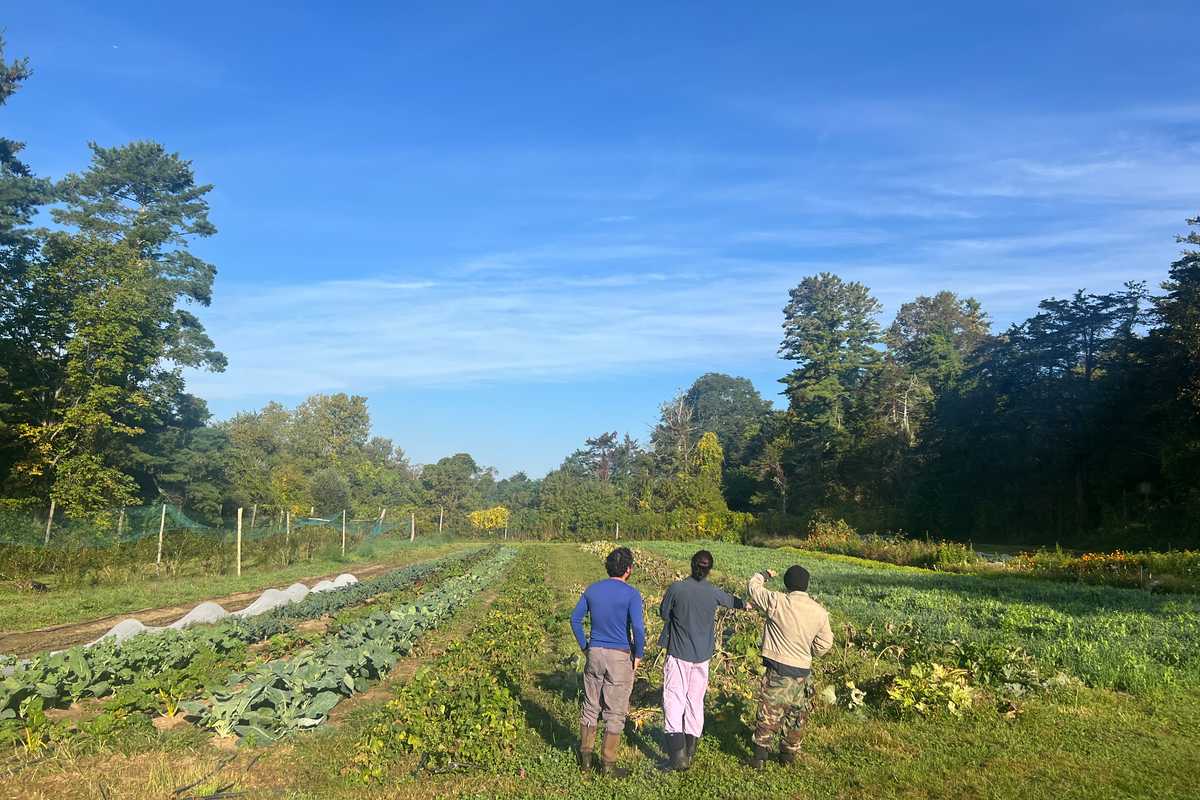
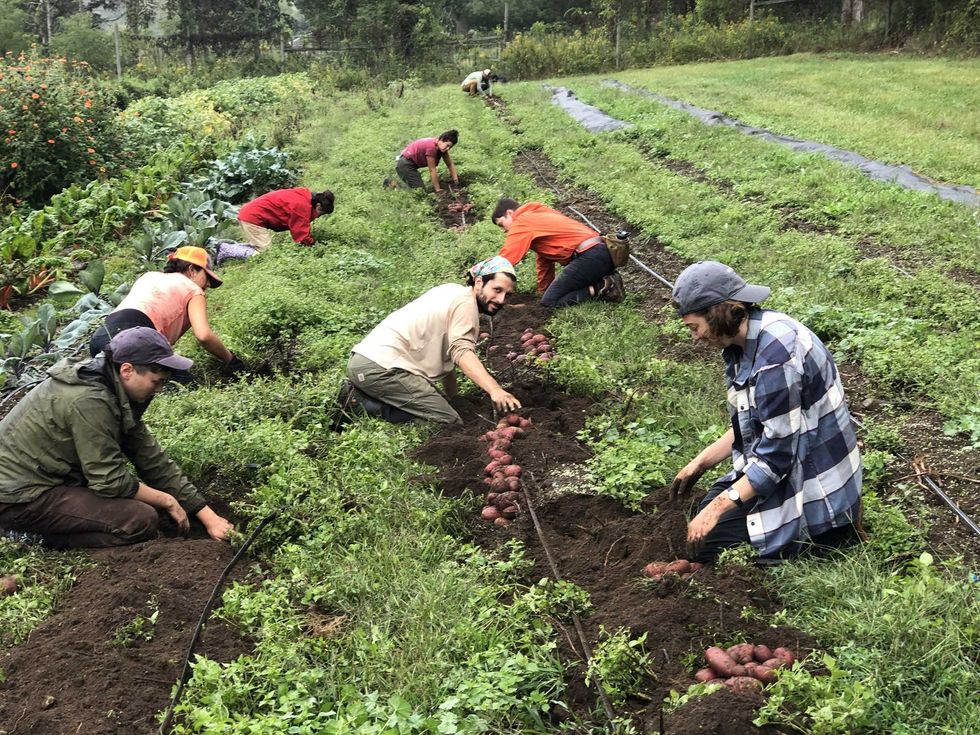 Fall storage crop harvests amid soil building cover crops at Adamah Farm in Falls Village. Janna Siller


 The Found Footage Festival is a “celebration of the videos that time forgot.”Provided by Found Footage Festival