Thank you!
Your support is sustaining the future of local news in our communities.

Gladwell Dives into History Of Targeted Military Bombing

Gladwell Dives into History  Of Targeted Military Bombing

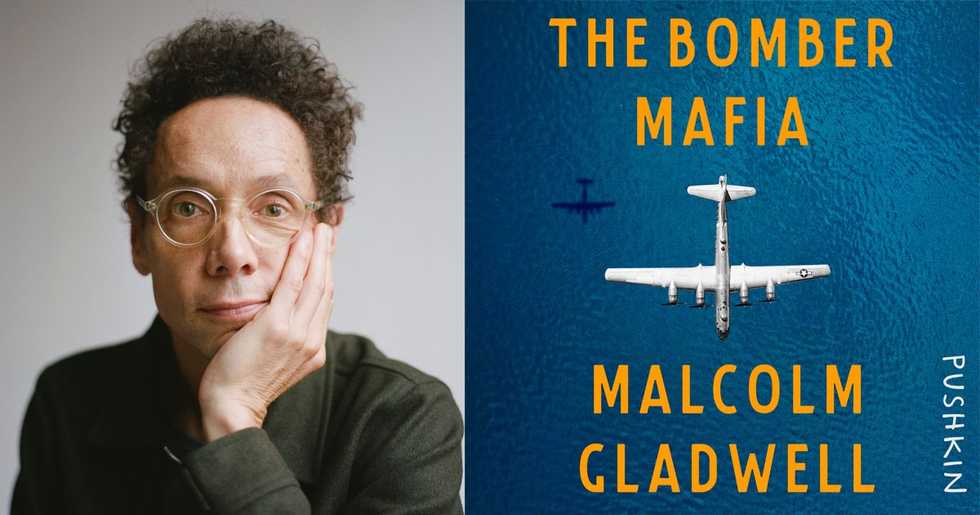
Is aerial bombing a strategic weapon or an instrument of terror? Malcolm Gladwell’s new book, “The Bomber Mafia,” tells the story of how American military aviation thinking transformed from aiming to dismantle enemy industrial capability to delivering wholesale slaughter of civilians … and how the pendulum now has swung back. 

Master storyteller that he is, Gladwell brings alive charismatic historical figures who played key roles in the transition, especially Gen. Curtis E. LeMay, who in later years earned opprobrium for suggesting that North Vietnam could be bombed “into the Stone Age.” 

LeMay’s personal courage and pragmatism, as well as his dedication to excellence among the pilots and crews he led, somewhat redeem his reputation in Gladwell’s retelling. 

Also depicted in depth is the more sympathetic character of Gen. Haywood Hansell, from whom LeMay took over command of bombing of Japan and who saw his more ethical strategy of targeting only military sites replaced by LeMay’s approach of mass destruction, culminating in atomic warfare. 

The book does particularly well in limning the interpersonal dynamics of the mostly young, ambitious and competitive officers who formed the group to which the book’s title refers.

Gladwell makes a compelling case that LeMay was right and that proponents of precision bombing were wrong, at least in terms of bringing the war to an end. 

The accuracy in proving-ground tests of the legendary Norden bombsight had led a cabal of American Army aviation leaders — there was no Air Force then — to believe that precision bombing could cripple the manufacture of strategically crucial ball bearings and synthetic fuels. Such bombing required daylight missions, exposing fliers and crews to accurate enemy artillery and fighter planes. 

Many lives and aircraft later, it became apparent that, under combat conditions, very few bombs were actually hitting their targets, and the damage done was minimal compared to the human cost. 

Night-time incendiary raids aimed at homes of factory workers (and their families), however, could halt production of materiel effectively. 

Gladwell describes how cities such as Dresden in Germany and Tokyo in Japan were turned to furnaces and cinders as pilots and crews watched in dismay. 

Gladwell also takes readers to today’s world, where lasers and computers make the precision attacks strategists once dreamed of a practical reality, even as nations retain vast arsenals of weapons of mass destruction.

As with all Gladwell’s books, I found “The Bomber Mafia” a compelling and vivid read, though not on a par with “The Tipping Point” or “David and Goliath.” 

Partly to blame is that those books yielded surprising revelations, often counter-intuitive, where this story is much more straightforward and unremarkable. 

But I also felt that Gladwell skimmed over much that could have enriched the book. Nowhere does he mention how German, Japanese, Italian and Russian bombing strategists rationalized their own decisions to intentionally strike civilian targets. 

And Gladwell occasionally gets basic facts wrong: for example, he refers to a lack of a tailwind to help a heavily laden bomber take off, when a headwind is what aerodynamics demands.  

There’s also a looseness, an informality at times, to his descriptions, as if he’s chatting with the reader, that can be jarring at times. 

Overall, though, like the bombers he writes vividly about, Gladwell delivers the goods.

Latest News

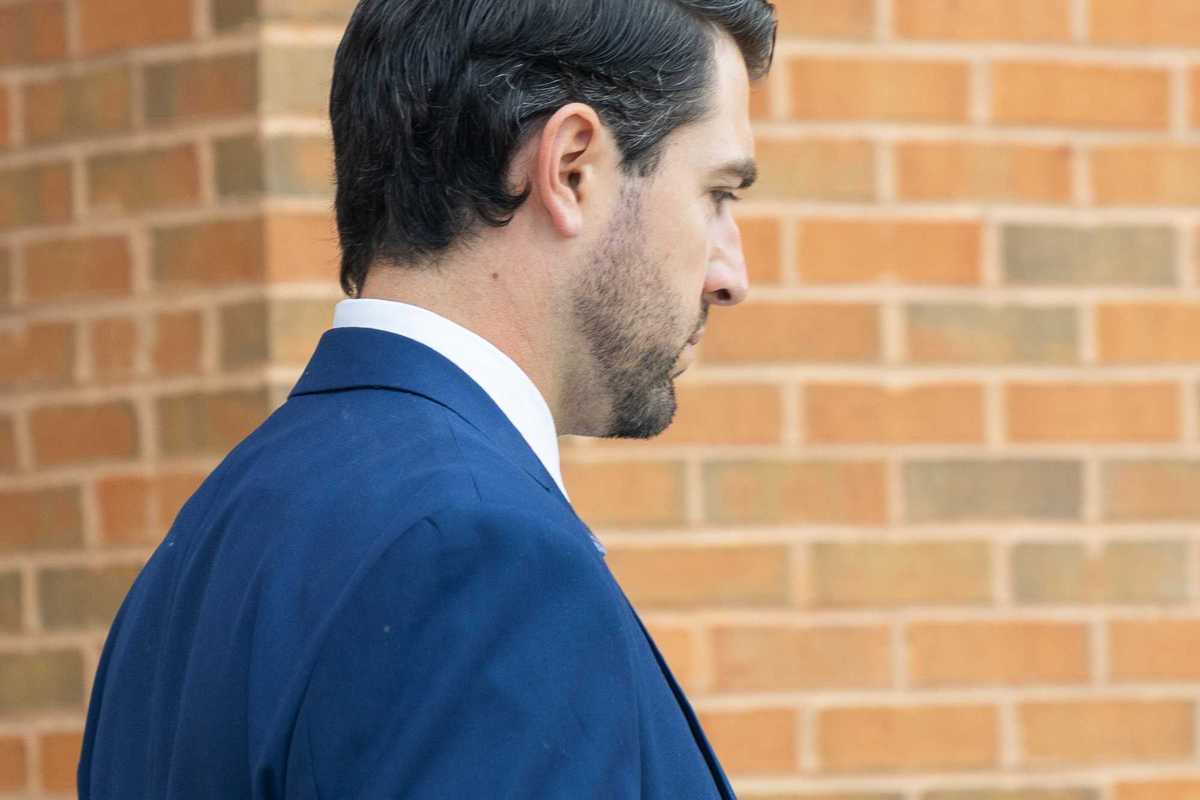
Wassaic Project co-founder Eve Biddle presents her “Field Notes”

Artist Eve Biddle and Tremaine Gallery Director Terri Moore.

D.H. Callahan

On Wednesday, Sept. 2, the Tremaine Gallery at the Hotchkiss School in Lakeville opened its new show, “Field Notes,” with works by multidisciplinary artist Eve Biddle.

Biddle is best known in the area as one of the founders of the iconic Wassaic Project in the hamlet of Wassaic, New York. The project, which is part art incubator, part gallery, part studio and a whole lot of community, is housed in an old converted grain elevator right next to the Metro North train tracks. It’s credited by many as the spark that revitalized the hamlet, which now boasts a craft bakery, a curated wine and liquor store, a pizza hot spot, the Lantern.

Keep ReadingShow less

Victor Cella is painting his own path

Victor Cella is painting his own path

Artist Victor Cella with his recent painting “White Dog” in his studio and shop, Little Store Antiques in Great Barrington.

L. Tomaino
If I taught art, I’d teach it in a different way. I could teach it as an awareness — how to free yourself up.
— Victor Cella

Paintings by Victor Cella of a blue dog, a flower still life and a colorful abstract greet visitors as they mount the steps to The Little Store, an antique shop he runs with his husband, John Ortisi, at 88 Main St. in Great Barrington, Mass.

The shop is filled not only with antiques but also with Cella’s paintings. People stop by to see what Cella is currently painting and to talk with him. He is known for his amiability as well as his paintings.

Keep ReadingShow less
google preferred source

Want more of our stories on Google? Click here to make us a Preferred Source.

Fear and Loathing in the Woodland

Fear and Loathing in the Woodland

Fear and Loathing in the Woodland Japanese barberry, an invasive shrub with thorny branches, provides shelter for mice and can contribute to conditions that allow tick populations to thrive.

Provided

I am tempting tick-bite fate by writing this, even from the safety of my office.

Eight people emailed me with a link to the New York Times article on ticks that ran in the Aug. 20 magazine section.My Instagram algorithm made sure that I saw the same story several times over.The article, “The Summer the Ticks Took Over,” by Benjamin Wallace reads like a horror story, engendering a kind of paranoia that sidewalk-hugging New Yorkers can easily fall prey to.The reader comments enhance the author’s terror and fall into key categories: readers who are living proof of the sometimes harrowing, life-altering consequences of a tick bite; readers’ instructive life hacks against ticks (“permethrin is your friend”); readers’ collective chant to kill the deer; and, finally, readers who question why anyone would ever go in the woods again.

Keep ReadingShow less
Oldtone brings roots music, dancing and community to Cool Whisper Farm

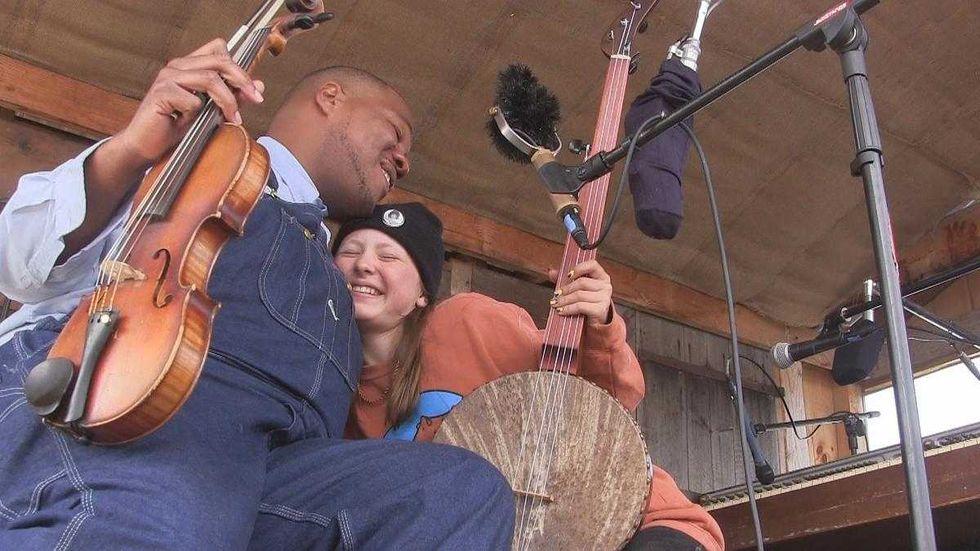
The Allum Ridge Boys & Ashlee at Oldtone Music Festival in 2025

Jim Wright

The Oldtone Music Festival returns Sept. 10 through 13, bringing musicians and audiences together for a four-day celebration of roots music at Cool Whisper Farm in Hillsdale.

Founded in 2015 as a one-day show in Wassaic, Oldtone moved the following year to the Schober family’s Cool Whisper Farm, where it grew into a three-stage camping festival. The festival ran annually until the COVID-19 pandemic forced its cancellation in 2020. After limited attempts to bring it back in 2021 and 2022, organizers announced in early 2023 that the festival would end.

Keep ReadingShow less
“Come From Away,” a story of kindness at Sharon Playhouse
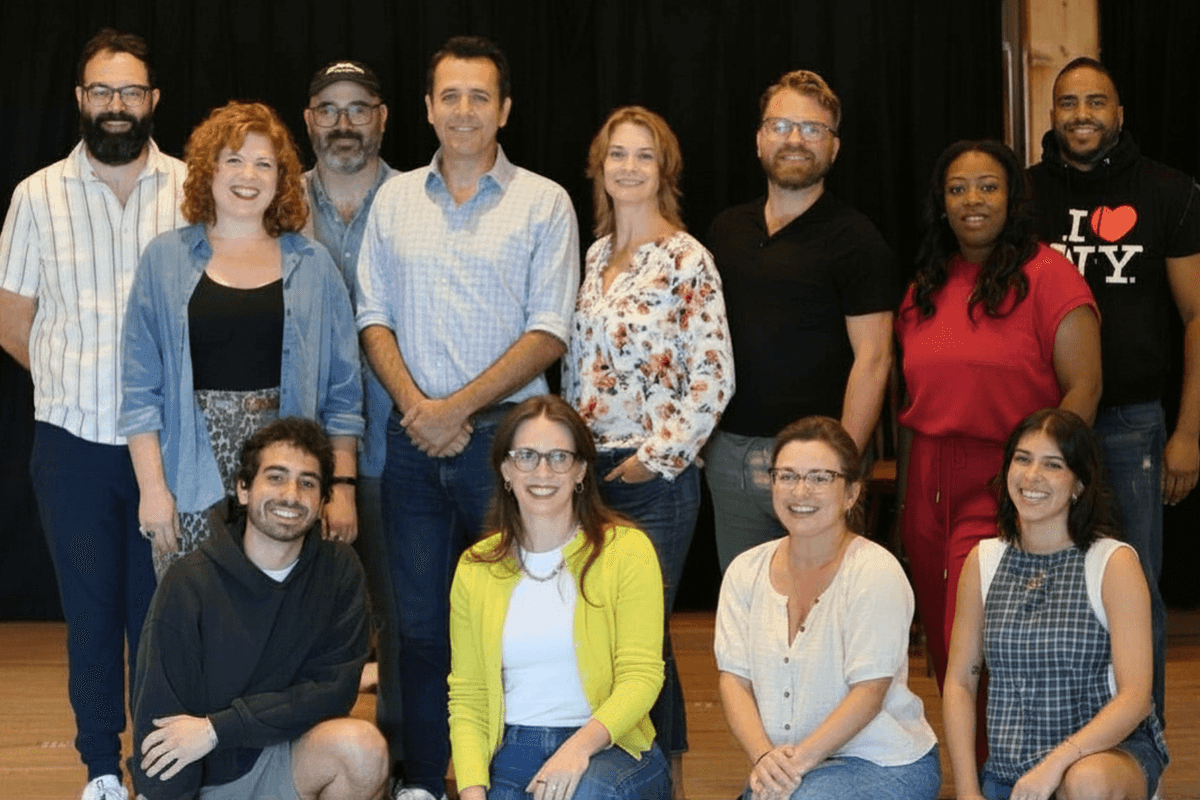
“Come From Away” cast in rehearsal. (Back Row L to R): Jeffrey Konowitch, Meagan Lewis-Michelson, Max Bennett-Parker, Michael F. McGuirk, Tracy Liz Miller, Ricky Oliver, Cherish Love, Willie Marte (Front Row L to R) Cameron Sirian, Chelsie Nectow, Erin Lindsay Krom, Sophie Nassiri
Lynette Shy

Twenty-five years after the events of Sept. 11, 2001, the Sharon Playhouse is staging a musical about what happened in the aftermath — and about an extraordinary act of kindness in a small Newfoundland town.

“Come From Away,” the Tony Award-winning musical by Irene Sankoff and David Hein, runs Sept. 11 through 27 and concludes the Playhouse’s 2026 MainStage season. Directed by Hunter Foster, with choreography by Krystyna Resavy and music direction by Eric Thomas Johnson, the production tells the true story of the thousands of airline passengers who suddenly found themselves stranded in Gander, Newfoundland, after U.S. airspace was closed following the terrorist attacks.

Keep ReadingShow less
google preferred source

Want more of our stories on Google? Click here to make us a Preferred Source.

google preferred source

Want more of our stories on Google? Click here to make us a Preferred Source.