Latest News
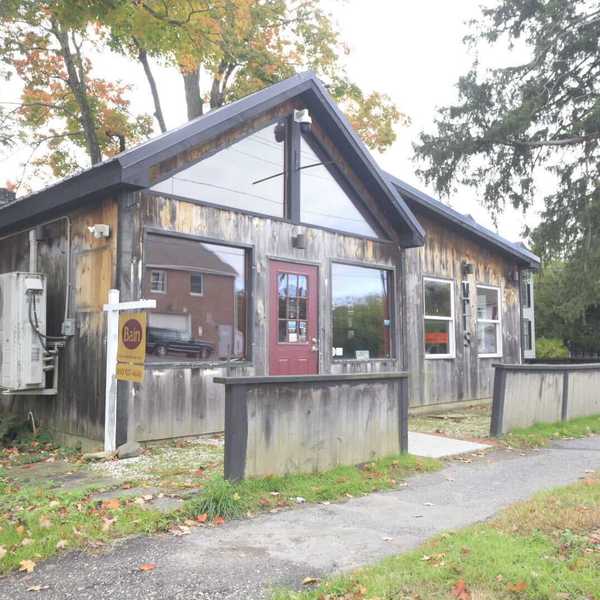
The Town of North East’s Boulevard District — a stretch of Route 44 between Millerton and the New York State border — is the town’s largest commercial zone. The proposed zoning rewrite would allow mixed-use buildings with residential apartments above ground-floor retail.
Photo by Aly Morrisey
MILLERTON — A group called “Save Millerton” has sparked debate over the Town of North East’s proposed zoning overhaul, circulating disputed claims about transparency, enforcement, and the town’s long-term direction.
The group recently published two half-page ads in The News that have drawn wide attention — and criticism from town officials and volunteers — as residents try to understand the 181-page rewrite currently under review. The ads raised concerns about the new zoning code and the process behind its creation.
The claims raised by Save Millerton have prompted many residents to scrutinize the draft code, released Nov. 18, while leaving others confused as they navigate competing interpretations of what the zoning overhaul would permit.
Town officials, meanwhile, say they are finalizing the product — a process that has already taken several years — to modernize an outdated zoning code adopted in 1977, with the goals of supporting local business and creating new housing options. However, Save Millerton organizer Tyler Graham argues the process has lacked transparency and the draft raises questions that have not been adequately explained.
To understand the debate, The News spoke with Graham, who lives on Cooper Road, and Town Supervisor Chris Kennan about the issues at stake, the origins of Save Millerton, and the group’s goals.
What is ‘Save Millerton’?
Graham described Save Millerton as an informal effort made up of a small number of residents concerned about the zoning rewrite and future enforcement. The News could not independently confirm the number of participants.
Graham said he has been speaking with other residents and collecting email addresses through his website, www.savemillerton.org, where he plans to post documents and commentary related to the zoning process.
He said the campaign’s purpose is to call attention to gaps in enforcement, demand greater transparency, and question the speed at which the rewrite is moving toward adoption. The effort stems partly from a long dispute on Cooper Road, where Graham and several neighbors allege that an illegally constructed dwelling has gone unenforced for years.
Graham said requests for information about the case were “stonewalled,” leaving residents frustrated. Kennan declined to discuss the issue, calling it decades-old and complicated, and said the Town has retained outside counsel.
Graham said that experience fuels his skepticism about the zoning overhaul.
What are Save Millerton’s claims?
One of Save Millerton’s claims is that the proposed update of accessory dwelling units (ADUs) could accelerate residential density in ways that change the town’s character. Graham said allowing accessory units could have major consequences.
Town officials disagree. Kennan disputes that view, noting that strict septic requirements significantly limit where ADUs can be built. He emphasizes that accessory apartments already exist in the current code and that most homeowners will not have the capacity to add a unit even under a more permissive framework.
A second concern Save Millerton highlights is the possibility of “big-box stores” or large-scale commercial development entering North East. Graham said most residents he’s spoken with prefer driving to Poughkeepsie or Great Barrington for large retail and want Millerton to retain its small-town character.
Kennan counters that such fears are unrealistic, given the parcel sizes in the commercial districts and the area’s low population density. He noted that the commercial parcels in North East are far too small for stores on the scale of a Walmart or Costco.
However, he noted that “many residents would welcome new shopping options.”
The Town’s view
Town officials maintain that the overhaul stems from recommendations in the 2019 Comprehensive Plan and years of work by the Zoning Review Committee, which has held nearly 100 meetings. Kennan said the code is intended to support business growth and expand housing opportunities — not transform Millerton into something unrecognizable.
“I hope those who took the time to follow the process will appreciate the effort and attention to detail that went into the revisions,” Kennan said. While acknowledging that residents have “every right to express their views,” Kennan said the Save Millerton ads contained “misinformation and errors,” citing, for example, a reference to a “new Village Hall” rather than a new Town Hall.
Bill Kish, a volunteer and member of the Planning Board and Zoning Review Committee, also expressed frustration with the advertisements. “As somebody who spent five years working as a volunteer to try to develop the best possible commercial zoning, I’m taking into account as many points of view as possible,” he said. “However, I find it disturbing that this series of advertisements appeared at the very last minute, seemingly designed to throw a hand grenade at the whole process.”
Next steps and enforcement going forward
Kennan acknowledged longstanding concerns over the town’s reputation of lackluster zoning enforcement. “Zoning enforcement is a repeatedly mentioned concern, and has been for decades,” he said. “The Town intends to address this and continue to make improvements.”
The first public hearing on the zoning overhaul is scheduled for Jan. 8, 2026, at North East Town Hall at 19 North Maple Ave. Kennan has emphasized that additional public hearings will be scheduled as necessary. Residents are encouraged to read the zoning draft online at townofnortheastny.gov/zoning-review-committee/ or in person at Town Hall. Digital and hard copies are available.
Keep ReadingShow less
Chocolatier Christophe Armero and his wife, Jennie Baird, handcraft small-batch Mudgetown Chocolate in Millerton. Free tastings will be available at Tri-Corner Feed in Millerton on Saturday, Dec. 13, at noon and 3 p.m.
By Aly Morrissey
MILLERTON — There’s wine tasting, beer tasting and even coffee tasting – but Millerton is adding something sweeter to the mix. A craft chocolate tasting event will mark the debut of Mudgetown Chocolate on Saturday, Dec. 13, at Tri-Corner Feed. Two free tastings will be held at noon and 3 p.m.
Mudgetown Chocolate is made in Millerton by Sharon-based chocolatiers using cacao beans sourced from all over the world. Saturday’s event will mark the official launch of the small-batch line at Tri-Corner Feed, one of the only places it will be available.
“Our goal is to delight the community with something special,” said Christophe Armero, chocolatier and founder of Mudgetown Chocolate. He describes his product as a “delicious, locally made chocolate that can’t be purchased anywhere else.”
The business began as a retirement passion project for Armero, who spent 38 years in the sugar industry. After moving full-time to Sharon in 2020 from Riverside, Conn., he and his wife, Jennie Baird, began experimenting with chocolate in their barn in 2022. “I realized quickly that it’s very easy to make mediocre chocolate,” Armero joked.
After becoming more interested in the process, he grew determined to master the craft. In 2024, he landed an internship at Dandelion Chocolate in San Francisco, where he learned the tricks of the trade.
“It was a bit intimidating because I was this older guy and all the other chocolatiers were young and very professional,” he laughed. “But they taught me a lot.”
Today, Armero can speak fluently about each step of the chocolate-making process, from sourcing the bean and fermentation to roasting, cracking and “melanging,” most of which is done right here on South Center Street in Millerton.
Tri-Corner Feed’s incubator kitchen
Tri-Corner Feed has a bustling storefront where community members can find locally sourced produce, nutrient-dense groceries and even a chai latte – all with sliding scale prices. And there is just as much action happening behind-the-scenes in their fully licensed commercial kitchen.
It’s here that entrepreneurs and early-stage businesses like Mudgetown Chocolate can roll up their sleeves and create products in an affordable space without the burden of high startup costs.
Armero uses a small, 1-kilogram roaster in Tri-Corner’s kitchen, followed by a cracking and winnowing setup that uses a shop vac to suck out the shells and leave the nibs behind. Then, nibs spend 48 hours or more in a granite stone melanger, where they break down and release natural cacao butter. During this part of the process, the bitterness softens and new flavors develop.
Locally made, globally sourced
Armero and Baird purchase cacao beans directly from small farms and fermentaries in countries like El Salvador, Colombia and Uganda. The couple even traveled to Ecuador to visit one of their producers, prioritizing direct relationships whenever possible, which sets them apart from other commercial producers.
Armero said he hopes to bring more local partners into his chocolate business for future creations. “We’ve made some fantastic chocolate infused with whiskey,” he said, adding that he also has a vision of creating a chocolate bar with crunchy bread crumbs. His goal is to partner with local distilleries and bakeries to make this a reality.

Commercial chocolate vs. craft chocolate
Armero said the key differences between commercial chocolate and craft chocolate are “scale and objective.” Big-brand names rely on facilities designed to transform commodity beans into large quantities of uniform chocolate designed to meet the brand’s distinct taste.
Unlike these chocolate giants, Mudgetown Chocolate and other craft makers work in small batches, coaxing the best flavors out of beans. You might get a slightly different flavor with each batch. With only two ingredients in their dark chocolate – cacao and sugar – the results are highly dependent on the bean itself.
Armero said, “We’re always trying to get the best out of the beans.”

A sensory experience
Armero and Baird describe their upcoming chocolate tasting as a full sensory experience, explaining that tastes can last from 30 seconds to a minute and evolve in that time.
“You get the top notes first, which are usually floral, lighter notes,” said Baird as she bit a chunk of chocolate. “Then you get the mid-notes which tend to be chocolatey and nutty, and then you get the end notes.”
The couple instruct tasters to crunch first, then let the chocolate melt on your tongue. They recommend breathing in through your mouth and out through your nose for the full effect. And, whatever you taste, Armero and Baird say it’s correct. “Everyone’s different,” Armero said. But everyone is right because it’s entirely subjective.”
The chocolate tastings are free and open to the public. They will take place at Tri-Corner Feed at 56 South Center Street in Millerton.
Keep ReadingShow less
Amenia Town Hall
Photo by John Coston
AMENIA — Revisions to the town regulations outlining the separate roles and structures of the Planning Board and the Zoning Board of Appeals (ZBA) will be considered at public hearings on Thursday, Dec. 18, at Town Hall, beginning at 7 p.m.
Amendments to the local code seek to clarify the structure of both boards, along with the appointment of alternates, training, attendance and the process for removing members. Residents are invited to comment on the proposed regulations during the public hearings or to provide written comments in advance.
The five-member ZBA, whose members serve five-year terms, would be expanded with the addition of two alternate members appointed by the Town Board for one-year terms, should the changes be adopted. If a ZBA member is absent or must recuse due to a conflict of interest on a particular application, the chairman would seat an alternate in their place.
Requirements for four hours of training annually would apply to all members, as well as alternates under the new code.
Under the proposed attendance requirements, ZBA members may not be absent for more than three consecutive meetings or for more than eight meetings within a calendar year.
Under the amended codes, the seven members of the Planning Board would serve for seven-year terms. The Town Board would appoint two alternate members, each for one-year terms. Four hours of training would be required for all members annually. No member would be allowed to be absent for more than three consecutive meetings or a total of five meetings in a calendar year.
Copies of the proposed local laws can be viewed on the town hall website at https://ameniany.gov.
Keep ReadingShow less
North East Town Hall in Millerton, where officials continue to discuss updates to the town’s zoning code.
By Nathan Miller
MILLERTON — Planning Board members raised a mix of broad and detailed concerns about the Town of North East’s proposed zoning plan during a special meeting on Wednesday, Dec. 3 — their final discussion before the public hearing set for Jan. 8.
The 181-page draft plan represents a rewrite of the town’s decades-old zoning code, updating definitions, commercial use rules, and standards for parking, lighting and design. Town officials say the overhaul is meant to eliminate inconsistencies and give applicants and reviewers a clearer, more functional set of rules.
At Wednesday’s meeting, Planning Board members offered comments that ranged from line-by-line concerns to questions about how cohesively the document functions as a whole.
Planning Board member Dan Sternberg offered the widest critique. “I think as a whole, this draft is not well drafted. I think as a legal document — as a piece of legislation — it’s got a lot of problems. It reads like something drafted by committee.”
Sternberg suggested the document should be considered more holistically, and the language of the proposed draft should be more consistent and clear.
He said lifting examples of codes from other towns likely contributed to the disjointedness of the draft. “The language used in it may not be consistent with some of the language of the rest of our code,” Sternberg said. “I’ve read lots and lots of agreements, lots and lots of legislation over the years, and seeing the drafting process, I can tell that this was kind of stitched together.”
Board members appeared reluctant to scrap the draft outright, arguing that doing so would dismiss several years of work by volunteers and consultants. Instead, they expect to recommend that the Town Board focus on clarifying sections where the language is not clear.
Planning Board member Bill Kish, who served on the Zoning Review Commission that drafted the commercial zoning overhaul, offered a defense of the draft.
Kish emphasized that nothing in the draft was borrowed casually. He said that anything that was borrowed was the subject of at least one full meeting and it was discussed again. “This is about as good as you can get using the process that we had,” Kish said. “That’s all I can say.”
Nevertheless, Planning Board Chair Dale Culver said he agreed with Sternberg's criticism. "I'm never in favor of lifting other towns' codes that are a long ways from our town," Culver said. "Because we tend to get their slant of their view for their code for their town. And our town may be different. It quite often is."
It remained unclear at the close of the meeting whether Sternberg’s broader criticism would be included in the Planning Board’s formal memo to the Town Board. The implications are significant: if the critique is included, it signals that the full board believes the draft needs broader revision. If it is not included, the Town Board receives a narrower set of recommendations, and Sternberg’s concerns will arrive only through his individual memo.
Board members did have consensus on other comments that will be included in the board's memo. Board member Leslie Farhangi requested that the phrase "cage-type poultry" be removed from the draft entirely.
Farhangi also recommended — and the board agreed — that approvals should include an expiration date. Board members noted that a plan could be approved and then remain unbuilt for years, while the town changes.
The Planning Board's memo has not yet been drafted as of press time. Planning Board members were also encouraged to submit individual letters to the Town Board expressing any concerns that the board didn't have consensus on.
"We can't have it be all unanimous consent," Culver said. "Because if that's the case, are we all thinking or are we just listening and agreeing?"
Keep ReadingShow less
loading