Charles H. ‘Chip’ Collins



NORFOLK — Charles H. “Chip” Collins, 70, died peacefully on Nov. 29, 2024, after a long illness with dementia. He was a beloved husband, father, son, brother, and friend. Chip was a visionary leader whose life and work left a lasting im pact in land and wildlife conservation.
Chip was born Oct. 20, 1954, in Pittsburgh, Pennsylvania, to Francis H. Collins and Nancy C. Collins. He graduated from St. Mark’s School in 1973, and went on to study history at Colorado College, earning his bach elor’s degree in 1977. In 1992, Chip earned a master’s degree in environmental studies from the Yale School of Forestry & Environmental Studies.
Chip’s job at the Western Pennsylvania Conservancy marked the start of a distinguished 40-year career dedicated to protecting the natural world. He served in several influential roles, including Colorado State Director for The Nature Conservancy and Vice President of the Chesapeake Bay Foundation. In 1986, Chip was named the first Executive Director of the National Fish and Wildlife Foundation. After graduate school, Chip moved to Massachusetts to serve as Vice President of Winslow Management, an environmental investment management firm. In 1995, Chip co-founded The Forestland Group, LLC, a timberland investment management organization, where he served as Managing Director until his retirement in 2014.
Chip married Anne Childs in 1989, and together they raised three children, Teddy, Caroline, and Alice, in Watertown, Massachusetts. Being a dad was Chip’s most cherished role in life. In addition to his professional work, Chip served on the Board of Directors for the Land Trust Alliance, the Theodore Roosevelt Conservation Partnership, the Institute for Ecosystem Studies, Great Mountain Forest, the Student Conservation Association, the Quebec-Labrador Foundation, Shady Hill School, and the Jane Coffin Childs Fund for Cancer Research.
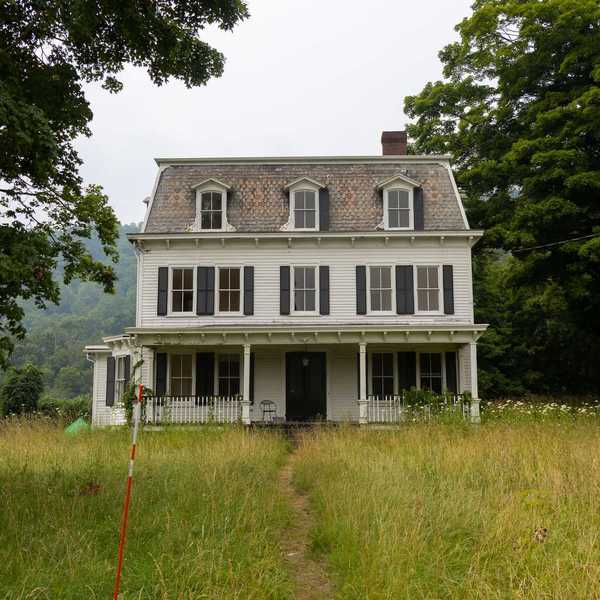
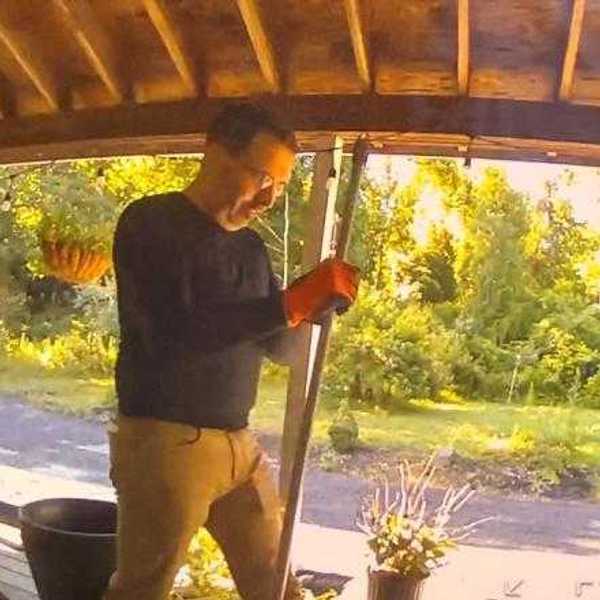
Chip’s dedication to the environment was matched only by his deep love for wild places and the species that inhabit them. An avid outdoorsman, Chip traveled widely on fishing and hunting trips. He loved growing up on the Eastern Shore of Maryland, calling waterfowl with his dad and two brothers, and spending his summers on Lake Muskoka and Deer Lake in Ontario. He loved exploring the mountains of Colorado and the woods of Northwestern Connecticut.
Chip received exceptional care from many compassionate caregivers as his health declined. He never lost his love for the outdoors. Chip is survived by his wife, three children, daughter-in-law, Tory Collins, his mother, and his siblings, Alice Collins, Francis “Pat” Collins, and Edison “Eddie” Collins, along with many loved family members. A service will be held at Story Chapel in Mount Auburn Cemetery , Cambridge, Mass., at 11:00 a.m. on Saturday, March 29, 2025. In lieu of flowers, the family requests that donations be made to the conser vation organization of your choice.
Natalia Zukerman
Aerial view of The Shed at Tanglewood in Lenox, Massachusetts.
The Boston Symphony Orchestra is outlining its path forward following the announcement that music director Andris Nelsons will step down after the 2027 Tanglewood season, closing a 13-year tenure.
In a letter to supporters, the BSO’s Board of Trustees acknowledged that the news has been difficult for many in its community, while emphasizing gratitude for Nelsons’ leadership and plans to celebrate his final season.
The orchestra also pointed to broader challenges facing the institution and the field at large. Attendance has declined over the past two decades, while operating costs have risen. The BSO has relied on more than $100 million in reserve funds beyond standard endowment draws to cover ongoing deficits, and key facilities — including venues at Tanglewood — require significant upgrades.
In response, the organization is advancing a long-term strategy centered on three priorities: programming, partnerships and place. Plans include rethinking how concerts reach contemporary audiences, strengthening ties across Boston and the Berkshires, and investing in major performance spaces such as Symphony Hall and Tanglewood.
The board emphasized that while the BSO remains committed to artistic excellence and its core repertoire, adapting to changing audience habits will be critical to its sustainability. Leaders say ongoing conversations with musicians, staff and community partners have helped shape the new direction.
Despite financial pressures and leadership changes, trustees expressed confidence in the orchestra’s future, underscoring the role of audiences, donors and artists in sustaining one of the country’s oldest cultural institutions.
Leila Hawken
AMENIA — A small, town-owned parcel of land on Depot Hill Road moved a step closer to being sold to Habitat for Humanity following action by the Town Board at its meeting on Thursday, March 19. The vote was unanimous. Councilwoman Vicki Doyle was absent from the meeting.
The existing lot, measuring 0.7 acres, will be subdivided so that the space occupied by the town’s newly installed EV charging stations will be retained by the town.
Once the subdivision is finalized, the remaining 0.57-acre lot is slated to be sold to Habitat for Humanity for $30,000. Plans call for construction of a three-bedroom, one-bath home to be designated as workforce housing. The below-market sale price is intended to help keep the home affordable for a qualifying buyer.
Affordable housing has been a longstanding need identified in the town’s planning documents, with officials citing challenges in retaining local workers and young families. Partnering with Habitat for Humanity allows the town to facilitate construction of a modest, income-qualified home while ensuring long-term affordability.
Town Engineer John Andrews is completing a short Environmental Assessment Form, certifying that no significant environmental impact is expected.
In other business, the board began planning for upcoming community events.
Looking ahead to the observance of the nation’s 250th anniversary on July 4, the Town Board acted unanimously to allocate $5,000 for the fireworks display coordinated by the local fire department.
Leila Hawken
Roasted lamb
Preparing lamb for the observance of Easter is a long-standing tradition in many cultures, symbolizing new life and purity. For Christians, Easter marks the end of Lenten fasting, allowing for a celebratory feast. A popular choice is roast lamb, often prepared with rosemary, garlic or lemon. It is traditional to serve mint sauce or mint jelly at the table.
The Hebrew Bible suggests that the last plague God inflicted on the Egyptians, to secure the Israelites’ release from slavery, was to kill the firstborn son in every Egyptian home. To differentiate the Israelites from the Egyptians, God instructed them to mark their doorposts with the blood of a lamb. Today, Jews, Christians and Muslims generally believe that God would have known who was Israelite and who was Egyptian without such a sign, but views of God’s omnipotence in the Abrahamic faiths have evolved over the millennia.
This tradition, celebrated at Passover, has made lamb a first choice for Jewish families commemorating freedom from Egyptian slavery. Christians have continued the tradition, naming Jesus the Lamb of God, whose death serves as atonement for the sins of the world. For them, the dietary restrictions of Lent have ended, allowing a return to eggs, sweets and meat.
2 or more cloves garlic, thinly sliced
Good-quality olive oil
Rosemary
Salt and pepper to taste
Preheat oven to 450 degrees. Trim fat from lamb as desired. Using a sharp knife, cut small gashes in the meat and insert a slice of garlic into each cut. Rub the roast with olive oil, then season with rosemary (some cooks also add thyme), salt and pepper.
Place the meat on a rack in a shallow roasting pan and put it in the preheated oven. After 15 minutes, reduce heat to 350 degrees. Roast for 25 minutes per pound for rare or 30 minutes per pound for well-done. Well-done lamb will be less juicy and less tender. If garlic is not desired, substitute lemon or additional rosemary.
When the roast is done, carve by slicing parallel to the bone, rotating as needed.
Variations: Some recipes substitute lemon juice for olive oil. You may also use salad oil instead of olive oil and add a bit of powdered ginger, a bay leaf, sage and marjoram. Soy sauce is also used.
To make gravy:
After removing the roast to rest, place the roasting pan on the stovetop over heat. Add flour and stir for one minute, until a paste forms. Add beef stock or water to reach the desired consistency. Mash any garlic pieces, if used, to enhance flavor. Strain and serve.

Want more of our stories on Google? Click here to make us a Preferred Source.

Patrick L. Sullivan
The average citizen looks at this and sees fly rods stored in garbage cans. The veteran angler sees an innovative modular storage system.
The snow is mostly gone, the mud is flowing, the stocking trucks are rolling and that means only one thing: it’s tackle fondling time!
Yes, it’s that happy time of year when we dig out all the gear we carefully cleaned and stowed away back in November.
What’s that? You left it all in the car until you had to help Aunt Edna move? And now it’s piled up in the garage?
Never mind that. What’s important is getting ahead of it,starting now.
Reels: Take the spools off and blast them with a can of compressed air. Then deploy a Q-tip to get the stubborn stuff. Then deploy something long and pointy to get the little bits of cotton that came off the Q-tip.
Lines: Clip off the old leader. It’s no good. Pull the fly line of the reel and clean it with something. There are many commercial products available. The Rio line cleaner seems to work pretty well, but it goes fast. I use a weak solution of Dawn dish soap and warmish water and a clean sponge or two, so I can see just how much yick comes off the line. Then I give it a shot of some stuff called Albolene, which is used for removing heavy theatrical makeup. It also functions as a line dressing and costs much less than actual line dressings.
Rods: I check guides and ferrules, and give everything a wipe with a chamois cloth or something similar. Then I start emailing people I barely know looking for someone who repairs rods.
I have something like 60 fly rods, and they are a pain in the neck to store. But I had a brain wave over the winter and bought four kitchen garbage cans. Ignoring the lids, I arranged them in a corner of my living room and to my delight found I can corral most of the rods in such a way that I can actually find the one I want.
It works very well. If the cans had an Orvis or Simms logo on them I could sell them for $85 apiece as a “modular rod storage system.”
Flies: What you absolutely don’t want to do is buy more fly boxes because the giant cardboard box filled with fly boxes is still in the back of the car and you can’t remember what’s in any of them so it’s better to just buy new flies and boxes and use those, reserving the joy of sorting through the old boxes for the summer when you’re at the summer camp that has a nice big table. Whatever you do, don’t do this. Oh, excuse me, that must be the Amazon guy at the door with my new boxes and flies.
Waders and boots: I have a dedicated wader rack where I hang them up. This is an improvement over my old method, which was to leave them in the car in a crumpled heap all winter. Check for leaks by taking a small flashlight and running it over the seams from the inside of the waders. If you see pinholes then it’s time to deploy Aquaseal. There are wader repair kits that have small tubes of Aquaseal and patches that can be cut to fit. Do not buy a big tube of Aquaseal unless you plan to use it very quickly, otherwise the big expensive tube turns to stone in a matter of days. That’s why the tubes in the kits are small. Ask me how I know this.
Check boot laces and replace if necessary. Paracord is your friend here, if you’re on a tight budget and don’t mind using a lighter to create an aglet. Look for missing studs and replace. Clean the soles with an old toothbrush. Do this outside. Ask me how I know this, too.
Note: Thanks for all the kind inquiries as to my new right hip. I am pleased to report that Ye Surgeon took me off the Injured Reserve list a couple of weeks ago, and as soon as things settle down a bit on the run-off, I will be back in action for the first time since September 2025.
Aly Morrissey
Sampling for ticks on Cary Institute’s campus. For more than three decades, Cary researchers have been investigating how environmental factors influence Lyme and other tick-borne diseases.
An increasing number of ticks in the Hudson Valley are carrying more than one disease-causing germ that can make people sick, according to a new study from the Cary Institute of Ecological Studies in Millbrook. Researchers say the trend could complicate diagnosis and treatment in humans after a tick bite.
Details of the study were released by the institute, and additional insights were provided in an interview with lead researcher Shannon LaDeau.
The findings are part of a long-running research effort in Dutchess County, where scientists have been collecting and tracking ticks for decades. The current analysis draws on nearly 10 years of samples, part of a 35-year monitoring project led by Cary Institute disease ecologist Richard S. Ostfeld. Ticks collected from forested plots on the Cary campus were frozen and later tested for a wide range of pathogens using updated laboratory methods.
According to the report, more than 38% of the ticks tested were capable of spreading at least one disease-causing pathogen to people.
“The probability of being exposed to a pathogen by a single bite from a nymphal tick is approaching 40%,” said Ostfeld in a statement. “That seems uncomfortably high. These ticks are so small, most people don’t even realize when one is feeding on them.”
Lead researcher Shannon LaDeau, a disease ecologist at the Cary Institute, has spent her career studying how diseases move through ecosystems. Her early work focused on tracking the spread of West Nile virus through bird populations using large datasets, before turning her attention to ticks and tick-borne illness in the Northeast.
The latest study analyzed more than 2,000 blacklegged ticks collected over nearly a decade in Dutchess County and found that roughly 1 in 10 ticks in their nymph stage – the small, hard-to -see phase most likely to bite humans – were carrying at least two pathogens.
“That means a single tick bite could expose someone to more than one illness,” LaDeau said in an interview.
The ticks themselves are not born carrying disease, she added. Instead, they pick up pathogens during their first blood meal as larvae, when they are extremely small and remain close to the ground in leaf litter. At that stage, they typically feed on small rodents, such as mice and chipmunks. If the host animal is infected, the tick can acquire more pathogens.
Lyme disease, once acquired by a tick, stays with it for life, while other pathogens like Babesia may clear over time.

Overall, researchers found that more than a third of ticks tested were carrying at least onepathogen, with Lyme disease remaining common. About 20% of ticks carried the bacterium that causes Lyme disease, while lower levels of other known illnesses, such as anaplasmosis, were detected.
One of the more striking findings was the rise of babesiosis, an illness caused by a parasite that requires different treatment than Lyme disease.
“Babesia has been increasing over time,” LaDeau said, noting that in some years it was even more common in ticks than the bacteria that causes Lyme disease. “There’s a lot of year-to-year variation, but over the longer term, it’s increasing.”
These results have important public health implications, LaDeau said, because the two pathogens require different tests and treatments. Lyme disease is treated with antibiotics such as doxycycline, while Babesia infections are treated with antiparasitic medications.
“This particular co-infection does represent a new risk in the sense that Babesia and Lyme do not respond to the same treatment,” LaDeau said. Anaplasma, which has been around for a long time and has historically had a co-infection with Lyme disease, does respond to the same treatment.
“In the Northeast, when someone gets sick after a tick bite, medical professionals should be testing for both pathogens to ensure proper diagnosis and treatment,” said LaDeau.
How to protect yourself from tick bites
For residents spending time outdoors, LaDeau said prevention starts with awareness. Wearing light-colored clothing can make ticks easier to spot, and checking yourself regularly – both while outside and after coming indoors – is key. Tick activity also varies throughout the year, with certain times, particularly late spring and late summer, posing higher risk.
Just as important is knowing your surroundings. “There are places where you go out and get ticks every time, and other places where you don’t,” LaDeau said, noting that ticks come from the ground and typically latch on from leaf litter as they climb upward.
Millerton News
The Pasquale Grasso Trio performs at 7:30 p.m. April 4 at The Stissing Center in Pine Plains. The Italian-born guitarist, a rising jazz star and winner of the Wes Montgomery International Jazz Guitar Competition, is known for his virtuosic, piano-like style. A frequent collaborator with vocalist Samara Joy, he has performed at major festivals worldwide and is supporting his 2025 release “Fervency.” Tickets at thestissingcenter.org

Want more of our stories on Google? Click here to make us a Preferred Source.

Want more of our stories on Google? Click here to make us a Preferred Source.