FALLS VILLAGE, Conn. — I know nothing about nature aside from my reverence for its beauty. I took one environmental science class nearly four years ago but that is the extent of my knowledge. Despite this I had the pleasure of being surrounded by not only nature enthusiasts but also experts at the inaugural Yale Camp Writers Retreat held at Great Mountain Forest.
The background of the retreat was an essential, calming character. The rustic and historic Yale Camp, founded in 1940, is nestled amongst 6,500 acres of woods on Canaan Mountain. With 15 hiking trails, the forest is home to beautiful scenery and creatures.
The retreat was created by author Tom Shachtman in honor of local writer Hal Borland. Borland lived on a farm on Weatogue Road in Salisbury, Conn., towards the end of his life where he wrote all but one of his classic books such as “When the Legends Die” and “High, Wide and Lonesome.”
All the retreatants varied heavily in background but we all came together to discuss the common interests of writing and nature. From corporate finance to lawyers to students, we all brought our individual expertise into the discussion and connected at meals and free time, forming genuine social bonds with strangers over a single similar interest.
After arriving around noon on Friday, I set up my bunk, introduced myself to my roommates for the weekend and began to outline my goals and mindset heading into the retreat. There is no better setting to journal than sitting on a porch in a rocking chair looking out at the vast trees and rolling hills of the Northwest Corner.
The first day I went on a guided nature walk to Old Man McMullen Pond. There was a perfect reflection of the light blue sky and bright clouds on the still surface as rushing water poured over a beaver dam next to the pond. I sat on a bench looking out at the magnificent sight in awe.
Over the course of the weekend I attended three different sessions led by varying nature writers. Todd Davis, a writer, poet and environmental science professor, discussed the importance of the natural world and how he conveys it in his writing, connecting nature to human experiences without exploiting it. Former Director of the Sharon Audubon Center Eileen Fielding gave a beginners’ explanation of ecology, which was personally much needed, and provided examples on how to communicate scientific information to be easily digestible for readers.
The most enlightening experience for me was poet and environmentalist Evelyn Reilly’s session on Ecopoetics, an idea created by poet Jonathan Skinner referring to how writing can change our relationship with the environment. In preparation for this session I was instructed to bring a nature poem by another writer that I enjoyed and a poem of my own creation. Before this assignment, I hadn’t written a poem since probably third grade. It was a daunting task, to say the least. But I put my head down and told myself it doesn’t have to be profound, you don’t have to be the next Mary Oliver, just write something. After I wrote it, my mom insisted on seeing it and when she began reading it out loud to my dad, I ran into the other room plugging my ears to not cringe at my work.
I showed up to the session on the second day, palms sweating, 14 copies of my poem in hand as well as a Rupi Kaur poem from her collection titled “Home Body.” Toward the end of the session, after discussing what it means to be an ecopoet and analyzing several examples, we broke off into groups of three to discuss. When it came time to discuss my poem after hearing from some of history’s greatest, I was shocked to receive positive feedback. Though I greatly desired approval from my peers, concerningly, I realized as they were reading it that it didn’t matter. I was happy with the message it conveyed and its connection between human life and nature. It didn’t need to be one of the great works of art, it worked well and that’s all that matters.
This retreat marked a much needed time of reflection, grounding and reconnection to why I write.
Having attended a religious high school, retreats are not a new experience for me. However, this was my first time being embedded in nature with the sole focus of writing. My relationship with creative writing is similar to that of an old friend whom I drifted apart from because I had neglected to give it attention and time. This three-day experience gave me the opportunity to reconnect with what it means to be a writer.
Despite being hugely out of my comfort zone surrounded by many new people — all of whom are much more experienced than myself — I received a sign that I was in the right place.
My favorite movie is “Dead Poets Society” and the film introduced me to the book “Walden” by Henry David Thoreau. In the movie, the main character paraphrases a line from the book which reads, “I went to the woods because I wished to live deliberately, to front only the essential facts of life, and see if I could not learn what it had to teach, and not, when I came to die, discover that I had not lived.” Reading the book has always been on my bucket list but landed on the back burner for many years.
The first night of the retreat featured a raffle for campers to choose from a selection of books. When my name was called toward the end I approached the table and my eyes immediately darted to a 1939 copy of the book. I immediately grabbed it and couldn’t put it down the rest of the weekend. I knew that book was there for me and I was in the right place to learn how to suck out all the marrow of life, as Thoreau professes.



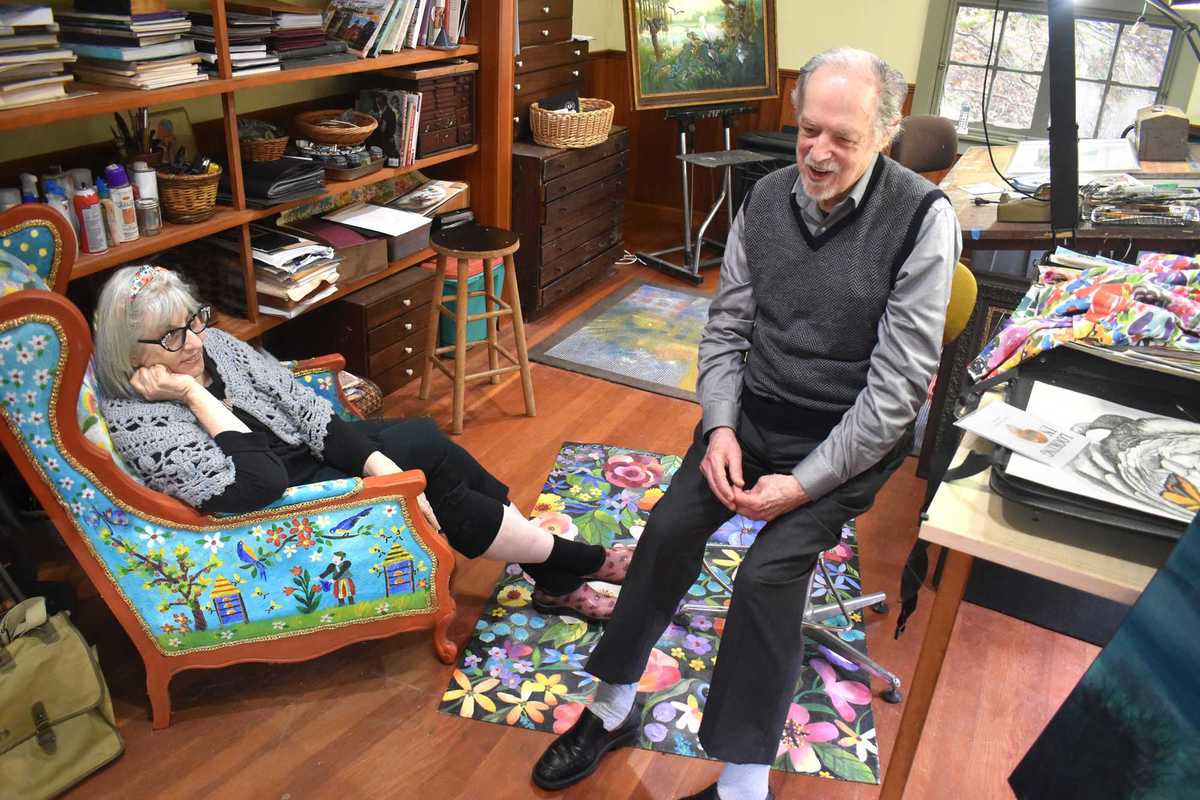
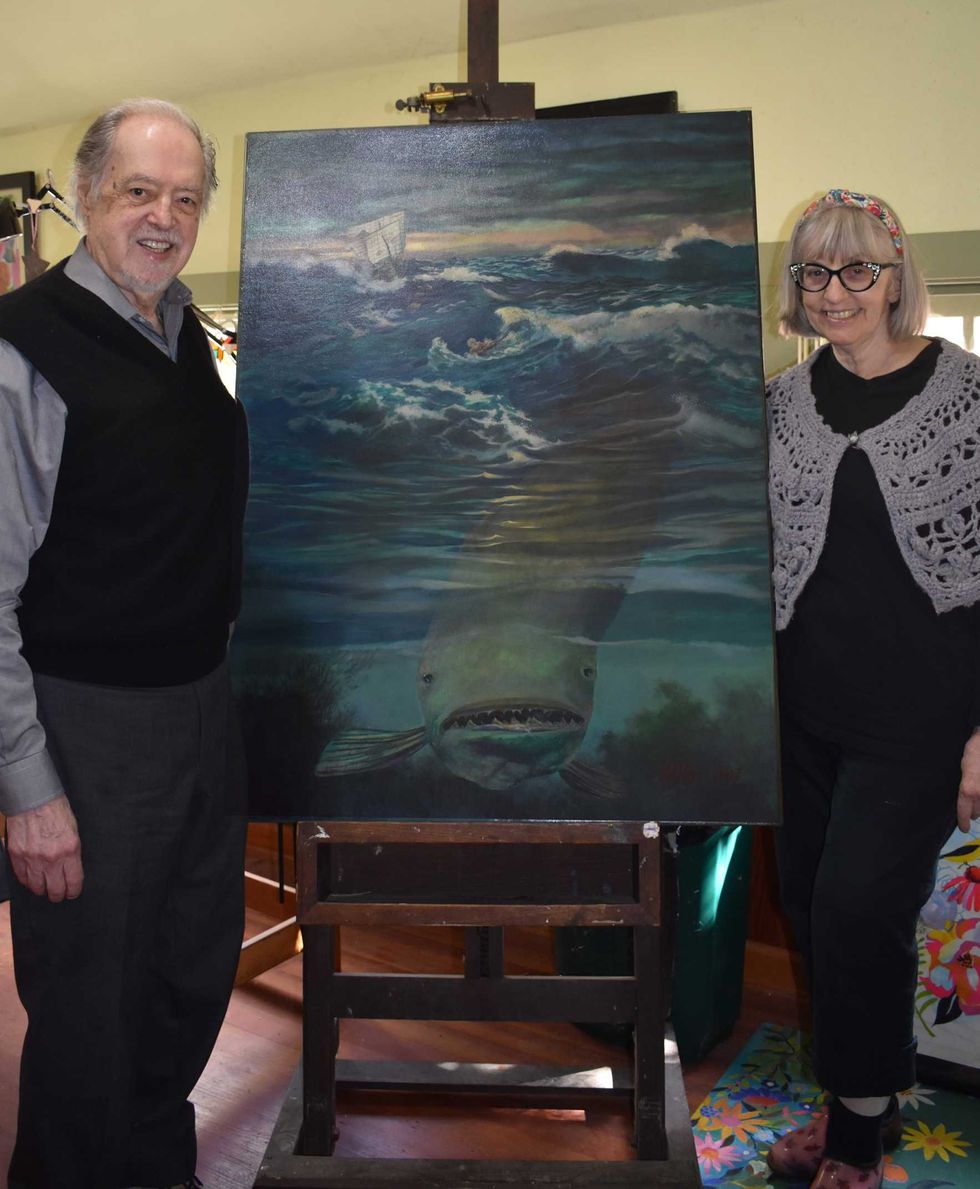 Justine and Victor Valla in their studio with a painting of Victor’s,”Jonah and the Whale.” Robin Roraback

 A ceramic vase by Kathleen Heidemann.Provided
 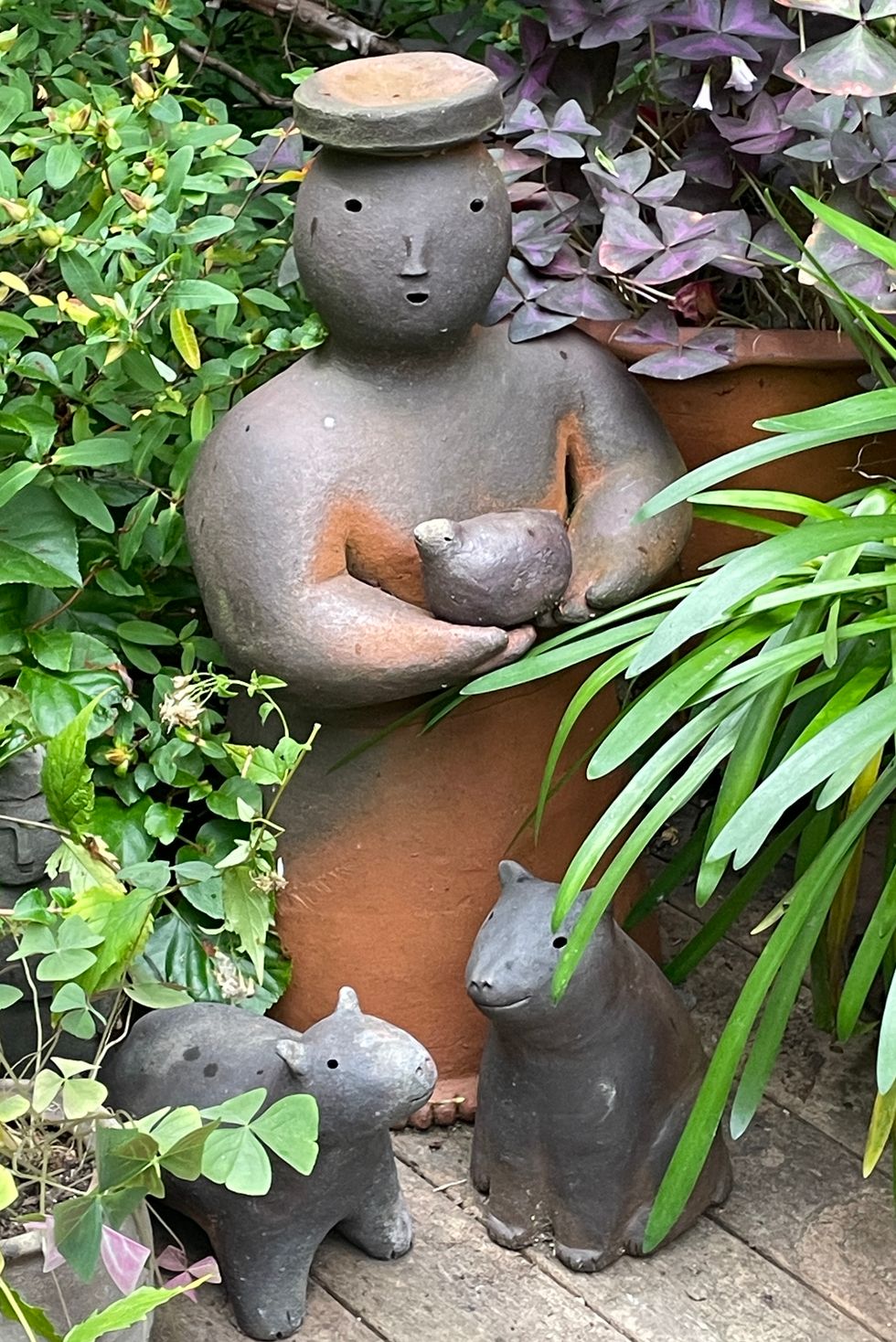 Joy Brown’s delightful ceramic sculptures.Provided