In the early 1760s, Benjamin Franklin was one of the most popular people in the world. The writer, printer, inventor and electricity pioneer was known throughout the British Colonies in America, as well as in Europe, as a respected intellectual and diplomat. While we know him as one of the Founding Fathers of the United States, he spent almost a third of his life in Europe. Eight of those years were spent in France, working to secure support from the French military during the Revolutionary War. But before that, he spent 18 years in England as a diplomatic representative from the colonies.
It was during that time when Franklin first witnessed a musician play a series of glass bowls by wetting his fingers and drawing them across the bowls’ rims. The sound was haunting and otherworldly — like nothing he, nor anyone else, had ever heard before. But as Franklin was transfixed by the sound, he saw what many great innovators see when witnessing something new: inefficiencies. The musician was moving all over the place, working far too hard to make these angelic sounds. So Franklin went about fixing the problem.
In 1761, Franklin commissioned an English glass blower to make him 36 glass bowls of specific diameters and thickness. He then mounted them on a rotating, lathe-like structure, interstacking the smaller bowls inside the openings of the larger ones. Now, instead of reaching all around a table, the musician could play the bowls in a style closer to a piano, simply by moving his fingers. Franklin called his new invention the armonica, after the Italian word for harmony, “armonia,” and was known to play it for friends and visitors.
For somebody whose name is synonymous with money, his face famously gracing the $100 bill, Franklin wasn’t quite as capitalistically minded as one might expect. He declined to patent the invention, instead allowing other instrument fabricators to make their own without paying him fees. Possibly due to his altruism, the armonica caught on, with pieces written for it by such compositional legends as Mozart and Beethoven.
Now, the instrument is coming to Great Barrington as part of the Berkshire Opera Festival. For its 10th anniversary, the festival is presenting “Lucia di Lammermoor” by Italian composer Gaetano Donizetti. The opera, which will be performed in its original Italian, is one of the most prominent works in the “bel canto” style. The term “bel canto” translates to “beautiful voice,” but today, the style can be best summed up as a more dramatic style, allowing performers to match their vocal tones to subjects or moods. This essentially lets the singers act with their voices through song.
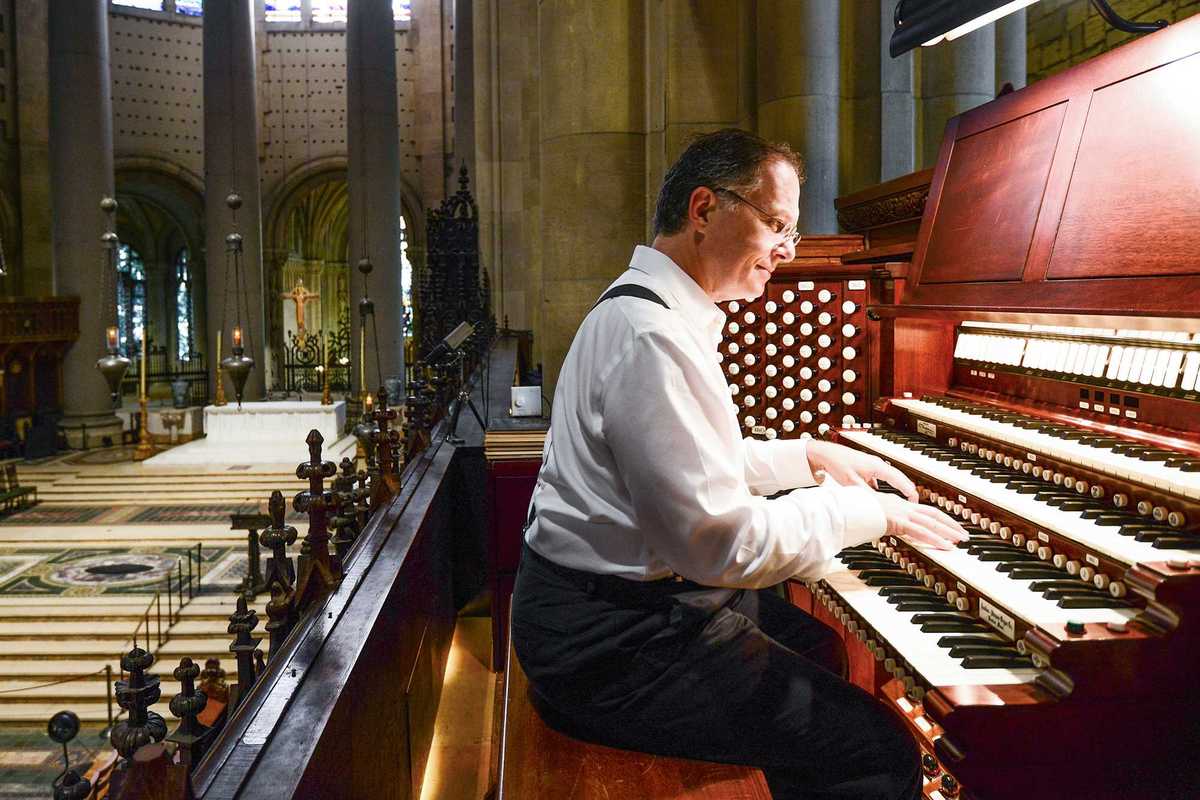
The opera is most commonly performed with a flute solo, but the Festival chose to enlist the armonica, as was originally called for by Donizetti. To play it, BOF is bringing in multi-instrumentalist Dennis James, who has already demonstrated his armonica skills to Berkshire audiences at the American premiere of George Benjamin’s opera “Written on Skin” at Tanglewood in 2013.
“Lucia di Lammermoor” will run at the Mahaiwe Performing Arts Center in Great Barrington on Saturday, Aug. 22; Tuesday, Aug. 25; and Friday, Aug. 28. For tickets and more information, visit berkshireoperafestival.org/










 Justine and Victor Valla in their studio with a painting of Victor’s,”Jonah and the Whale.” Robin Roraback