The Thyme in Sheffield blends nature, wellness and community

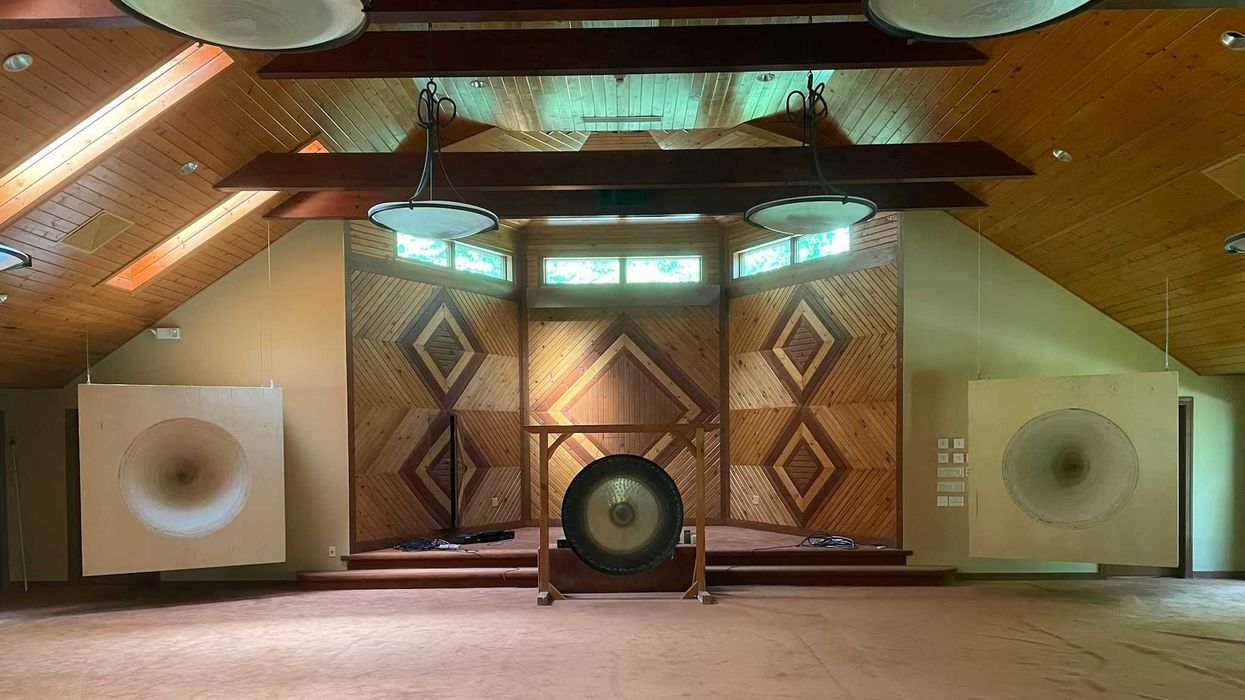
The central communal space, featuring an A for Ara audio system, gong and Tibetan bowls, hosts up to 80 guests for sound meditations and healing music experiences.
Provided

The central communal space, featuring an A for Ara audio system, gong and Tibetan bowls, hosts up to 80 guests for sound meditations and healing music experiences.
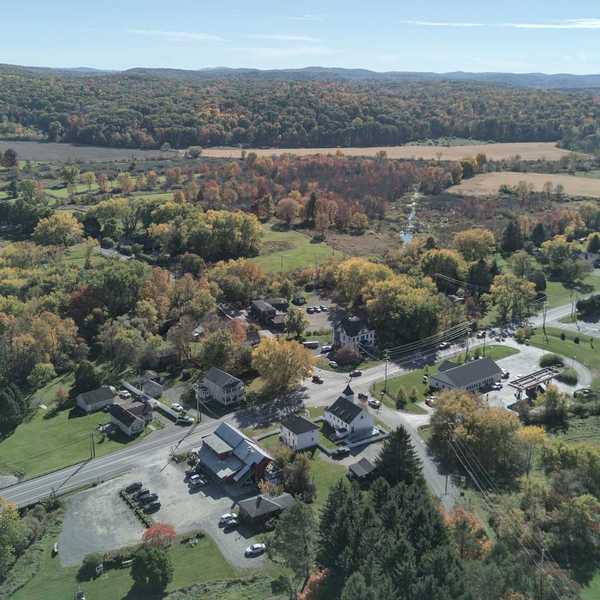
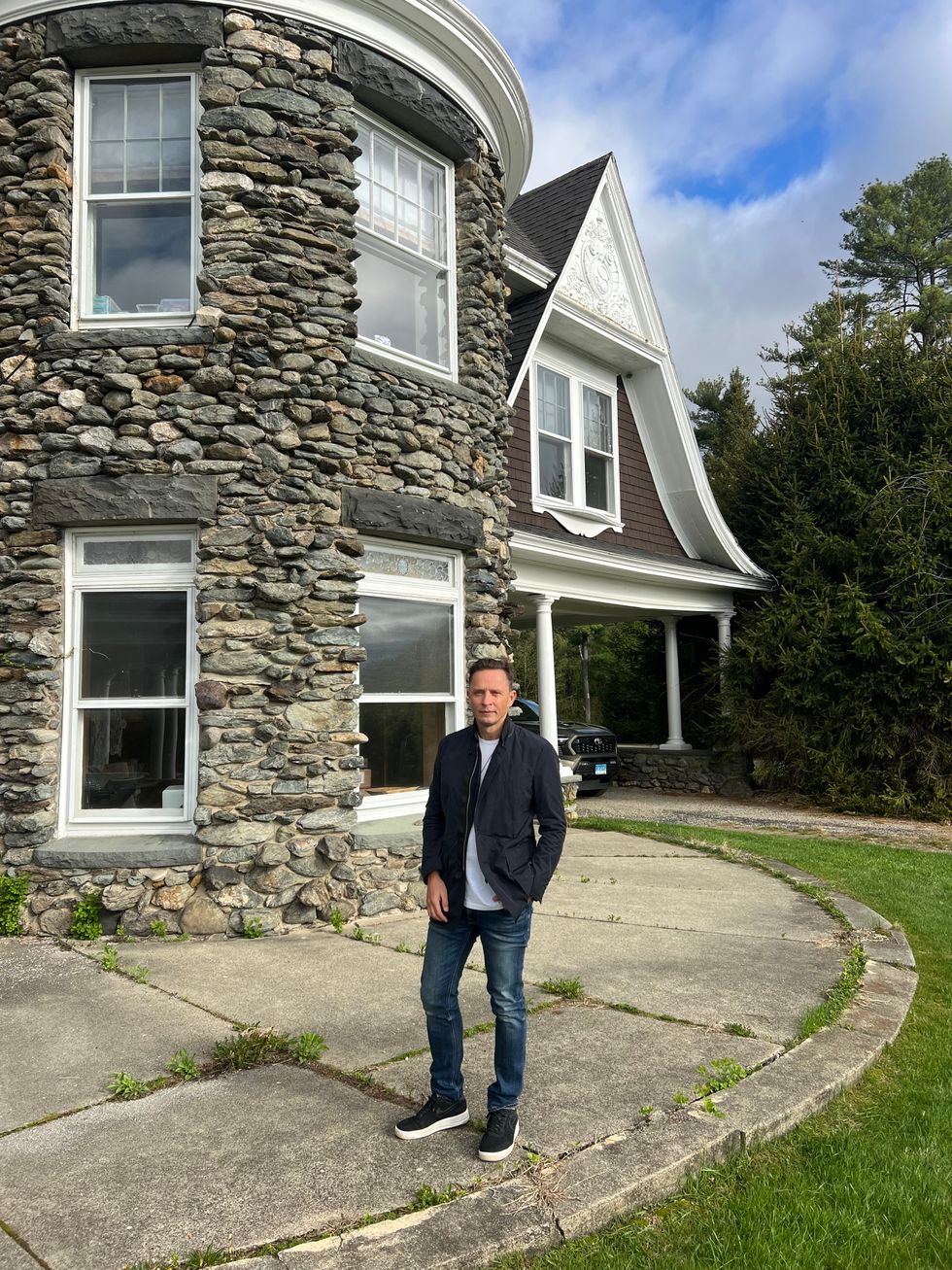
The Thyme, on Route 41 in Sheffield, is a retreat center offering a variety of residential and non-residential programs and services to the local community and Berkshire‑area visitors. A new incarnation of what for many years was the Option Institute, The Thyme is the dream project of James Davies and Andrew Murray, business partners who left the pressures of international banking and moved with their families to this Berkshires campus in September 2024. They bought the 85‑acre property from Barry and Susan Kaufman for $5.35 million and, together with five other business partners, have been renovating the property’s many buildings ever since.
The center opened in January of this year and is a work in progress as the team continues to refine its offerings. Since opening, the venue has hosted events across 22 weekends, with most bookings for residential retreats with some spiritual element. Upcoming events include a women’s retreat (The Wild Rest), a family Halloween event called Curiouser, and a Thanksgiving weekend for those who have already visited the property. The year will culminate with a weekend retreat around the winter solstice facilitated by renowned astrologer Rebecca Gordon.
The center is also available to rent for local businesses and has hosted several dinners organized by the local community. The Thyme is open year-round, welcoming visitors for all four seasons of Berkshire beauty. Programming at The Thyme is very much centered on allowing visitors to enjoy the majestic nature, including the famous Sage’s Ravine. With a 2,000‑square‑foot dining hall, it can accommodate up to 110 people for meals in a variety of configurations.
There are 11 other buildings on the property. Two are the homes of Davies, Murray and their families. The central communal space (separate from the dining room) has been equipped with a cutting‑edge audio system designed by local business A for Ara. Together with one of the largest gongs in the Northeast and Tibetan singing bowls, this space can host groups up to 80 for sound meditations and other curated musical experiences that facilitate healing, relaxation and personal growth.
There are accommodations for 60 people in four buildings, with plans to add more. The beautifully renovated guest rooms are decorated in earth tones in a peaceful, minimalist style, with large windows that showcase the spectacular natural surroundings.
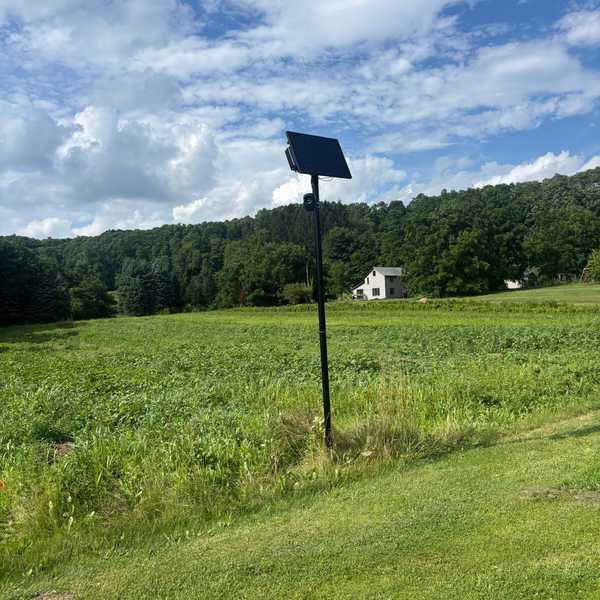
Visitors to The Thyme — whether for day trips or longer stays — will have spectacular views of mountains, rolling hills, a pond, streams and a beautiful walking trail. The Appalachian Trail awaits just down the road from the campus for more serious hikers.
To prepare the property and buildings, the team at The Thyme has hired a number of local workers — landscapers, carpenters, designers. As The Thyme sets up its programs, it’s also hiring specialists such as masseuses. In addition, the center has welcomed core staff members as full‑time residents to head up kitchen operations, music programs and other guest offerings.
Davies and Murray have already been welcoming a mix of generations to The Thyme and have put multigenerational programming at the heart of their offerings, focusing on research showing that strong community connection boosts well‑being. A recent family weekend was attended by guests ranging from newborns to people in their eighth decade.
For more on its programs or to inquire about using the space, visit thethyme.co or email hello@thethyme.co
Kate Farrar at Foxtrot Farm
STANFORDVILLE — Pepper, a cattle-dog schnauzer mix, and Earl, a calico cat, tear through Foxtrot Farm’s design studio in Standfordville in an all-out sprint. They seem to have a love-hate routine down pat. After a burst of chaos, Earl disappears behind a box and Pepper curls onto the couch and begins to snore. On this cold January day, farm owner Kate Farrar is just about to begin seeding for the season.
Sitting on just five acres, Foxtrot Farm is a small but mighty regenerative flower farm and floral design studio in Stanfordville, and Farrar is planting seeds — literally and figuratively — for her fifth growing season. While winter is a time of recalibration and reflection, it also marks a pivotal moment when Farrar’s hard work will pay off in the months ahead. There’s something for everyone at Foxtrot.
Flowers are the hallmark of the business, with a rotating rainbow of colors each season. You can find species like lisianthus and heirloom chrysanthemums — Farrar’s current favorite — and a range of in-season foliage like vines and fennel fronds that are used to accent bouquets.
“It can change the entire vibe of a bouquet,” she said. In addition to flowers, Farrar grows select fruits and vegetables, like raspberries and kale. Each year, she adds more native plants to support her regenerative, pesticide-free farming model. Because she doesn’t use chemicals, Farrar relies on the robust ecosystem of insects, birds, and native predators attracted by those plantings.
While soil health is the foundation of her regenerative model, she said creating a diverse ecosystem is just as important. “I think regenerative farming is not only amending the soil for your crops, but improving the quality of the soil,” Farrar said. “And beyond that, it’s about creating an ecosystem where things can thrive.”
Each season, Foxtrot offers its products through several business models. Flowers are available wholesale to florists and other businesses, arrangements are available for weddings and special events, and a pick-your-own membership is available for local residents.
Farrar also offers a community-supported agriculture program — commonly known as a CSA — for customers seeking a steady supply of locally grown blooms. Participants can pay through a seasonal lump sum, in installments, or on a sliding scale.
Farrar spent a decade farming for other people throughout the Hudson Valley before she decided to take the next step in her career. She didn’t want to do it without land security, so when an opportunity arose to purchase land in Stanfordville with a friend, she felt that the timing was right.
The 2021 season focused on cover-cropping and infrastructure, while 2022 marked her first production year.
A science and art
Farrar said she initially focused on flowers because they offered the highest return per square foot, but she stayed with them because she loves them.
While the farm is her livelihood, she views Foxtrot as not just a business and a science, but an art. “I get to be playful with the work, and it’s a straightforward way to tie art into agriculture,” Farrar said, reflecting on her dual English and photography major at a liberal arts college.
Her senior thesis involved photographing people in agriculture. “I hadn’t gotten my hands dirty yet, but I was already drawn to it,” Farrar said.

From grief to growth
Farrar’s mother died when she was a senior in college, and she found herself navigating intense grief at a pivotal moment in her young adult life.
A friend brought her to a farm to get her connected with the land and, for Farrar, it was a light-bulb moment. “It reminded me that there was a spaciousness beyond deadlines and tests,” she said. Farrar described that experience as cathartic. “That was the moment I realized I didn’t just want to observe the land through photography, I wanted to work with it.”
Today, as Foxtrot enters a new growing season, Farrar is excited to be expanding. After operating largely as a one-woman farm with some part-time seasonal help, she is looking forward to hiring a full-time employee for the fifth growing season.
Winter craft event on Jan. 18
Foxtrot Farm will host a winter craft event on Saturday, Jan. 18, from 11 a.m. to 1 p.m. at Vitsky Bakery in Wassaic. Farrar said she chose to host the crafting event as a way to stay relevant and connected with the community during the winter months. “Collaging is a low-pressure activity, and it gets you out of ‘productivity brain’ and into something more meditative,” she said. Attendees will be able to enjoy conversation and add some color to the cold, winter months through the floral dreamscape collaging event. Farrar will also share more information about Foxtrot’s CSA. The event is free and open to the public.
Kathy Chow, pictured here standing, addresses the room during public comment on the proposed overhaul of North East's zoning code. Chow suggested more farming opportunities should be permitted in the code.
MILLERTON – Community members crammed into the North East Town Hall on Thursday, Jan. 8, for a highly anticipated public hearing on the town’s proposed commercial zoning overhaul.
With the 21-seat meeting room at capacity, several attendees were forced to listen from the lobby. After listening to public comments, the town board opted to adjourn the hearing rather than close it, scheduling a continuation for Tuesday, Feb. 3, at 6 p.m.
The hearing marked a significant milestone in a process that has been four years in the making and represents the first comprehensive rewrite of the town’s zoning code since the mid-1970s.
The proposed zoning overhaul is intended to modernize regulations that have remained largely unchanged for decades, aligning them with the town’s 2019 Comprehensive Plan and current economic and housing needs. The revisions place a strong emphasis on encouraging reinvestment in commercial districts, expanding housing options — including multifamily, mixed-use and affordable housing — and updating standards to reflect modern land uses and technologies. Town officials have said the goal is to support local businesses, streamline approvals, and provide clearer, more predictable rules while preserving neighborhood character and quality of life.
While approximately 35 members of the public attended – not including members of the town board and legal counsel – only seven residents chose to speak. Most expressed general support of the draft, thanking the Zoning Review Committee (ZRC) and town board for their work and volunteer efforts. Some brought up targeted concerns while others made recommendations.
North East resident Tyler Graham – founder of the newly formed Save Millerton group, which has publicly challenged the zoning revision process and specifically the town board – was more critical.
Review of the process
Prior to opening the public hearing, Town Supervisor Chris Kennan summarized the steps that were taken to update the zoning code. He noted the process began with the Town and Village Comprehensive Plan, which was adopted on Nov. 14, 2019, which recommended hiring a consultant and attorney to draft new language to update the zoning and subdivision laws.
A significant undertaking, the board broke the process into two parts. The objective of the first phase was to focus primarily on the commercial districts in the town. Kennan said some aspects of the residential zones, as well as the land conservation zone, were included. The Zoning Board of Appeals (ZBA) presented its work on Nov. 14, 2024 and the town board completed its review on Nov. 4, 2025.
Support and recommendations
Rich Stalzer, chair of the town’s Conservation Advisory Counsel, said he viewed the zoning review process as “open and inclusive,” while raising several technical concerns. He asked the town to clarify zoning document provisions related to backup generators and noise impacts, strengthen pedestrian safety requirements for off-site parking and address ambiguities around accessory dwelling units on properties owned by trusts or LLCs. Stalzer also recommended aligning school use requirements across residential zoning districts.
Kathy Chow, a North East resident and chair of the Millerton Climate Smart Task Force, focused her remarks on agriculture and economic development. She said current permitted uses limit farming opportunities and called for greater flexibility to allow market gardens, greenhouses, community gardens and a broader range of farm animals. Chow also urged the town to encourage artisan workshops and food-based businesses in the Irondale area, suggesting it could become a hub for small industry and capture Route 22 traffic.
Other supporters spoke in favor of specific policies that would increase housing opportunities or relax setback requirements and of the nature of the work in general.
Kevin Webb of Skunk’s Misery Road expressed general support for the draft, saying “the spirit of the work seemed good and seems like the product of a lot of hard work.”
“I don’t want to make perfect the enemy of good,” Webb said. “This can’t be a perfect product, but I support it.”
Kathleen Spahn, a member of the village ZBA and who also works at the NorthEast-Millerton Library, expressed support for policies that would increase housing opportunities while protecting the town and village from an influx of short-term rentals and part-time residents.
Rob Cooper said he welcomed the proposed relaxation of setback requirements, supporting changes that would make it easier to build or expand without needing a variance.
Criticism of the process
Ed Covert, a resident of Cooper Road, thanked the ZRC “for their hard work,” and efforts to improve the town. He added, “It’s just a shame that it had to be handed over to the town [board], who added things that the ZRC didn’t even address.”
Covert criticized what he described as a lack of zoning enforcement on Cooper Road, citing years of tension with a neighbor who he said constructed an illegal dwelling and a lack of response to multiple complaints filed by residents. “Fix problems before you change things,” Covert said.
Tyler Graham, founder of Save Millerton, used his allotted time to question the process, including the timing of the draft’s release over the holidays and classification of the rewrite as primarily commercial when, he argued, it would also impact residential zoning. He also criticized the lack of a reader-friendly summary explaining what changes were made and why.
Next steps
The town board will continue to accept written comments in advance of the Feb. 3 continuation of the public hearing, all of which will become part of the official record. Copies of the draft zoning code remain available at Town Hall, on the town’s website and at the NorthEast-Millerton Library.
The board and Dutchess County Planning officials will also review written submissions and feedback provided during the hearing as they consider potential revisions to the draft. The town board will also complete a State Environmental Quality Review to assess any significant adverse impacts before closing the public hearing and adopting amendments with the New York Secretary of State.
Once approved, a committee will be appointed to dive into phase two, an overhaul of the residential zoning code.
Other business
Following the public hearing, the board resumed its regular monthly meeting and routine business. Members voted to sign an agreement with the Town of Pine Plains, designating its facility as North East’s official dog shelter. They also approved minutes from the Dec. 11, 2025, meeting, shared committee reports and agreed upon budget adjustments for the 2025 fiscal year.
The Millerton Inn on Main Street will host the first dinner in this year's Dine Out for History series on Sunday, Jan. 18. A local history quiz including a free glass of wine will precede dinner service at 5:30 p.m. Reservations are requested.
MILLERTON —Diners will once again have the opportunity to support the North East Historical Society this winter while enjoying meals at local restaurants with the return of “Dine Out for History.”
Seven restaurants across Millerton and the Town of North East will be participating in this year's event, marking the highest number since the COVID-19 Pandemic shuttered the event from 2020 to 2022.
On select dates from Jan. 18 through March 23, participating restaurants will host their own Dine Out for History night, with 10% of the evening’s proceeds donated to the historical society to support research, digitization of its collection and efforts to make historic content more accessible to the public.
“We’re very happy to see the significant support we are getting from local restaurants,” said Edward Downey, president of the North East Historical Society. “We aim to bring them more business at a tough time of year, and from the feedback we’ve gotten, their patrons enjoy rallying to support local history.”
The series will begin Sunday, Jan. 18, at The Millerton Inn, 53 Main St. An optional brief presentation — a participatory local history quiz — will be held at 5:30 p.m. for those who wish to arrive early. The program includes a complimentary glass of wine, with dinner to follow. Reservations are requested.
The other participating restaurants include Taro’s at 18 Main St. on Thursday, Jan. 29; Willa at 52 Main St. on Thursday, Feb. 12 (reservations requested); the Oakhurst Diner at 19 Main St. on Sunday, Feb. 22; Pasture Kitchen at 130 Route 44, on Thursday, March 5; the Golden Wok at Railroad Plaza, 2 Main St., on Sunday, March 15 (takeout only); and Round III at 5523 Route 22, on Monday, March 23.
To get a reminder, please sign up for the North East Historical Society newsletter by contacting Ed Downey at eddowney12@gmail.com.
The North East Historical Society is on the second floor of the NorthEast-Millerton Library, 75 Main St., Millerton. Its hours are 11 a.m. to 1 p.m. on Fridays or by appointment. For more information, contact Ed Downey at eddowney12@gmail.com.
Millerton Fire Company crews directing traffic as they waited for a tow truck large enough to haul the wrecked box truck away from a crash site on Route 44 just south of the entrance to the Millerton Gun Club on Friday, Jan. 9.
MILLERTON — A crash involving a box truck and a passenger vehicle blocked traffic just outside the Village of Millerton for much of the early afternoon Friday.
North East Fire Chief Keith Roger told The News on-scene that no one was injured in the crash that occurred around 12:30 p.m. on Route 44, just south of the entrance to the Millerton Gun Club.
Details of the incident were limited as emergency crews worked at the scene. Roger said a box truck and a passenger car were the two vehicles involved, but additional information was not immediately available.

The passenger car was towed from the scene by about 1:45 p.m. A heavy-duty tow truck from East Fishkill arrived shortly thereafter to remove the box truck.
The disabled box truck blocked a lane of traffic on Route 44 just outside of the village, causing significant delays for motorists and prompting many to take a detour on Mill Road to avoid the congestion.
"It takes a minute," Roger said. "We don't have any large vehicle tow companies nearby."