The story of Mary Flagler Cary and her local legacy

Historical Society archives
The story of Mary Flagler Cary and her local legacy
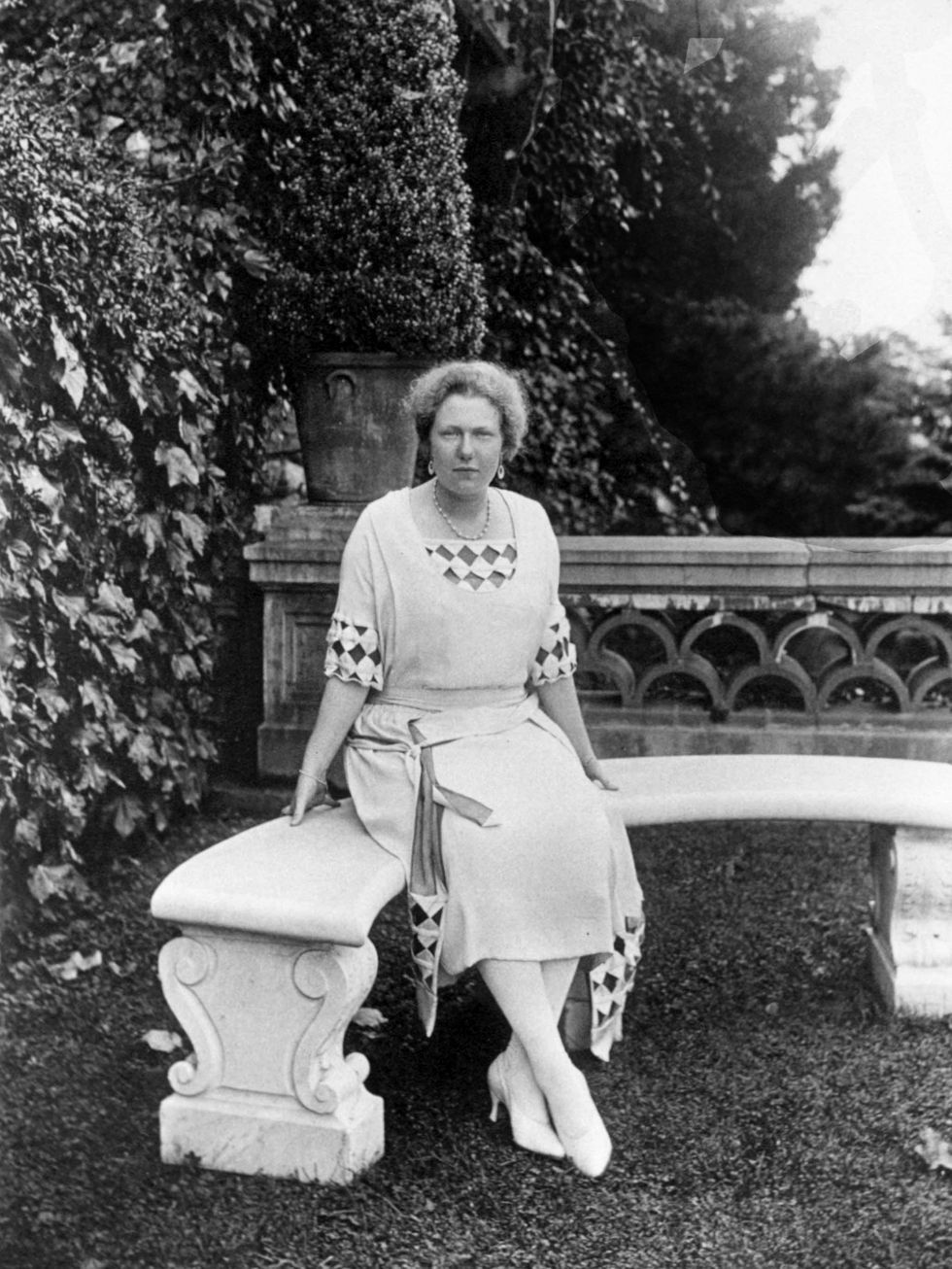
Mary Flagler Cary left her land to what is now the Cary Institute of Ecosystem Studies, which has made myriad important contributions to the world of science since becoming an independent nonprofit research center in 1993. Photo Courtesy of the Millbrook Historical Society
MILLBROOK — After not having regular meetings since the start of the COVID-19 pandemic began in March 2020, the first in-person, indoor meeting of the Millbrook Historical Society (MHS) gathered at the Millbrook Library on Thursday, Nov. 18, for a lively discussion of Mary Flagler Cary.

More than 50 people gathered to hear a talk entitled, “The Artist of the Canoo Hill,” by Brad Roeller. He spoke of his experiences working at the Cary Arboretum, which started in 1972. He ended up working there for the next 37 years.

During his time there, Roeller met many acquaintances and employees of Mary Flagler Cary, granddaughter of Henry Flagler.

Flagler, an American industrialist, a founder of Standard Oil and founder of the Florida East Coast Railway, was born right in Hopewell in 1830.

Roeller is a renowned horticulturist, author and Innisfree Garden trustee who has also lent his expertise to such celebrated gardens as the Botanical Gardens and the Altamont Estate.

Flagler, who fell in love with Florida and eventually moved there, spent the majority of his time there until his death in 1910. He left behind a vast estate.

Among the many relatives he left behind was a granddaughter, Mary, who has ties Millbrook.

She married Melbert B. Cary, a graphic artist and founder of the Wooly Whale, a private press that published very specific titles. He also had an amazing collection of books that were donated to the Rochester Institute of Technology (RIT) after his death.

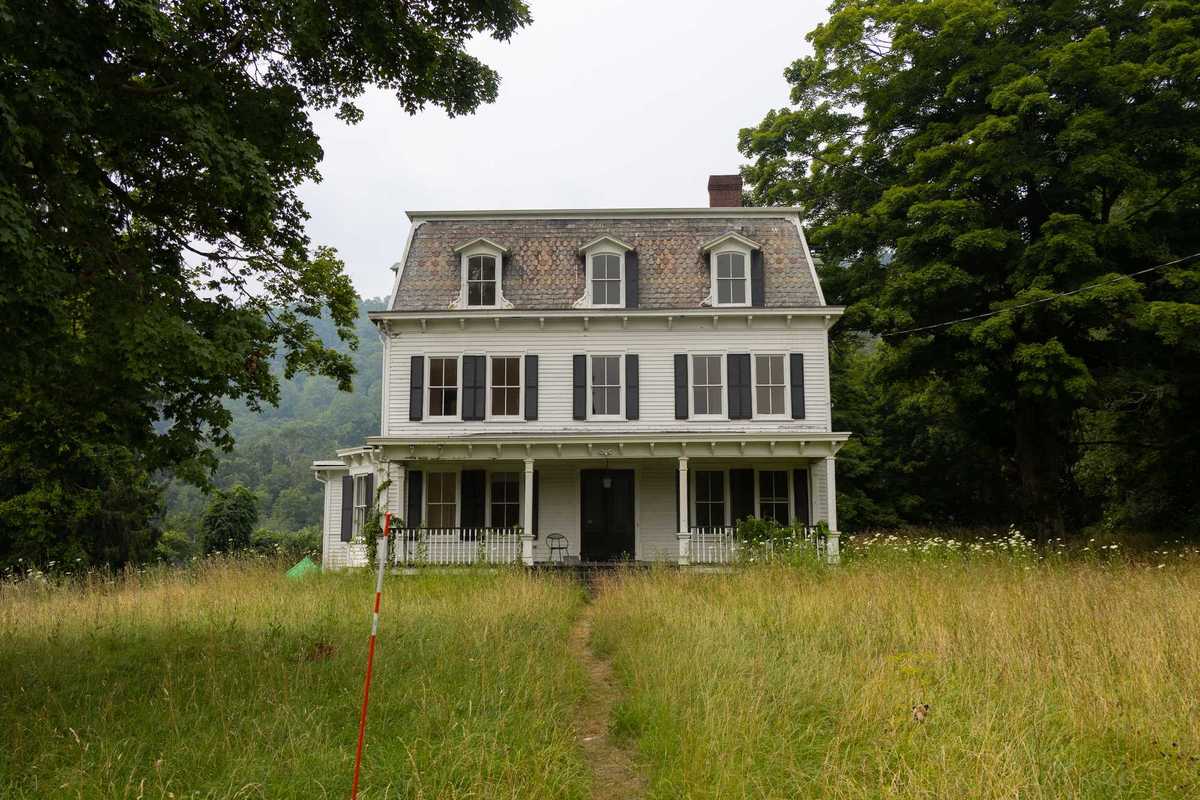
The Carys had a country estate in Millbrook, which began with one farm and grew from there to the vast acreage we know today as the Cary Institute of Ecosystem Studies.

The Carys enjoyed their country estate in Millbrook and Mrs. Cary, a well known philanthropist, devoted much of her time to managing the property of close to 2,000 acres after her husband’s death in 1941. A quiet and reserved woman, she had a special fondness for the Maple trees on the property.

She was an avid photographer and the property provided her with a wealth of subject matter for taking photos, mostly in black and white, and surprisingly, many Polaroid pictures.

Her love for her property, its trees and the wildlife it supported encouraged her to set up a charitable trust. She bequeathed her estate to an organization involved in conservation and preservation of natural resources and the maintenance of such properties.

Mary Flagler Cary died in 1967 and in 1971 her trustees asked the New York Botanical Garden (NYBG) to oversee her property, at that time called  the Mary Flagler Cary Arboretum.

In 1983 Gene Likens, who was affiliated with the NYBG, founded the Cary Institute of Ecosystem Studies in Millbrook as part of the New York Botanical Garden. In 1993 it  became an independent nonprofit center for ecological research with Likens as director and president.

Roeller, during his years at the Cary Institute, became acquainted with several local people who knew or worked for the Cary family. He was shown many photographs of the early years at their estate. He was even shown some photos taken by Mrs. Cary.

Even now, more than 50 years after her death, many of the trees standing in the forests of the Cary Institute are among those planted during her day.

There are also many photographs that were taken by her — of the property, of the trees — a history in photos of early conservation efforts.

Today, the Cary Institute of Ecosystem Studies located at 2801 Sharon Turnpike (Route 44), which once belonged to the Carys, remains an important part of Millbrook’s history and of its future.

Cary researchers and scientists study the environment, issues of climate change, infectious disease, freshwater and forest health and urban ecology, as its website (www.caryinstitute.org) describes.

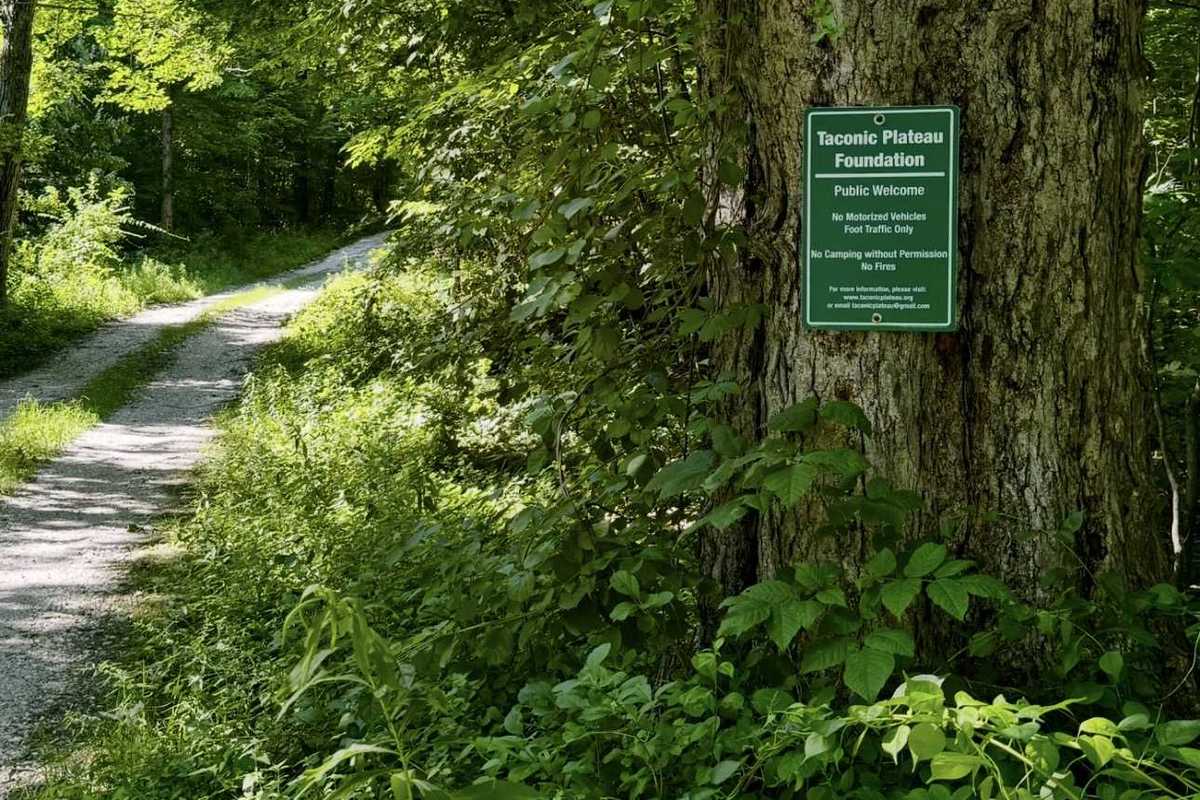
Locals and tourists alike are welcome to visit the vast hiking trails, study the ferns that grow along the ponds and streams and  watch the many animals in their natural habitat.

It’s safe to say that the spirit of Mary Flagler Cary and her philanthropic ways are alive and well in Millbrook.

For more information and future meetings of the MHS, go to www.millbrookhistoricalsociety.org.

Latest News

Local Pilates instructor returns home after Miami Dolphins stint

Millbrook resident Jackie Bachor hugs her horse, Dessie, during a tour of her barn and Pilates studio on Tuesday, April 21.

Photo by Graham Corrigan

MILLBROOK — Local Pilates instructor Jackie Bachor has led a career that has taken her from rural upstate New York to Miami and back again — where she is forging a new path that blends her passions for fitness and equestrianism.

Now standing in the sun-drenched studio space of True Pilates Millbrook, Bachor has found space for both. The studio doubles as a stable loft, looking down on Bachor’s horses Dessie and Sammy. When Bachor points around the space to identify Pilates equipment, it’s as if she’s naming horses. At the center of the room is the Cadillac, a raised bed with overhead bars. To the side sits the Barrel, an arced apparatus designed for optimal spinal mobility.

Keep ReadingShow less
Thai tea shop to open in former Candy-O’s space on Main Street

Kanchisar Jaradhanaiphat, left, and John Schildbach hope to open Muanjai Tea on Main Street in Millerton by June 6.

Photo by Nathan Miller

MILLERTON — The former home of Candy-O’s on Main Street will soon get new life, with a Bangkok-inspired tea shop expected to open in June.

Millerton residents John Schildbach and Kanchisar Jiradhanaiphat hope to open Muanjai Tea on June 6. The couple — who are set to be married in May — are currently securing permits to renovate the former candy store, with plans to transform the space into a Thai-inspired tea shop modeled after urban cafés, featuring an elevated atmosphere and menu.

Keep ReadingShow less
Oblong Books placed on NYS Historic Registry

New York State Senator Michelle Hinchey buys two books from Oblong Books in Millerton on Thursday, April 23, after inducting the business into the state Historic Business Preservation Registry.

Photo by Graham Corrigan

MILLERTON — Fifty-one years after Dick Hermans and Holly Nelson opened Oblong Books, the Millerton bookstore has been recognized as part of New York State history.

Following a nomination from state Sen. Michelle Hinchey, Oblong Books was added to the New York State Historic Business Preservation Registry. Hermans and his daughter and co-owner, Suzanna Hermans, celebrated the designation Thursday alongside Hinchey, North East Town Supervisor Christopher Kennan and Kathy Moser, acting commissioner of the New York State Office of Parks, Recreation and Historic Preservation.

Keep ReadingShow less
google preferred source

Want more of our stories on Google? Click here to make us a Preferred Source.

Amenia's Arbor Day celebration

Amenia's Arbor Day celebration
Nathan Miller

A group of gardeners and community members hear Maryanne Snow-Pitts explain proper care for newly-planted tree saplings near the Harlem Valley Rail Trail in Wassaic after Snow-Pitts planted two serviceberry trees in celebration of Arbor Day on Friday, April 24.

Workforce housing subdivision awaits fire company approval
Amenia Town Hall on Route 22.
Photo by Nathan Miller

AMENIA — The proposed workforce housing subdivision on Route 22 is awaiting feedback from the Amenia Fire Company after developers added more water tanks to plans for the property.

Planning Board members discussed other outstanding questions involving the Cascade Creek workforce housing subdivision at their regular meeting on Wednesday, April 22, continuing a conservation subdivision process that began nearly a year ago.

Keep ReadingShow less
‘Vulnerable Earth’ opens at the Tremaine Gallery

Tremaine Gallery exhibit ‘Vulnerable Earth’ explores climate change in the High Arctic.

Photo by Greg Lock

“Vulnerable Earth,” on view through June 14 at the Tremaine Gallery at Hotchkiss, brings together artists who have traveled to one of the most remote regions on Earth and returned with work shaped by first-hand experience of a fragile, rapidly shifting planet, inviting viewers to sit with the tension between awe and loss, beauty and vulnerability.

Curated by Greg Lock, director of the Photography, Film and Related Media program at The Hotchkiss School, the exhibition centers on participants in The Arctic Circle, an expeditionary residency that sends artists and scientists into the High Arctic aboard a research vessel twice a year. The result is a show documenting their lived experience and what it means to stand in a place where climate change is not theoretical but visible, immediate and accelerating.

Keep ReadingShow less
google preferred source

Want more of our stories on Google? Click here to make us a Preferred Source.

google preferred source

Want more of our stories on Google? Click here to make us a Preferred Source.