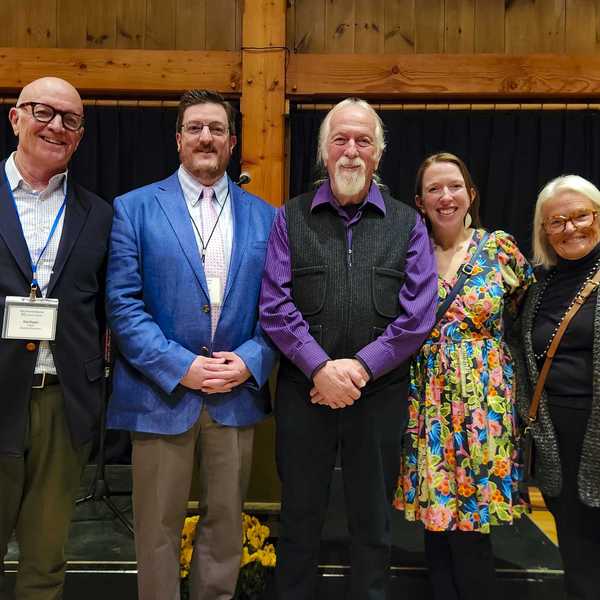
John Richard Dildine

John Richard Dildine

FALLS VILLAGE — John was born on Dec. 15, 1934, in Evanston, Illinois, and died on June 3, 2024. John graduated from high school in Silver Spring, Maryland, with a focus on audio, radio and music. He curated and hosted a popular Folk Music radio program recorded at WAMC and broadcast by NPR. He was the first president of The Folklore Society of Greater Washington in the early 1960s. He provided audio support during the March on Washington for Jobs and Freedom on Aug. 28, 1963.

John, his wife, Ginny, and their three children (son Wesley, daughters Debbie and Connie) performed as The Dildine Family Folk Songs and Marionettes for ten years at folk festivals, schools and folk venues.

John was a self-employed sound recording engineer for documentary films and television. He was also a voice recording artist. The John Dildine and Ginny Dildine Papers now reside at the Library of Congress-Folklife Division.

John loved travel, painting, pottery, and family. He is survived by his wife of 71 years, Ginny, his son, Wesley (Chelsea), daughters Debbie (Joel) and Connie (Lars); and two granddaughters, Leah (Matt) and Shannon, and four great grandchildren.

Latest News

North East’s commercial rezoning puts focus on housing

The North East Town Hall building, where town officials will hold a public hearing on Thursday, Jan. 8, at 7 p.m., on proposed zoning code amendments

By Nathan Miller

MILLERTON — The zoning code changes that will be the focus of a public hearing on Thursday, Jan. 8, represent a major overhaul of the code since it was adopted in the 1970s, placing a strong focus on promoting housing options in the town’s commercial district.

The hearing is scheduled for Jan.8 at 7 p.m. at Town Hall and the draft of the amendments can be found online at townofnortheastny.gov/zoning-review-committee/ or in person at Town Hall or at the NorthEast-Millerton Library.

Keep ReadingShow less
Sharon Hospital drops NDP as ambulance provider

Sharon Hospital in Sharon, Connecticut.

Archive photo

SHARON — Northern Dutchess Paramedics will cease operating in northwest Connecticut at the start of the new year, a move that emergency responders and first selectmen say would replace decades of advanced ambulance coverage with a more limited service arrangement.

Emergency officials say the change would shift the region from a staffed, on-call advanced life support service to a plan centered on a single paramedic covering multiple rural towns, raising concerns about delayed response times and gaps in care during simultaneous emergencies.

Keep ReadingShow less
Trevor-Lovejoy Zoo receives $5M for new animal hospital

Max Amsterdam reaches out to pet a red panda at the Trevor-Lovejoy Zoo on Millbrook School’s campus on Wednesday, Dec. 17. Amsterdam is a senior at Millbrook School and serves as the zoo’s head student curator.

Photo by Aly Morrissey

MILLBROOK — The Trevor-Lovejoy Zoo announced this month that it has received a $5 million donation — the largest in the organization’s history and made anonymously — that will primarily fund a state-of-the-art animal hospital, a key feature of the zoo’s current master plan for expansion. The zoo, which is located at the Millbrook School, currently houses 180 exotic animals from all over the world.

“It’s very exciting,” said Nancy Stahl, who oversees fundraising for the zoo. “This gift is going to enhance everything we already do and enable us to increase opportunities for science, our community and support the well-being of our animals.”

Keep ReadingShow less
New program offers home pickup for textile recycling

AMENIA — Residents can now take advantage of a local recycling program that offers convenient home pickup for textiles and other household items. The program, approved by Dutchess County, was outlined by Town Board member and Town Supervisor-elect Rosanna Hamm.

The service, operated by Helpsy, accepts unwanted clothing, footwear, textiles, accessories and linens, along with items such as luggage and stuffed animals. According to the Environmental Protection Agency, only about 17% of recyclable textiles are currently reclaimed, with the rest ending up in landfills or municipal incinerators.

Keep ReadingShow less