Irondale Schoolhouse: a piece of living history

Ralph Fedele sits at a desk in the historic Irondale Schoolhouse, which he led the effort to relocate to downtown Millerton.
Aly Morrissey


Ralph Fedele sits at a desk in the historic Irondale Schoolhouse, which he led the effort to relocate to downtown Millerton.
“It was in dire straits. Right on the road, but beautiful. I remember thinking, ‘Wouldn’t that be a great building to move into the village?’” —Ralph Fedele
A one-room schoolhouse sits on Main Street along the Harlem Valley Rail Trail, offering an opportunity for locals and visitors to step inside a piece of living history.
The Irondale Schoolhouse that now sits in downtown Millerton was not originally located on Main Street. The building was first constructed in 1858 along what is now Route 22 in the Irondale section of town, defined by Irondale road and the Old Mill that still sits along Webatuck Creek. At the time, the schoolhouse was one of 14 that served the Town of North East’s children.
Starting in 2015, the building was disassembled and moved — piece-by-piece — thanks to the efforts of a local organization called the Friends of the Irondale Schoolhouse and a Millerton resident that has dedicated much of his life to the community and preserving local landmarks.
That man is Ralph Fedele, a revered figure in the community both for his efforts to restore, maintain and educate people about the former schoolhouse and for more than a decade serving on the North East Town Board.
Fedele moved to Millerton from New York City 37 years ago, in 1988, and has since worn many hats – volunteer, historian, advocate, elected official – yet he still doesn’t believe he’s earned that title.
“I’m a transplant,” he said matter of factly. “I’m from the city.”
Years after settling in Millerton full time, Fedele was driving north on Route 22 when he spotted an old, classic building and couldn’t stop thinking about it.
“It was in dire straits,” he recalled. “Right on the road, but beautiful. I remember thinking, ‘Wouldn’t that be a great building to move into the village?’”
That moment would eventually turn into Fedele’s lasting legacy.
Fedele joked that people may have thought he was crazy during the lengthy restoration. “I was a tyrant,” he said with a laugh. “I really made sure that we were able to get it done.” The effort required coordination with the state, the county, village and town officials, and his newly assembled nonprofit board.
As a self-proclaimed history buff, Fedele didn’t stop at the restoration. He found a list of students in old records and did what any determined historian would do. He opened the telephone book and started making calls.
Eventually, he tracked down one of the schoolhouse’s original students – Mary (Mechare) Leitch – who, at the age of 101, returned to the building after renovations were complete.
“It was a marvelous time,” smiled Fedele. “I was so happy to see her.”
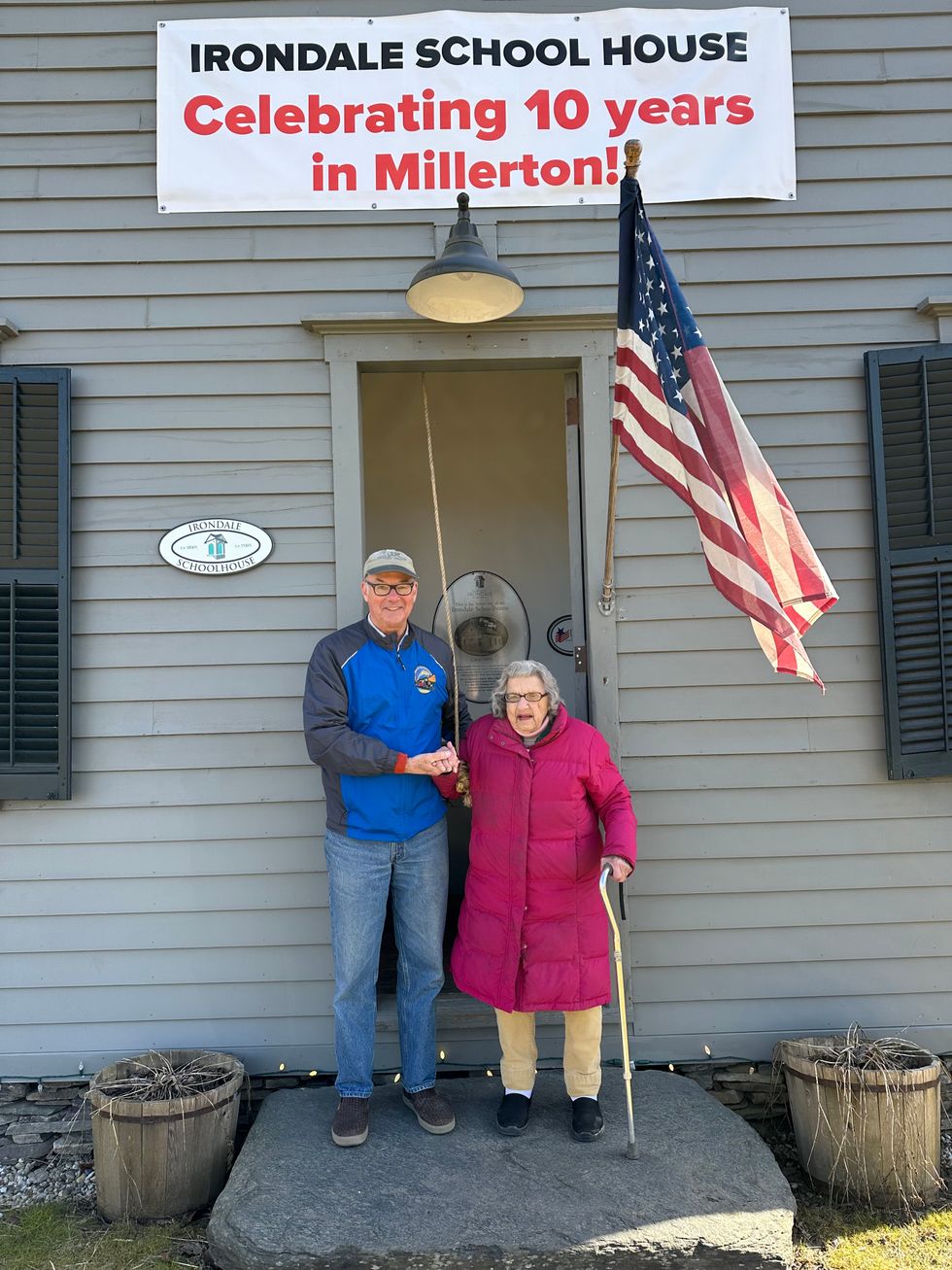
Leitch died on Dec. 24, 2025, at the age of 103.
Leitch was born in Millerton in 1922 and grew up on Winchell Mountain in the hamlet of Irondale. Her early schooling was at Irondale’s 1858 one-room schoolhouse until it closed in 1930. She was proud of having been the last person to attend the school. From the third grade onward, she attended school in the Millerton school district.
“If you sit still, you will rust,” was a favorite Leitch saying, perhaps inspired by the Irondale district and the area’s iron industry.
Leitch delighted in the outdoors and in the company of animals and people, caring for many dogs—especially Jack Russells—and cherishing the horses that were part of her long, vibrant life. An avid sportswoman, she enjoyed deer hunting and fishing, keeping her licenses current right up until her passing. She was a longtime member of both the Jack Russell Club of America and the Dutchess County Professional Horsemen’s Association.
In 1958, she married William “Billy” Leitch of Millbrook, a professional horseman, sharing a love of the sporting life and enjoying active membership in the Millbrook Hunt Club. Billy pre-deceased her in 2015.
Aly Morrissey
Dick Hermans in the Oblong Bookstore on Millerton’s Main Street in 1985.
As Millerton celebrates its 175th anniversary, one of Main Street’s most enduring institutions continues to shape the face of Main Street. Oblong Books, the independent bookstore that has served generations of readers, remains a cultural cornerstone of the village 50 years after opening its doors.
The store officially celebrated its golden milestone in August 2025 with a “good old-fashioned block party.” Hundreds turned out for the family-friendly event featuring live music, food trucks, raffles and entertainment.
Second-generation co-owner Suzanna Hermans, daughter of Oblong’s founder Dick Hermans, said the event was more than just a party.
“We wanted to celebrate our friends, neighbors and generations of customers who have kept us here for 50 years,” she said. “It’s a thank-you to the people of Millerton, in particular, without whom we’d never be here.”
The store’s history was highlighted and celebrated leading up to the birthday bash.
Oblong co-founder Dick Hermans originally opened the store in 1975 with a vision of creating a welcoming space for lovers of good books and music. With a $10,000 loan, he and founding partner Holly Nelson opened their first 400-square-foot shop on Main Street — now home to the soon-to-open Black Rabbit dispensary.
As the business grew, Oblong expanded into Harold’s Apparel — now Cottage+Camp — in 1981, and eventually purchased its current building. To this day, staff remember walking the books across the street by hand during the move.

Oblong Jr. — a children’s bookstore located next to Oblong in what was once a shoemaker’s storefront – came later, as did their second location in Rhinebeck.
Over 50 years, Oblong navigated shifts in technology, consumer behavior and the broader economy.
In the 1990s, the rise of big-box chains like Barnes & Noble and Borders contributed to a steep decline in independent bookstores across the country. Then, the emergence of eBooks and Amazon further threatened smaller shops.
More recently, bookstores are facing the threat of censorship and efforts to limit access to books.
Through it all, Suzanna Hermans says it has been the support of the local community that helps Oblong weather these industry-wide changes.
“One thing that spans the whole length of it is our incredible staff that has worked for us over these last 50 years,” she says.
Since its founding, Oblong has employed more than 200 people — many of whom have stayed for five to 40 years. “Folks tend to stay a long time, which is an incredible testament to their admiration for bookselling,” she says. “But we also work really hard to be a great place to work.”
Over the decades, Oblong has also become a destination for top-tier literary events featuring celebrity authors, local favorites and emerging voices.
“We love our authors,” Hermans says. “We’ve built up a reputation that you can send your best-touring authors here to the Hudson Valley and they’re going to sell their books at our events.”
Though much has changed over the years, the heart of Oblong Books remains the same: books, music and community.
Graham Corrigan
Meg Musgrove, left, and Jessica Rose Lee opened Rosemary Rose Finery on May 1.
Millerton’s Main Street has weathered its share of booms and busts over the past 175 years. But in 2026, the downtown is buzzing once again, fueled in no small part by a wave of new businesses that have opened their doors.
The storefronts run the gamut: Rosemary Rose Finery, Jones & Daughters, and Dutchess Trading Company have jewelry and home goods on offer. Tri-Corner F.E.E.D. and Pasture Kitchen keep the community fed with an emphasis on locally-sourced products. Candy-Os and the T-Shirt Farm have combined into a one-stop shop for sweets and fabrics. Muanjai Tea is bringing a new flavor of café to the area, and Black Rabbit Farms will be the town’s first purveyor of recreational cannabis.
Sitting side by side on Main Street’s curve, Black Rabbit Farms and Muanjai Tea will be the newest businesses on the block. The respective owners expect to open this summer.
Black Rabbit Farms owner Douglas Broughton has been cultivating marijuana since the 1990s, but its recent legalization led him to pursue a retail space. He found a location in the former Demitasse space at 32 Main St.
The tea shop, the brainchild of Kanchisar Jiradhanaiphat and John Schildbach, will offer Thai tea classics such as pink milk, but Schildbach was quick to clarify that “this isn’t going to be a bubble tea shop.” The menu will also feature Thai tea ice cream floats, lattes and matcha drinks.
Muanjai Tea is taking over the former Candy-Os space. It became available after Candy-Os owner Gillian Osnato decided to combine her inventory of sweets with the T-Shirt Farm, her other business on the block. “I was skeptical about how to merge them, but I think it worked,” Osnato said. “There are two different sets of equipment, and each has its own set of challenges, but everyone seems to be excited. ”
Then there’s Jones & Daughters, a boutique offering apparel, jewelry, home goods, and gifts next door to the Moviehouse. It opened last month in the former Geary Gallery Space. “We wanted to create a place to shop that felt as thoughtful as this community,” co-founder Constance Edwards said. “The perfect outfit, something beautiful for your home, a gift that actually means something.”

More jewelry and artisan goods are available at Rosemary Rose Finery. Founder Jessica DeCarlo Lee moved into the space in May. She shares it with Meg Musgrove, who runs Common Place Craft Workshop. The result is a combination workshop and retail space that has received rave reviews and return customers. Herbal medicines, screen-printing, and pottery are among the store’s offerings.
Millerton’s recent business growth is becoming increasingly visible. After opening last year, local market Tri-Corner F.E.E.D. and farm-to-table restaurant Pasture Kitchen continue to thrive.
Tri-Corner has carved a niche in a town in need of groceries. It offers farm-fresh meats, seasonal vegetables, prepared foods, coffee and baked goods. “We really want to reduce barriers for people to be able to afford nutritious, local food,” said Blake Myers, director of food programs at the Tri Corner F.E.E.D. Market. “Anybody can come in and shop.”
Pasture Kitchen, formerly Tallow, survived a rebrand on the strength of its expanded and locally-sourced menu. The restaurant blends popular classics like burgers and chicken sandwiches with steak frites, burrata salads, and a rotating wine selection.
But while some new tenants were drawn to Millerton’s rising profile, others are interested in preserving its history.
Some are longtime residents interested in preserving and repurposing the town’s iconic buildings — like Jason Jobson, Richard Lambertson, and Christophe Pourny of Dutchess Trading Company. They opened in the old Terni’s storefront in 2024, renovating the space topreserve one of the town’s most historic structures.
The trio has converted the mirror-lined space — which has served as a cafe, boarding house, and tackle shop over its hundred year history — to a home goods and gifts store. “We love the town because there are so many people that have been coming here their whole lives,” said Jobson. “We get a lot of people from the Berkshires, too,” added Lambertson. “They come up Route 22 and stop for lunch.”
Nathan Miller
Police drone operators take flight from the parking lot of J.H. Ketcham Hose Co.'s Wingdale station, near the search area for 49-year-old Ryan Courtien on Wednesday, July 15. Courtien has been missing since Sunday morning when we left his house to work in his front yard.
DOVER PLAINS — The search for former Dover Town Supervisor Ryan Courtien entered its third full day Wednesday, July 15, drawing emergency responders from across northeast Dutchess County and western Connecticut after the longtime public official disappeared from his property Sunday morning.
Courtien — a 49-year-old Wingdale resident, former Dover Town Supervisor, current Planning Board chair and volunteer firefighter — went outside at 9:30 a.m. on Sunday, July 12, to do yard work at his home on Waldo Road and never returned. New York State Police have led a search and rescue effort since Sunday afternoon, mobilizing up to 80 people per day to search the woods surrounding Courtien's home.
As of Wednesday morning, July 15, Courtien remains missing as authorities scour the area with heat-detecting drones, helicopters, scent hounds and searchers on foot.
Authorities and local officials are urging the public to keep an eye out for Courtien and check any security or trail cameras for signs of him. Authorities say Courtien was last seen wearing tan pants and a black t-shirt. His cellphone was left behind and State Police Trooper Krystal Paolicelli said Courtien's vehicle is accounted for at his home.
"We are asking residents to check their Ring cams, if anyone has any trail cams," Paolicelli said. "Anything that they see that they think could help us in this investigation, just give us a call. Even if they think it's silly, give us a shout."
Members of the public will not be allowed to take part directly in search and rescue efforts, but Dover Town Supervisor Rich Yeno said community members may assist by donating water and electrolyte drinks to rescuers. Donations may be left at the J.H. Ketcham firehouse on Route 22 in Dover Plains.
Paolicelli said safety concerns are behind the decision to limit direct public involvement in the search. Authorities are searching the heavily wooded and rugged area directly surrounding Courtien's home on Waldo Road, posing a risk that nonprofessionals could be lost or injured.
Yeno praised Dover and surrounding communities and emergency responders for the show of support during the search for Courtien. He said the sizable response is a testament to the dedication of emergency responders and the tight-knit community that exists across Dutchess County and even into Connecticut.
"Everybody's a neighbor," Yeno said. "It's been overwhelming, but I can't thank the town enough."
Searchers have had to contend with temperatures climbing into the 90s and now face air quality issues due to wildfires in Ontario, Canada, that have cast a smoky haze over much of the Hudson Valley on Wednesday, July 15.
The heat poses challenges in the use of heat-detecting drones, New York State Police drone coordinator Bryan Conti said, but the devices are still helpful in the search effort.
The troopers' drones are equipped with both infrared and typical visible-light cameras that drone operators utilize to identify whether a heat signature belongs to wildlife, natural features or a missing person.
Drone operations have also been conducted in pre-dawn hours to aid the effectiveness of the heat-seeking capabilities. Those hours are crucial, Conti said, because of the heat and how objects on the ground retain it.
"The biggest thing right now, at this time of year, is everything holds the heat," Conti said. "We've been clearing a lot of the questionable areas or heat signatures."

Want more of our stories on Google? Click here to make us a Preferred Source.
Nathan Miller
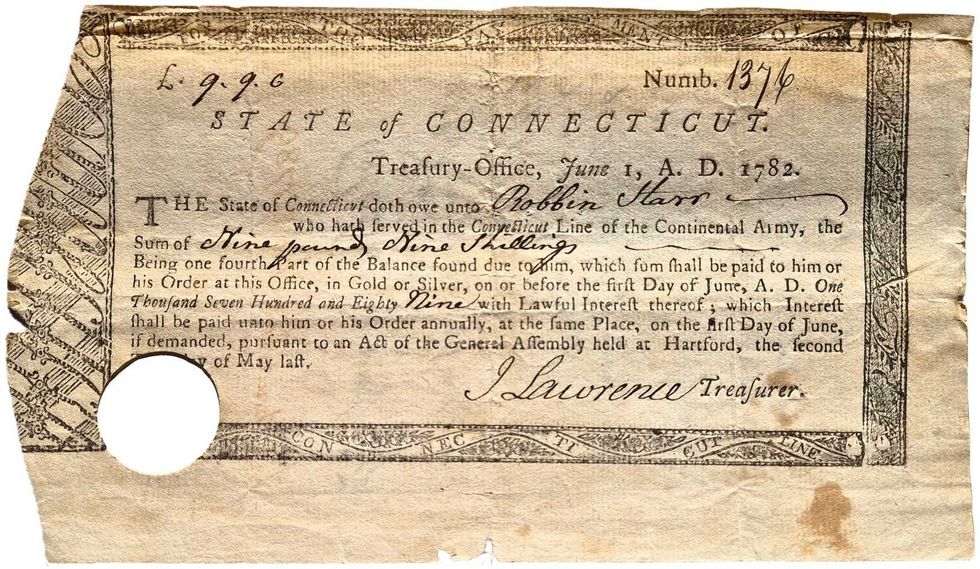
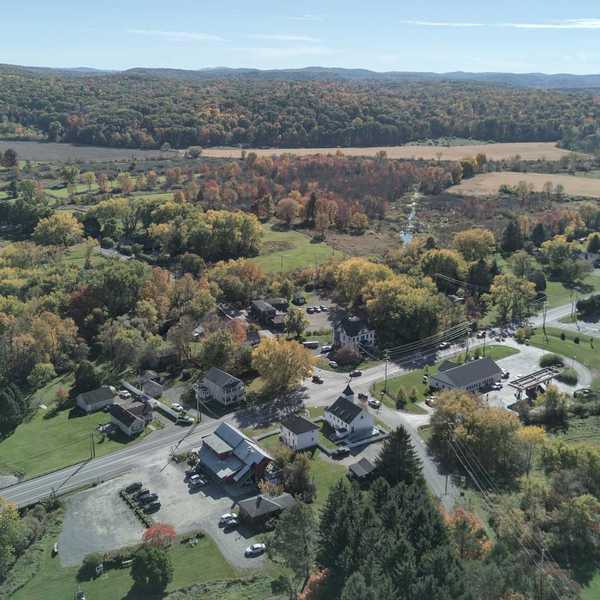
The arrival of the railroad in the Town of North East in 1851 is heralded as the moment Millerton came into being — ushering in a boom period for the area that transformed it from a sparsely populated farming community into a hub of commerce.
That moment was brought about by Sidney Greene Miller and his associate civil engineers in their work as contractors for the New York and Harlem Railroad. After his work, Millerton quickly grew from an insignificant hamlet in North East to the center of the town’s activity within just 25 years.
The railroad’s contribution to the area’s growth, along with Miller’s reported congeniality, as described in a 2001 history of the village produced by the North East Historical Society, led village founders Alexander Trowbridge, Col. John Winchell, Walter Wakeman, Platt Paine and soon-to-be Connecticut Governor Alexander Holley to name Millerton after the civil engineer when it was officially formed in 1875.
But little is known about Miller, beyond the findings uncovered by the North East Historical Society and some investigative work by Sarah Hermans, an amateur historian who grew up in Millerton.
Hermans said public documents on him are sparse, although she found enough to roughly map out his life from records available online.
Miller was born in New York City in 1817, where he was raised by Sylvanus Miller. An obituary for Miller when he died in 1900 said his father, Sylvanus, was a judge, and census records list his profession as “lawyer.”
Miller became a civil engineer, serving as a partner of Morris, Miller and Schuyler when that company was contracted to expand the New York and Harlem railroad north from New York City to Albany. Records show Miller lived in New York City in the early 1850s when the Millerton stop was built, but he didn’t stay in the city long.
Census records indicate Miller left New York State within the decade. He, his wife and three children moved to Westport, Connecticut, in 1854 and then to Virginia in 1856. There, Miller and his wife, Sarah Williamson, had three more children.
Miller and his family were forced out of their home in Alexandria, Virginia, when the United States Army seized the house to use as a hospital during the Civil War.
By 1870, the family had moved to Savannah, Georgia. Documents from Miller’s life are limited, but records indicate that building railroads led him to move frequently. Within just 10 years, Miller and his family, now including a grandson, were recorded as living in Chatham Township in New Jersey in 1880.
Miller did return to New York City at some point before his death in 1900, as shown by death records and an obituary published in The New York Times.
Miller was buried in Green-wood Cemetery in Brooklyn.
Hermans said her research on Miller began by accident while she was researching a friend’s family history. She said she thought Miller would have been a local before she started researching, but soon found out he never even lived in Millerton.
“I was delighted and shocked to find out that he was actually a ‘city person,’” Hermans said.
Nathan Miller
Millerton Fire Co. members monitor a fire at the Brown Cup Diner on Route 22. The diner would later be completely destroyed by the fire.
Millerton’s volunteer fire department has spent more than 130 years protecting the village, a legacy that began after a fire ravaged and destroyed a prominent hotel in 1891.
North East Fire District Commissioner Dave Vandebogart, who serves as the fire company’s historian, is himself a third-generation member of the Millerton Fire Company. He said Millerton’s rapid growth after the arrival of the railroad spurred the need for an organized fire department.
At the time, building codes didn’t exist and materials were much more flammable. Densely populated communities like the newly-formed Millerton could face devastation if a fire broke out and spread through the community.
That fear materialized in January 1891, Vandebogart said, when the Millerton Hotel near the intersection of John Street and Center Street caught fire. Village residents banded together with buckets to try to douse the flames, but the effort wasn’t enough to save the building. The incident highlighted a need for an organized fire company with proper firefighting equipment.
The fire company officially formed in January 1892, after village trustees met at the Millerton National Bank and voted to create a local fire company. Trustees later elected to name the company the E.H. Thompson Hose Company in honor of the bank’s president, who provided the venue for the trustees’ early meetings.

The newly-formed hose company soon purchased a horse-drawn hose cart, complete with a 500-foot hose, wrenches and 28 pails for carrying water. An additional horse-driven cart carried nine ladders.
The fire company’s first official home was a building that still stands at the corner of Dutchess Avenue and Century Boulevard in Millerton, neighboring the building that houses EcoBuilders and Moore & Moore Printing. That building was constructed in 1902 and named the E.H. Thompson Fire House to further honor the Millerton National Bank’s president.
Millerton’s fire department slowly grew, expanding its equipment collection until a new firehouse was necessary and constructed in 1962. That building on Century Boulevard still serves as the company’s main firehouse today and is currently undergoing renovations to its exterior.
Firefighters have had to staff the firehouse 24/7 on multiple occasions during the village’s history — including in 1969 when a massive snowstorm shut down Route 22 for two days and two nights.
People crowded the firehouse for a warm place to stay as the snowstorm stranded travelers and forced some locals out of their homes. Everyone was stuck until large snow blowers arrived from Poughkeepsie to clear Route 22.
But Vandebogart said the fire company faces more profound challenges than just fighting fires. Changing demographics in the area and increased training standards have created challenges for the volunteer organization.
“Everything is modeled for career,” Vandebogart said, highlighting a shift over recent decades toward professional emergency medical services and firefighters nationwide. As that shift has occurred, safety standards and training requirements have risen across the board, placing a larger burden on volunteers.

Another challenge is attracting new members. In 2017, the Millerton Fire Company ran a program known as “Explorers,” which allowed teenagers from 14 and up to participate in volunteer work at the firehouse.
But that program folded due to staffing issues, and the North East Fire District Board of Commissioners has proposed a policy limiting volunteer participation to those no younger than 16 at its regular meeting on Tuesday, April 21.
Vandebogart said the rising cost of living in the region further exacerbates recruitment challenges. As costs increase, younger generations of Millertonians have become less likely to stay in the community to build a life.
“Membership kind of ebbs and flows,” Vandebogart said. “It is hard to keep young people around here.”
Looking toward the future, Vandebogart said the fire company hopes to avoid having to transition to professional firefighting for as long as possible.
“We’re just trying to keep it volunteer,” Vandebogart said.
Nathan Miller
A rendering of the planned pool and poolhouse shows a shallow, ramped entrance allowing access for people with disabilities.
Plans for the long-awaited community pool and poolhouse at Eddie Collins Memorial Park are moving into the construction phase, with village officials aiming to open the facility by summer 2027.
The Village Board of Trustees hopes to hold a ceremonial groundbreaking in July as part of Millerton’s 175th anniversary celebration. With contracts for electrical, plumbing and mechanical work now approved, construction is expected to begin in August.
The project has been in development since March 2024, when the village first unveiled plans to renovate Eddie Collins Memorial Park. Funding accelerated later that year after the village secured a $6.4 million grant through New York’s NY SWIMS capital program to construct a community pool, poolhouse with bathhouse facilities, community room and septic system.
The project received an additional boost in December 2024, when the New York State Office of Parks, Recreation and Historic Preservation awarded the village a matching grant of up to $675,000. In March 2025, the Foundation for Community Health contributed a $23,557 grant to help cover administrative costs associated with the project.
Then in February of this year, the Village revealed final designs for the pool. The structure is intended to withstand heavy seasonal use and support year-round community programming.
The pool design includes several features aimed to appeal to a wide range of ages, including a waterslide, diving board and water-play elements for children.
The proposed layout includes a sloped, shallow entry area with young children and accessibility in mind, a mid-depth section and a deep end designed to accommodate a diving board, officials said.
The plans also include a kitchen area that can support concessions and special events with outside vendors – a revenue stream village officials hope will offset operational costs.
The park’s first swimming pool was installed in 1966 in the rear southwestern corner of the park. Over time, the high water table lifted and cracked the pool. Groundwater infiltration prevented the pool’s water from heating up even on hot summer days.
The renovations to Eddie Collins Memorial Park have been a hit with residents so far. Construction on Phase 1 — regrading of the park, a new entrance and paved parking areas, a soccer field, accessible playground upgrades, new basketball courts and pavilion improvements — was completed in 2022.
Additional reporting provided by Aly Morrissey.

Want more of our stories on Google? Click here to make us a Preferred Source.

Want more of our stories on Google? Click here to make us a Preferred Source.