Like many fanatic fly-fishers, I have lots of books on the subject. I buy them. People give them to me. Some are wonderful. Some are outdated. Some are ridiculous.
I took a look at the primary fish book shelf, shoving fly rod tubes out of the way to do so. And here is what I found after an exhaustive and highly scientific search that took three minutes:
1) “Instinctive Fly Fishing” by Taylor Streit. Streit is a guide in Taos, N.M., and I once fished with someone who fished with him a lot. So he’s practically a close friend. Anyhoo, any fly-rodder at any skill level can learn something (or be reminded of something) useful from this book.
2) “Presentation” by Gary Borger. This coffee table-size book is inexplicably out of print. If you find one, grab it, even unto half your kingdom (or a hundred bucks, whichever comes first). Loaded with tactical tips that seem obvious once you read about it.
3) “The Optimist” by David Coggins. This is brand new and got good reviews from the usual media suspects, who notoriously enjoy the most appalling bilge.
So I was prepared to hate it, and was denied the pleasure.
Coggins goes around and fishes in places I will probably never get to, and describes it in a humble, amusing manner. I dislike fishing with anybody, but I’d fish with this guy.
4) “Casting a Spell” by George Black. This account of the bamboo rod and the author’s attempts to collect a few for himself is very interesting and just the thing for those gray, cold days in mid-February when the sun comes out around 11 a.m., throws in the towel at 2 p.m., and you’ve got permanent glaucoma from looking out your plastic-covered windows.
5) “Trout Madness” by Robert Traver. Every car I’ve ever owned has been called “The Fish Car.” This book is why.
If P.G. Wodehouse wrote about fly-fishing it would come out like this.
6) “Dances with Trout” is our representative selection from John Gierach. It doesn’t matter which one you get. They’re all terrific. I rip him off regularly for my “Tangled Lines” columns for The Lakeville Journal. (If you’re gonna steal, might as well steal from the top shelf.)
7) “Trout Streams of Southern New England” by Tom Fuller. Part of the excellent Backcountry Guide series. Only problem is that some of the info in this 1999 book is out of date in 2021.
8) “Flyfisher’s Guide to Connecticut” by Ron Merly. This is one of another excellent series of guide books, and was published in 2012, which is better than 1999.
9) “Simple Flies” by Morgan Lyle. I don’t tie flies but I know people who do. This collection of recipes for 52 easily tied patterns is laid out in such a way that I can take photos of the relevant pages, send them to a guy, and say, “Like that. Four dozen, please.” I especially recommend the Deer Hair Sedge in sizes 12 and 16.
10) “Fly Fishing for Smallmouth Bass” by Harry Murray. Murray’s Fly Shop in Edinburg, Va., is one of those legendary places everybody should go to once, and Murray himself is the undisputed king of the bronzeback. He also gets kudos for pointing out the obvious: that trout and smallmouth eat a lot of the same stuff, so you don’t need to change your entire approach, nor do you need to buy a lot of new gear. Although if you want to, he’s got it in stock.










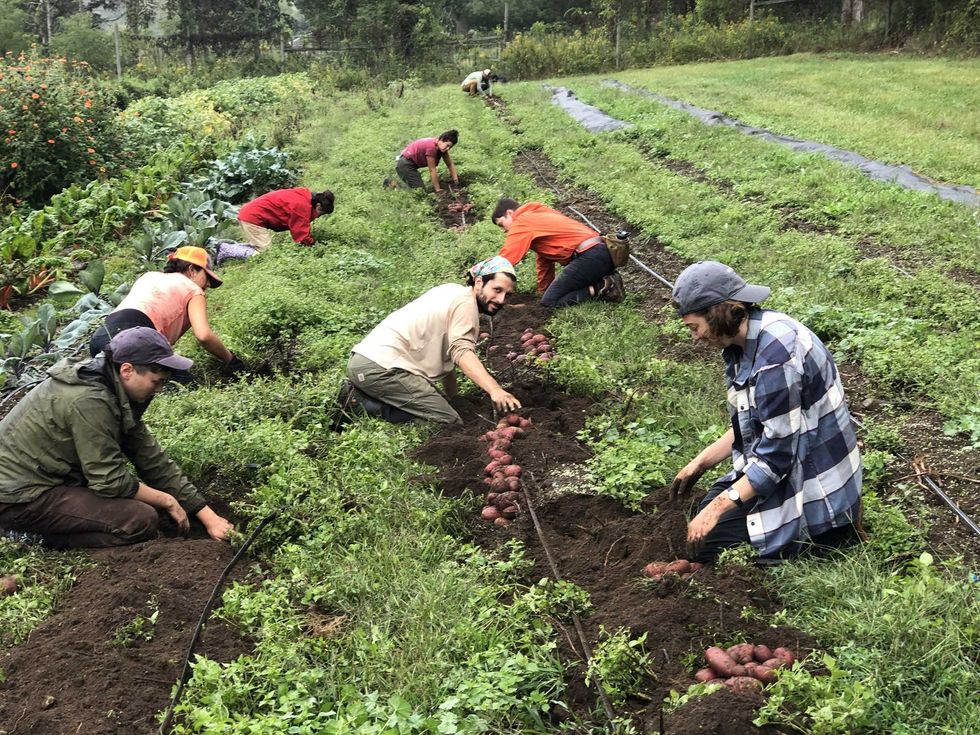 Fall storage crop harvests amid soil building cover crops at Adamah Farm in Falls Village. Janna Siller

 The Found Footage Festival is a “celebration of the videos that time forgot.”Provided by Found Footage Festival