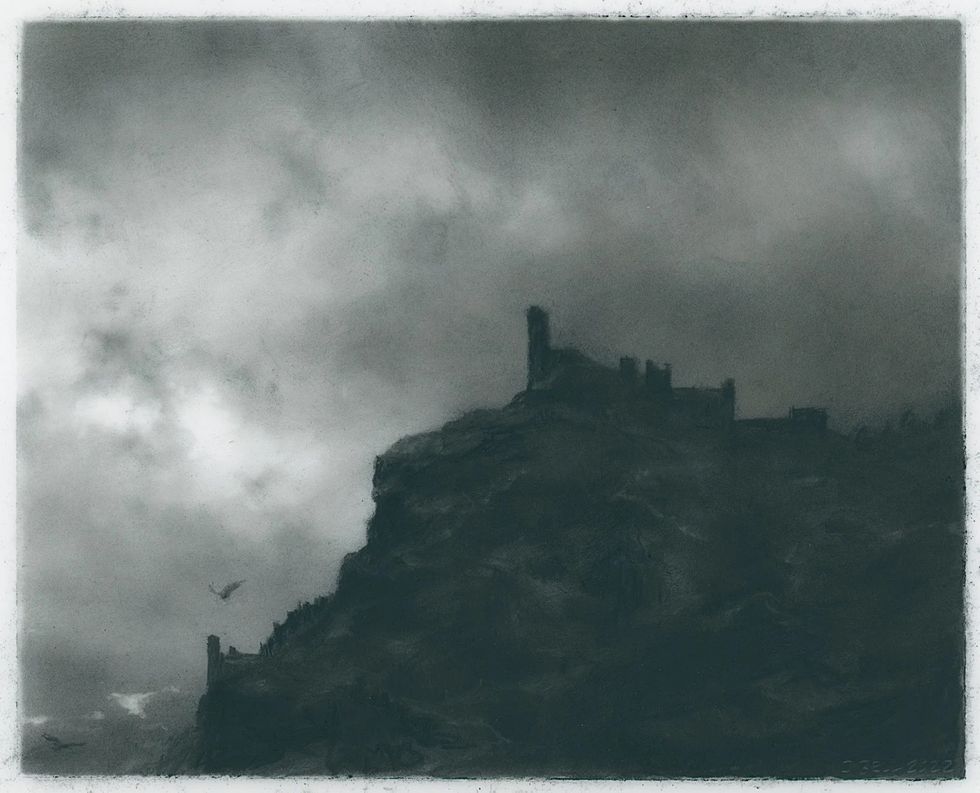
Dozier Bell's exquisite new show of drawings and paintings at Carol Corey Fine Art in Kent, Conn., is a generous group of postcard-size landscapes, seascapes, and interiors from her home in Maine. Each painting gives the sense of looking through the wrong end of binoculars that shrink and compress the view at a psychological distance. These are not pictures of the sun-splashed Maine of Neil Welliver and Fairfield Porter but "Dark Maine," with its long autumns and winters of isolation and introspection that test the resolve of the spirit.
Rather than painting from memory, the subject of Bell's work is memory itself. The result is no small feat, accomplished by obsessive drawing in dense velvet-black charcoal on mylar with phenomenal skill. There is a translucent dreamy light and a "how does she do that" aspect to these works that almost entirely removes the touch of her hand from their creation. The casual observer might say they are photographic, given the size and skillful adjustment of light and dark. However, it is somehow more closely related to the cinematic, especially in her pale skies, sometimes populated by soaring birds — like film stills from early Ingmar Bergman. The psychologically-charged black-and-white landscape of Bergman's "Persona" springs to mind.
The material of the compressed charcoal pigment is at one with the dense atmosphere of the image. It's an internal space that has its lineage in the Northern European tradition — not Munch's slashing, expressive psyche but the dark, silent interiors of Danish painter Vilhelm Hammershoi.





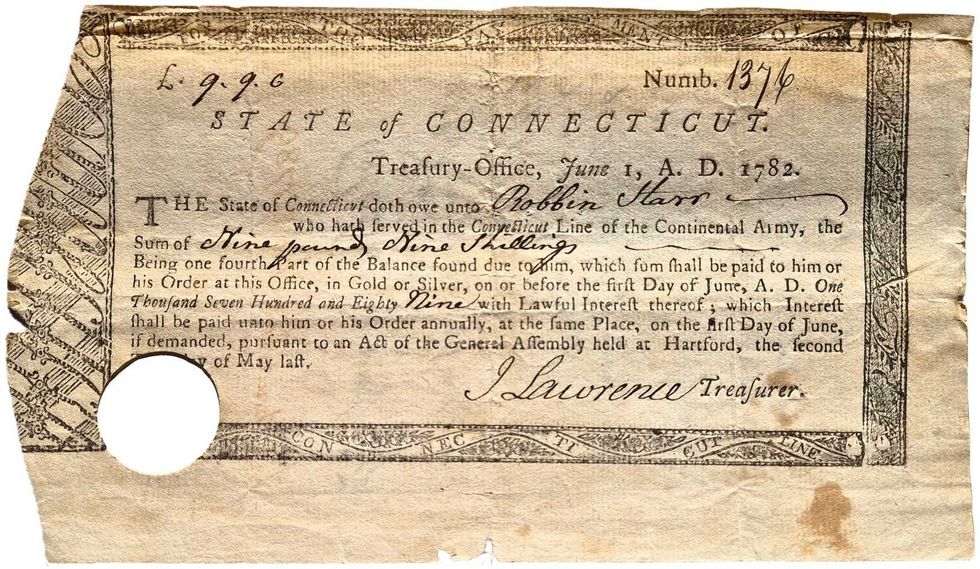 Pay Bill for Robin Starr’s service in the Continental Army.Courtesy the Alex Breanne Corporation
 John Mills speaking at Quinnipiac University.Courtesy the Alex Breanne Corporation
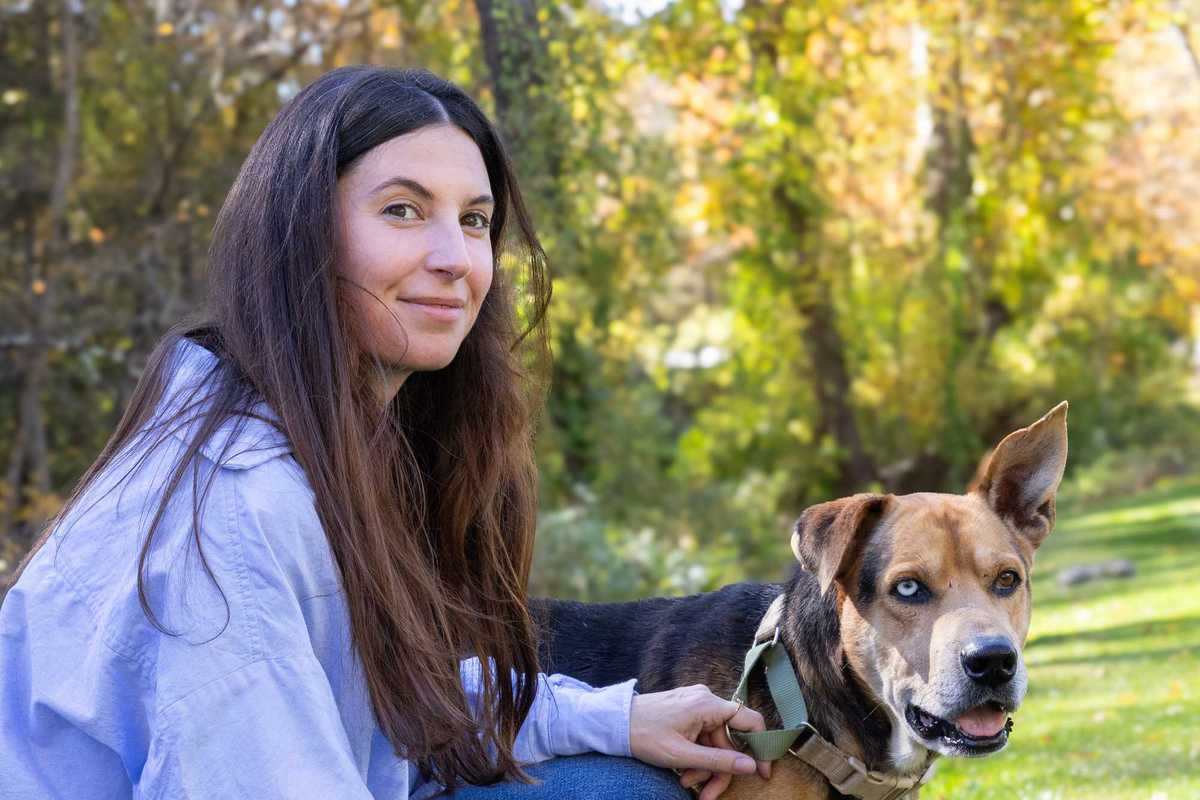
 Stephanie Saetta,with her rescue dog George and Blue (left), a shepherd mix awaiting his forever home.Madi Long