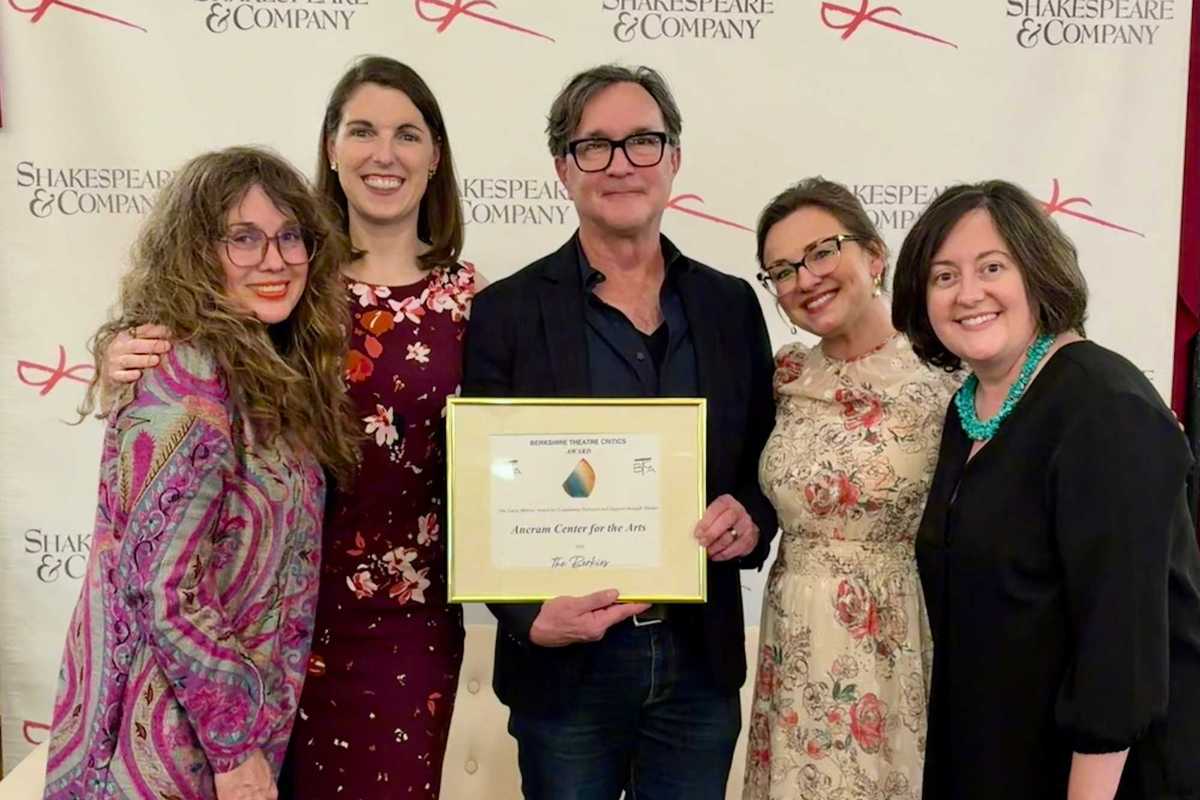
Ancram Center for the Arts will host its second annual Summer Bash on Saturday, Aug. 1, from 6 to 10 p.m. at The Farm at Pond Lily in Elizaville. The fundraiser features a cocktail reception, buffet dinner, a performance by acclaimed musical duo The Bengsons, dessert and an after-party. Emmy Award-winning actor Rena Sofer and Broadway performer Danielle Skraastad will emcee the evening. Proceeds support Ancram Center’s performances, artist residencies and free educational programs. Tickets are limited and available at ancramcenter.org.
Latest News
Under the big top at Full Circus Farm
Robin Roraback
Nov 17, 2026
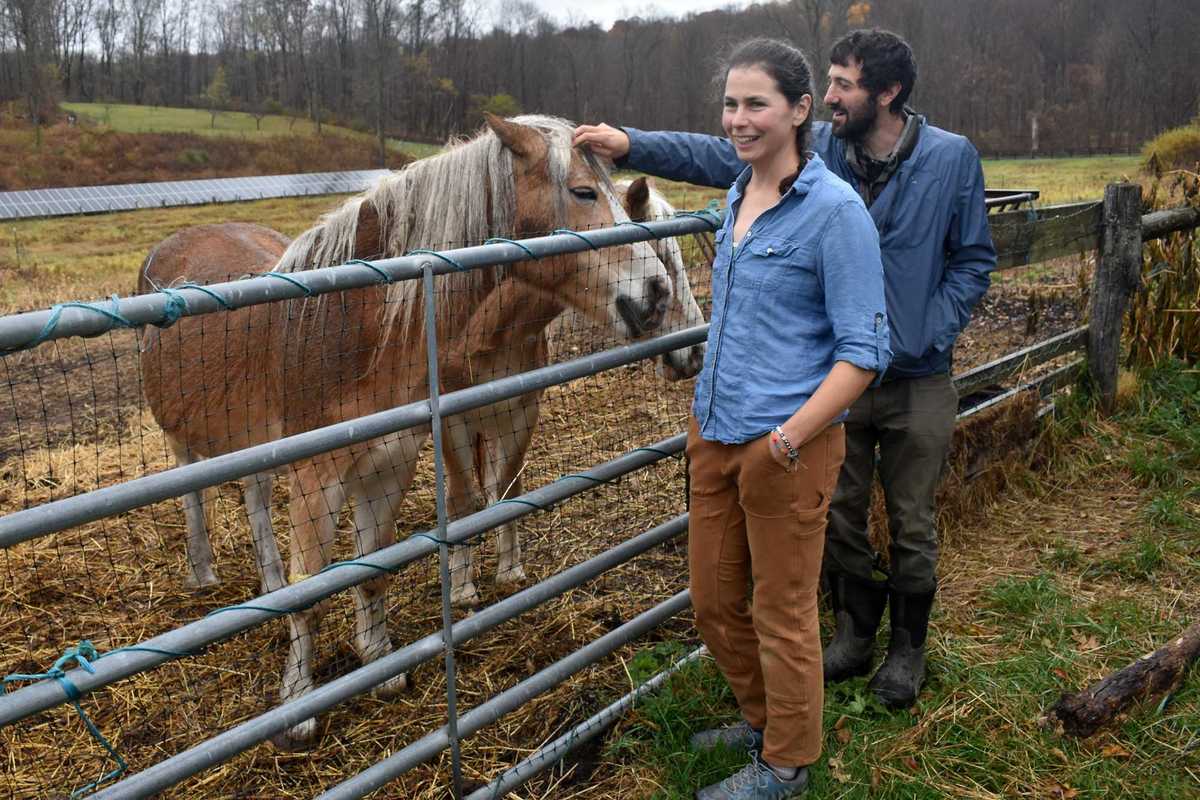
Miriam Goler and Mark Stonehill with their Haflinger horses, Sunshine and Sandy, at Full Circus Farm in Pine Plains.
L. Tomaino
We share this farm with such amazing human and nonhuman neighbors.
— Mark Stonehill
For Mark Stonehill and Miriam Stonehill Goler, the founder of Full Circus Farm in Pine Plains, farming has always been about more than what comes out of the ground.
“From the very beginning, we’ve envisioned the farm as a place not only for food production, but also merriment and community,” they said.
That spirit is reflected in the farm’s logo as well, designed and drawn by Goler, which depicts Stonehill as a juggler standing on the back of a horse and Goler as a jester.
They grew up in New York City and met when they were in high school. Stonehill said, “If you’d asked me in high school, I’d never have said I’d be a farmer.” And yet he and Goler have been farming at Full Circus Farm in Pine Plains since 2014.
Stonehill went to Macalester College for urban geography and environmental studies. Goler went to Cornell University planning to study biological and environmental engineering, but she took classes at the Cornell School of Agriculture and Life Sciences where and realized she could be a farmer. It soon became clear she had a passion for agriculture.
After graduation, they both apprenticed at organic farms: Quail Hill Farm in Amagansett, Long Island, then two along the coast of Maine.
They returned to New York State and searched for land to lease. “When we found this land and met the land owners, we knew it was the right place for us,” said Stonehill.
“Our farm is a primarily horse-powered farm. That means that we use our draft horses to plow, prep our field for planting, and knock out weeds, among other tasks,” explained Stonehill.
They use a tractor for things the horses can’t do, such as lifting 700 pound bales of hay.
Sandy and Sunshine, their Haflinger horses, are “a wonderful team,” said Goler. She explained why they prefer horses. “They are lighter on the soil, they provide fertilizer, and they eat down the grass.” She added, “And I just like horses. A tractor doesn’t talk to me and greet me in the morning.”
Full Circus Farm is certified organic. Stonehill explained, “There are so many reasons we choose to farm this way, but the simplest is that we share this farm with such amazing human and nonhuman neighbors.”

For their first decade of farming, they concentrated on growing vegetables. They were a community-supported agriculture (CSA) farm, growing enough to feed 40 families. The families invested in a share of the farm’s harvest, which gave them organic produce throughout the year.
A flood in 2023 caused Stonehill and Goler to rethink what they grew.
“The flood was a big wake-up call to do things differently and make the farm more adaptable to climate change and flash flooding,” said Stonehill. “We knew if we could make the nursery work, we’d have a chance to build a business that lasts for many years.”
“The heart of our business is pears, apples and figs,” said Stonehill. “We’ve expanded the nursery to include native trees and ornamental and fruiting bushes.” Among the trees and bushes they propagate are raspberry canes, several varieties of figs, currants, elderberry, pawpaw, strawberry, northern red oak, willow, lilac and oakleaf hydrangea.
Stonehill hopes to expand further. “In 10 years’ time, I’d like to see our nursery offering a much wider variety of plants.”
Goler developed an online store where plants from the nursery can be ordered for pickup in the spring and fall. Their nursery products are also available through Hudson Valley Seed Co. “We are now available in all 50 states,” said Stonehill.
Of vegetables, Stonehill said, “Tomatoes and kale make sense for us. Our greenhouse is trellised floor to ceiling with tomatoes in the summer.” They sell kale and tomatoes to Tri Corner F.E.E.D. Market in Millerton and Big Rock Market in Stanfordville.
“We’d love to find other outlets to sell to and get another hoop house to grow more tomatoes,” commented Stonehill.
In Pine Plains, local restaurants are putting the farm’s harvest to creative use: Stissing House makes ice cream with Full Circus Farm’s mint, while Champêtre incorporates fig leaves from the farm’s trees into its own ice cream.
Stonehill and Goler do most of the work themselves, with help from their two young sons, Ezra and Luca, who recently helped dig out young trees.
A special offering at Full Circus Farm is custom grafting. Stonehill explained, “We can graft from an apple tree you loved, your grandparent’s tree, a tree that is on its last legs that you want to preserve. Take a cutting and bring it to us. Miriam will graft it and make another tree.”
In addition, Stonehill offers classes at the farm or at homes on pruning. “I love education and working with people of all ages. It’s fun to teach pruning.” He will go to homes and prune trees from January through March.
Stonehill will also travel to homes to consult on the best spots for their plants and trees to grow.
Full Circus Farm grafts and propagates all its own trees and nursery plants at the farm.
To learn more and browse the online store, visit fullcircusfarm.com

Keep ReadingShow less

Want more of our stories on Google? Click here to make us a Preferred Source.
The Cornwall Whale resurfaces in West Cornwall
D.H. Callahan
Nov 17, 2026
The Cornwall Whale is the brain-child of visual and experiential designer Lindsay Stadig.
Provided
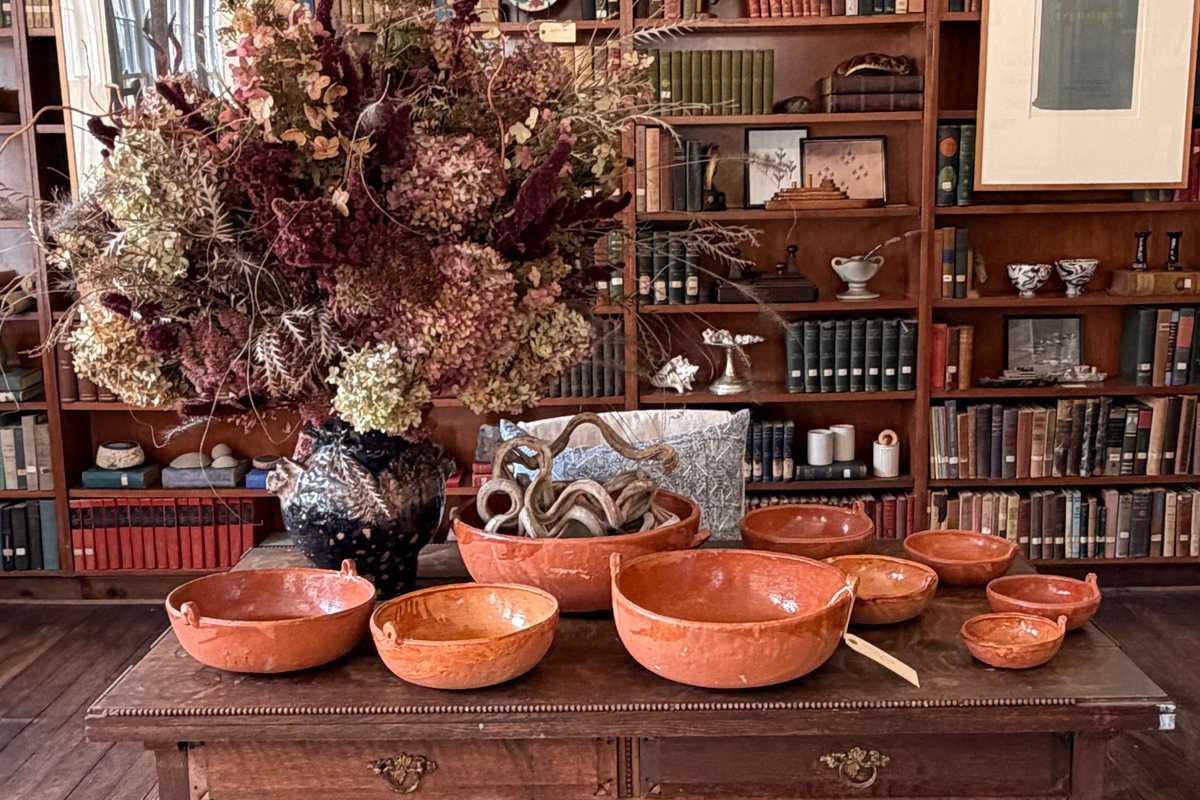
There’s something oddly familiar yet intangibly foreign about the Cornwall Whale. It’s not an interiors store, even though there are chairs and furnishings for sale. It’s not an art gallery, though there are paintings and sculptures occupying every corner of the space. It’s not a boutique, even with locally handmade shoes and carefully selected garments. No, The Cornwall Whale is something truly unique in the world of the truly unique.
The enigmatic shop popped up in the early winter of 2025 at the Hughes Memorial Library, right on the bank of the Housatonic River in West Cornwall. It is the brain-child of visual and experiential designer Lindsay Stadig.
Stadig has a cultivated taste for the beautiful and macabre. Her home in West Cornwall is filled with curious objects that beg you to think deeper about what they are, who they were originally made for and how they’ve ended up in her collection. In one corner of her living room hangs a small assortment of black-and-white paintings, almost silhouettes of landscapes. Upon closer inspection, they reveal themselves to be century-old sandpaper drawings made by young girls in finishing schools. In another corner stands a sizable menagerie of sculptural hands — some antiques, some old advertising displays, glove molds, trinkets and ceramic fine art. All of it, no matter how old it actually is, seems to have been snatched from the clutches of an ancient deity whom Stadig must have charmed or tricked for access to their treasures.
To spend a day with Stadig at a flea market like Brimfield in Massachusetts or the Elephant’s Trunk in New Milford is to get a lesson on finding diamonds in the rough. Items cast to the backs of tents that rarely garner a second glance seem to call to her with unmistakable clarity. For years, she’s developed relationships with an impressive number of vendors and cultivated a collection of curiosities for her role of displaying new and fashionable items in alluringly different ways. Having worked for brands like Barney’s New York, Calvin Klein, Tory Burch and Tuckernuck, designing retail window displays and interior environments, she seems to have found the perfect space between beauty and curiosity. The Cornwall Whale is her invitation to come experience that space.
The name of The Cornwall Whale comes from an old British broadside that Stadig found while visiting Cornwall, England, about a real, live whale that swam upstream in the 1600s, stranding itself in the river. The logo for the store is taken directly from the centuries-old print.
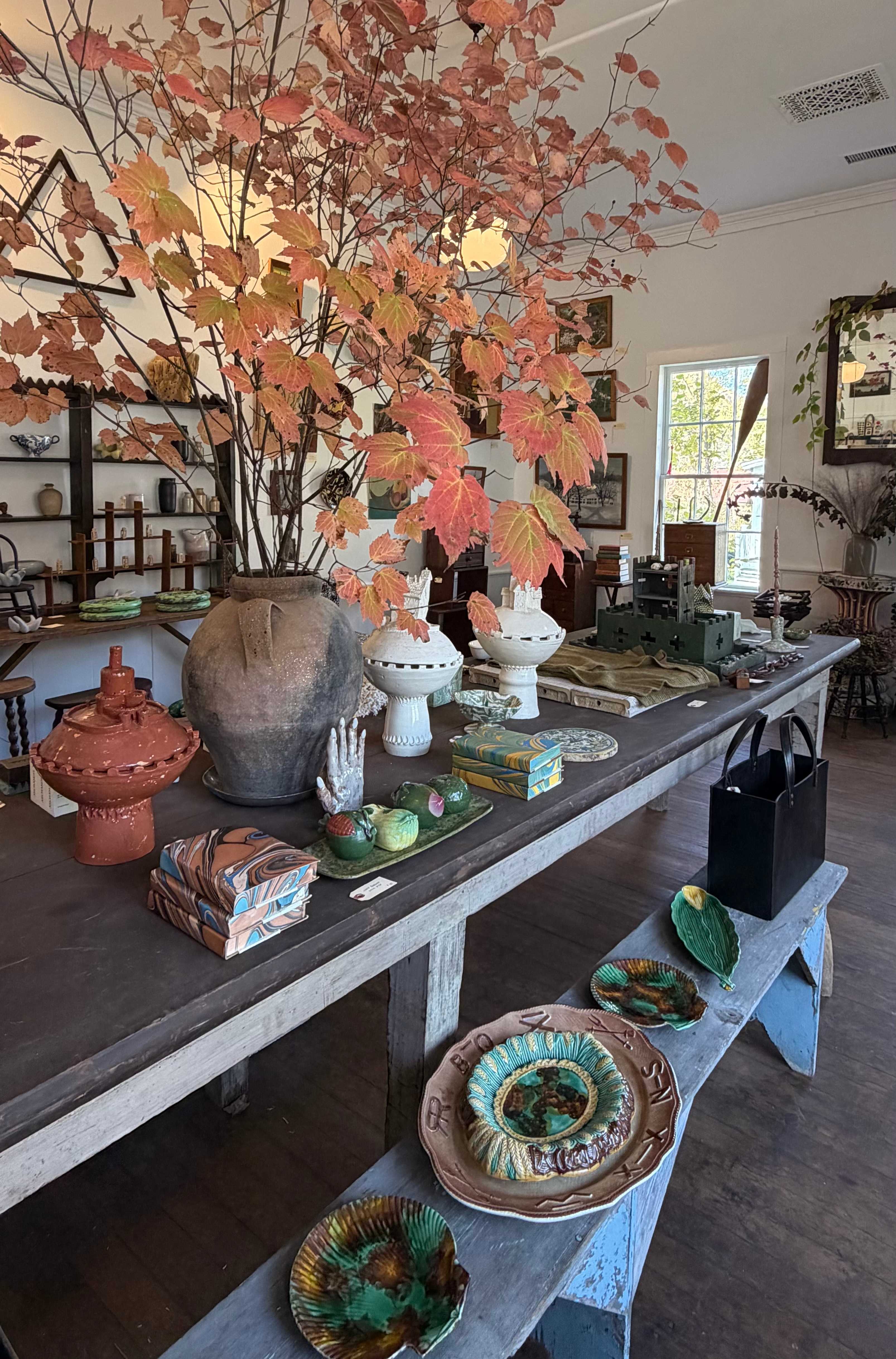
The shop is packed to the ceiling with strange treasures from her years of selective flea market and antique picking, but what really sets the Whale apart is her collaboration with the art world. Before entering the corporate fashion world, Stadig studied art at Pratt Institute in Brooklyn, where she got to experiment in many mediums, from printmaking to welding. Artists are her people, and her people are happy to share their wares.
This year, she’s featuring chaotic ceramics from Barbara Ensor, handmade leather boxes and bags by Will Griffin, sculptures by Kale Prentice, miniature copper-mounted “Lover’s Parts” paintings by Lane Arthur Callahan and even an assortment of scagliola, a form of composite plaster that mimics stone and marble in nearly psychedelic executions by Amy Mellen. There are handmade leather crossbody bags by Lauren Brinkers, pillows and dried florals from local design maven John Haven, cards from calligrapher Melissa Gamwell and a collection of folk art from art critic couple Jerry Saltz and Roberta Smith.
You’d think the items she’s collected would be for the particularly weird or eccentric, but they all speak to a surprisingly universal clientele. Latent leafers and longtime locals alike seem to be inexplicably magnetized to items they never even knew existed. It’s true that you might see some of the same styles of vintage paintings in any antique mall or thrift store, but when you see it on the wall of the Whale, it speaks to you in a different voice.
In addition to the objects in the store, the Whale will be offering a series of workshops over the course of the season. The first of the workshops will be led by artisan bag maker Dana Simpson on Sunday, Nov. 22. Simpson will teach participants the maritime art of ropework, guiding them to make their own dog leashes, purse charms and wreaths out of rope.
There will also be a paper marbling class on Dec. 6 and drop-in figure drawing nights.
Much like its namesake, the Whale only surfaces sporadically to inhale and exhale creative objects to and from the community. Stadig opens the shop on Saturdays and Sundays from noon to 6 p.m.,, though there are chances to catch her on the occasional Friday.
To learn more about the Cornwall Whale, follow @future.hermit on Instagram.
Keep ReadingShow less
Where Calvin, Hobbes and Rockwell meet
D.H. Callahan
Nov 17, 2026
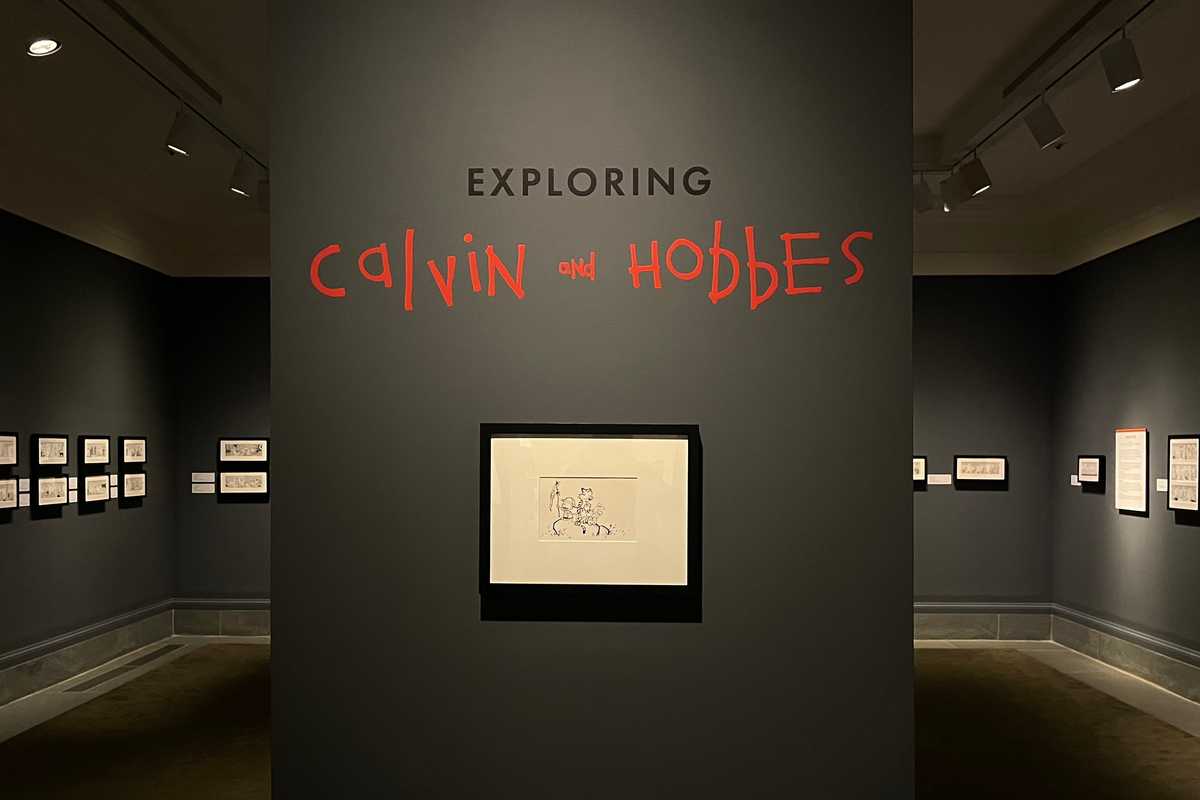
Original “Calvin and Hobbes” comic strips by Bill Watterson are on view alongside works by Norman Rockwell in “Exploring Calvin and Hobbes” at the Norman Rockwell Museum. Stockbridge. The exhibition runs through May 31, 2027.
D.H. Callahan
Two distinctive approaches to American life and storytelling come together in a new exhibition at the Norman Rockwell Museum in Stockbridge, Massachusetts. Opening Saturday, Nov. 14, the exhibition brings the imaginative world of Bill Watterson’s “Calvin and Hobbes” into conversation with the familiar scenes of everyday life captured by Norman Rockwell. Though separated by generations and working in different mediums, both artists found humor, humanity and complexity in the seemingly ordinary.
Norman Rockwell skyrocketed to popularity when he started painting the covers for the Saturday Evening Post, a magazine with a history spanning more than two centuries.Its last print edition ran this past September, transitioning the publication to an online-only format. From 1897 until 1963, it published a new issue every week. Over that time, it published writings by literary legends like F. Scott Fitzgerald, Kurt Vonnegut, Agatha Christie, William Faulkner, Edgar Allan Poe, Louis L’Amour, John Steinbeck and Lenox, Massachusetts resident Edith Wharton, and featured comics by “Peanuts” creator Charles M. Schultz. In 1916, the magazine first featured one of Rockwell’s illustrations. He was just 22 years old.
Through his work illustrating covers for the Post, as well as a prolific, nearly omnipresent advertising illustrations, Rockwell found his way into virtually every home in America. Known for his idealization of American life, Rockwell used the quaint life of rural New England as the center of the world he depicted and made his later-years home of Stockbridge famous as a beacon of idealized, wholesome living.
It wasn’t until later in his career, during his third marriage, that Rockwell began tackling larger social issues, famously releasing “The Problem We All Live With,” which depicted a young black girl being escorted to school by federal marshals. The painting, based on the story of Ruby Bridges, originally appeared in Look magazine in 1964 and is part of the collection of the Norman Rockwell Museum in Stockbridge.
For the next six months, many of Rockwell's paintings will be joined by original “Calvin and Hobbes” comic strips by Bill Watterson. “Calvin and Hobbes” dealt with another kind of idealized American lifestyle — that of a mischievous youth. Though Rockwell would hint at the naughty notions of children, Watterson explored them to the fullest.
The comic strip focuses on an imaginative 6-year-old boy named Calvin and his best friend, Hobbes. To everyone else in the strip’s world, Hobbes was an inanimate stuffed tiger, but to Calvin, an only child, he was a very sentient accomplice, friend, confidant and voice of reason. Together, the friends battled monsters and aliens through Calvin’s imagination, dealt with the dregs of boredom in the middle of rural winters and even grappled with philosophy, existentialism, climate change, consumerism, political theater, and even, improbably, artificial intelligence.
Watterson and Rockwell have more in common than just their success. Though both artists were known for their unmistakable styles, neither was recognized as a fine artist, often relegated to the periphery as simply illustrators. Watterson confronted this notion in his work. Rockwell accepted and even stated confidently that he was an illustrator, rather than a “fine-art man.” Both used their art to tell vivid stories that rewarded the curious observer for looking a little closer. Both created art intended for broad publication rather than primarily for sale as individual works.
Where they differ most dramatically is in their relationships with celebrity and the intersection of art and commerce. Rockwell became a rock star artist, even before rock stars existed. He relished in the nation’s fixation on his disarming demeanor, which seemed ripped right out of one of his illustrations. Watterson, on the other hand, eschewed the spotlight at all costs.
Rockwell was known to be a client pleaser, accommodating publications and advertisers with little, if any, pushback. With him, corporations knew what they were getting, and he was happy to provide it. But when The Saturday Evening Post told him to only paint white people, push back he did. Rockwell was able to get his “Golden Rule” painting published, but eventually left the Post to go to Look magazine where he had more creative freedom.
Watterson, on the other hand, was disgusted by the rampant commercialization of beloved cartoon and comic characters for the profits of corporate America. His was a pure art, not intended to be meddled with by stakeholders or turned into commodities to help sell unrelated products.
“Calvin and Hobbes,” Watterson once said, “was designed to be a comic strip and that’s all I want it to be.”
At the height of “Calvin and Hobbes’s” success, Watterson was under immense pressure to further monetize his art. Instead of acquiescing, he ended the run of the comic with a poignant final edition, leaving us to believe the pair continued their exploring indefinitely.
In addition to Watterson’s strips, the exhibition will feature works by some of his inspirations, including George Herriman, creator of “Krazy Kat,” and the father of the “Peanuts,” Charles M. Schulz, once known for his contributions to the Saturday Evening Post. On loan from the Billy Ireland Cartoon Library & Museum at Ohio State, the works mark the first touring exhibition of Watterson’s original drawings. A rare exhibition poster and catalog, featuring an interview with the reclusive artist, are available for purchase, with proceeds benefiting the museums.
“Exploring Calvin and Hobbes” runs through May 31, 2027. For more information, visit nrm.org.
Keep ReadingShow less
Chim Chim Cher-ee! A local sweep makes movie magic
D.H. Callahan
Nov 17, 2026
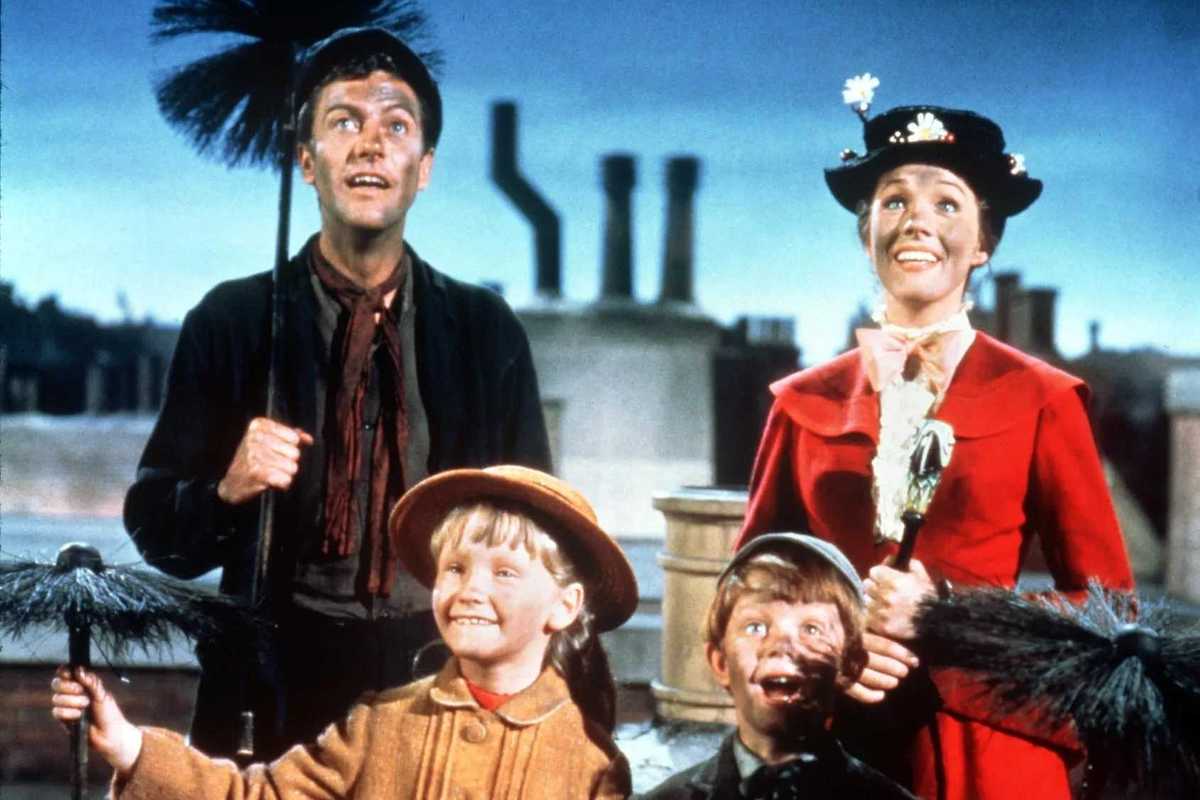
Dick Van Dyke, Julie Andrews and the Banks children in Disney’s 1964 classic, “Mary Poppins.”
There are few films in the history of Hollywood that have endeared themselves to kids of all ages like “Mary Poppins.” On Sunday, Nov. 22 at 2 p.m., the classic story of a magical nanny, a couple precocious children, some cartoon penguins and a chimney sweep will screen at the Colonial Theatre in North Canaan. For the third year in a row, the event will be free of charge, thanks to Salisbury-based chimney sweep Rob Keller of Sultans of Soot.
Keller has been cleaning, relining and tending to area chimneys for over 30 years while raising a family in the community. He credits the Colonial for making its theater available for sponsored events like this one. Of course, Keller doesn’t need to drum up any more business this time of year. His motivation for the sponsorship is simply to give back to the community and create opportunities for togetherness. Seeing the joy and excitement of the kids and families who are making this a yearly tradition is more than enough for him.
This year, the evening will open with a select song or two from the film’s stage adaptation, performed by the Falls Village Children’s Theater. Keller was also a sponsor of the theater’s production of “Mary Poppins” this past summer after being asked if he had any spare brooms they could borrow. There’s not a lot of representation of chimney sweeps in popular culture, so this sponsorship seems like a match made in Magic Kingdom heaven.
Walt Disney first fell for “Mary Poppins” through the books by British-Australian writer P.L. Travers in the 1930s after reading them to his daughters. Travers had a notoriously bristly personality and brazenly rejected multiple offers from Disney to bring her character to life on the silver screen. In the early 1960s, she finally struck a deal that included script approval and a level of creative oversight, something Disney had held out on for over 20 years. The conflict was made into a successful movie itself. “Saving Mr. Banks” starred Tom Hanks as Walt Disney and Emma Thompson as Travers. The duo was supported by an impressively star-studded cast.
“Mary Poppins” was an instant smash hit upon its release in 1964. Julie Andrews won the lead as the titular Mary Poppins over a series of A-List stars, including Angela Lansbury, Bette Davis, Judy Garland, Elizabeth Taylor and Jayne Mansfield. She was discovered by Disney himself, who saw her originate the role of Eliza Doolittle in “My Fair Lady” on Broadway.
Moviegoers fell in love with her pitch-perfect voice and intangible charisma as Poppins, her first role on the big screen.
Disney also personally cast Dick Van Dyke as Bert, the jack-of-all-trades and ever-jolly chimney sweep. Despite delivering a famously terrible Cockney accent, audiences loved him and his exuberant dances with animated penguins and fellow chimney sweeps.
The real star of the production were the songs. Brothers Richard M. Sherman and Robert B. Sherman were also brought in personally by Walt Disney and started writing the songs before there was even a script. “Supercalifragilisticexpialidocious,” “A Spoonful of Sugar,” “Feed the Birds” and “Let’s Go Fly a Kite” have all stood the test of time as true musical classics, alongside the chimney sweep anthem, “Chim Chim Cher-ee.”
Keller says that surprisingly little has changed in the world of chimney sweeping since the Edwardian days depicted in the film. Modern chimney sweeps wear respirators and protect their hands, eyes, ears and heads. Thanks to the modern convenience of vacuum technology, they’re not up on roofs nearly as much as sweeps of olden times. Regrettably, that’s led to very few opportunities for spontaneous jaunty dances with his colleagues.
To get your tickets to the screening, visit canaancolonial.com.
To learn more about the Sultans of Soot, visit sultansofsoot.com.
Keep ReadingShow less

Want more of our stories on Google? Click here to make us a Preferred Source.
loading