In the shadows of the historic Cornwall Bridge, something tasty is brewing. It’s the morning pot that roaster John Zeiser is preparing for his wife, Jane Carlen. They’re the owners of Cornwall Bridge Coffee.
Upon first hearing the name, the covered bridge in West Cornwall might spring to mind, but that’s not actually the Cornwall Bridge. Hundreds of people drive over the Cornwall Bridge on Route 7 every day, but few know what lies beneath it. The top of the bridge is so featureless that casual drivers could miss the fact that they’re even driving on a bridge at all. But from the river, there’s a whole other scene. The underside of the bridge is quite remarkable, leading to its addition to the National Register of Historic Places in 2004
It was built in 1930 by C.W. Blakeslee and Sons, a construction company so prolific that it is credited with helping shape the landscape of the Northeast. The bridge, also known as Bridge No. 560, consists of six open-spandrel concrete arches which reach over 670 feet. For something so utilitarian, made mostly of concrete, it’s actually quite pretty when you take the time to appreciate it.
It works as a wonderful mascot for Cornwall Bridge Coffee.
Zeiser learned to roast coffee beans when living in Los Angeles, while Carlen worked toward her Ph.D. in statistics from UCLA. He was getting serious about the process but put his budding infatuation on hold while he and his wife moved to Litchfield County, where he grew up, in 2020. The house they moved into in Cornwall Bridge had a garage that was zoned for commercial use, but with a baby on the way, they weren’t in a rush to set anything up. Once they’d settled into parenthood, though, they decided to put their passions to work.
Zeiser loved his days roasting coffee. The couple had bonded over their love of a quality cup when they met on the West Coast. They also wanted to find more ways to contribute to their new community in Cornwall. Zeiser is on the board of the Cornwall Chronicle, and Carlen is on the board of the Cornwall Child Center. Having seen how community can grow around food, the couple purchased a Diedrich IR-3 coffee roasting machine. It didn’t take long to see that Zeiser’s skills hadn’t faded.
Roasting coffee is one thing. Building a business is quite another, and the two academics had very little experience in growing a brand. To help give them an identity, they tapped into their home and their values. The couple truly appreciates the underappreciated. When deciding how to present their brand, they wanted that to shine through. And there were few better examples than the often-overlooked Cornwall Bridge.
The Bridge isn’t fancy, but it sure gets the job done. The same can be said for Cornwall Bridge Coffee. The roastery is operated out of the couple’s home in a space that is part personal art gallery, part bean storage and part roasting facility. All their packaging is compostable. Their logo is a simple design featuring the bridge’s underside, which was made for the company by artist and friend Candacee White. The beans are sourced from farms that focus on sustainable practices. Other than the beans themselves, everything else is local. Half of their deliveries are made on foot, as the roastery is close enough to the Cornwall Market, their largest vendor, to drop off their orders by hand. Additional vendors, including the Local in West Cornwall, are all within driving distance, and deliveries can be combined with trips to drop off the kids at school to reduce the company’s carbon footprint. They even roast to order, further reducing waste from beans that haven’t flown off the shelf.
This local focus isn’t just due to a small, growing brand’s potential reach. It’s built into the company’s DNA. Zeiser is heavily influenced by the “artistic/literary ideas of regionalism.” Their blends, River Road and Red Vienna, are both local references. Even their nascent beginnings were hyperlocal, first selling their beans at the Cornwall Village Farmers Market.
For a company so focused on their immediate surroundings, it sure can take you on a journey. Its beans, which can’t actually be grown in Northwestern Connecticut’s climate, are imported from Papua New Guinea, Brazil, Rwanda, Colombia and Ethiopia, and every cup can work as a little escape. A peaceful moment to enjoy your morning and appreciate the little things in life. Especially for new parents.
To learn more and browse their offerings, head to cornwallbridgecoffee.com.

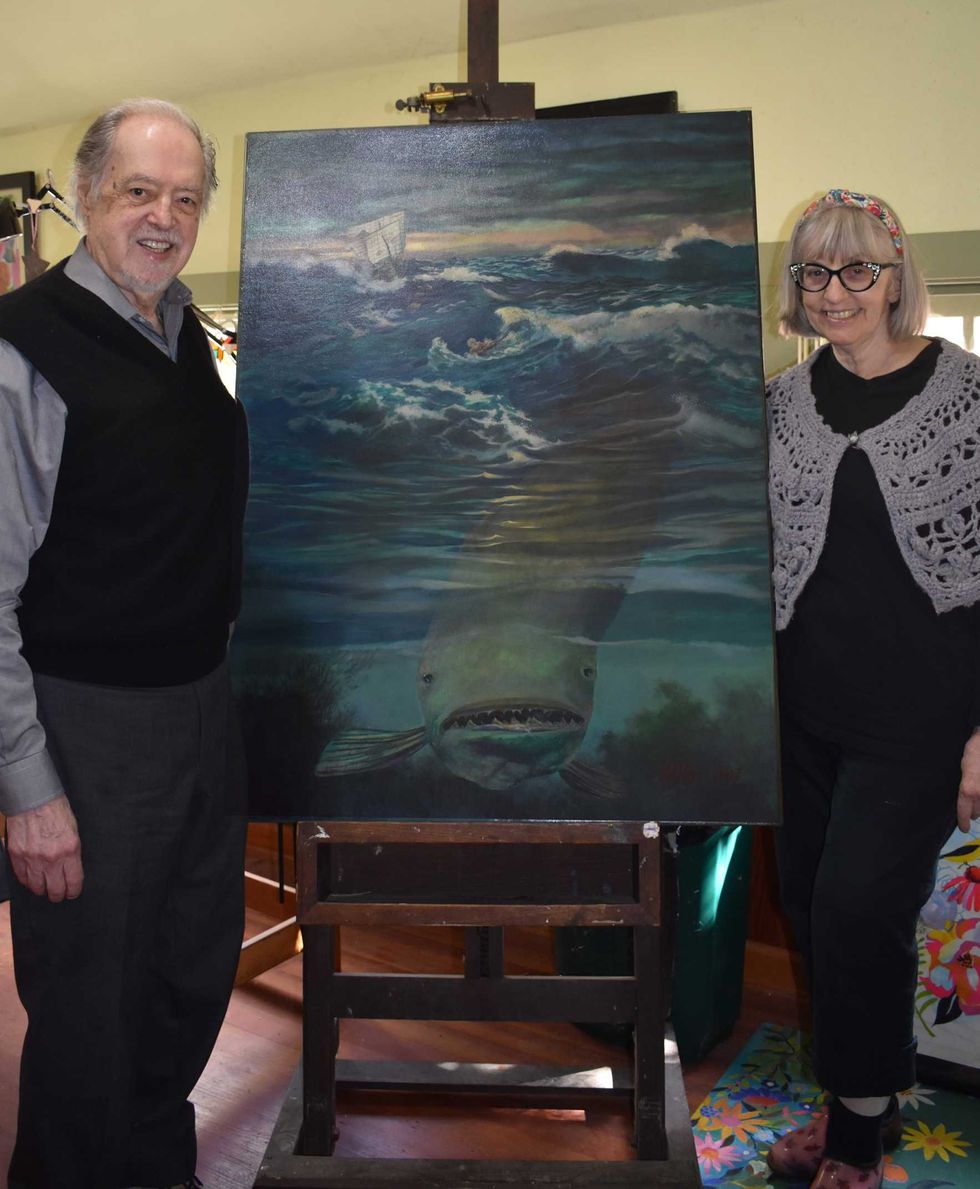 Justine and Victor Valla in their studio with a painting of Victor’s,”Jonah and the Whale.” Robin Roraback