Fast fashion has made it possible to buy the latest trend almost as quickly as it appears on social media. The environmental cost, however, is anything but fleeting. Fashion production accounts for about 10% of global carbon emissions, consumes enormous quantities of water and energy, and an estimated 85% of textiles end up in landfills each year. Synthetic fabrics also shed microplastics when washed.
So what would happen if we slowed things down?
That’s the question behind Hudson Valley Sustainable Fashion Week[end], a two-day celebration of sustainable style, local makers and the possibilities of keeping clothing in circulation. The weekend lands at Stone Ridge Orchard, a 200-year-old working farm, on Sept. 25 and 26, pairing an evening fashion show with a new all-ages Slow Fashion Fair.
“To me, slow fashion means intentional fashion. Careful, thoughtful, human,” said Joanne Louis-Paul, the event’s communications director. “Slow fashion is the speed at which one person can sew an intricately detailed dress. It’s taking the time to go to a thrift store or clothing swap and sifting through an unknown bounty of possibilities. It’s extending the life of a piece of clothing for as long as possible.”
In everyday terms, she said, “It’s stopping to think before purchasing anything or giving anything away.”
Friday’s fourth annual Organic Runway brings Hudson Valley designers to the farm for a sunset showcase of garments made from repurposed textiles and produced locally. Designers include Clare Bare, ennui, Kacy Coyle, KNUD, la vie après l’amour, Last Night on Earth, So Vicki and Touch Threads. The evening runs from 4 to 8 p.m., giving attendees time to pick apples and sip local cider before settling in for the runway.
“We’re all about the whimsy here at HVSFW,” Louis-Paul said. “The runway is so incredibly dreamy. Being outside makes for an unpredictable, one-of-a-kind backdrop every year, and there’s just nothing like that sunset glow.”
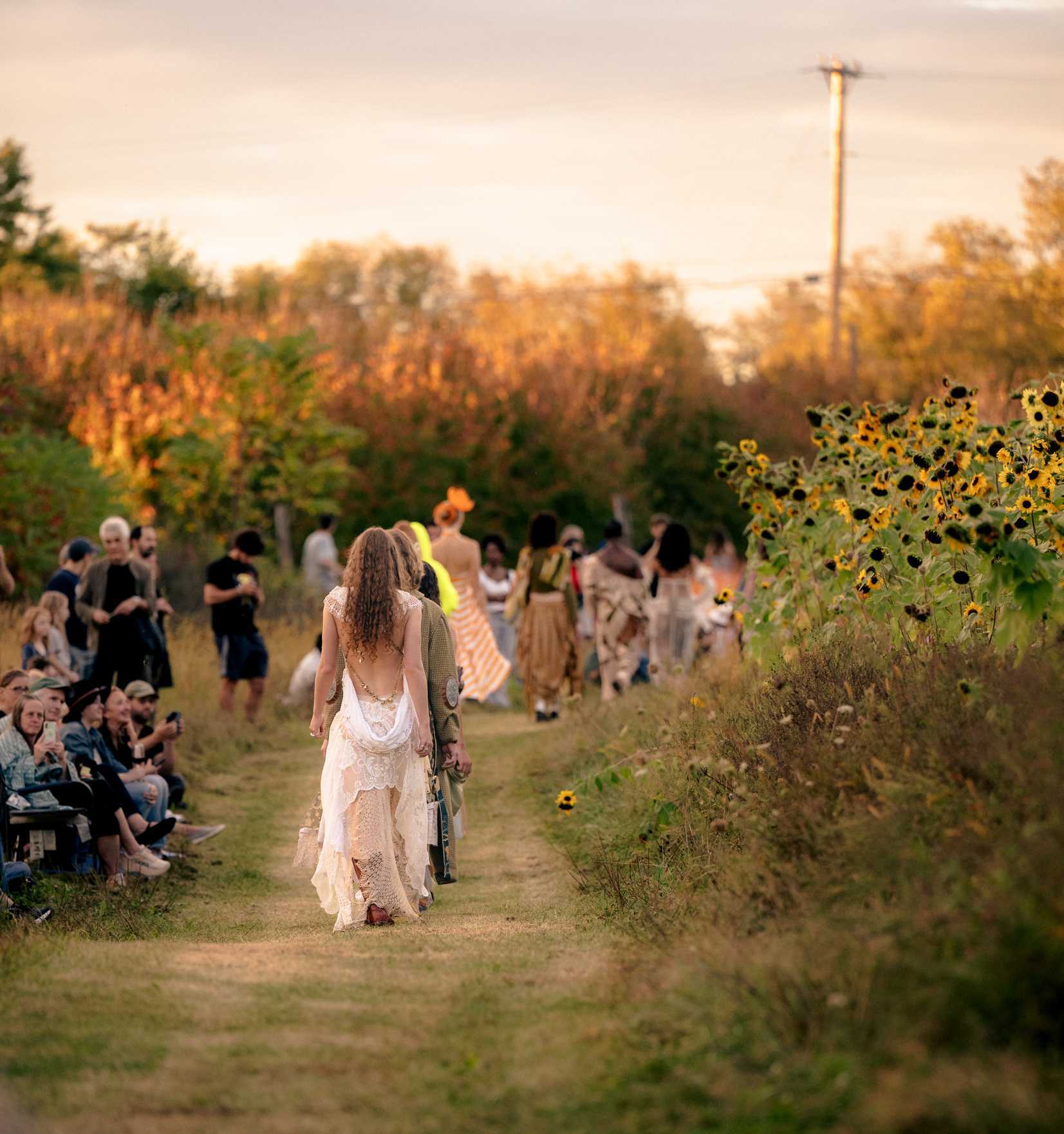 Models walk the organic runway at HVSFW. Ilan Harel
The unlikely pairing of fashion and farming is also part of the point.
“Once you’re sitting amongst the apple trees, you realize how much sense it makes to mend the relationship between fashion and nature,” she said.
Saturday introduces the inaugural Slow Fashion Fair, from 11 a.m. to 5 p.m., with workshops, mending, fiber art, vendors, music, eco-friendly kids’ crafts and a clothing swap. There will even be sheep.
“We wanted to have a fair so we could invite more people in the eco-friendly ecosystem into the fold,” Louis-Paul said. “We get to highlight not only designers, but makers and artisans of all kinds.”
The organizers hope the fair appeals not only to people already thinking about climate and sustainability but also to those encountering the ideas for the first time. With mending, a clothing swap and hands-on workshops, the emphasis is on showing visitors things they can actually do.
“There are so many things anyone can start doing today,” Louis-Paul said. “From something as simple as sewing a patch onto a stain or tear to hosting a mini clothing swap at your house with friends and family, there are tons of ways to engage with your wardrobe more thoughtfully.”
She speaks from experience. Before becoming involved with the event, she said, secondhand shopping held little appeal.
“As someone who never liked the idea of thrifting, I am now completely sold on circular fashion,” she said. “I recently sewed a broken strap on a dress I got at a clothing swap, and I felt so accomplished! Being in this world has shown me that conscious consumption is attainable and fun.”
But behind the fun is a serious concern about what happens to clothing once consumers decide they no longer want it.
“Just because you throw it away doesn’t mean it goes away,” she said, pointing to discarded clothing accumulating in other parts of the world and the microplastics shed by synthetic fabrics. “The planet and people are suffering because of this throwaway culture we’ve adopted. If an outfit is new but super cheap, believe there’s a high cost to someone else.”
For more information and tickets, visit hvsfw.org





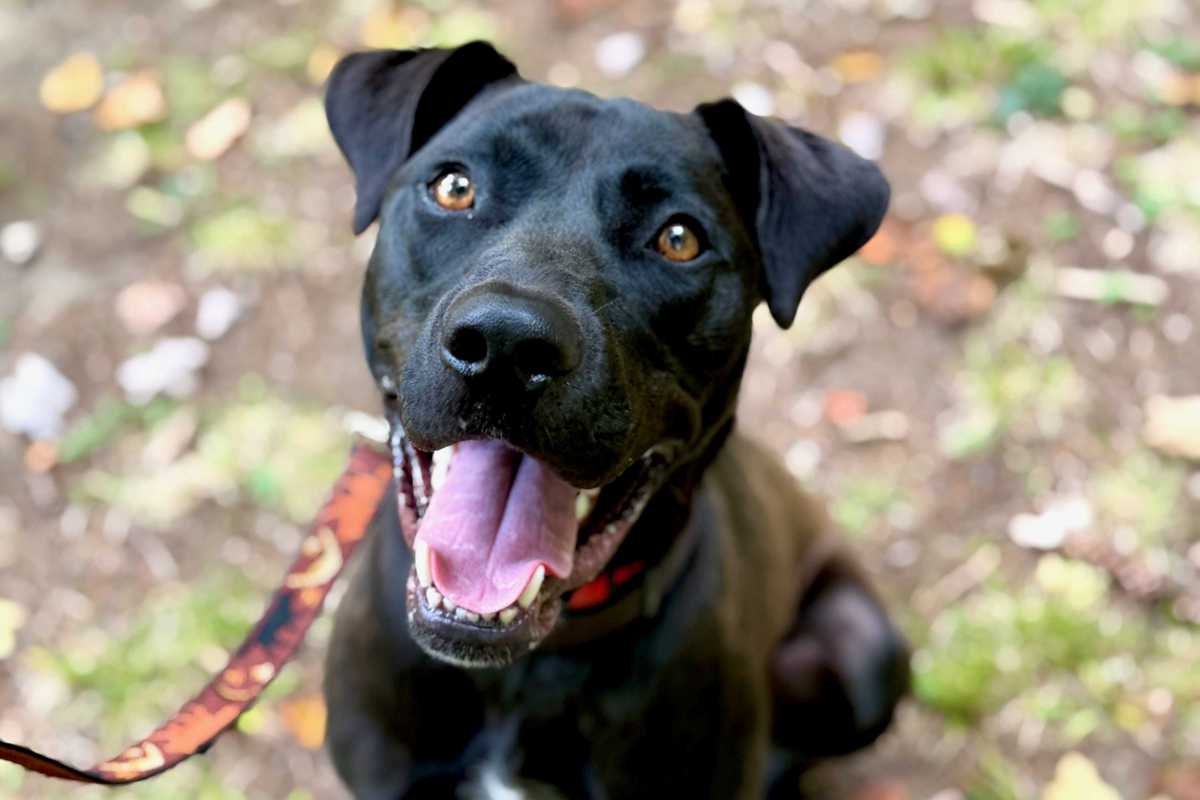
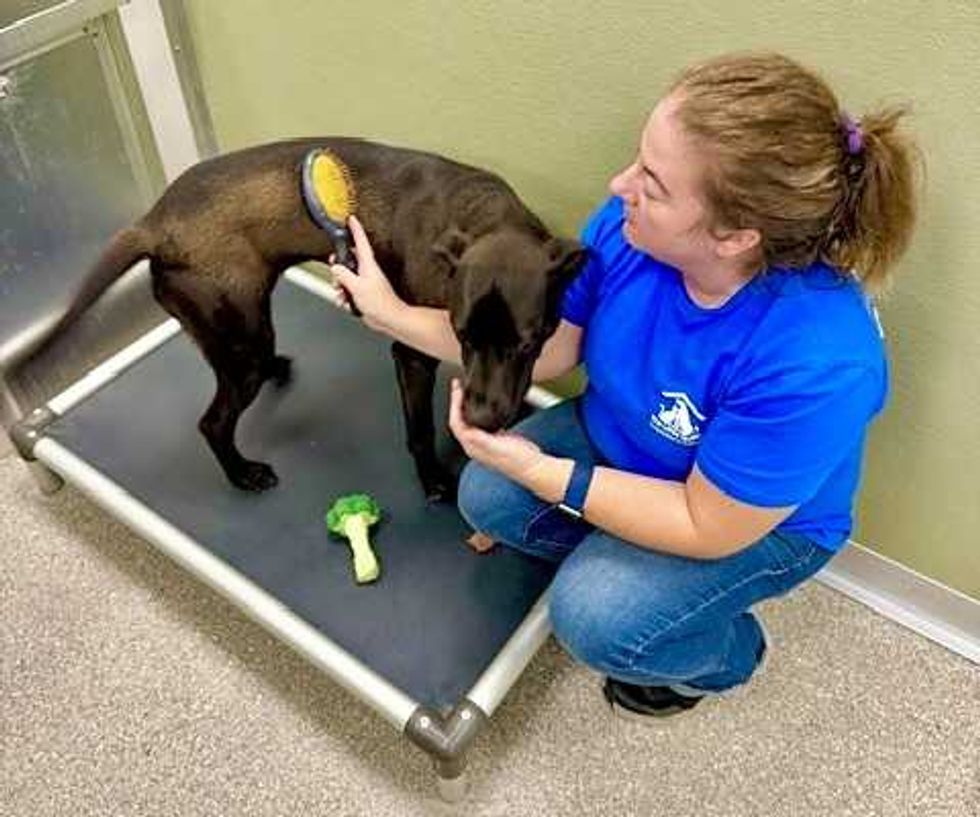 Tiffany Lemelin, shelter manager, brushing Marsala upon arrival.Provided
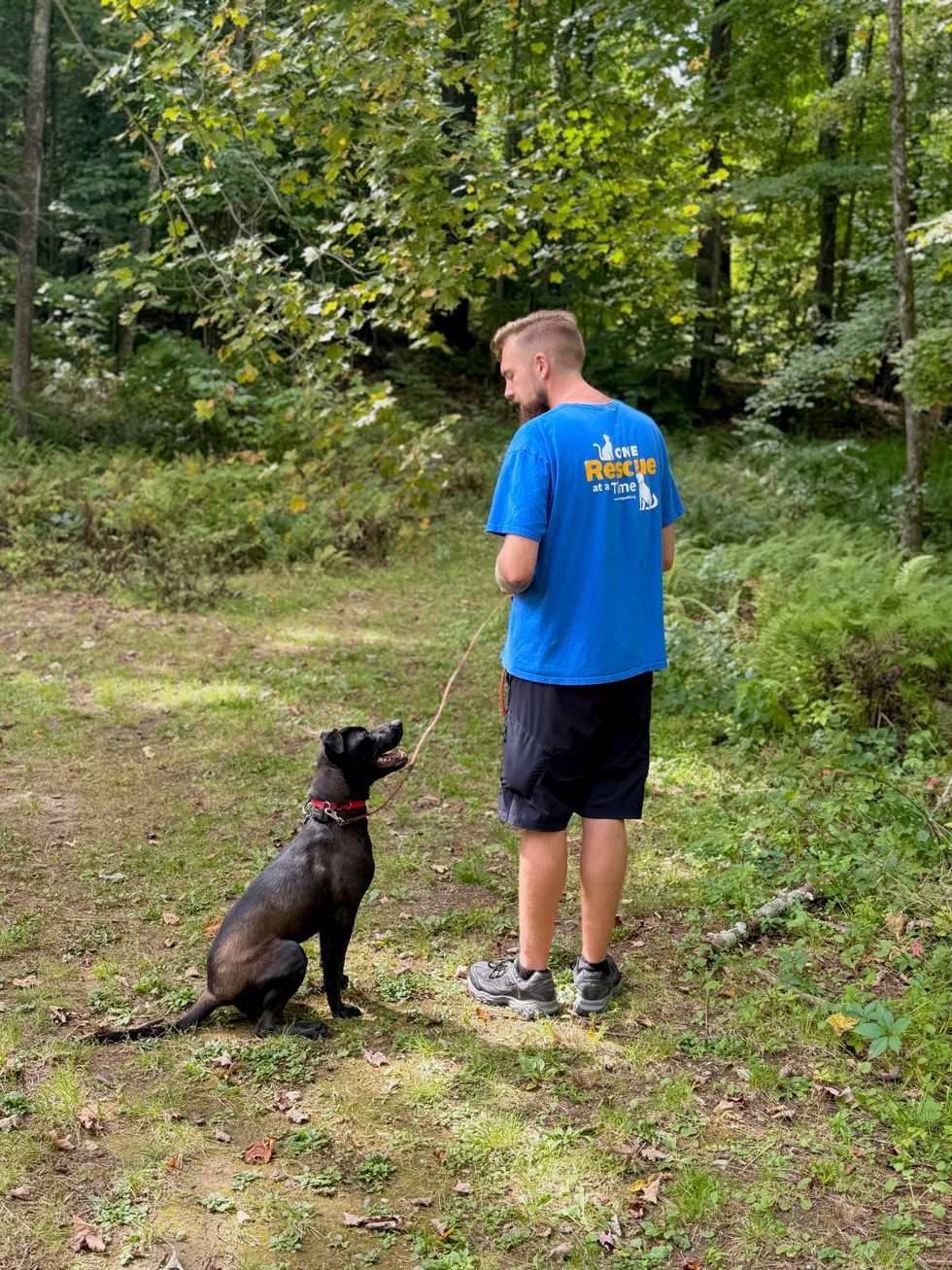 Michael DeBarba, certified dog trainer working with Marsala.Jennifer Almquist
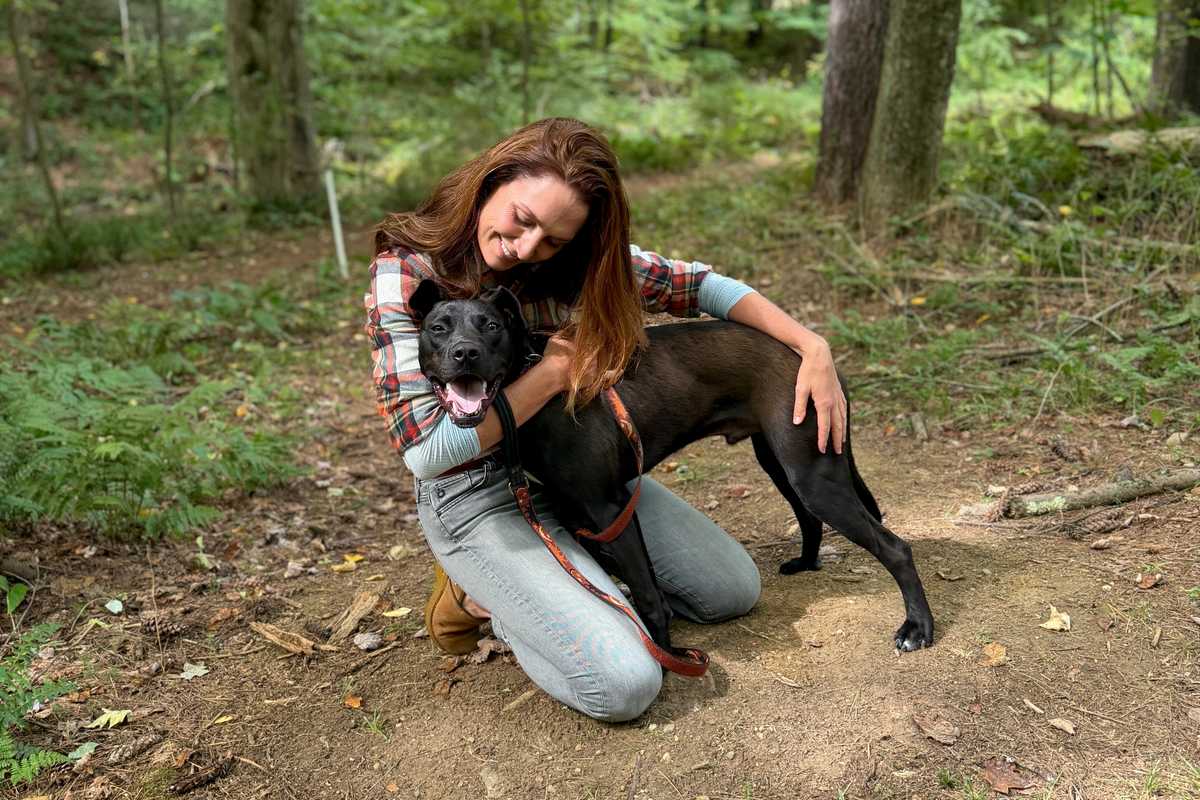 Marsala wins a heart.Jennifer Almquist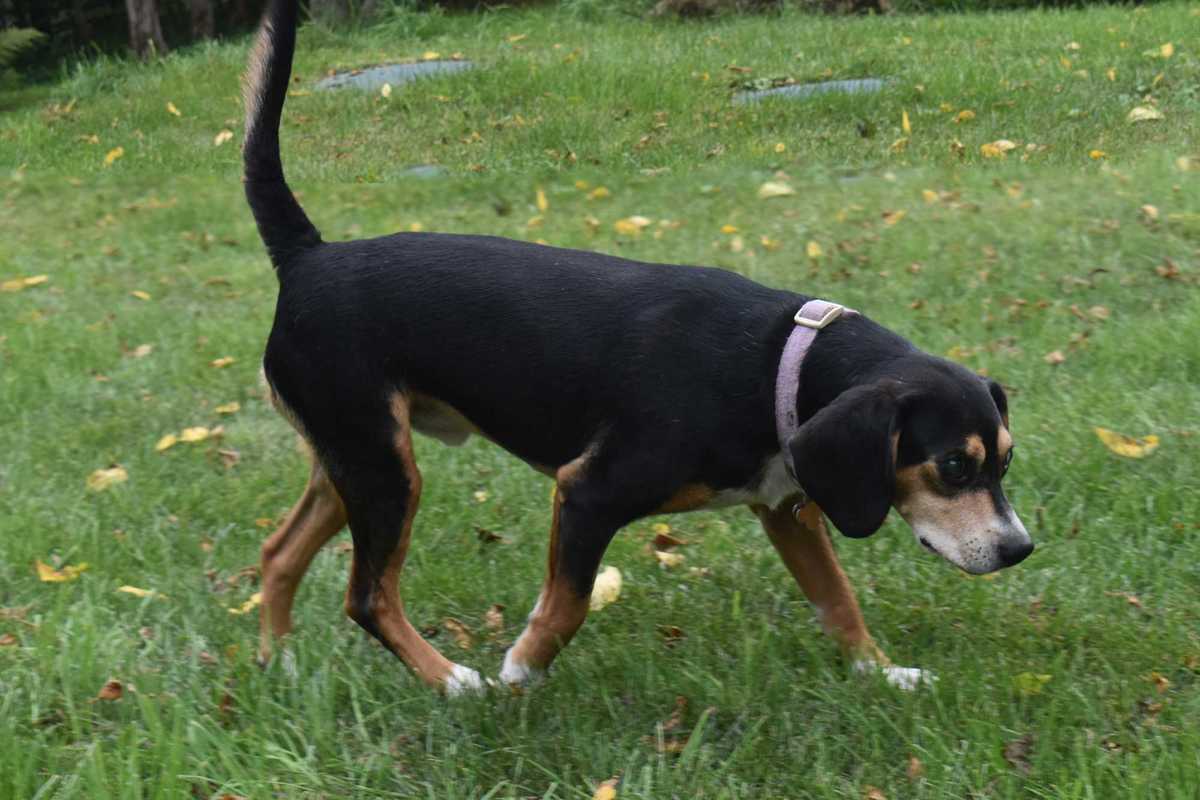
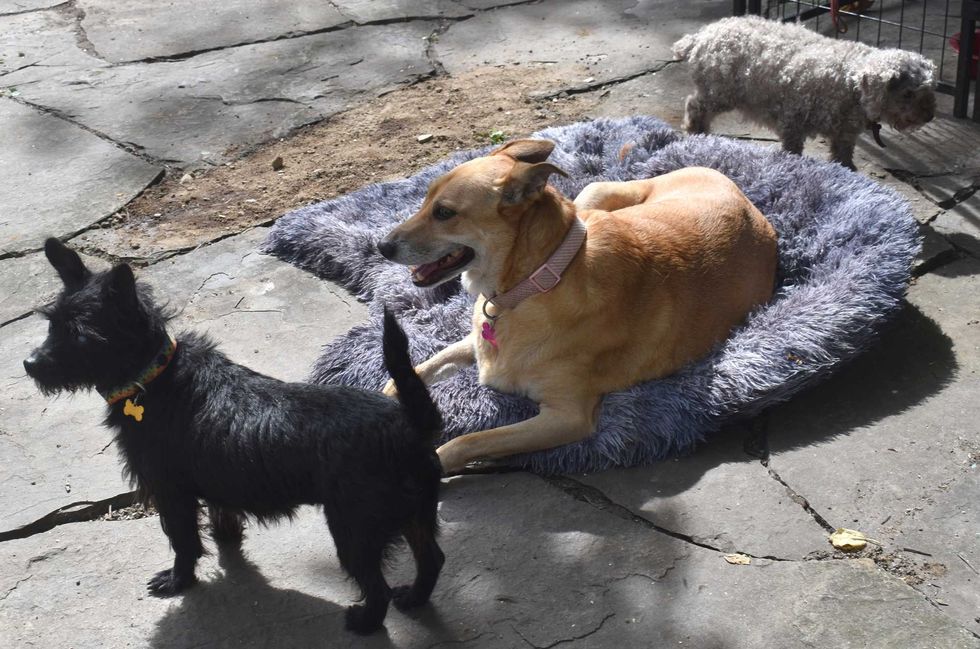 Sadie, center, a Carolina dog, plays with her friend Negra, a terrier mix. Bella Linda, the small poodle, has since been adopted.L. Tomaino
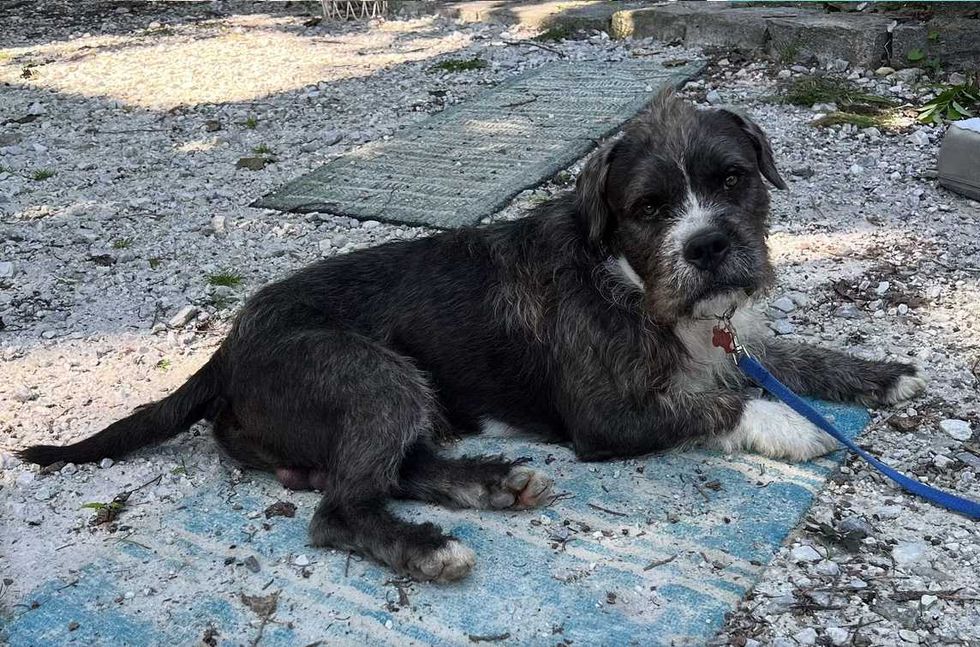 Wesley, a young, exuberant mix, is looking for an active home.L. Tomaino
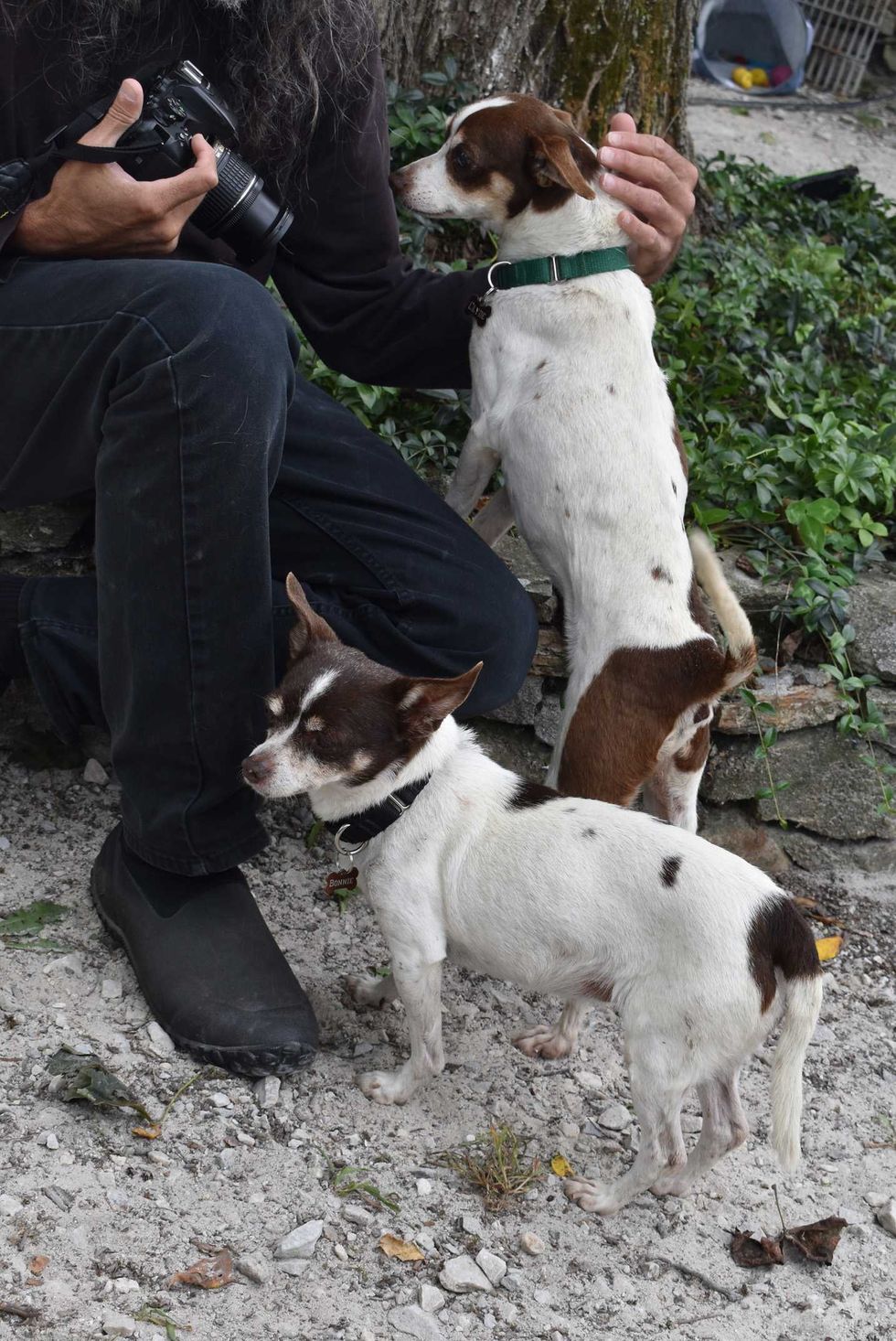 Bonnie and Clyde, an affectionate terrier pair.L. Tomaino