Truth and evidence depend on the right to observe

Truth and evidence depend on the right to observe

A small group of protesters voice opposition to President Trump's administration and Immigration and Customs Enforcement at Amenia's Fountain Square at the intersection of Route 44 and Route 22 on Saturday, Nov. 8, 2025

Photo by Nathan Miller

The fatal shooting of Alex Pretti, and before him Renée Good, by federal agents in Minnesota is not just a tragedy; it is a warning. In the aftermath, Trump administration officials released an account of events that directly contradicted citizen video recorded at the scene. Those recordings, made by ordinary people exercising their rights, showed circumstances sharply at odds with the official narrative. Once again, the public is asked to choose between the administration’s version of events and the evidence of its own eyes.

This moment underscores an essential truth: the right to record law enforcement is not a nuisance or a provocation; it is a safeguard. As New York Times columnist David French put it, “Citizen video has decisively rebutted the administration’s lies. The evidence of our eyes contradicts the dishonesty of the administration’s words.”

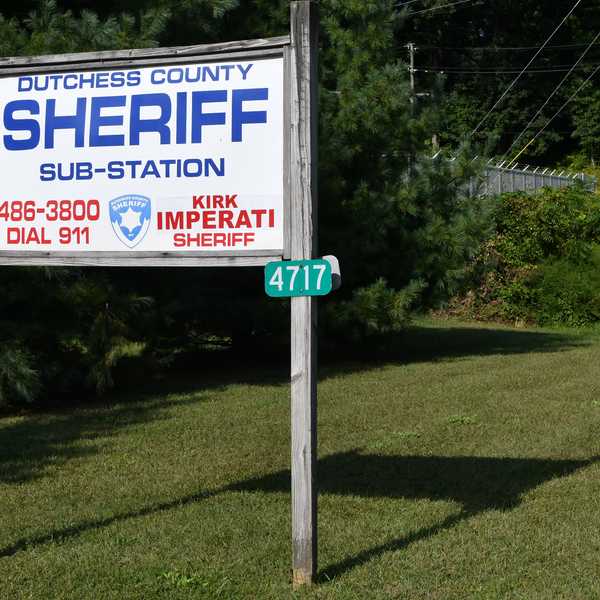
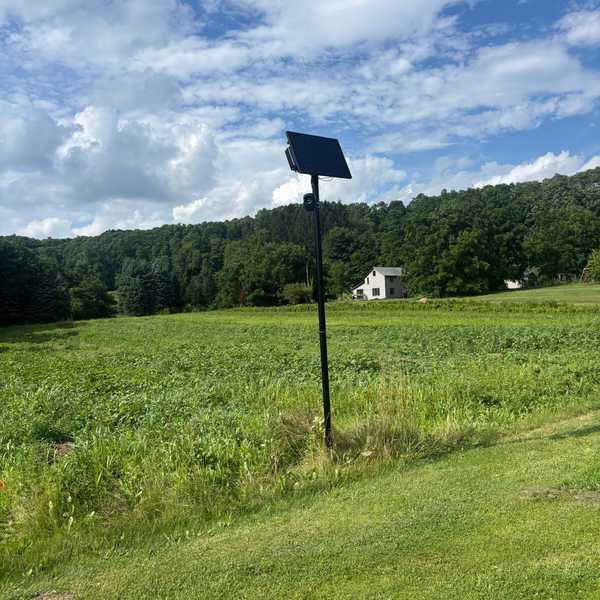
Separately, law enforcement agencies across the country are expanding their capacity to watch the public. Here at home, as we’ve reported, Dutchess County’s Real Time Crime Center brings together feeds from automated license-plate readers, including systems provided by Flock Safety, allowing police to track vehicles across jurisdictions in real time. These tools collect detailed movement data on vast numbers of people who are not suspected of any crime, often with limited public discussion of safeguards or oversight.

When citizens document state power, they are told to step back or trust official explanations. When the state documents the public, continuously and at scale, it is framed as efficiency. One form of observation is treated as suspect; the other as routine.

What magnifies the alarm in the Minnesota shootings isn’t just the loss of life, but the response that followed. Federal force was used against members of the U.S. public, and officials responded not with clarity or accountability, but with statements that collapsed under visual evidence. That willingness to lie, and to do so reflexively, signals a deeper problem: an administration increasingly willing to treat truth as an obstacle rather than an obligation.

A democratic society depends on shared facts. The right of citizens and journalists to observe, record, and document matters because it anchors truth in evidence, not authority. That right is not a threat to public safety. It is among the few remaining tools the public has to insist that power remains answerable to the truth.


Latest News

Speed cameras gain ground in Connecticut, stall in Dutchess County

A speed enforcement camera in New York City.

Photo courtesy NYC DOT

Speed cameras remain a tough sell across northwest Connecticut — and are still absent from local roads in neighboring Dutchess County.

Town leaders across northwest Connecticut are moving cautiously on speed cameras, despite a state law passed in 2023 that allows municipalities to install them. In contrast, no towns or villages in Dutchess County currently operate local automated speed-camera programs, even as New York City has relied on the technology for years.

Keep ReadingShow less
In remembrance:
Tim Prentice and the art of making the wind visible
In remembrance: Tim Prentice and the art of making the wind visible

There are artists who make objects, and then there are artists who alter the way we move through the world. Tim Prentice belonged to the latter. The kinetic sculptor, architect and longtime Cornwall resident died in November 2025 at age 95, leaving a legacy of what he called “toys for the wind,” work that did not simply occupy space but activated it, inviting viewers to slow down, look longer and feel more deeply the invisible forces that shape daily life.

Prentice received a master’s degree from the Yale School of Art and Architecture in 1960, where he studied with German-born American artist and educator Josef Albers, taking his course once as an undergraduate and again in graduate school.In “The Air Made Visible,” a 2024 short film by the Vision & Art Project produced by the American Macular Degeneration Fund, a nonprofit organization that documents artists working with vision loss, Prentice spoke of his admiration for Albers’ discipline and his ability to strip away everything but color. He recalled thinking, “If I could do that same thing with motion, I’d have a chance of finding a new form.”

Keep ReadingShow less
google preferred source

Want more of our stories on Google? Click here to make us a Preferred Source.

Strategic partnership unites design, architecture and construction

Hyalite Builders is leading the structural rehabilitation of The Stissing Center in Pine Plains.

Provided

For homeowners overwhelmed by juggling designers, architects and contractors, a new Salisbury-based collaboration is offering a one-team approach from concept to construction. Casa Marcelo Interior Design Studio, based in Salisbury, has joined forces with Charles Matz Architect, led by Charles Matz, AIA RIBA, and Hyalite Builders, led by Matt Soleau. The alliance introduces an integrated design-build model that aims to streamline the sometimes-fragmented process of home renovation and new construction.

“The whole thing is based on integrated services,” said Marcelo, founder of Casa Marcelo. “Normally when clients come to us, they are coming to us for design. But there’s also some architecture and construction that needs to happen eventually. So, I thought, why don’t we just partner with people that we know we can work well with together?”

Keep ReadingShow less
‘The Dark’ turns midwinter into a weeklong arts celebration

Autumn Knight will perform as part of PS21’s “The Dark.”

Provided

This February, PS21: Center for Contemporary Performance in Chatham, New York, will transform the depths of midwinter into a radiant week of cutting-edge art, music, dance, theater and performance with its inaugural winter festival, The Dark. Running Feb. 16–22, the ambitious festival features more than 60 international artists and over 80 performances, making it one of the most expansive cultural events in the region.

Curated to explore winter as a season of extremes — community and solitude, fire and ice, darkness and light — The Dark will take place not only at PS21’s sprawling campus in Chatham, but in theaters, restaurants, libraries, saunas and outdoor spaces across Columbia County. Attendees can warm up between performances with complimentary sauna sessions, glide across a seasonal ice-skating rink or gather around nightly bonfires, making the festival as much a social winter experience as an artistic one.

Keep ReadingShow less
Tanglewood Learning Institute expands year-round programming

Exterior of the Linde Center for Music and Learning.

Mike Meija, courtesy of the BSO

The Tanglewood Learning Institute (TLI), based at Tanglewood, the legendary summer home of the Boston Symphony Orchestra, is celebrating an expanded season of adventurous music and arts education programming, featuring star performers across genres, BSO musicians, and local collaborators.

Launched in the summer of 2019 in conjunction with the opening of the Linde Center for Music and Learning on the Tanglewood campus, TLI now fulfills its founding mission to welcome audiences year-round. The season includes a new jazz series, solo and chamber recitals, a film series, family programs, open rehearsals and master classes led by world-renowned musicians.

Keep ReadingShow less
google preferred source

Want more of our stories on Google? Click here to make us a Preferred Source.

google preferred source

Want more of our stories on Google? Click here to make us a Preferred Source.