


Latest News
NECC announces new Executive Director
Nathan Miller
Oct 27, 2026

Athena Fliakos
Photo provided
MILLERTON — The North East Community Center has named Lakeville resident Athena Fliakos as its new executive director. She will begin Nov. 2, filling a position that has been vacant since March.
Fliakos said she is joining the organization during a difficult economic period nationally that requires adaptation from everyone — especially nonprofits.
Over the past year, NECC has had to contend with the closure of its daycare center and greater stress on its food pantry following cuts to federal nutrition assistance programs. That’s all amid a backdrop of rising costs that are squeezing consumers and businesses nationwide.
“The state of the nonprofit in New York is a precarious one,” Fliakos said, referring to the challenge of running a nonprofit organization in one of the most expensive states in the U.S.
Fliakos’s hiring ends a six month vacancy that began with the departure of former Executive Director Christine Sergent in March. Board Chair Irene Banning and Vice Chair Julie Fajgenbaum served as co-Executive Directors in the interim.
Sergent’s departure came just a few months after NECC shuttered its daycare program, the Early Learning Center in December, citing financial difficulties. Organizational leadership said at the time of the daycare’s closure that rising costs made the program unaffordable and put other programs at risk.
Fliakos called attention to NECC’s established programs, notably the food pantry, for their stability and reach through an economically fraught period. Last fall, the Trump administration followed through on cuts to the federal Supplemental Nutrition Assistance Program, known as SNAP, that shifted the burden of funding onto states and localities.
In the wake of those cuts, Dutchess County and New York State released millions in aid to local food pantries who were already experiencing strain from continuously increasing numbers of patrons.
NECC’s food pantry serves an average of 200 to 250 households per week. Patrons of the pantry may utilize its services up to two times per month.
Fliakos said the food pantry and NECC’s other food programs stood out as a model for one of her goals — collaboration and coalition building.
“A lot of what’s been talked about in the last five to 10 years — which I think takes a tremendous amount of commitment by a number of people — is really breaking siloed areas of service,” Fliakos said.
As part of its food assistance programming, NECC leads the Tri Corner Nutrition Security Coalition. The coalition is a group of farmers, food pantries and community health organizations that collaborate to promote access to nutritious food in New York and Connecticut.
Fliakos said she aims to build on this model, seeking collaborations with other area nonprofits and community groups to build and promote programming that benefits the community.
Another goal of hers is to build the organization’s visibility while maintaining its identity, saying the Executive Director role requires a balance of leadership, stewardship and imagination. Accomplishing that will draw on her experience in managerial roles including as CEO of YWCA Ulster County in Kingston, New York.
Fliakos, a Denver, Colorado, native, began her professional career as a teacher at Hotchkiss School near Lakeville, Connecticut, in 2001. The school was her alma mater — she graduated in 1995 — and tied her to the region for most of her adult life so far.
“I think about my relationship with the Northwest Corner as having sort of roots and wings,” Fliakos said. “I have moved around a little bit in the last 30 years, but I have never gone too far.”
NECC Board Chair Irene Banning announced Fliakos’s hiring with an email to community members on Thursday, Oct. 22. The letter described Fliakos as a leader and “agent of educational change.”
Banning called attention to Fliakos’s managerial experience, including founding the GoodBrain Project Inc. in 2013. Fliakos started the organization in 2013 to guide schools and nonprofits in reducing employee burnout and improving culture. One thing she’s excited about as she begins her role at NECC is supporting the staff.
“There have to be resources provided to the people who are on the front lines,” Fliakos said. “Not-for-profit people or teachers or nurses — we live off the passion, but the passion can’t feed us.”
Keep ReadingShow less
Amenia Library budget proposition misses election deadline
Nathan Miller
Oct 27, 2026

AMENIA — Town Board members have taken action to secure additional funding for the Amenia Free Library after ballot proposition paperwork failed to make it to election officials on time.
Amenia Free Library Executive Director Victoria Herow said library board members had worked to collect necessary signatures by June 29 for a ballot proposition to ask voters for a $10,000 budget increase. Then, on Aug. 22, she was informed that the paperwork had reached the Dutchess County Board of Elections after the deadline and was ineligible for this year’s election.
Federal and state law requires ballot propositions be filed no later than three months prior to Election Day. That deadline fell on Aug. 3 this year.
Amenia Town Clerk Dawn Marie Klingner filed the library’s ballot proposition with the county’s Board of Elections with a letter dated Aug. 17, two weeks after the deadline. She said the late submission amounted to a clerical oversight on her part, but voiced frustration with what she described as poor communication from the Board of Elections.
“I looked down at the beautiful purple folder and I was like ‘oh let’s send that out right now,’” Klingner said. “In years past that we’ve done this, it’s gone out in August.”
Klingner pointed to the 2023 election cycle, when she submitted the library’s budget increase proposition with a letter dated Aug. 29, 2023. The library asked for a $50,000 increase that year and won it at the ballot box. The library and Klingner successfully filed paperwork for $20,000 increases in 2024 and 2025 as well.
Dutchess County Republican Elections Commissioner Erik Haight pushed back on Klingner’s criticism, pointing to the federal Military and Overseas Voter Empowerment Act passed in 2009 and state law that codify the three month deadline for ballot propositions.
“She’s obviously aware that she filed it late,” Haight said in an email. “She filed it late and as a function of law we lack the authority to put the prop on the ballot.”
She said she became aware of the error a week later on Aug. 24, and began working with town attorney Ian Lindars to get in touch with county election commissioners and attempt to rectify the issue. After four days of negotiation, the Board of Elections declined to make an exception and upheld the deadline.
With the ballot proposition out of the question, Herow and library board members had resigned themselves to making do without the $10,000.
“We have to be very careful about everything,” Herow said. “That’s just part of it. It means next year we’ll have to ask for a smidge more to help meet whatever costs.”
The Amenia Free Library collected a total of $283,700 in revenue from varying sources in 2026, according to an operating budget summary on the library’s website. A bulk of that revenue — $265,000 in 2026 — comes from taxes paid in the Town of Amenia.
Town Board members have opted to grant the additional funds as part of Amenia’s municipal budgeting process. Lindars explained that libraries such as the Amenia Free library have two options for budget increases — a voter referendum or through Town Board approval.
Library expenses totaled $295,800 in 2026, resulting in a $12,100 deficit this year that Herow expected to grow. The $10,000 in additional funds was meant to modestly offset that deficit.
“Our costs go up just like everybody else’s,” Herow said. “Electricity, insurance, materials, the cost of running the building.”
Herow echoed Klingner’s concerns about poor communication. She said library board president Alan Gamble hand-delivered the necessary petitions to Klingner at Amenia Town Hall on June 29. There was no communication with the library until Aug. 22, when Herow heard from Dutchess County Democratic Committee Chair Michael Dupree that election commissioners had received the paperwork late.
Similarly, Klingner said she was not informed that the submission was late until she heard from a third party.
Keep ReadingShow less
Dutchess County early education pilot program takes shape
Graham Corrigan
Oct 27, 2026

From left: Louise McLoughlin, Himali Pandya, and Sabrina Jaar Marzouka stand with New York OCFS Commissioner Dr. DaMia Harris-Madden and Jill Roche Gomez at the Poughkeepsie BOCES center on Thursday, Oct. 15.
Photo by Graham Corrigan
POUGHKEEPSIE — The shortage of early education in Dutchess County costs the local economy more than $320 million a year, advocates said at an Oct. 15 business roundtable in Poughkeepsie.
The figure puts a price on a problem that parents and business owners in northeastern Dutchess have been describing for months, and underscores the importance of the county’s upcoming pilot program to approach the problem from a multi-faceted perspective.
The 2026-27 New York State budget includes $4.5 billion for early learning and pre-K, up $1.7 billion from last year. Dutchess is one of three counties, with Monroe and Broome, chosen for the pilot program targeting early education for children ages 0 to 3. Dutchess County will receive$22 million a year for three years, with the goal of creating 1,000 more licensed seats for children in the county.
Bringing the business community into the conversation has been a chief concern for Louise McLoughlin, Executive Director of the Dutchess County Workforce Investment Board and one of the event’s organizers.
“It all started with the business community,” McLoughlin said after the conference. “In 2019, the county’s economic development advisory council heard from business leaders that they were having trouble hiring and retaining employees. And the top 3 reasons were transportation, housing, and childcare.”
McLoughlin now finds herself at the forefront of a transformative moment in New York’s early education infrastructure. The hope is that the pilot program leads to broader reforms and collaboration with businesses to remove barriers to entry, both in terms of costs to parents and the childcare facility licensing process.
The pilot comes at a critical moment for early education in the region. Dutchess County has lost 33% of its child care centers since 2007 — with 15 early education programs closed in 2025 alone. Children with access to early education from 0 to 3 years old have a 6% higher high school graduation rate, according to the National Bureau of Economic Research. And in the near term, public child care investment creates jobs at one of the highest rates of any sector, according to the Dutchess County Early Learning & Child Care Coalition.
The event was held at the Dutchess BOCES Conference Center in Poughkeepsie. Alexandra Smith of the Poughkeepsie Children’s Cabinet opened the discussion with a presentation titled “Childcare as Civic Infrastructure,” on the ripple effects of the child care gap.
The gap concerns the county’s capacity for early education and its finances. According to the Child Care Council of Dutchess and Putnam, there are 9,262 children with working parents in Dutchess County — but the county only has 7,610 licensed seats available through early education centers.
Costs for center-based infant care run at about $1,540 a month, while the estimated true cost is $1,872. Staff account for about 60% of a center’s costs. Median pay for early education staff is $20,928 for assistant teachers and $23,760 for lead teachers. For a two-person household, child care takes about 13 percent of take-home pay, nearly double the 7 percent federal benchmark.
Those numbers demonstrate what people in the northern part of the county told officials in August. Parents, day care operators, and employers gathered at the Pine Plains Free Library on Aug. 19 for a focus group led by the Child Care Council of Dutchess and Putnam. County Legislator Chris Drago opened that session by saying, “Without childcare, folks can’t work.”
Participants described a thinning local network. The North East Community Center closed its free day care program last November, citing falling enrollment and rising costs. Employers, including Harney & Sons Fine Teas in Millerton and dairy farm Chaseholm Farm in Pine Plains, said they have struggled to build schedules around workers’ families.
To build a new framework for early education, McLoughlin and her peers are examining other successful examples. Washington D.C., New Mexico, Vermont and Quebec have experimented with using subsidies, flat taxes, oil & gas revenues, and payroll taxes to fund their early education programs. McLoughlin and the DCELC are hosting events examining each model in the months to come.
When the Dutchess County program rolls out this spring, it’ll utilize ideas from a variety of places. One of the most important ones, McLoughlin said, was removing income requirements for parents to be able to participate. “It’s not tied to the finances of the family,” she said. “Anyone can take advantage of it, which is very helpful for the people that just miss qualifying for other kinds of assistance.”
Parents will have to enroll in a state portal for their children to be eligible to participate. The statewide portal, McLoughlin said, ensures an equitable system. Thus far, she’s been heartened by the ways in which a myriad of bureaucratic bodies have been able to work together. “We’ve been working with 50 or 60 organizations, parents, senators’ offices, businesses, county legislature — they’re actually rolling up their sleeves and helping us, which is unheard of,” she said. “If the 0 to 3 year olds could talk, we would include them too.”
Keep ReadingShow less

Want more of our stories on Google? Click here to make us a Preferred Source.
Sisters Hill Farm in talks with a prospective buyer who would keep it a working farm
Graham Corrigan
Oct 27, 2026
STANFORDVILLE — Three months after announcing that Sisters Hill Farm was for sale, the Sisters of Charity of New York said leadership is in talks with a prospective buyer who intends to keep the property a working farm and continue its community-supported agriculture program.
In a letter earlier this month to farm members, the congregation’s leadership team said the prospective buyers share a commitment to preserving the farm and its mission. Farmer David Hambleton will continue to play “an important role” in its future, the letter said.
The letter did not name the prospective buyers or disclose a price, and the sale is not final. The congregation said it is still working through the details of a purchase agreement and is “very encouraged” by the direction of talks.
The Stanfordville farm supports a CSA program and is a popular destination for locally-grown produce. In July, the congregation announced plans to to sell its entire property, just east of Route 82, without a public listing or asking price. The announcement offered no guarantee the land would stay in agriculture.
The letter refers to the farm as “much more than a piece of property,” a place where stewardship, education and service have flourished for almost 30 years.
The congregation hired Hambleton in 1999 to start a community-supported agriculture program, which has grown from 40 members to more than 400. Members pay on a sliding scale, and 10% of the harvest goes to families in need.
In 2023, a lack of new congregants led the Sisters of Charity of New York to announce they would wind down.
Hambleton, who declined to comment on the planned sale in July, told CSA members at the time he was “still processing this.” He has described the farm’s purpose as being as much about community as vegetables. In a 2024 profile with The Millerton News, Hambleton said “there’s nothing more basic and elemental than feeding people.”
His role extends beyond the fields. Since 1999, Hambleton has trained a class of apprentices every year, many of whom go on to farm in the Hudson Valley and beyond. Erin Bullock, who founded Mud Creek Farm CSA a year after apprenticing at Sisters Hill in 2008, told the News in August, “Dave was a true mentor, and shared everything he knew.”
The congregation thanked members for the “outpouring of love, concern, and support” since the sale was announced.
Keep ReadingShow less
Stanford home prices drop slightly after slower September sales
Christine Bates
Oct 27, 2026
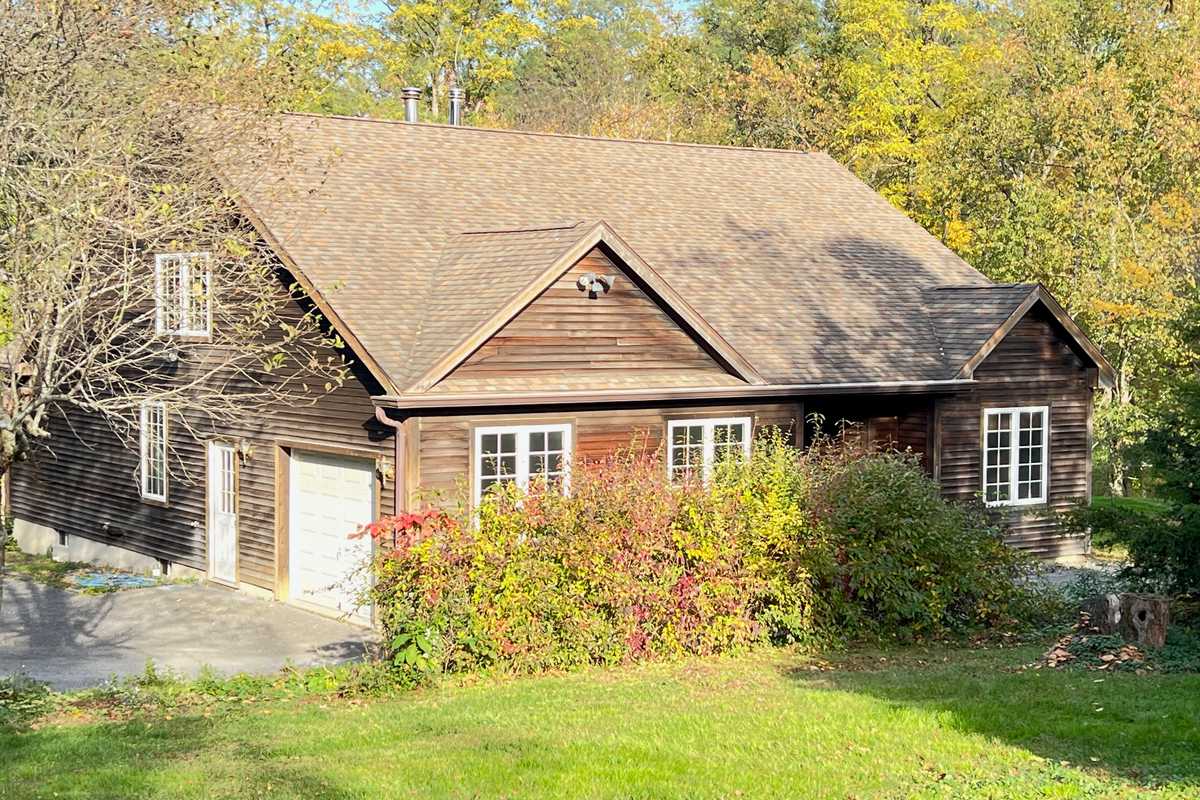
Located on a Stanford dirt road designated as “scenic,” 421 Conklin Hill Road is a single level 1,436 square foot home which sold for $571,430.
Photo by Christine Bates
STANFORD — At the end of September, median single family home prices dropped to $623,000 on lower unit sales volume.
The median price at the end of September represents a 4% drop since the year prior. According to real estate transaction data provided by New York State, Stanford home prices hit a median of $650,000 for the 12 months ending Sept. 30, 2025.
Home prices are still high. The current median is about 15% higher than the $540,000 median home price recorded for the 12 months ending September 2024.
A total of 23 residences were sold in the 12 months ending on Sept. 30, 2026, fewer than the 33 sales in the period ending Sept. 30, 2025, and 39 sales for the 12 months ending July 31, 2024.
As of early October, there were 16 single-family homes on the market with six listed above $1 million, and only three below the median price of $623,000.
August Transfers 2026
662 Willow Brook Road — 3 bedroom/1 bath ranch on 1.34 acres transferred to Martin Gavio for $392,500.
5626 Route 82 — 3 bedroom/1 bath ranch on 1.1 acres transferred to Andres Perez for $115,000,
1220 Hunns Lake Road — 4 bedroom/2 bath home built in 1920 on 1.52 acres transferred to Maya Victoria Hood for $840,000.
September Transfers 2026
421 Conklin Hill Road — 3 bedroom/2 bath home on 5.4 acres transferred to Esther Sarah Colbran for $571,430.
283 Carpenter Hill Road — 3 bedroom/2 bath cape cod home on 25 acres transferred to Lynn Gubemick for $1.7 million.
* Town of Stanford property transfers from August 1, 2026 to September 30, 2026 are supplied by Dutchess County Office of Real Property. Details on each property from Dutchess Parcel Access. Current market data from One Key MLS and Infosparks. Compiled by Christine Bates, Real Estate Advisor with William Pitt Sotheby’s International Realty, Licensed in Connecticut and New York.
Keep ReadingShow less
Dutchess County Sheriff's Report — Thursday, October 29, 2026
Millerton News
Oct 27, 2026
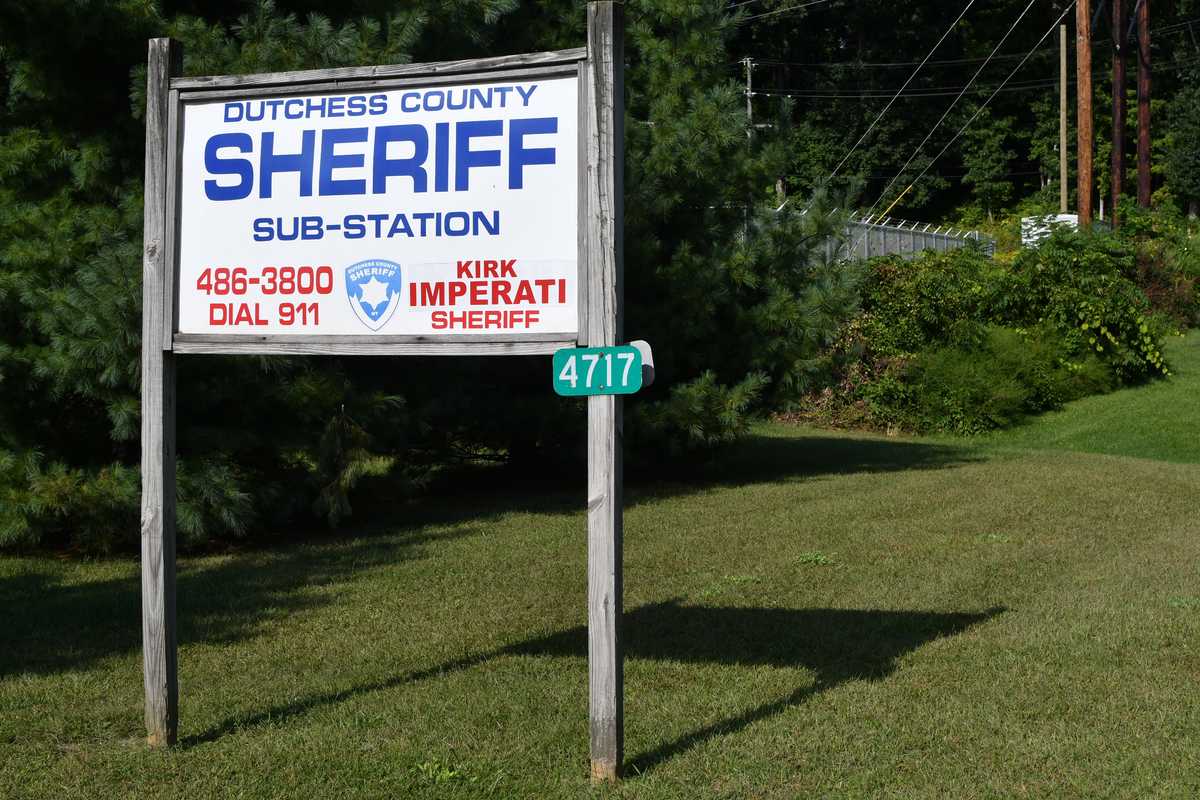
Dutchess County Sheriff's Report — Thursday, October 29
Archive photo
Dutchess County Sheriff’s Office Harlem Valley area activity report Oct. 15 to Oct. 21
Oct. 17 — Deputies arrested Kevin Antonio Nahje Brathwaite, age 29, for aggravated unlicensed operation of a motor vehicle subsequent to a traffic stop in the Town of North East. Subject to appear in court at a later date.
Oct. 20 — Deputies responded to Rudd Pond Road in Millerton to investigate a car that crashed into a telephone pole, resulting in minor injuries. The vehicle’s operator was transported to Fairview Hospital in Great Barrington, Massachusetts, for medical care.
PLEASE NOTE: All subjects arrested and charged are alleged to have committed the crime and are presumed innocent until proven guilty and are to appear in local courts later.If you have any information relative to the aforementioned criminal cases, or any other suspected criminal activity please contact the Dutchess County Sheriff’s Office tip line at 845 605 CLUE (2583) or Email dcsotips@gmail.com. All information will be kept confidential.
Keep ReadingShow less
Want more of our stories on Google? Click here to make us a Preferred Source.
loading