SHARON — Austin Barney, age 87, died peacefully on December 23, 2025. There will be a graveside service on Saturday, September 26th at 11:00AM at Ellsworth Cemetery in Sharon. All are welcome to join.

Latest News
Celebration of Life - Marilyn Kay
Millerton News
Sep 16, 2026
Haystack Book Festival returns to Norfolk
Mike Cobb
Sep 16, 2026
Belle Burden, No. 1 New York Times bestselling author of “Strangers,” will kick off the Haystack Book Festival in conversation with Roxanne Coady, RJ Julia Booksellers, on Oct. 2.
Provided
Now in its eighth year, the Haystack Book Festival brings together many of today’s best authors Oct. 2 through 4 for unmoderated conversations about their work in Norfolk, Connecticut.
On Friday, Oct. 2, Infinity Hall will host “The Brendan Gill Lecture” at 6 p.m., with Belle Burden in conversation with Roxanne Coady, founder and owner of RJ Julia Booksellers.
“We have a terrific program this year,” said festival organizer Michael Selleck. “We’re going to kick it off with Belle Burden, the best-selling author of ‘Strangers.’ The event has quite a bit of draw, so we moved it to Infinity Hall. It’s the first time we’re doing that.”
Burden’s book recounts the early days of the pandemic with her husband, who, without warning, announced that he was leaving her after 20 years.
In “Strangers,” Burden revisits her marriage, searching for clues that her husband was not who she always thought he was. As she examines her relationship through a new lens, she reckons with her own family history and the lessons she intuited about how a woman is expected to behave in the face of betrayal. Through it all, she is transformed.
“‘The Brendan Gill Lecture’ was originally a program that the library associates started. It’s a really great platform for us to have writers. This year we chose to do it as a conversation,” Selleck said.
A longtime Norfolk resident, Brendan Gill wrote for The New Yorker for more than 50 years. He contributed short stories, profiles and book reviews and was, in successive decades, the magazine’s movie, theater and architecture critic.
In 1998, “The Brendan Gill Lecture” was established by the Norfolk Library Associates to honor Gill’s generous contributions to the library.
Saturday’s events will be held at the Norfolk Library and include three conversations on America at 250.
“This year our Saturday program will celebrate America 250 through conversations that examine identity by living a life abroad, the effects of war and its aftermath, and the exploration and myth of the western frontier,” Selleck said.
“Across Borders and Belonging — Exile, Identity and American Lives Abroad” will kick off the day at 10:30 a.m. with David Mayers and best-selling author Nicholas Boggs.
At 1 p.m., “After the Wounds — War, Memory and the Search for What Endures” will feature authors David Nasaw and Elizabeth Samet. It will be followed at 3 p.m. by a conversation with Craig Fehrman and Megan Kate Nelson, “Inventing America — Power and Myth at the Nation’s Edges.”
On Sunday at 11 a.m., “Among the Trees — History, Science and Environment” will be discussed by Sophie Pinkham and Robert Moor. This event is sponsored by Great Mountain Forest.
When asked what he likes best about the festival, Selleck said:
“We like the intimacy and unmoderated conversations between the authors. Our hope is that people will be interested and want to come.”
For tickets and information, visit haystackbookfestival.org
Keep ReadingShow less
Danielle Mailer’s lifelong love
Robin Roraback
Sep 16, 2026
Artist Danielle Mailer at her studio and showroom in Goshen.
L. Tomaino
That painful time inspired me to pursue a career in teaching art so that I could find the kid like me who struggled academically but was able to find some joy in the art room. —Danielle Mailer
A visit to Danielle Mailer’s colorful Goshen studio found her busy getting ready for a show at Hunt Library’s ArtWall in Falls Village. The show opens Sept. 19 with a reception from 5 to 7 p.m. and runs through Oct. 23.
She explained, “With just weeks to go and a stack of blank small wooden panels, I set up a challenge to do a painting a day. This became a painting a week. I always forget how little works can be brutal to resolve.”
Well-known for her large-scale work, she commented on taking a break from it.
“I love the way the public art projects involve the community. All of the large-scale works include many hands. But I also welcome the times when I can be in the studio working in solitude and managing a modest-size canvas as opposed to a 200-foot mural.”
Besides the small paintings, she is finishing art for gardens, which will also be in the Hunt show. These tall metal columns are topped with birds, cats or rabbits. Each side takes her about a week to paint, with the intricate patterns and designs that are trademarks of her art.
“My lifelong love for pattern spills over onto every surface, often stepping beyond canvases to chairs, walls, etc. I once saw a quote by an unknown artist who said, ‘To pattern is to make human.’”
Mailer has also been designing costumes for the Nutmeg Ballet’s upcoming production of “El Colibri” (“The Hummingbird”).
Recently, she had a piece in Provincetown.
In mid-August, The Berta Walker Gallery which represents her, commissioned Mailer to make a piece for a show titled “Collaboration.”
“I created a five-foot spinning, two-sided figure silhouette, and my husband, Peter McEachern, a professional jazz musician, composed a piece to accompany this swinging muse. It’s the first time in our 25-year relationship that we have joined forces this way. It was very exciting and possibly a new path.”

Murals by Mailer decorate the city of Torrington, ranging in size from 12 feet to 200 feet. They include “Horse Tale” near the children’s museum, “Fishtales” behind Staples above the Naugatuck River, “Cat Tales” above Five Points Gallery and “Ballet Dancer” at Nutmeg Ballet. At the Bantam Arts Factory is a mural of a potter at work. Leonora, the mountain lion, is a well-known figure outside Scoville Library in Salisbury.
“As a young child I was in certain ways defined by my inability to read. I was and am, most definitely dyslexic, but in those days, some 65 years ago, they did not have the diagnostic tools. So, I felt clueless in the classroom for years. But in the art room I was often a star, and it pretty much saved me from despair. Eventually I managed and did well academically. When making things, I felt successful. I think that painful time inspired me to pursue a career in teaching art so that I could find the kid like me who struggled academically but was able to find some joy in the art room.”
Mailer taught for 30 years, first at Indian Mountain School and then at Salisbury School.
Mailer’s parents — her father, a writer, and her mother, an abstract expressionist painter — were always very supportive of her.
“I would describe my childhood New York City apartments with my mother as creative chaos. She always picked the room with the best light to set up her studio. Invariably, this was the living room, which became an ongoing, ever-changing giant still life. Color, pattern, palettes, with large globs of paint that several cats would often run through, making colored paw prints on the parquet floors. And then a smell of some savory stew (she was a great cook) mingling with the odor of turpentine. All of this was my childhood backdrop.”
Mailer studied at Bowdoin College, New York Studio School and the School of Visual Arts.
At New York Studio School, “We drew from the figure five hours a day and the instructors were very rigid. It was the early ’80s, and Cezanne was the artist du jour. I was more interested in making giant Matisse-like paintings but quickly realized that to survive the program it would be Cezanne. It temporarily killed my joy for painting, but I got a solid art training and so it had its value.”
She continued, “Years later, after a decade of becoming a graphic designer, I returned to painting with the move to Connecticut. There I finally felt free to shed all the ‘art teaching voices’ and make work that expressed more of my ‘inner reality.’ I wanted to make female figures and so started with simple collage and eventually moved over to acrylic on canvas and still later found a desire to pull the figure out of the picture plane and make a stand-alone silhouette.”
Mailer credits her husband with helping her figure out any problems that come up with her work and its installation.
“Peter has been my number one everything! He helps me in every way. A gatekeeper and a sounding board and a smart problem solver and a talented musician in his own right. And a really good guy.”
Art has been a support throughout her life.
“Painting keeps me glued together,” she reflected.
Mailer will take part in a panel discussion at Hunt Library, “The Business of Art,” on Sept. 24 at 5:30 p.m., along with artists Robert Cronin, Janet Andre Block and Jason Losh. The discussion will be moderated by Compass editor, artist and musician Natalia Zukerman.
To see more of Mailer’s work, visit daniellemailer.com.
Keep ReadingShow less

Want more of our stories on Google? Click here to make us a Preferred Source.

There’s still time for monsters in Wassaic
D.H. Callahan
Sep 16, 2026
A site-specific sculptural work by Samuelle Green at Wassaic Project.
D.H. Callahan
“Because, now is the time of monsters,” the summer group show at the Wassaic Project, held its closing reception on Sunday, Sept. 13. Like many exhibitions at the venerated arts gallery, incubator and cultural center, the space was packed full of innovative art of a wide variety of media..
Housed in the iconic Maxon Mills building, the show started on the first floor, just beyond the Project’s vibrant and funky gift shop. To name all the artists and mediums might take this week’s entire Compass section, but it’s worth highlighting some standouts.
Dennis Gordon is a retired firefighter from the South Bronx. His realistic architectural-model-style sculptures of abandoned buildings are eerily realistic and elicit the uncanny feeling of recognizing a place you’ve never actually seen.
The ceramic sculptural objects by Kelly Cox seem similarly pulled from a world of a failed capitalistic experiment, with an office chair, safety cones, and mouse and bear traps in dreamy colors occupying space along the narrow staircase that leads from gallery to gallery. Further up those stairs, Saul Chernick explores the possibilities of colors and simple shapes through painting, felt work and sculpture.
The doorway of the fourth floor was overwhelmed by a grand, site-specific sculpture by Samuelle Green, conjuring the likeness of angelic clouds of heavenly feathers, all made from the pages of old books. The grandeur and glory of the piece was inescapable.
Two full-room installations towards the top of the building tapped into parallel themes of home and imagination. “Protect Me From My Dreams” by Jessica Hargreaves, and “A Room of My Own” by Clarissa Pezone both explored unique interpretations of fear, safety, and the existence — imagined or real — of monsters.

While the summer exhibition has closed, the Wassaic Project continues to host events, including an author’s talk with writers and former podcast hosts Amy Stephenson and Casey Childers. A new exhibition featuring National Endowment for the Arts-commissioned works by photographer Liz Nielsen and fiber artist akeylah wellington will open on the same day, Oct. 3. That evening, musician Tim Love Lee will present the first of three “Resonant Reflections” performances in the Gridley Chapel, which are being described as “part nightclub, part ashram and a sonic bath for your heart and feet.”
On the weekend of Oct. 23, however, the monsters will reappear at the Wassaic Project’s Haunted Barn and Monster’s Ball. In the past, the Project has hosted their Haunted Mill, an artist’s rendition of a grand-scale haunted house with scares and sculpture given equal weight. This year, they’re moving to a barn building with fewer stairs and more possibilities for frights. On Saturday, Oct. 24, they’ll team up with Wassaic’s Lantern Inn bar and pizza restaurant for some serious celebration of the season. The Monster’s Ball is not for the casual observer. Costumes are required, and tickets sell out early. Show up with a ticket but no costume, and they’ll turn you away. But arrive in the appropriate attire, and get ready to boogie with the baddies.
To learn more about the Wassaic Project’s upcoming programs and snag your tickets to the Monster’s Ball, head to wassaicproject.org.
Keep ReadingShow less
From grain to glass at Mine Hill Distillery
D.H. Callahan
Sep 16, 2026
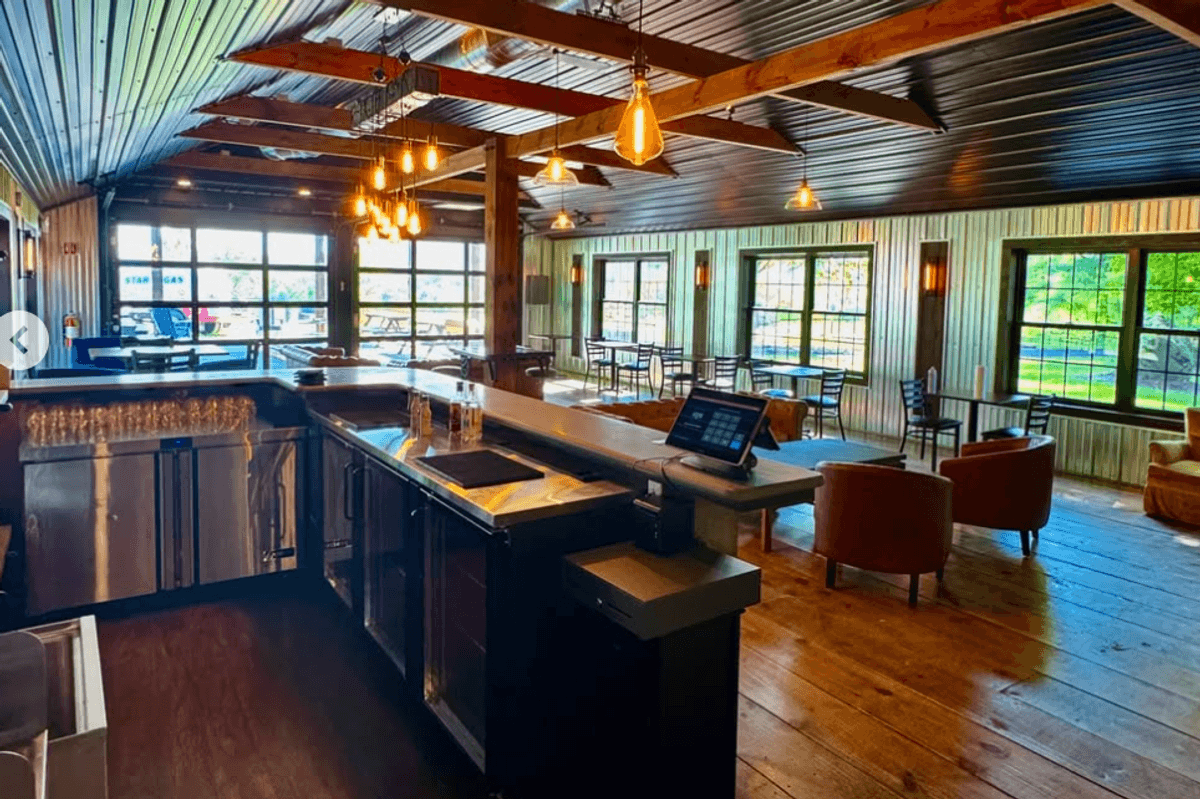
A wall at the Mine Hill Distillery tasting room.
D.H. Callahan
Mine Hill Distillery wants to stock your bar. They’re working throughout the year to provide professional and amateur mixologists with the ingredients they need to make cocktails their way, which distiller Chris Byles claims is the best way to make them.
To do it, they’re distilling some of the finest grain-to-glass spirits in the state. Nestled in Roxbury, the second-to-last town in Connecticut to allow the sale of alcohol, the distillery occupies three carefully restored buildings: one a former cigar factory, one a converted train station and the third an old lumber storehouse.
Grain-to-glass is what you might conjure up when you picture a distillery. It’s sourcing raw ingredients like wheat, rye or barley and using some complicated equipment to create time-honored spirits. In other words, they only bottle what they make themselves. It’s how Byles has done it throughout his career, having built two distilleries in his home state of Texas before striking out to work stills in Montana and Wisconsin.
Through that time, Byles picked up quite the passion for what you can do to spirits, as well as what you can do with them. He’ll be quick to give visitors tips and tricks to tweak their old-fashioneds to their preferences, but ask the right questions in the Mine Hill Tasting Room, and he might start telling you about ways to use their Amaro to cook burgers or top your ice cream. That’s right: Amaro.

When the distillery opened in 2019, they started, as many small distilleries do, with their whiskeys. Whiskey is the only spirit they make that requires substantial time to age. So they started there, allowing their product to mature as they experimented with other spirits. Gin and vodka are the logical next in line.
Very few distilleries venture into the world of Amaro. In fact, Mine Hill seems to be the only one in the state. The decision was partially a fun experiment and partially a tactic in their game plan to provide cocktail enthusiasts with the ingredients they need to concoct their own creations. Similarly, Byles is making his Amaro his own way, using maple syrup as a sweetener. By his estimation, he may be the only one in the world using this process as such a scale, adding 170 gallons of Vermont Maple Syrup to 490 gallons of wine from Hopkins Vineyard, just up the road in Warren, Connecticut. They mix it all up with a secret blend of herbs and spices, age it for over seven months and end up with a unique spirit perfect for mixing, cooking or even sipping over ice.
Amaro isn’t their only tactic for filling out a cocktail bar. Understanding that not every casual cocktail creator wants to use a nicer, pricier spirit as their base, the distillery released their Iron Trail line. Named after the historic iron blast furnace just up the road from the distillery, their Iron Trail bourbon and vodka offer quality distilled spirits at a more affordable price point.
As we leave summer behind us and evenings reclaim their crisp temperatures, now is also a great time to explore the possibilities of Mine Hill’s signature bourbon and rye. The tasting room and their website are chalk full of cocktail ideas, but as Byles says, the best cocktails are the ones made to your taste. So have fun with their spirits, and enjoy the process.
To see their full lineup and get some cocktail suggestions, visit minehilldistillery.com.
Keep ReadingShow less
Fireplace season: make the hearth the heart of your home
Kerri-Lee Mayland
Sep 16, 2026
A cozy fireplace sets the stage for fall, with layered textures and seasonal touches creating a warm gathering place.
Kerri-Lee Mayland
There is something about that first wood fire of the season mixed with crisp New England air that feels like fall’s own potpourri. It’s nostalgic. It makes us think of chilly evenings, Sunday dinners, sweaters pulled out of storage and everyone coming inside a little earlier as the days grow shorter.
Even just looking at a fireplace can spark that feeling.
Fireplaces have always had a way of drawing us in. Long before we had televisions hanging above them, the hearth really was the heart of the home — a source of warmth, light, food and gathering. And while we may not depend on our fireplaces in quite the same way today, we still instinctively gravitate toward them.
So, fireplace season is here. Let’s make the most of it.
If you have a working wood-burning fireplace, use it! Once the fireplace has been properly inspected and cleaned as needed, bring in the wood, find a beautiful basket for the logs and put those fireplace tools where you can actually reach them. A fireplace doesn’t need to look pristine. In fact, they are better when they look as though someone actually lights a fire there.
Fall is also a great time to rearrange the room around your fireplace. Angle a favorite chair toward it. Pull an ottoman closer. Bring out the throws and pile them into a basket. Add a little table for a cup of tea or a glass of wine. Suddenly, you have a place that practically begs you to sit down and stay awhile.

And then, of course, there is the mantel.
We love decorating our mantels in New England, especially as the seasons change. But fall decorating doesn’t have to mean covering every available inch with orange pumpkins.
Start with what you already have. A favorite painting or mirror can be the anchor. Add candlesticks, pottery, a few branches clipped from outside, perhaps some tiny pumpkins or gourds. The best mantels feel collected and slightly imperfect — as though they evolved with the season rather than arrived in one giant shopping bag.
But what if your house doesn’t have a fireplace?
Fake it.
A good trick it to find an old mantel at an antique store, flea market or architectural salvage shop and use it purely as decoration. A beautiful old mantel instantly adds architecture, history and character to a room, even if there isn’t a chimney anywhere in sight.
And don’t forget: The space underneath is just as much of a design opportunity as the mantel itself.
Place a large basket beneath it and fill it with logs. You may never burn a single one, but you’ll still get that wonderful visual warmth and texture.
Or fill the space with an enormous arrangement of dried hydrangeas from summer. By fall, those bright summer blooms have faded into beautiful muted greens, dusty pinks and creams. Pile them generously into an old basket, crock or oversized vessel and suddenly you have this gorgeous, romantic focal point.
You could even turn the space into a tiny library. Tuck a small bookshelf beneath the mantel or stack favorite books inside. Add a chair nearby, and you’ve created a charming little reading corner around a fireplace that doesn’t actually exist.
And if you want more than the illusion of warmth, electric fireplaces have come a long way.
There are beautiful options now that can be inserted into an existing nonworking fireplace or incorporated into a new mantel. You get the glow and movement of flames, plus actual heat, without needing a chimney. For apartments, newer homes or rooms where adding a traditional fireplace simply isn’t practical, they can completely change the atmosphere.
Because fireplace season isn’t really just about fire.
It’s about creating a reason to gather. To turn off a few lights, pull up a chair and settle in. It’s about the glow, the warmth and that unmistakable feeling that fall has arrived.
Keep ReadingShow less

Want more of our stories on Google? Click here to make us a Preferred Source.
loading