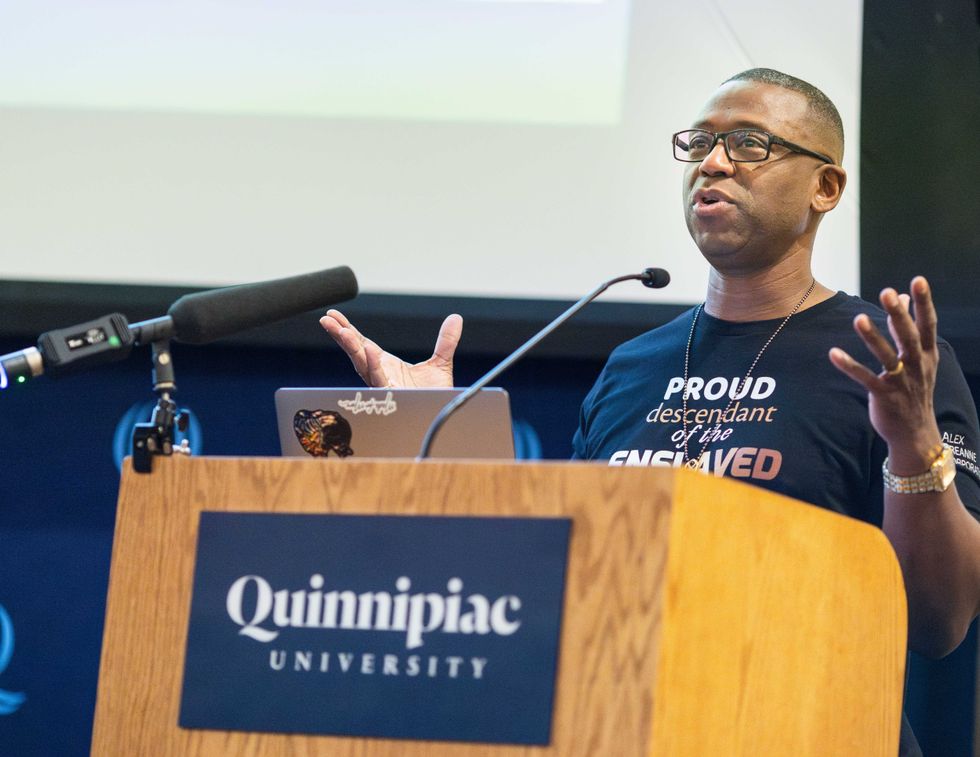
“No One Cares About Crazy People,” a documentary directed by Gail Freedman and inspired by Ron Powers’ book of the same name, screens at The Moviehouse in Millerton on Sunday, Oct. 11, at 1 p.m. The film examines the realities of living with severe mental illness in America, combining personal stories with a look at the systemic challenges facing individuals and families seeking care. A Q&A with Freedman and Jo Ann Brown, executive director of NAMI Mid-Hudson, will follow the screening.
Latest News
Who to call when things go flutter-scratch-thump
Natalia Zukerman
Oct 07, 2026
Kyle McAward of Nutmeg Wildlife Management.
Provided
There are few sounds quite as alarming as the unmistakable flutter-scratch-thump of a wild animal trapped inside your wood stove chimney.
When it happened at my house, I did what anyone with a conscience — and absolutely no idea how to extract a terrified bird from a chimney — would do: I went on Nextdoor.
That’s how I found Kyle McAward of Nutmeg Wildlife Management, a Sharon-based wildlife control business serving Connecticut and New York. I’m happy to report that the bird was freed and, as McAward put it, “hopefully living a good life.”
“I love to do the ones where, at the end of the day, everybody lived,” he said.
An outdoorsman his entire life, Kyle grew up in Sherman and has worked on farms and in construction, experiences that made wildlife management a natural fit. When he researched the business, he saw room for a different approach.
“A lot of the companies that you’re going to find now, they tend to use poisons,” he said. “I don’t like the ecological impact of them.”
Instead, Nutmeg Wildlife Management, which is licensed and insured in Connecticut and New York, emphasizes eco-friendly exclusion, humane trapping and remediation. McAward focuses on finding and sealing the places animals use to enter a structure and addressing what the industry calls “lifestyle issues” that attract them in the first place.
With rodents, that can mean keeping vegetation at least 2 feet from the foundation of your home, mowing lawns, moving bird feeders away from the house and keeping livestock feed at a distance.
“Usually there’s a smoking gun,” he said. His job is to find it.
The work can also get considerably more adventurous. McAward responds to calls involving birds and bats in chimneys, raccoons in crawl spaces and even timber rattlesnakes in yards.
“Any situation where someone’s coming into interaction with an animal that they don’t wish to, I come on by and provide help,” he said.
Rattlesnakes, which are protected, require coordination with state wildlife officials. McAward admitted that maneuvering one away from a home can be exciting, but said crawling into dark spaces can sometimes be more unnerving.
“A cornered raccoon can be a little scary,” he said.
Local homeowners praise McAward for being communicative, thorough and practical, providing clear explanations and photographs of completed work. His philosophy, though, remains simple: solve the problem without creating another one farther down the food chain.
“At the end of the day,” he said of poison-based rodent control, “you could end up with just you, the mice and the poison.”
Nutmeg Wildlife Management and Kyle McAward can be found on Nextdoor.com, reached at 516-491-6893 or by email at kylemcaward@gmail.com.
Keep ReadingShow less
A lifetime of loving animals
Jennifer Almquist
Oct 07, 2026
Dr. Bronwen Childs with Monty.
Provided
“It was the way of treating animals like family that stuck with me.”
— Dr. Bronwen Childs
Dr. Bronwen Childs, a board-certified specialist in veterinary diagnostic imaging, grew up in Norfolk and knew early that animals would be part of her life.
Her parents encouraged her interest, with one rule: “No snakes or pets that require live food.”
The household included pocket pets, as well as goats, a sheep, Fjord ponies and even a raccoon. At 13, Childs got Monty, a 5-year-old horse who remained her companion for the next 27 years.

Naturally drawn to science, Childs found her way to veterinary medicine through mentors at Kent School, including former Olympian Michael Page. “It was the way of treating animals like family that stuck with me,” she said.
A graduate of Tufts Cummings School of Veterinary Medicine, Childs trained in radiology at the University of Georgia. Today, she is a staff radiologist at Pieper Veterinary Hospital in Middletown, which provides general and specialty care for dogs, cats and exotic pets. She also consults on equine imaging and provides traveling ultrasound services to Litchfield County clinics through Berkshire Veterinary Imaging.
Radiology, she said, allows her to help animals and fellow veterinarians while living in Norfolk near her family. “Specializing in radiology has been the best decision of my career.”
Monty died recently, a significant loss after nearly three decades together. “He was a constant when things were changing,” Childs said. “I know I am who I am today because of our experiences together.”
At home, the family has a dog, Bandit, while Childs’ children regularly collect frogs, toads, newts and worms from the yard. “They keep the kids excited about being outdoors,” she said, “and that is the start of it all.”
Keep ReadingShow less
Saddle up
Madi Long
Oct 07, 2026
Megan McDermott competes with her horse, Nintendo, at the Discovery Land Company Masters at the Highlands Horse Show on Thursday, Oct. 1.
Madi Long
From international show jumping to hunter paces, trail rides and hands-on workshops, there’s plenty happening for horse lovers this fall. Here are a few ways to get in the saddle — or simply enjoy the view from the rail.
Highlands Hudson Valley Horse Show
Amenia, New York/ Sept. 30-Oct. 11
Top-level show jumping returns to Amenia this fall as the Highlands Horse Show brings two weeks of international equestrian competition to Highlands Hudson Valley at Keane Stud.
Following the Discovery Land Company Masters Sept. 30-Oct. 4, the Highlands Cup runs Oct. 7-11, featuring CSI5* show jumping and Major League Show Jumping competition. The week will bring some of the sport’s top riders and horses to the Hudson Valley, culminating in the $340,000 Highlands Cup CSI5* Grand Prix on Sunday, Oct. 11.
Beyond the competition ring, the event includes shopping, food, art and other activities throughout the grounds. Learn more at highlandshudsonvalley.com.
White Memorial Conservation Center
Litchfield, Conn. / Year-round
Saddle up and explore more than 4,000 acres of fields, forests and wetlands at White Memorial Conservation Center. Riders can access miles of designated roads and trails throughout the property, with trailer parking in Sawmill Field. Group rides require advance registration. Learn more at whitememorialcc.org.
Fox Crossing Equestrian Thrills in the Hills Show
Morris, Conn. / Oct. 25 or Nov. 15 (TBD)
Fox Crossing Equestrian invites riders to bring a little pink to the ring for this annual hunter-jumper show supporting breast cancer awareness. The show features a mix of rated and special classes, along with raffles, vendors and a silent auction. A portion of the proceeds will benefit breast cancer awareness. Learn more at foxcrossingequestrian.com.
The TAKHIN Method with Rupert Isaacson at The Equus Effect
Sharon, Conn. / Oct. 13-15
The Equus Effect in Sharon welcomes world-renowned horseman Rupert Isaacson for a three-day, hands-on workshop exploring Takhin Equine Integration. The approach brings together classical in-hand horsemanship, equine well-being, nervous system regulation and human development. Participants can work with one of The Equus Effect’s horses or bring their own. The workshop runs from 9 a.m. to 4 p.m. each day and costs $900 per person. Registration is required. Learn more at theequuseffect.org.
Horse Portrait at Le Petit Ranch
Sheffield, Mass. / Oct. 17
Spend a Saturday with horses and art at Le Petit Ranch’s Horse Portrait at the Ranch. Participants will learn about horse behavior, grooming and leading horses before creating their own art using drawing, painting and mixed media. Registration is required. The event is pay-what-you-can, with a suggested donation of $40 for the first child and $15 for each additional child. Learn more and register at lepetitranch.org.
Barbara Meyer Memorial Hunter Pace
Amenia, New York/ Oct. 18
Ride across the scenic Wethersfield Estate during the Barbara Meyer Memorial Hunter Pace, hosted by the Millbrook Pony Club on Sunday, Oct. 18, from 9 a.m. to noon. Teams of two to three riders will navigate a 6- to 9-mile cross-country course, aiming to finish as close to the optimum time as possible. Registration is $80 for adults and $60 for juniors. Enter by Oct. 16.
Locust Hill Hunter Pace
Hyde Park, New York / Nov. 1
Test your riding skills on the roughly 10-mile Locust Hill Hunter Pace, winding through countryside, farmland and wooded trails. The course features a variety of jumps, with go-arounds available. Teams can include two to four riders, with ribbons awarded through 10th place. Registration is $100 per rider if entered before Oct. 20. Learn more at carlettefarm.com.
Equine Affaire
West Springfield, Mass. / Nov. 12-15
Horse lovers can immerse themselves in four days of all things equine at Equine Affaire at the Eastern States Exposition. The annual event features clinics, seminars, demonstrations, competitions, breed exhibits and a massive trade show with tack, apparel and supplies. Visitors can also meet horses and participate in hands-on activities. The event runs Thursday through Saturday from 9 a.m. to 7 p.m. and Sunday from 9 a.m. to 5 p.m. Each evening, Fantasia offers a two-hour celebration of horsemanship and music. Learn more at equineaffaire.com.
Keep ReadingShow less

Want more of our stories on Google? Click here to make us a Preferred Source.
Independent care at Copake Veterinary Hospital
Robin Roraback
Oct 07, 2026
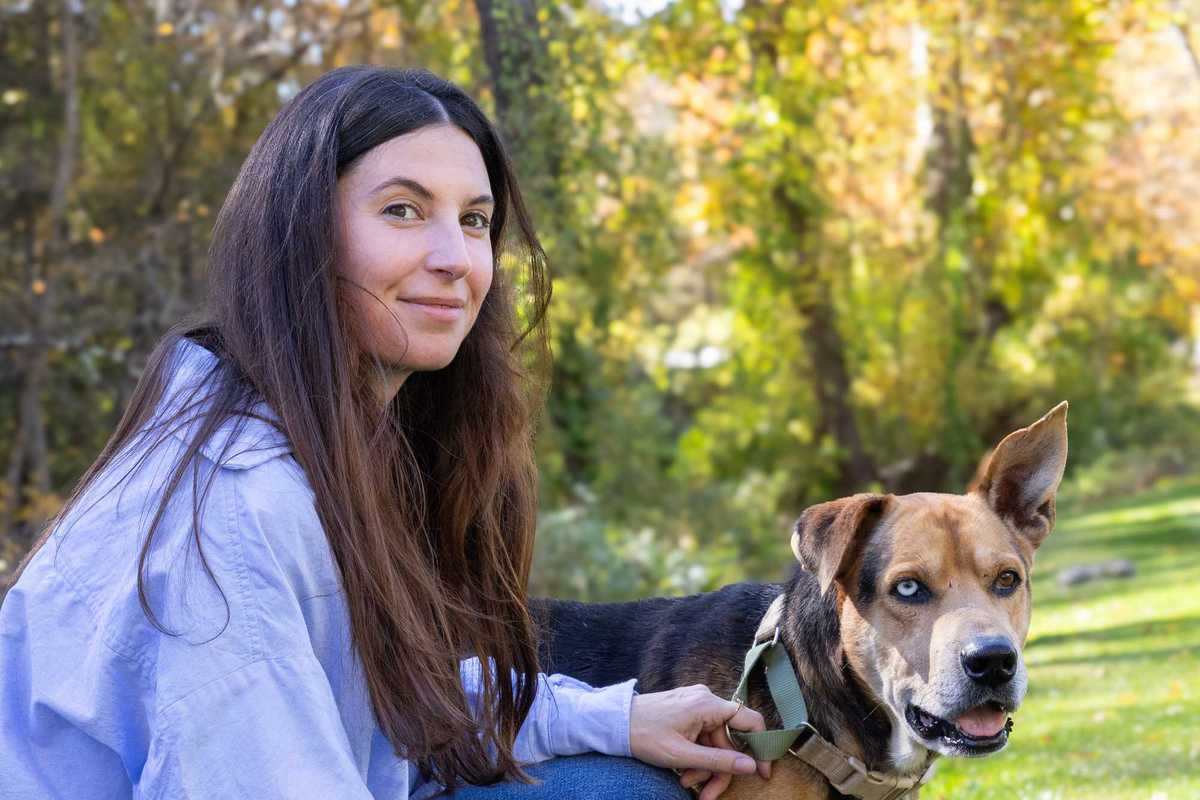
Veterinary assistant and clinic coordinator Trisha Burlingame with Scarlett.
L. Tomaino
“We are a very close-knit team. Everyone here is like family.”
— Trisha Burlingame, veterinary assistant and clinic coordinator
Copake Veterinary Hospital, accredited by the American Animal Hospital Association, treats dogs, cats and some pocket pets, including hamsters, gerbils and rats.
The hospital’s owner, veterinarian Dr. Tyler Hotaling, bought the practice in 2024. He is dedicated to providing the best care possible to his patients and pointed to three factors that help achieve that goal.
First, “We are independently owned. Most other vet clinics in the area are corporate,” Hotaling said. He said corporate ownership can contribute to higher costs because of added pressure to show a profit.
Second, “We take pride in our AAHA accreditation. Less than 10% of veterinary clinics achieve it.” Copake follows protocols designed to deliver high-quality patient care and employee training.
Third, “We deliver high-quality, evidence-based care — which is not uniform throughout the profession.”
Copake Veterinary Hospital has an in-house lab and can provide ultrasounds, laser therapy and advanced digital X-rays.
To further expand services, Hotaling has also returned to school to learn new surgical techniques. He recently used his training in advanced orthopedic fracture repair and internal fixation to repair the leg of a puppy that had been hit by a car. He expects to soon complete a course in tibial plateau leveling osteotomy, or TPLO, which will allow him to repair cruciate ligament tears in dogs.
Offering these treatments in Copake rather than sending clients to more expensive specialty hospitals can help keep treatment costs down.

Dr. Emily Reilly, one of five veterinarians at the practice, added as she examined Chloe, a yellow Lab, “We try to keep it low stress and use low-stress handling.”
Veterinary assistant Ehren Melius described another element that benefits Copake’s patients.
“We believe in community-based medicine, which is vanishing in this day and age,” Melius said.
The staff also pointed to teamwork as an important part of the practice. Trisha Burlingame, veterinary assistant and clinic coordinator, praised the work environment.
“We are a very close-knit team. Everyone here is like family. Dr. Hotaling is a great boss, very flexible and family-oriented,” Burlingame said.
Copake Veterinary Hospital is located at 7915 State Route 22 in Copake Falls, New York. Its team welcomes new patients. It is open Monday through Friday from 8 a.m. to 5 p.m. and Saturday from 8 a.m. to 1 p.m. The hospital accepts emergencies during regular business hours.
For more information, call 518-329-6161 or visit copakevethospital.com.
Keep ReadingShow less
A gentle touch at Rosie’s Grooming
Leila Hawken
Oct 07, 2026
Trimmed to perfection at Rosie’s Grooming in Amenia, a standard poodle named Scarlett O’Connor is ready to strut. With 32 years of grooming experience, Rosie Urena has welcomed customers at her Amenia shop for three years.
Leila Hawken
Hand-scissoring is just one of the reasons discerning dogs choose Rosie’s Grooming for their beauty needs. Once they have experienced the care Rosie Urena provides, using only organic products, they and their owners tend to become regular customers.
Urena has 35 years of experience in dog grooming. Her fully equipped salon accommodates small, medium and large dogs.
Urena owned and operated her first shop at Trump Plaza in New York City for more than 16 years before moving the business to Ledgewood Boarding Kennel in Millerton, where she operated for another 16 years. She has been at her present location in Amenia for three years.
“Every dog is different,” she said, explaining that she does not post a rate schedule or quote prices over the phone. She needs to meet the dog first.
“Money is not everything,” Urena said, adding that her shop offers a service where the dog comes first. She believes in keeping customers happy, which may explain why she has so many repeat clients.
“I treat people and dogs the same,” she said.
“I speak to the dogs in Spanish,” Urena said, explaining that she calms them with her quiet demeanor. “My demeanor sets the stage for the grooming.”
While their owners are present, Urena explained, dogs can instinctively pick up on stress and react to it.
During the interview, a customer came to retrieve Scarlett O’Connor, 6, a standard poodle from Lakeville and New York City, who had finished her grooming appointment in great style.
“Not every poodle can support this haircut,” Urena said, describing the precision cut preferred for Scarlett, who proudly held her head high in a show of attitude.

Another customer came to pick up Ollie, a pleasant, well-behaved shih tzu from Millbrook who had been in for a bath, trim and blow-dry for extra fluffiness.
Asked about differences between city and country dogs, Urena said they are mostly the same. “In the country, though, we have a lot of sporting dogs,” she added.
Urena grew up on a small farm in a village in the Dominican Republic, hoping as a young child to become a veterinarian.
“We were in charge of all of the animals,” she recalled. “I loved that life.”
In time, she broadened her career plans and earned an associate degree in animal science.
Two rescue dogs, both described by Urena as great dogs, have joined her household. Brissa, 17, is a Chihuahua-terrier mix from the Dominican Republic, and Milo, 5, is a Havanese, the national dog of Cuba. Milo had been tossed from a moving car in Rhode Island and was picked up by state troopers.
“I would never make a dog suffer so the customer can see hair,” Urena said when asked what she would want a new customer to know. The well-being of the dog comes first.
“I refuse to brush a dog in need of a short haircut for hot weather or to counter coat matting, nor will I do a shave-down just to make more money or to please a customer’s aesthetic taste,” she said.
Rosie’s Grooming is located at 20 Lango Road in Amenia. For more information, call 845-332-5366.
Keep ReadingShow less
Holding light: two new installations at Wassaic Project
Natalia Zukerman
Oct 07, 2026
akeylah wellington’s tapestries are made from hundreds of thousands of pony beads.
Natalia Zukerman
New monumental installations by Liz Nielsen and akeylah wellington at the Wassaic Project were celebrated Saturday, Oct. 3, with an artist talk moderated by independent curator Katie Hood Morgan, followed by a reception on the lawn of the Gridley Chapel. Though dramatically different in material and method, the installations share an interest in how we perceive what we cannot fully see or understand — and what happens when something unimaginably vast is made physical.
Opening the talk, Wassaic Project co-executive director Eve Biddle noted that both projects received funding from the National Endowment for the Arts, with Nielsen’s project receiving additional support from the Jacques and Natasha Gelman Foundation. At a time of uncertainty for arts organizations and federal arts funding, Biddle called the support especially meaningful.
“In this sort of chaotic moment in our world,” she said, “Wassaic Project is the recipient of two National Endowment for the Arts awards for two really extraordinary, really radical artists working at the edge of their mediums and pushing us forward into the next generation of artists.”
wellington’s two 9-by-10-foot tapestries shimmered outside in the bright autumn day. Her “nineties resolving power” and “aughts resolving power” draw on Hubble Space Telescope images recorded between 1990 and 2009: supernovae, gas rings, binary star systems, globular star clusters and other distant phenomena. These cosmic phenomena are translated into pixels and then into hundreds of thousands of plastic pony beads, an ornament familiar from braided hairstyles, turning images of deep space into something tactile, domestic and culturally specific.
wellington said she became fascinated by the language used to describe Hubble, particularly its “resolving power” — its ability to render distant objects with what was touted as unprecedented clarity.
“Hubble is a time machine,” she said, describing how the telescope captures light that has traveled for millions of years. But when she began looking closely at the images offered as evidence of technological progress, she noticed something amusing: “A lot of those images were pixelated.”
That contradiction became fertile ground for the questions surrounding her work.
Inside the Gridley Chapel, Nielsen’s “Crystalline Resonance” approaches the cosmos from another direction. Twelve transparent photograms installed in the chapel windows turn Nielsen’s camera-less photographic process into a kind of stained glass. Circles, triangles, squares and other elemental forms assemble themselves into what Nielsen calls “dimensional beings,” while sunlight continually redraws the work across the chapel walls and floor.

Nielsen described light as both material and mystery — “something that’s tangible and intangible,” behaving as both wave and particle.
“I’m coming from an immaterial world, bringing it into a material world, and then dematerializing it again,” she said.
That transformation is especially potent in the former chapel. Nielsen noted that stained glass historically was not simply about the glass itself, but about “the presence of the divine coming through” as sunlight became colored light.
“I’m not particularly religious myself,” she said, but spaces like the chapel have long been places for “meditation, community gatherings” and other forms of interior experience.
Her figures offer no prescribed theology. Some resemble guardians or guides; one looks like a mermaid, another a queen, another a baseball-capped figure. Nielsen wants the encounter to come before the explanation.
“Something resonates with you before you understand it,” she said.
Both artists take something difficult to grasp — ancient light, distant stars, invisible forces, deep time — and give it a body. Nielsen does it with transparent photographic film and sunlight; wellington does it with plastic beads and thread.
And both complicate the idea that technology necessarily brings us closer to certainty.
There is humor in that for wellington, whose work frequently uses the word in its less familiar sense: not simply comedy, but the act of enduring or tolerating something. There is something “kind of funny,” she said, about spending hundreds of hours reproducing an image of something she will never actually see — just as there is something funny about spending billions of dollars to produce an image of the cosmos that still arrives as pixels.
“Funny like ‘the milk is off’ funny,” she explained.
Asked about seeing her work outside, wellington reflected that her plastic tapestries create an intentional collision between the technological and natural worlds. Leaves, sky, buildings and passing trains remain visible around and through them.
Nielsen, meanwhile, has been searching for ways to move photography off the wall and into lived space. At Wassaic, the landscape itself completes her images as viewers look through them.
“What if the photograph is something that you’re moving through,” she asked, “not just looking at?”
For Nielsen, light itself may be the perfect vehicle for an experience that asks the viewer to slow down. She has spent years studying its behavior, how to manipulate it and, as she put it, “how to almost emote it.”
“Light is like love,” she said. “We know both, but we can’t hold either.”
Keep ReadingShow less

Want more of our stories on Google? Click here to make us a Preferred Source.
loading